Does social media actually depress people? A new study says yes — sort of.

For some time now, we’ve been hearing the contention made that social media causes people to become angry or depressed.

One aspect of this phenomenon, the argument goes, is the “politicization” of social media — most recently exhibited in the 2016 U.S. presidential election.

Another aspect is the notion that since so many people engage in never-ending “happy talk” on social media — presenting their activities and their lives as a constant stream of oh-so-fabulous experiences — it’s only natural that those who encounter those social posts invariably become depressed when comparing them to their own dreary lives that come up wanting.

But much of this line of thought has been mere conjecture, awaiting analysis by social scientists.

One other question I’ve had in my mind is one of causation:  Even if you believe that social media contributes to feelings of depression and/or anger, is using social media what makes people feel depressed … or are people who are prone to depression or anger the very people who are more likely to use social media in the first place?

Recently, we’ve begun to see some research work that is pointing to the causation — and the finding that social media does actually contribute to negative mental health for some users of social media.

One such study appeared in the February 2017 issue of the American Journal of Epidemiology. Titled “Association of Facebook Use with Compromised Well-Being:  A Longitudinal Study,” the paper presents findings from three sets of data collected from ~5,200 subjects in Gallup’s Social Network panel.

The researchers — Drs. Holly Shakya and Nicholas Christakis — studied the relationships between Facebook activity over time with self-reported measures such as physical health, mental health and overall life satisfaction. There were other, more objective measures that were part of the analysis as well, such as weight and BMI information.

The study detected a correlation between increased Facebook activity and negative impacts on the well-being of the research subjects.  ore specifically, certain users who practiced the following social media behaviors more often (within one standard deviation) …

  • Liking social posts
  • Following links on Facebook
  • Updating their own social status frequently

… showed a decrease of 5% to 8% of a standard deviation in their emotional well-being.

As it turns out, the same correlation also applied when tracking people who migrated from light to moderate Facebook usage; these individuals were prone to suffer negative mental health impacts similar to the subjects who gravitated from moderate to heavy Facebook usage.

The Shakya/Christakis study presented several hypotheses seeking to explain the findings, including:

  • Social media usage comes at the expense of “real world,” face-to-face interactions.
  • Social media usage undermines self-esteem by triggering users to compare their own lives with the carefully constructed pictures presented by their social media contacts.

But what about that? It could be argued that heavy social media users are spending a good deal more time engaged in an activity which by definition is a pretty sedentary one.  Might the decreased physical activity of heavy social media users have a negative impact on mental health and well-being, too?

We won’t know anything much more definitive until the Shakya/Christakis study can be replicated in another longitudinal research study. However, it’s often quite difficult to replicate such findings in subsequent research, where results can be affected by how the questions are asked, how random the sample really is, and so forth.

I’m sure there are many social scientists who are itching to settle these fundamental questions about social media, but we might be waiting a bit longer; these research endeavors aren’t as tidy a process as one might think.
The U.S. Postal Services unveils its Informed Delivery notification service – about two decades too late.

Earlier this year, the U.S. Postal Service decided to get into the business of e-mail. But the effort is seemingly a day late and a dollar short.

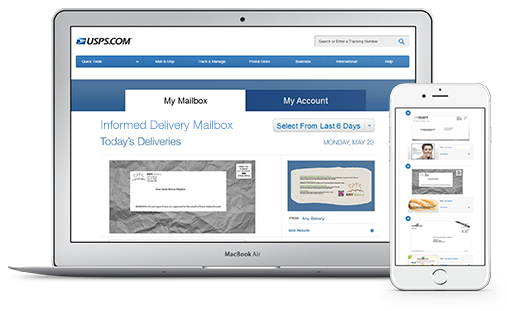
Here’s how the scheme works: Via sending an e-mail with scanned images, the USPS will notify a customer of the postal mail that will be delivered that day.

It’s called Informed Delivery, and it’s being offered as a free service.

Exactly what is this intended to accomplish?

It isn’t as if receiving an e-mail notification of postal mail that’s going to be delivered within hours is particularly valuable.  If the information were that time-sensitive, why not receive the actual original item via e-mail to begin with?  That would have saved the sender 49 cents on the front end as well.

So the notion that this service would somehow stem the tide of mass migration to e-mail communications seems pretty far-fetched.

And here’s another thing: The USPS is offering the service free of charge – so it isn’t even going to reap any monetary income to recoup the cost of running the program.

That doesn’t seem to make very good business sense for an organization that’s already flooded with red ink.

Actually, I can think of one constituency that might benefit from Informed Delivery – rural residents who aren’t on regular delivery routes and who must travel a distance to pick up their mail at a post office. For those customers, I can see how they might choose to forgo a trip to town if the day’s mail isn’t anything to write home about — if you’ll pardon the expression.

But what portion of the population is made up of people like that? I’m not sure, but it’s likely far fewer than 5%.

And because the USPS is a quasi-governmental entity, it’s compelled to offer the same services to everyone.  So even the notion of offering Informed Delivery as “niche product” to just certain people isn’t relevant.

I guess the USPS deserves fair dues just for trying to come up with new ways to be relevant in the changing communications world. But it’s very difficult to come up with anything worthwhile when the entire foundation of the USPS’s mission has so been eroded over the past generation.

Suddenly, smartphones are looking like a mature market.

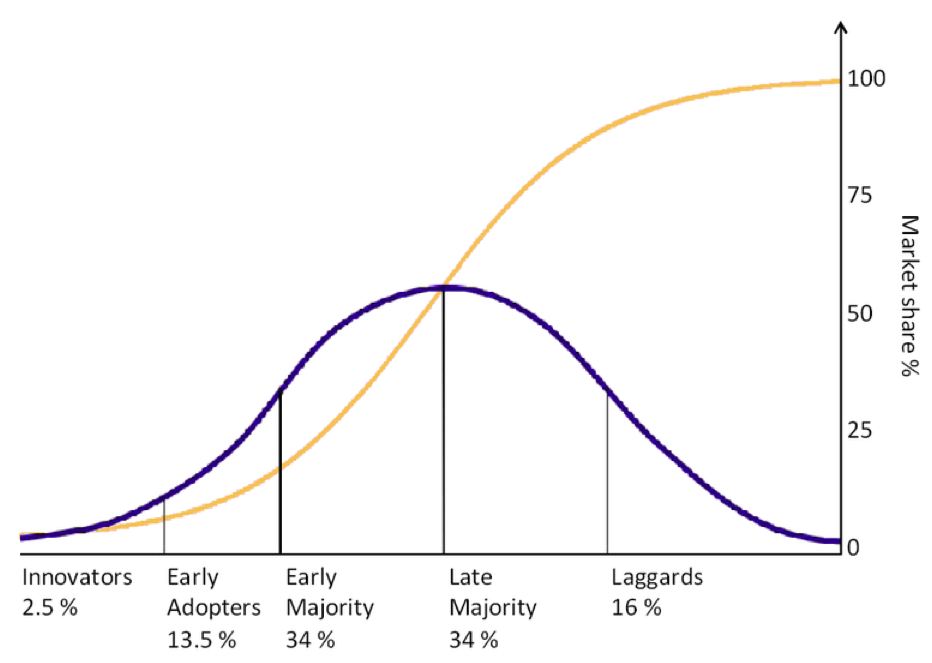
The smartphone diffusion curve. (Source: Business Insider)

In the consumer technology world, the pace of product innovation and maturation seems to be getting shorter and shorter.

When the television was introduced, it took decades for it to penetrate more than 90% of U.S. households. Later, when color TVs came on the market, it was years before the majority of households made the switch from black-and-white to color screens.

The dynamics of the mobile phone market illustrate how much the pace of adoption has changed.

Only a few years ago, well-fewer than half of all mobile phones in the market were smartphones. But smartphones rapidly eclipsed those older “feature phones” – so that now only a very small percentage of cellphones in use today are of the feature phone variety.

Now, in just as little time we’re seeing smartphones go from boom to … well, not quite bust.  In fewer than four years, the growth in smartphone sales has slowed from ~30% per year (in 2014) to just 4%.

That’s the definition of a “mature” market.  But it also demonstrates just how successful the smartphone has been in penetrating all corners of the market.

Consider this:  Market forecasting firm Ovum figures that by 2021, the smartphone will have claimed its position as the most popular consumer device of all time, when more than 5 billion of them are expected to be in use.

It’s part of a larger picture of connected smart devices in general, for which the total number in use is expected to double between now and 2021 – from an estimated 8 billion devices in 2016 to around 15 billion by then.

According to an evaluation conducted by research firm GfK, today only around 10% of consumers own either an Amazon Echo or Google Home device, but digital voice assistants are on the rise big-time. These interactive audio speakers offer a more “natural” way than smartphones or tablets to control smart home devices, with thousands of “skills” already perfected that allow them to interact with a large variety of apps.

There’s no question that home devices are the “next big thing,” but with their ubiquity, smartphones will continue to be the hub of the smart home for the foreseeable future.  Let’s check back in another three or four years and see how the dynamics look then.

Are boomerang kids the “new normal” now?

I’ve blogged before about how the Great Recession and resulting high unemployment rates drove a significant number of young adults back into their childhood homes — or relying on Mom and Dad for financial support at least. It affected millions of young adults.

The economy and job prospects have been steadily improving since those dark days – even if the improvement hasn’t been as rapid as people would like to see …

But here’s an interesting finding: Those new jobs and the improving economy haven’t resulted in the kids moving back out of the house.

In fact, two studies conducted by the Pew Research Center in 2016 have determined that “living with parents” is now the single most common living arrangement for America’s 18-34 year olds.

That is correct: Instead of living with a spouse, a partner, a roommate or on his or her own, the largest single segment of millennials lives full-time with parents.  The phenomenon is most prevalent in Connecticut, New Jersey and New York, where it’s no coincidence that the cost of living is much higher than the national average.

For marketers, this means that the once-coveted 18-34 year-old cohort is today made up of many people who are consuming other people’s resources (e.g., the resources of their parents) rather than making all of their own purchase decisions and spending their own money.

Furthermore, Pew Research has determined that living with parents isn’t merely about employment (or the lack thereof). Over the past eight years, adults age 18-34 have continued to move back home in greater numbers — even as more of them have been able to find jobs.

The Pew findings suggest yet another surprising trend that appears to be in the making – that this is the first American generation where a large portion of the people won’t ever purchase a home.

It’s easy to figure that trends of this kind are transitory. But Pew cautions that the trends may well be more fundamental than the implications of an economic recession.  Instead, there are broader cultural dynamics at play – as well as the long-term challenges of economic independence for this generation of people.

The implications for marketers are intriguing, too.  For some, it will mean placing more emphasis on marketing initiatives aimed at parents, who are the now ones making purchase decisions within a larger multi-generational household — often one that stretches over three generations rather than just two.

And consider these dynamics as well: How do young adults and their parents work through multi-generational purchase decisions?  What are the most effective ways to target and reach multiple generations living under one roof who are making coordinated purchase decisions?  Maybe the old ideas of targeting each audience separately no longer make as much sense as before.

One thing’s for sure – it’s risky for marketers to wait for a return to normal … because that “normal” likely isn’t coming back.  Better to come up with new tactics and new messaging to reach and influence buyers in the new multi-generational environment.

ESPN: What the heck just happened … and who’s to blame?

Last week, ESPN announced the layoffs of some 100 staffers, most of them on-air talent. This comes after layoffs of ~300 other personnel in 2015, but since those were behind-the-scenes employees, the news didn’t seem as momentous.

There are several factors coming together that make life particularly difficult for the sports network. One big problem is the commitment ESPN has made to pay top-dollar for the right to air professional sports events, particularly NFL and NBA games.

These financial commitments are set in stone and are made well into the future, which means that ESPN is committed to high long-term fixed costs (broadcast rights) in exchange for what’s turning out to be declining variable revenues (viewer subscription fees and advertising).

This isn’t a very good financial model at all.

Which brings us to the second big factor: declining subscribers.

Since 2011, the network has lost ~15 million subscribers. So far in 2017, the network has experienced an average loss of ~10,000 people per day.

The financial impact of these losses is significant. All of those lost subscribers amounts to more than $1.3 billion per year in money that’s no longer going on ESPN’s books.

Sports journalist Clay Travis predicts that if the current trajectory of subscriber losses continues, ESPN will begin losing money in 2021. (And that’s assuming the subscriber base losses don’t accelerate, an assumption that might be a little too rosy.)

The fundamental question is why so many people are no longer subscribing to ESPN. The predictable answer is because services like Hulu, Netflix and Amazon, with their on-demand services, are squeezing cable/satellite TV and its subscription business model.

One way Disney (ESPN’s parent company) has attempted to maximize viewer subscription revenues over the years has been by bundling the network with other, less lucrative Disney media properties like the History Channel, Vice, Disney Junior and the Lifetime Movie Network. In the Disney constellation of channels, ESPN has been the acknowledged “driver” of subscription revenues all along, with die-hard sports fans being willing to subsidize the other Disney channels – often never watched by these subscribers – as the price of access.

But something else is happening now:  ESPN itself has begun to lose viewers as well.

According to television industry publication Broadcasting & Cable, ESPN’s viewership rating has declined ~7% so far this year.  ESPN2’s rating is down even further – an eye-popping ~34%.

Percentages like those aren’t driven by “sidebar” incidental factors. Instead, they cut to the core of the programming and the content that’s being offered.

If there’s one programming factor that’s tracked nearly on point with ESPN’s viewership declines, it’s been the explosion in “sports-talk” programming versus actual “sports game” programming at the network. As Townhall opinion journalist Sean Davis has written:

“If you talk to sports fans and to people who have watched ESPN religiously for most of their lives, they’ll tell you that the problem is the lack of sports and a surplus of shows featuring people screaming at each other. The near-universal sentiment … is that the content provider sidelined actual sports in favor of carnival barkers.”

Davis points out the flaw in ESPN’s shift in colorful terms:

“ESPN went from the worldwide leader in sports to yet another expensive network of dumb people yelling dumb things at other dumb people, all the while forgetting that the most popular entertainment of people yelling about sports stuff for several hours a day – sports talk radio – is free.”

There’s an additional factor in the mix that’s a likely culprit in ESPN’s tribulations – the mixing of sports and politics. That programming decision has turned out to be a great big lightning rod for the network – with more downside than upside consequences.

The question is, why did ESPN even go in that direction?

Most likely, ESPN execs saw the tough numbers on higher costs, subscriber losses and lower ratings, and decided that it needed a larger content pie to attract more consumers.

The reasoning goes, if some people like sports and others like politics, why not combine the two to attract a larger audience, thereby changing the trajectory of the figures?

But that reasoning flies in the face of how people consume political news. In the era of Obama and now Trump, political diehards gravitate to outlets that reinforce their own worldviews:  conservatives want news from conservatives; liberals want news from liberals.

MSNBC and the Fox News Channel have figured this out big-time.

But if you’re starting with a cross-partisan mass media audience for sports, as the original ESPN audience most certainly was, trying to combine that with politics means running the risk of losing one-half of your audience.

That’s what’s been happening with ESPN. Intertwining sports with coverage about bathrooms in North Carolina, transgender sports stars, gun control laws and proper national anthem etiquette only gets your numbers going in one direction (down).

The question for ESPN is how it plans to recalibrate and refocus its programming to truly defend its position as the worldwide leader in sports broadcasting. However it decides to position itself in terms of the delivery of its content – television, online, subscription, pay-per-view or other methods – it should refocus on covering live sports events.

Not sports talk … not debate … not politics or sociology, but the sports themselves.

At one time, not so long ago, sports were a safe refuge from politics and the news. ESPN would do itself – and its viewers – a favor if it sought to recapture that spirit.

Brand PR in the era of social media: Much ado about … what?

These days, brands often get caught up in a social media whirlwind whenever they might stumble. Whatever fallout there is can be magnified exponentially thanks to the reach of social platforms like Twitter, Facebook and Instagram.

When a “brand fail” becomes a topic of conversation in the media echo chamber, it can seem almost as though the wheels are coming off completely. But is that really the case?

Consider the past few weeks, during which time two airlines (United and American) and one consumer product (Pepsi) have come under fire in the social media sphere (and in other media as well) for alleged bad behavior.

In the case of United and American, it’s about the manhandling of air travelers and whether air carriers are contributing to the stress – and the potential dangers – of flying.

In the case of Pepsi, it’s about airing an allegedly controversial ad featuring Kendall Jenner at a nondescript urban protest, and whether the ad trivializes the virtues of protest movements in cities and on college campuses.

What exactly have we seen in these cases?  There’s been the predictable flurry of activity on social media, communicating strong opinions and even outrage.

United Airlines was mentioned nearly 3 million times on Twitter, Facebook and Instagram just on April 10th and 11th.  Reaction on social media over the Pepsi ad was similarly damning, if not at the same level of activity.

And now the outrage has started for American Airlines over the “strollergate” incident this past weekend.

But when you consider what the purpose of a brand actually is – to sell products and services to customers – what’s really happening to brand reputation?

A good proxy is the share price of the brands in question. United Airlines’ share price took a major hit the week the “draggergate” news and cellphone videos were broadcast, but it’s been climbing back ever since.  Today, United’s share price looks nearly the same as before the passenger incident came to light.

In the case of Pepsi, company shares are up more than 7% so far in 2017, making it a notably robust performer in the market. Moreover, a recent Morning Consult poll found that over 50% of the survey respondents had a more favorable opinion of the Pepsi brand as a result of the Kendall Jenner commercial.

That is correct:  The Pepsi commercial was viewed positively by far more people than the ones who complained (loudly) about it on social media.

What these developments show is that while a PR crisis isn’t a good thing for a brand’s reputation, social fervor doesn’t necessarily equate with brand desertion or other negative changes in consumer behavior.

Instead, it seems that the kind of “brand fails” causing the most lasting damage are ones that strike at the heart of consumers’ own individual self-interest.

Chipotle is a good example, wherein the fundamental fear of getting sick from eating Chipotle’s food has kept many people away from the chain restaurant’s stores for more than a year now.

One can certainly understand how fears about being dragged off of airplanes might influence a decision to select some other air carrier besides United – although it’s equally easy to understand how price-shopping in an elastic market like air travel could actually result in more people flying United rather than less, if the airline adjusts its fares to be more the more economical choice.

My sense is, that’s happening already.

And in the case of Pepsi, the Jenner ad is the biggest nothing-burger to come down the pike in a good while.  The outrage squad is likely made up of people who didn’t drink Pepsi products to begin with.

Still, as an open forum, social media is important for brands to embrace to speak directly to customers, as well as to learn more about what consumers want and need through their social likes, dislikes and desires.

But the notion of #BrandFails? As often as not, it’s #MuchAdoAboutNothing.

United Airlines’ four miscalculations — and the $200 million impact.

Just how many mistakes did United Airlines make in “re-accommodating” four of its booked passengers recently? Oh, let us count the ways …

Miscalculation #1

Despite some reports to the contrary, technically United Airlines wasn’t in an overbooking or oversold situation. The flight boarded full; then some crew assigned to a future flight from the destination city turned up suddenly.

The airline’s first mistake was failure by its managers or staff to correctly anticipate the crew that needed to travel on this flight.

 Miscalculation #2

Their second mistake was to implement an operating procedure which gives crew higher priority than paying customers.

Because all customers had already taken their seats on the airplane, and no more seats were available, this meant that the airline’s staff had to ask — or coerce — some seated customers to leave.

Miscalculation #3

United’s third mistake was management’s failure to empower the airline’s gate agents to offer higher compensation in order to entice customers to leave voluntarily.

This miscalculation guaranteed that the victims would be “paying customers” who had done nothing wrong, rather than the airline’s managers and staff who had made all the mistakes.

Miscalculation #4

When choosing its victims, everything else being equal apparently, United Airlines and its regional partners like United Express go after the lowest-paying customers first. That too is a miscalculation.

Let’s explore this a bit further. According to the latest published data I could find, on average around 40% of passengers on the typical flight are traveling using heavily-discounted tickets.  Most of those tickets are non-refundable, and prepaid.  They can be changed ahead of time, but only if the customer pays change fees which can be very costly.

This means:

  • If the passenger doesn’t change his or her booking early enough, and doesn’t show up for the flight, the airline keeps all the revenue – and has the possibility of re-selling the seat to a different passenger.
  • Otherwise, the airline keeps the original revenue, plus the change fee. For United, this amounted to $800 million of additional revenue in the year 2015 alone.

Phony Risk?

Airlines justify their overbooking and overselling tactics as a way of reducing the risk of revenue lost from no-shows. Published data indicates that approximately 15% of confirmed reservations are no-shows. Assuming that the airline bears the full risk of revenue lost from no-shows, overbooking mitigates that risk by allowing other passengers to claim and pay for seats that would otherwise fly empty.

Airlines typically overbook about 12% of their seats, counting on no-shows to match load-to-seats, or later cancellations to reduce bookings. (Failure to correctly anticipate the number of no-shows would also qualify as a mistake by the airline’s management or staff.)

All that being said, however, in most discounting situations there is no “risk” to reduce, because most customers who buy discounted tickets already bear all the financial risks from a failure to show up for flights. If passengers are unable to fly when originally planned, they must either pay steep change fees … or they forfeit the entire fare paid.

The Real Risk

In fact, the airlines’ biggest risk of revenue loss from no-shows arises from passengers paying first class, business class or full-fare economy.

These types of tickets account for approximately 25% of passengers and 50% of ticket revenues.  Yet those passengers typically incur few if any cancellation fees or penalties if or when they don’t show up.

When enterprises like United try to have it both ways – by putting themselves ahead of their customers and gaming the system to maximize revenues without incurring any apparent financial risks – is it any wonder the end result is ghastly spectacles like passengers being forcibly dragged off airplanes?

Scenes like that are the predictable consequences of greed overtaking sound business management and ethics. You don’t have to think too hard to come up with other examples of precisely the same thing — Wells Fargo’s “faux” bank account setups being another recent corporate black-eye.

I’m sure if United Airlines had it to do all over again, it would have cheerfully offered up to $10,000 per ticketed passenger to get its four flight crew members off to Louisville, rather than suffer more than a $200 million net loss in share value of its company stock over the past week.

But instead, United Airlines decided on a pennywise/pound-foolish approach.

How wonderful that turned out to be for everyone.

Downtown turnaround? In these places, yes.

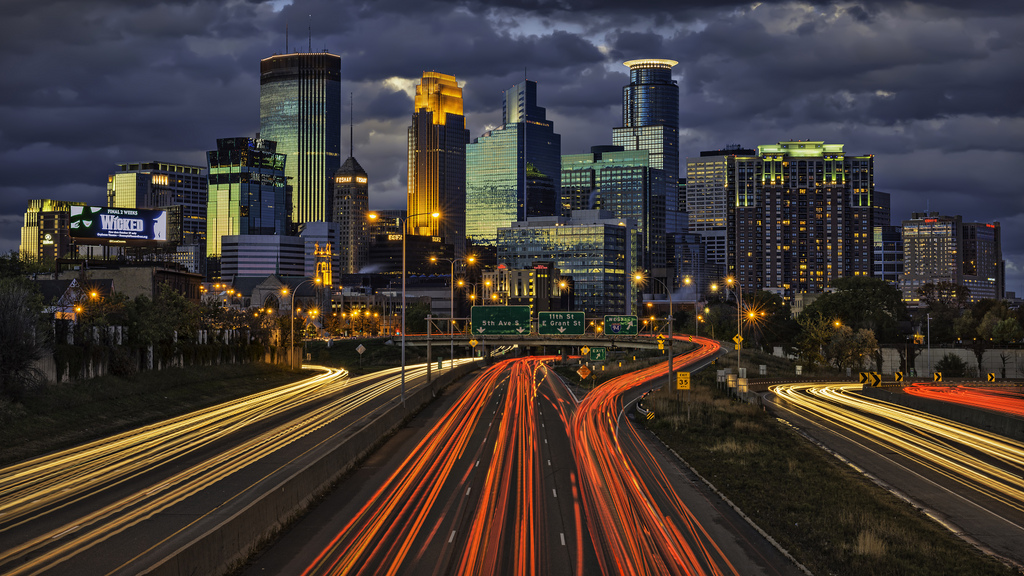
Downtown Minneapolis (Photo: Dan Anderson)

For decades, “going downtown” meant something special – probably from its very first use as a term to describe the lower tip of Manhattan, which was then New York City’s heart of business, commercial and residential life.

Downtown was literally “where it was at” – jobs, shopping, cultural attractions and all.

But then, beginning in post-World War II America, many downtowns lost their luster, as people were drawn to the suburbs thanks to cheap land and easy means to traveling to and fro.

In some places, downtowns and the areas immediately adjoining them became places of high crime, industrial decay, shopworn appearances and various socio-economic pathologies.

Things hit rock bottom in the late 1970s, as personified by the Times Square area of New York City. But since then, many downtowns have slowly come back from those near-death experiences, spurred by new types of residents with new and different priorities.

Dan Cort, author of the book Downtown Turnaround, describes it this way:  “People – young ones especially – love historical buildings that reintroduce them to the past.  They want to live where they can walk out of the house, work out, go to a café, and still walk to work.”

There are a number of cities where the downtown areas have come back in the big way over the past several decades. Everyone knows which ones they are:  New York, Seattle, San Francisco, Minneapolis …

But what about the latest success stories? Which downtowns are those?

Recently, Realtor.com analyzed the 200 largest cities in the United States to determine which ones have the made the biggest turnaround since 2012. To determine the biggest successes, it studied the following factors:

  • Downtown residential population growth
  • Growth in the number of restaurants, bars, grocery stores and food trucks per capita
  • Growth in the number of independent realtors per capita
  • Growth in the number of jobs per capita
  • Home price appreciation since 2012 (limited to cities where the 2012 median home price was $400,000 or lower)
  • Price premium of purchasing a home in the downtown district compared with the median home price of the whole city
  • Residential and commercial vacancy rates

Based on these criteria, Realtor.com’s list of the Top 10 cities where downtown is making a comeback are these:

  • #1 Pittsburgh, PA
  • #2 Indianapolis, IN
  • #3 Oakland, CA
  • #4 Detroit, MI
  • #5 Columbus, OH
  • #6 Austin, TX
  • #7 Los Angeles, CA
  • #8 Dallas, TX
  • #9 Chicago, IL
  • #10 Providence, RI

Some of these may surprise you. But it’s interesting to see some of the stats that are behind the rankings.  For instance, look at what’s happened to median home prices in some of these downtown districts since 2012:

  • Detroit: +150%
  • Oakland: +111%
  • Los Angeles: +63%
  • Pittsburgh: +31%

And residential population growth has been particularly strong here:

  • Pittsburgh: +32%
  • Austin: +25%
  • Dallas: +25%
  • Chicago: +21%

In the coming years, it will be interesting to see if the downtown revitalization trend continues – and spreads to more large cities.

And what about America’s medium-sized cities, where downtown zones continue to struggle. If you’ve been to Midwestern cities like Kokomo, IN, Flint, MI or Lima, OH, those downtowns look particularly bleak.  Can the sort of revitalization we see in the major urban centers be replicated there?

I have my doubts … but what is your opinion? Feel free to share your thoughts below.

PR Practices: WOM Still Wins in the End

These days, there are more ways than ever to publicize a product or service so as to increase its popularity and its sales.

And yet … the type of thing most likely to convince someone to try a new product – or to change a brand – is a reference or endorsement from someone they know and trust.

Omnichannel marketing promotions firm YA conducted research in 2016 with ~1,000 American adults (age 18+) that quantifies what many have long suspected: ~85% of respondents reported that they are more likely to purchase a product or service if it is recommended by someone they know.

A similarly high percentage — 76% — reported that an endorsement from such a person would cause them to choose one brand over another.

Most important of all, ~38% of respondents reported that when researching product or services, a referral from a friend is the source of information they trust the most.  No other source comes close.

This means that online reviews, news reports and advertising – all of which have some impact – aren’t nearly as important as the opinions of friends, colleagues or family members.

… Even if those friends aren’t experts in the topic!

It boils down to this:  The level of trust between people has a greater bearing on purchase decisions because consumers value the opinion of people they know.

Likewise, the survey respondents exhibited a willingness to make referrals of products and services, with more than 90% reporting that they give referrals when they like a product. But a far lower percentage — ~22% — have actually participated in formal refer-a-friend programs.

This seems like it could be an opportunity for brands to create dedicated referral programs, wherein those who participate are rewarded for their involvement.

The key here is harnessing the referrers as “troops” in the campaign, so as to attract a larger share of referral business and where the opportunities are strongest — and tracking the results carefully, of course.

Where’s the Best Place to Live without a Car?

For Americans who live in the suburbs, exurbs or rural areas, being able to live without a car seems like a pipedream. But elsewhere, there are situations where it may actually make some sense.

They may be vastly different in nearly every other way, but small towns and large cities share one trait – being the places where it’s more possible to live without a car.

Of course, within the larger group of small towns and larger cities there can be big differences in relative car-free attractiveness depending on differing factors.

For instance, the small county seat where I live can be walked from one side of town to the other in under 15 minutes. This means that, even if there are places where a sidewalk would be nice to have, it’s theoretically possible to take care of grocery shopping and trips to the pharmacy or the cleaners or the hardware store on foot.

Visiting restaurants, schools, the post office and other government offices is also quite easy as well.

But even slightly bigger towns pose challenges because of distances that are much greater – and there’s usually little in the way of public transport to serve inhabitants who don’t possess cars.

At the other end of the scale, large cities are typically places where it’s possible to move around without the benefit of a car – but some urban areas are more “hospitable” than others based on factors ranging from the strength of the public transit system and neighborhood safety to the climate.

Recently, real estate brokerage firm Redfin took a look at large U.S. cities (those with over 300,000 population) to come up with its listing of the 10 cities it judged the most amenable for living without a car. Redfin compiled rankings to determine which cities have the better composite “walk scores,” “transit scores” and “bike scores.”

Here’s how the Redfin Top 10 list shakes out. Topping the list is San Francisco:

  • #1: San Francisco
  • #2: New York
  • #3: Boston
  • #4: Washington, DC
  • #5: Philadelphia
  • #6: Chicago
  • #7: Minneapolis
  • #8: Miami
  • #9: Seattle
  • #10: Oakland, CA

Even within the Top 10 there are differences, of course. This chart shows how these cities do relatively better (or worse) in the three categories scored:

Redfin has also analyzed trends in residential construction in urban areas, finding that including parking spaces within residential properties is something that’s beginning to diminish – thereby making the choice of opting out of automobile ownership a more important consideration than in the past.

What about your own experience? Do you know of a particular city or town that’s particularly good in accommodating residents who don’t own cars?  Or just the opposite?  Please share your observations with other readers.