In the Facebook-faceprint tussle, score one for the little guys.

Is that Maria Callas? Check with Facebook -- they'll know.
Is that Maria Callas? Check with Facebook — they’ll know.

I blogged last year about privacy concerns surrounding Facebook’s “face geometry” database activities, which have led to lawsuits in Illinois under the premise that those activities run afoul of that state’s laws regarding the use of biometric data.

The Illinois legislation, enacted in 2008, requires companies to obtain written authorization from subjects prior to collecting any sort of face geometry or related biometric data.

The lawsuit, which was filed in early 2015, centers on Facebook’s automatic photo-tagging feature which has been active since around 2010. The “faceprints” feature – Facebook’s term for face geometry – recognizes faces based on the social network’s vast archive of users and their content, and suggests their names when they appear in photos uploaded by their friends.

The lawsuit was filed by three plaintiffs in a potential class-action effort, and it’s been mired in legal wrangling ever since.

From the outset, many had predicted that Facebook would emerge victorious.  Eric Goldman, a law professor at Santa Clara University, noted in 2015 that the Illinois law is “a niche statute, enacted to solve a particular problem.  Seven years later, it’s being applied to a very different set of circumstances.”

But this past week, a federal judge sided not with Facebook, but with the plaintiffs by refusing to grant a request for dismissal.

In his ruling issued on May 5th, U.S. District Court Judge James Donato rejected Facebook’s contention that the Illinois Biometric Privacy Information Act does not apply to faceprints that are derived from photos, but only when it’s based on a source other than photos, such as in-person scans.

The Judge roundly rejected this contention as inconsistent with the purpose of the Illinois law. Donato wrote:

“The statute is an informed consent privacy law addressing the collection, retention and use of personal biometric identifiers and information at a time when biometric technology is just beginning to be broadly deployed. Trying to cabin this purpose within a specific in-person data collection technique has no support in the words and structure of the statute, and is antithetical to its broad purpose of protecting privacy in the face of emerging biometric technology.”

This isn’t the first time that the Illinois law has withstood a legal challenge. Another federal court judge, Charles Norgle, sided against Shutterfly recently on the same issues.

And Google is now in the crosshairs; it’s facing a class-action lawsuit filed early this year for its face geometry activities involving Google Photos.

Clearly, this fight has a long way to go before the issues are resolved.

If you have strong opinions pro or con about social networks’ use of face geometry, please share your views with other readers in the comment section below.

The Ugly Other Side of Entrepreneurship

mA few years ago, I recall seeing a film made in India called Three Idiots. It’s a comedy about the college experience in India.  But there’s a serious undertone in that one of the issues dealt with in the movie is the pressure that many students feel about competing for precious few slots in top universities — as well as the pressure to excel once enrolled there.

In one scene, one of the students attempts suicide by jumping from a fourth floor dorm window.

The extreme pressures to succeed aren’t limited to India, of course. For years we’ve been reading articles about equally competitive environments in other countries like China.  Even the United States isn’t immune if one thinks about the elite private colleges and top public universities.

Unfortunately, the drive to succeed often follows students into the professional world in unhealthy ways. Several weeks ago, it was reported that a 33-year-old entrepreneur from Hyderabad, India named Lucky Gupta Agarwal took his own life after an app he had been developing failed to achieve the user acceptance and popularity he had anticipated.

The venture had started promisingly enough. After working for a number of years as a software engineer in a large Mumbai-based company, Mr. Agarwal developed a social networking app he named KQingdom that enables users to chat and photo-blog on the same app while earning rewards points for content created.

Mr. Agarwal believed that the features of his app were ones that were missing from Facebook and other social networking options.  He did many things right: He tested the app with fellow techies and social network users.  The app went through two years of development and alpha/beta testing to ensure that it worked smoothly.

When the app was listed on the Google Play store, it earned a 4.8 out of a possible 5.0 rating.

But Agarwal fell victim to over-rosy projections. He claimed to his family, friends and industry colleagues that the app would become more popular than WhatsApp.  He hired a staff of five to assist in the launch of the product.

As it turned out, after being launched in mid-2014 the app failed to garner the publicity or the engagement levels that Agarwal had anticipated. His financial situation deteriorated.  After having to lay off staff and downsize his operations, the entrepreneur sank into a depression that lasted for months before he ended his life several weeks ago.

In the wake of the news story, in the social commentary I’ve been reading on LinkedIn and elsewhere it seems that Mr. Agarwal’s situation isn’t an isolated one — even if the measures he ultimately took were unusually drastic. Clearly there are many, many other entrepreneurs who encounter a mismatch between their start-up expectations and the harsh reality.

Simply put, too many entrepreneurs don’t plan for failure even as they work for success. Even if a new product sufficiently fills a market need (whereas many of them fail for this fundamental reason), there’s still the challenge of implementing effective marketing and sales strategies, forging an efficient team of employees working together towards a common goal, and fending off nimble competitors who quickly react to new market moves with countermoves of their own.

And one other thing: Looking out from the safety of a job inside an established business, it’s very easy for a would-be entrepreneur to sense the shortcomings of staying in such an environment.  The siren call of becoming the head of one’s very own business is strong.

Unfortunately, many people are ill-prepared temperamentally to be entrepreneurs; it’s a big reason why so few ventures succeed. For every successful entrepreneur, there must be hundreds who fail — or whose efforts never even remotely achieve the level of success anticipated and hoped for.

Tragic incidents like the Agarwal news story remind us of the potentially tragic consequences.

Mobile shopping goes majorly mainstream.

untitledFor years, the common perception has been that consumers tend to use their laptops, tablets or mobile devices to research purchases while ultimately visiting a store to make the actual purchase.

And up until now, most studies have shown that no matter what type of digital device consumers use to shop, large majorities prefer to complete the sale in a store or at the mall.

But now a new study is telling us something different. The research, conducted by questioning ~1,000 U.S. consumers by research firm Ipsos, shows that shopping frequency in physical stores hasn’t kept pace with the growth of smartphone shopping.

According to Ipsos, over the past year there has been a significant increase in the amount of smartphone shopping, with two-thirds of respondents reporting that they are doing more of this today:

  • Shopping more frequently via smartphone: ~64%
  • Shopping more frequently via tablet: ~60%
  • Shopping more frequently via desktop computer: ~57%
  • Shopping more frequently via laptop computer: ~57%

At first blush, these figures don’t seem startling at all, considering the rise in the consumer economy over the past year or so.  Moreover, ~41% of the survey’s respondents reported that they haven’t made a significant change in their frequency of shopping in physical stores.

But in considering the ways respondents reported how and where they’ve been shopping less frequently over the past year, the differences appear much more stark:

  • Shopping less frequently via physical store: ~30%
  • Less frequently via desktop computer: ~11%
  • Less frequently via laptop computer: ~11%
  • Less frequently via tablet: ~11%
  • Less frequently via smartphone: ~9%

It even goes further than that. The two groups which seemed most inclined to shop less frequently in physical stores were younger consumers (age 25 and under) as well as consumers who earn more than $100,000 per year.

Add to this the propensity for younger consumers to be using smartphones and tablets more often than their older counterparts, and it’s clear that some of the most prized demographic categories are migrating to smartphone shopping in a big way.

The implications for traditional retail could not be more clear:  adapt your business model or else.

Checking messages: First, last and always.

cemIf you think your personal and professional life has become consumed with checking messages ad nauseum, you’re not alone.

Recently, Adestra and Flagship Research surveyed Internet-using Americans for eMarketer to find out just how pervasive the practice of checking messages has become.

The results surprise no one — even if they’re a bit depressing to contemplate.

Asked to cite when their first message check of the day is typically done, here’s what the eMarketer survey found:

  • I check messages first thing, before anything else: ~39% reported
  • After coffee/tea but before breakfast: ~22%
  • After breakfast but before departing for work: ~20%
  • On the way to work: ~4%
  • Once at work: ~8%
  • Later in the day: ~3%
  • Other responses: ~4%

[I was a little surprised to find myself in a distinct minority (checking messages upon arriving at work) … but I suppose when one gets to the office at 07:00 hrs. each workday, as I do, that may be when most others are en route to the office or still at home.]

Not surprisingly, the “check messages before anything else” contingent is more heavily represented by younger people, with over 45% of the survey’s respondents under the age of 35 reporting that they check messages first thing in the day.

The type of messages in question run the gamut from e-mail to text, social media and voicemail. But it’s overwhelmingly e-mail and text messaging apps that smartphone users check first thing in the day:

  • Text messaging: ~67% check this mobile app first
  • E-mail: ~63%
  • Facebook: ~48%
  • Weather app: ~44%
  • Calendar app: ~30%
  • News app: ~21%
  • Games: ~19%
  • Instagram: ~16%
  • Pandora: ~16%
  • Other social media: ~9%
  • Other apps: ~7%

More details on the eMarketer survey can be found here.

What are your message checking practices — and how are they different or similar to these survey results?

Inked in stone: One societal trend that’s going off the charts.

ttWhat’s one of the biggest societal trends in America nowadays? Believe it or not, it’s the rapidly growing popularity of tattoos.

Once the province of just a slim slice of the American population, today we’re smack in the middle of dramatic changes in attitudes about tattoos.

Let’s begin with figures published by the Harris Poll recently, based on its survey or more than 4,000 American conducted in late 2015. That survey finds that nearly one in three Americans age 18 or older have at least one tattoo (29%, to be exact).

Not only did that percentage surprise me, but also the increase that represents over a similar Harris Poll conducted just four years ago. In that survey, ~21% reported having a tattoo … which means that the nearly 40% more people have tattoos today than in 2010.

Pretty amazing, I thought.  And the surprises don’t stop there, either. Of those people who are tattooed, more than two-thirds report that they have more than one tattoo.

What isn’t surprising at all is that the tattoo craze is most prevalent among younger Americans:

  • Millennials: ~47% report having at least one tattoo
  • GenX: ~36%
  • Baby Boomers: ~13%
  • Matures: ~10%

There are also some locational differences, with rural and urban Americans somewhat more likely to be tattooed than those people who reside in suburbia:

  • Rural folks: ~35% have at least one tattoo
  • Urban dwellers: ~33%
  • Suburbanites: ~25%

[There’s no discernible difference at all between people of differing partisan/political philosophies, according to Harris.]

With such a big increase in tattooing, the next question is, what’s behind the trend? For clues, we can see how respondents described what their tattoo(s) mean to them personally:

  • Makes me feel more sexy: ~33% of tattooed Americans cited
  • Makes me feel more attractive: ~32%
  • Makes me feel more non-conformist/rebellious: ~27%
  • Makes me feel more spiritual: ~20%

[Far smaller percentages felt that their tattoo(s) made them feel more intelligent, more employable, more respected or more healthy.]

But what about regrets? Are there people who wish they hadn’t taken the plunge?  The Harris survey found that approximately one in four respondents do feel at least some regrets about having a tattoo.  The reasons why are varied — yet all pretty obvious:

  • Personality changes … doesn’t fit my present lifestyle
  • The tattoo includes someone’s name I’m no longer with
  • The tattoo was poorly done … doesn’t look professional
  • The tattoo is no longer meaningful to me
  • I was too young when I got the tattoo

In conclusion, I think it’s safe to conclude that tattoos are a generational thing. Those of us north of age 50 don’t have any tattoos — and likely will never get one.

But for the younger generations, not only have tattoos gone “mainstream,” for many they’re a decidedly aspirational thing.  And that, of course, means ever widening acceptance of tattoos along with encountering more of them than ever before.

Comments … thoughts anyone?

The States Where Your Dollar Goes a Good Deal Further

billsPeople have long suspected that many of America’s “richest” areas, based on salaries and other income, also happen to be where the cost of living is significantly higher.

Silicon Valley plus the New York City, Boston and the DC metro areas are some of the obvious regions, notorious for their out-of-sight housing and real estate prices.

But there are other factors at work as well in these high-cost areas, such as the cost of delivering goods to certain areas well-removed from the nation’s major trunk transportation arteries (think Alaska, Hawaii, Washington State and Minnesota).

And then there are state and local taxes. There appears to be a direct relationship between higher costs of living and higher taxation, too.

It’s one thing to go on hunches. But helpfully, all of these perceptions have been confirmed by the Bureau of Economic Analysis, using Personal Consumption Expenditure and American Community Survey data to do so.  Rolling the data up, the BEA has published comparative figures for all 50 states plus DC pertaining to the relative cost of living.

The approach was simple: consolidate the data to come up with a dollar figure in each state that represents how much $100 can purchase locally compared to the national average.  To get there, average price levels in each state have been calculated for household consumption, including rental housing costs.

Based on 2014 data, the figures have been mapped and are shown below:

100

So, just how far does $100 go?

The answer to that question is this: quite a bit further if you live in the mid-Continent region of the country compared to the Pacific Coast or the Northeast U.S.

In fact, $100 will get you upwards of 15% more goods and services in quite a few states. Here are the Top 10 states how much $100 will actually buy there:

  • Mississippi: $115.74 worth of goods and services
  • Arkansas: $114.16
  • Alabama: $113.51
  • Missouri: $113.51
  • South Dakota: $113.38
  • West Virginia: $112.87
  • Ohio: $112.11
  • Iowa: $111.73
  • Kansas: $111.23
  • Oklahoma: $111.23

At the other end of the scale, $100 is only going to buy about 20% to 30% fewer goods and services in the “Bottom 10” states compared to the “Top 10.” Here’s how it looks state-by-state:

  • DC: $84.60
  • Hawaii: $85.32
  • New York: $86.66
  • New Jersey: $87.64
  • California: $88.57
  • Maryland: $89.85
  • Connecticut: $91.41
  • Massachusetts: $93.28
  • Alaska: $93.37
  • New Hampshire: $94.16

Which states are closest to the $100 reference figure? Those would be Illinois at $99.40, and Oregon at $101.21.

I must say that those last two figures surprised me a bit … as I would have expected $100 to go less far in Illinois and Oregon.

Which of the state results surprise you? If any of them do, please share your observations with other readers.

Saints and Sinners: The Ten Most Sinful Cities in the United States … and the most Saintly

deWhich cities in America are the “most sinful” of the bunch? Perhaps they’re the ones whose monikers or mottos seem to suggest as much:

  • Always turned on.
  • Big beach. Big fun.
  • The city that never sleeps.
  • Glitter Gulch
  • Live large. Think big.
  • More than you ever dreamed.
  • Sin City
  • Sleaze City
  • Tinseltown
  • Town on the make.
  • What happens here, stays here.
  • What we dream, we do.
  • The wickedest little city in America.

While some of the descriptions above hardly represent what city boosters would want to convey about their burgs, a surprising number of them are actually the end-result of formal marketing and branding efforts – focus-group tested and all.

[How many cities do you think you can name for these slogans?]

tr logoBut put all of that aside now … because the online residential real estate website Trulia has been busy doing its own analysis of which cities qualify as being among the nation’s most “sinful.” Earlier this month, it published its listing of the ten most “sinful cities” in the United States.

How did Trulia compile the list? For starters, it limited its research to the 150 largest metropolitan areas.

Next, it used a variety of data such as drinking habits, the number of adult entertainment venues and the number of gambling establishments to determine the cities where it’s easiest to succumb to the eight deadly sins – among them gluttony, greed, lust, sloth and vanity.

For each “offense,” Trulia examined statistical measures that serve as key clues – stats like how many adult entertainment venues there are (for lust), and exercise statistics (for sloth).

Obviously, a mega-city like New York or Los Angeles is going to offer many more outlets catering to the sinful nature of mankind compared to smaller urban centers. So Tulia has “common-sized” the data based on per capita population, making it possible to determine the destination in which it’s easiest to satisfy one’s whims (or vices).

So – drumroll please – here’s the resulting Trulia Top Ten, listed below beginning with #10 and moving up to the ignominious honor of being the most sinful city of the bunch:

  • #10 Columbus, OH
  • #9   San Antonio, TX
  • #8   Las Vegas, NV
  • #7   Shreveport, LA
  • #6   Louisville, KY
  • #5   Toledo, OH
  • #4   Tampa, FL
  • #3   Philadelphia, PA
  • #2   Atlantic City, NJ
  • #1   New Orleans, LA  

I suppose few people would quarrel with New Orleans coming in at #1 on the list; anyone who has spent any time in that city knows must know how much of an “anything goes” atmosphere exists there. (Few tourists seem to avert their eyes to what they see, either.)

Atlantic City? Las Vegas?  Pretty much the same thing.

But what about Louisville, or Toledo, or … Shreveport?? OMG!

Of course, the same statistics Trulia crunched to determine who sits atop the “Sin City” list also reveal which cities are their polar opposites – the places Trulia calls America’s “saintly sanctuaries.”

Which cities are those?  Here’s that list:

  • #10 Cambridge, MA
  • #9   Greeley, CO
  • #8   Asheville, NC
  • #7   Boise, ID
  • #6   Claremont-Lebanon, NH
  • #5   Raleigh, NC
  • #4   Tuscaloosa, AL
  • #3   Ft. Collins, CO
  • #2   Ogden, UT
  • #1   Provo, UT

I think fewer surprises are on this list.

Tr

For details on the Trulia analysis and to read more about the methodology employed, click here.

What’s your take? Based on your own personal observations or even first-hand experience, which cities would you characterize as the most “sinful” … and the most “saintly”?  We’re all interested to know!

The Federal Trade Commission vs. Native Advertising: Score One for the FTC

ptpbIt’s pretty much a given these days that “native advertising” has it all over traditional advertising when it comes to prompting prospects to try a new product or service. Study after study shows that positive recommendations and ratings from family members, friends, key influencers and even simply fellow users are what prompt people to try it for themselves.

These dynamics mean that suppliers are looking for as many opportunities to publicize their offerings through these native channels as they can.

There’s a bit of a problem, however. Bloggers and other influencers have become wise to this reality — and many are taking it all the way to the bank.  The market is replete with conventions and other events such as the annual Haven Conference, at which these key influencers congregate and “hold court” with suppliers.

While there is no prescribed agenda regarding what’s discussed between suppliers and influencers, generally speaking there’s a whole lot of quid pro quo going on:  Things like receiving copious free samples in exchange for publishing product reviews, receiving monetary payments for mentioning products and brands in blog articles and on social media posts, and more.

One can’t really blame the influencers for peddling their influence to the highest bidder. After all, many successful bloggers and other influential people derive most or all of their livelihood from their online activities.  It’s only natural for someone whose influences ranges widely and deep to expect to be compensated for publicizing a product, a service or a brand — whether or not they themselves think it’s the best thing since sliced bread.

But there’s a growing problem regarding the “pay to play” aspects of native advertising. This past December, the Federal Trade Commission reiterated its opinion that such sweetheart deals are tantamount to advertising, and therefore must be prominently identified as such in online and other informational content.

Of course, including a prominent announcement that payment has been exchanged for an influencer’s commentary significantly lowers the positive impact of native advertising, in that the commentary being valued by consumers precisely because of its inherent objectivity and credibility is no longer much of a hook.

Until recently, it wasn’t clear how strict the FTC was going to be about enforcing its stated policy about disclosing financial remuneration for brand coverage by influencers.

L+TLWell, now we know.  It’s in the form of a settlement reach this month by the FTC with retailer Lord & Taylor over a particular online ad campaign that contained native advertising and social media components.  It’s the first time the FTC has brought an enforcement action since its native ad guidelines were published.

The settlement pertains to a promotional campaign for Lord & Taylor’s Design Lab private-label line of spring dresses. The initiative reached more than 11 million Instagram users, and the particular sundress at the center of the publicity campaign sold out quickly as a result.

The native advertising portion of the promo effort stemmed from an article about DesignLab that appeared in the online magazine Nylon.  That article was paid for by Lord & Taylor, which also reviewed and approved the article’s content prior to publication.

As could be expected, no notification that the piece was a paid ad placement was included when the article was published.

Skating close to the edge even more, the social portion of the promo campaign involved the retailer giving the sundress to approximately 50 top fashion bloggers, along with paying each blogger between $1,000 and $4,000 to model the dress in photos that were then posted to Instagram.

The bloggers were allowed to style the dress in their own way, but they were asked to reference the dress in their posts by using the campaign hashtag #DesignLab as well as @lordandtaylor.

Furthermore, the retailer reviewed and approved these social media posts before they went live, which enabled them to make stylistic edits before-the-fact as well.

Here’s an excerpt from the FTC’s statement about the Lord & Taylor action:

“None of the Instagram posts presented to respondents for pre-approval included a disclosure that the influencer had received the dress for free, that she had been compensated for the post, or that the post was a part of a Lord & Taylor advertising campaign.”

Clearly, the FTC is now putting muscle behind its 2009 opinion (and reiterated last year) that failing to disclose that an endorsement has been paid for is a deceptive practice.

In this particular “test case,” Lord & Taylor is getting off somewhat easy in that there have been no monetary penalties levied against the retailer. However, the company has signed a consent decree that is in place for the next two decades, which would mean “swift and stiff” penalties if the retailer were to transgress in the future.

Other terms of the settlement mandate that Lord & Taylor require its endorsers to sign and submit written statements outlining their obligation to “clearly and conspicuously” disclose any monetary or other material connections they have to the retailer.

Clearly, the Lord & Taylor settlement is a shot across the bow by the FTC, signifying that it means business when it comes to alerting consumers of the financial or other material connections that exist between influencers who are making value judgments on products and services.  In effect, the FTC is saying to the marketing world, “Be very careful …”

It’ll be interesting to see how marketers finesse the challenge of figuring out how to corral the obvious benefits of native advertising while mitigating the dampening effects of “full disclosure.”

Perhaps bloggers and other influencers will need to re-think their own business models as well, seeing as how the “golden goose” of supplier perks seems to have lost some of its luster now.

Stay tuned — this new “lay of the land” is still unfolding.

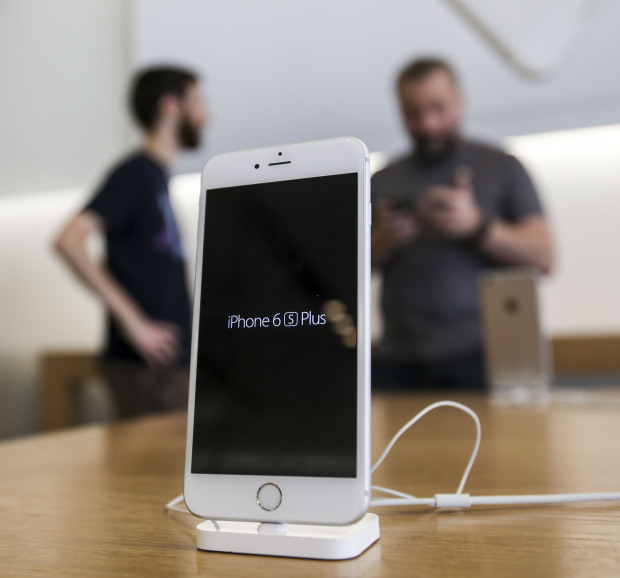
Is Apple setting itself up for failure in the FBI’s Syed Farook Probe?

ipThere’s no question that Apple’s refusal to help the FBI gain access to data in one of the iPhones used during the San Bernardino massacre has been getting scads of coverage in the news and business press.

Apple’s concerns, eloquently stated by CEO Tim Cook, are understandable. From the company’s point of view, it is at risk of giving up a significant selling feature of the iPhone to enable a “back door” access to encrypted data..  Apple’s contention is that many people have purchased the latest models of iPhones for precisely the purpose of protecting their data from prying eyes.

On the other hand, the U.S. government’s duty is to protect the American public from terrorist activities.

Passions are strong — and they’re lining up along some predictable social and political fault lines. After having read more than a dozen news articles in the various news and business media over the past week or so, I decided to check in with my brother, Nelson Nones, for an outsider’s perspective.

As someone who has lived and worked outside the United States for decades, Nelson’s perspectives are invariably interesting because they’re formed from the vantage point of “distance.”

Furthermore, Nelson has held very strongly negative views about the efforts of the NSA and other government entities to monitor computer and cellphone records. I’ve given voice to his perspectives on this topic on the Nones Notes blog several times, such as here and here.

So when I asked Nelson to share his perspectives on the Apple/FBI, I was prepared for him to weigh in on the side of Apple.

Well … not so fast. Shown below what he wrote to me:

______________________

This may come as a surprise, but I’m siding with the government on this one. Why?  Three reasons:

Point #1: The device in question is (and was) owned by San Bernardino County, a government entity.

The Fourth Amendment of the U.S. Constitution provides, “The right of the people to be secure in their persons, houses, papers, and effects, against unreasonable searches and seizures, shall not be violated …”

The investigation that the FBI wants to conduct could either be thought of as a seizure of property (the iPhone), or as a search (accessing the iPhone’s contents). Either way, Fourth Amendment protections do not apply in this case.

Within the context of the Fourth Amendment, seizure of property means interfering with an individual’s possessory interests in the property. In this case, the property isn’t (and never was) owned by an individual; it is public property.  Because Farook, an individual, never had a possessory interest in the property, no “unreasonable seizure” can possibly occur.

Also, within the meaning of the Fourth Amendment, an “unreasonable search” occurs when the government violates an individual’s reasonable expectation of privacy. In this case the iPhone was issued to Farook by his employer.  It is well known and understood through legal precedent that employees have no reasonable expectation of privacy when using employer-furnished equipment.  For example, employers can and do routinely monitor the contents of the email accounts they establish for their employees.

Point #2: The person who is the subject of the investigation (Syed Farook) is deceased.

According to Paul J. Stablein, a U.S. criminal defense attorney, “Unlike the concept of privilege (like communications between doctor and patient or lawyer and client), the privacy expectations afforded persons under the Fourth Amendment do not extend past the death of the person who possessed the privacy right.”

So, even if the iPhone belonged to Farook, no reasonable expectation of privacy exists today because Farook is no longer alive.

Point #3: An abundance of probable cause exists to issue a warrant.

In addition to protecting people against unreasonable searches and seizures, the Fourth Amendment also states, “… no warrants shall issue, but upon probable cause, supported by oath or affirmation, and particularly describing the place to be searched, and the persons or things to be seized.”

I strongly believe the U.S. National Security Agency’s mass surveillance was unconstitutional and therefore illegal, due to the impossibility of establishing probable cause for indiscriminately searching the records of any U.S. citizen who might have placed or received a telephone call, sent or received an email message or logged on to their Facebook account.

That’s because these acts do not, in and of themselves, provide any reasonable basis for believing that evidence of a crime exists.

I also strongly believe that U.S. citizens have the right to encrypt their communications. No law exists preventing them from doing so for legal purposes. Conducting indiscriminate searches through warrantless “back door” decryption would be just as unconstitutional and illegal as mass surveillance.

In this case, however, multiple witnesses watched Farook and his wife, Tashfeen Malik, open fire on a holiday party, killing 14 people, and then flee after leaving behind three pipe bombs apparently meant to detonate remotely when first responders arrived on the scene.

Additional witnesses include the 23 police offers involved in the shootout where Farook and Malik eventually were killed.

These witnesses have surely given sworn statements attesting to the perpetrators’ crimes.

It is eminently reasonable to believe that evidence of these crimes exists in the iPhone issued to Farook. So, in this case there can be no doubt that all the requirements for issuing a warrant have been met.

For these three reasons, unlike mass surveillance or the possibility of warrantless “back door” decryption, the law of the land sits squarely and undeniably on the FBI’s side.

Apple’s objections.

Apple’s objections, seconded by Edward Snowden, rest on the notion that it’s “too dangerous” to assist the FBI in this case, because the technology Apple would be forced to develop cannot be kept secret.

“Once [this] information is known, or a way to bypass the code is revealed, [iPhone] encryption can be defeated by anyone with that knowledge,” says Tim Cook, Apple’s CEO. Presumably this could include overreaching government agencies, like the National Security Agency, or criminals and repressive foreign regimes.

It is important to note that Apple has not been ordered to invent a “back door” that decrypts the iPhone’s contents. Instead, the FBI wants to unlock the phone quickly by brute force; that is, by automating the entry of different passcode guesses until they discover the passcode that works.

To do this successfully, it’s necessary to bypass two specific iPhone security features. The first renders brute force automation impractical by progressively increasing the minimum time allowed between entries.  The second automatically destroys all of the iPhone’s contents after the maximum allowable number of consecutive incorrect guesses is reached.

Because the iPhone’s operating system must be digitally signed by Apple, only Apple can install the modifications needed to defeat these features.

It’s also important to note that Magistrate Judge Sheri Pym’s order says Apple’s modifications for Farook’s iPhone should have a “unique identifier” so the technology can’t be used to unlock other iPhones.

This past week, Apple has filed a motion to overturn Magistrate Judge Pym’s order. In its motion, the company offers a number of interesting arguments, three of which stand out:

Contention #1: The “unreasonable burden” argument.

Apple argues that complying with Magistrate Judge Pym’s order is unreasonably burdensome because the company would have to allocate between six and ten of its employees, nearly full-time over a 2 to 4 week period, together with additional quality assurance, testing and documentation effort.  Apple also argues that being forced to comply in this case sets a precedent for similar orders in the future which would become an “enormously intrusive burden.”

Contention #2: Contesting the phone search requirement.

Apple isn’t contesting whether or not the FBI can lawfully seize and search the iPhone.  Instead it is contesting Magistrate Judge Pym’s order compelling Apple to assist the FBI in performing the search.  As such, Apple is an “innocent third party.”  According to Apple, the FBI is relying on a case, United States v. New York Telephone, that went all the way to the Supreme Court in 1977.  Ultimately, New York Telephone was ordered to assist the government by installing a “pen register,” which is a simple device for monitoring the phone numbers placed from a specific phone line.

The government argued that it needed the phone company’s assistance to execute a lawful warrant without tipping off the suspects.  The Supreme Court found that complying with this order was not overly burdensome because the phone company routinely used pen registers in its own internal operations, and because it is a highly regulated public utility with a duty to serve the public.  In essence, Apple is arguing that United States v. New York Telephone does not apply, because (unlike the phone company’s prior use of pen registers) it is being compelled to do something it has never undertaken before, and also because it is not a public utility with a duty to serve.

Contention #3: The requirement to write new software.

Lastly, Apple argues that it will have to write new software in order to comply with Magistrate Judge Pym’s order. However, according to Apple, “Under well-settled law, computer code is treated as speech within the meaning of the First Amendment,” so complying with the order amounts to “compelled speech” that the Constitution prohibits.

What do I think of Apple’s arguments?

Regarding the first of the them, based on its own estimates of the effort involved, I’m guessing that Apple wouldn’t incur more than half a million dollars of direct expense to comply with this order. How burdensome is that to a company that just reported annual revenues of nearly $234 billion, and over $53 billion of profit?

Answer:  To Apple, half a million dollars over a four-week period is equivalent to 0.01% of last year’s profitability over an equivalent time span. If the government compensates Apple for its trouble, I don’t see how Apple can win this argument.

Regarding the other two arguments above, as Orin Kerr states in his Washington Post blog, “I don’t know which side would win … the scope of authority under the [All Writs Act] is very unclear as applied to the Apple case.  This case is like a crazy-hard law school exam hypothetical in which a professor gives students an unanswerable problem just to see how they do.”

My take:  There’s no way a magistrate judge can decide this.  If Apple loses, and appeals, this case will eventually end up at the Supreme Court.

What if the back door is forced open?

The concerns of privacy advocates are understandable. Even though I’m convinced the FBI’s legal position is solid, I also believe there is a very real risk that Apple’s modifications, once made, could leak into the wrong hands. But what happens if they do?

First, unlike warrantless “back door” decryption, this technique would work only for iPhones — and it also requires physical possession of a specifically targeted iPhone.

In other words, government agencies and criminals would have to lawfully seize or unlawfully steal an iPhone before they could use such techniques to break in. This is a far cry from past mass surveillance practices conducted in secret.

Moreover, if an iPhone is ever seized or stolen, it is possible to destroy its contents remotely, as soon as its owner realizes it’s gone, before anyone has the time to break in.

Second, Apple might actually find a market for the technology it is being compelled to create. Employers who issue iPhones to their employees certainly have the right to monitor employees’ use of the equipment.  Indeed, they might already have a “duty of care” to prevent their employees from using employer-issued iPhones for illegal or unethical purposes, which they cannot fulfill because of the iPhone’s security features.

Failure to exercise a duty of care creates operational as well as reputational risks, which employers could mitigate by issuing a new variety of “enterprise class” iPhones that they can readily unlock using these techniques.

____________________

So that’s one person’s considered opinion … but we’d be foolish to expect universal agreement on the Apple/FBI tussle. If you have particular views pro or con Apple’s position, please join the discussion and share them with other readers here.


Sea change: Today, Americans are receiving their political news in vastly different ways.

pnWhere are Americans getting their political news in this very intensive Presidential election year?

There’s no question that the season is turning out to be a news bonanza, beginning with the string of debates featuring interesting and entertaining candidates and continuing on with near-nonstop political coverage on the cable networks.

And then there’s the endless chatter over on talk radio …

Recently, the Pew Research Center asked Americans where they’re receiving their political news. According to its just-issued report, Pew found that nine in ten American adults age 18+ typically consume some sort of news about the presidential election in any given week’s time.

When asked to cite which sources of information of political news are “most helpful,” here’s how the respondents answered:

  • Cable TV news: ~24% cited as the “most helpful” source of information
  • Local TV news: ~14%
  • Social media: ~14%
  • Website or apps: ~13%
  • Radio: ~11%
  • Network nightly news broadcasts: ~10%
  • Late-night comedy TV: ~3%
  • Local newspapers: ~3%
  • National newspapers: ~2%

Looking at this pecking order, several things stand out:

  • Even a few years ago, I doubt social media would have outstripped network TV or radio as a more helpful source of political news.
  • And look at where cable TV news is positioned — not only at the top of the list, but substantially above any other source of political information.
  • As for newspapers … even accounting for the fact that some websites or apps cited as helpful political news sources may actually be digital outlets for newspapers, newspapers’ position at the bottom of the list underscores their rapid loss of importance (and influence) in the political sphere. Aside from inflating a candidate’s own ego, who really cares about newspaper endorsements anymore?

Not surprisingly, the Pew research finds noticeable differences in the preference of political news sources depending on the age of the respondents. For instance, among respondents age 65+, here are the top four “most helpful” sources:

  • Cable TV news: ~43%
  • Network nightly news broadcasts: ~17%
  • Local TV news: ~10%
  • Local newspapers: ~6%

Contrast this with the very youngest respondents (age 18 to 29), where the two most helpful sources of information are social media (~35%) and websites or apps (~18%).

I’m sure readers have their own personal views as to which of the sources of political news are preferable in terms of their veracity. For some, social media and late-night TV comedy programs illustrate a general decline in the “quality” of the news, whereas others might look at radio programs or cable TV news in precisely the same negative terms.

More details on the Pew Research study can be found here.