The fine art of negotiation: It never goes out of style.

Harvey Mackay
Harvey Mackay

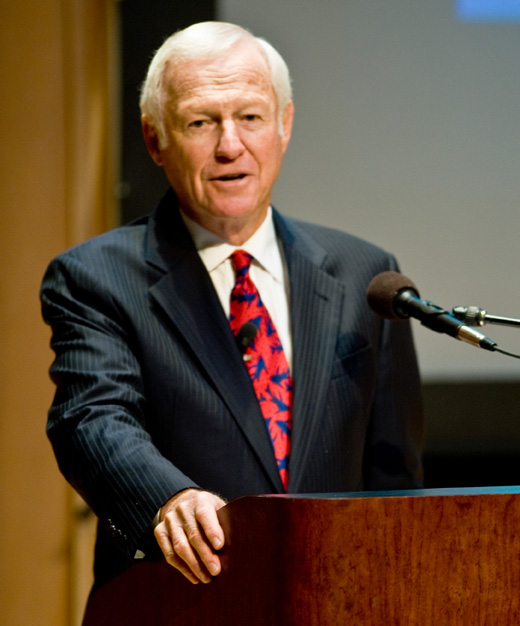
Many people in business know about Harvey Mackay.  The chairman of Twin Cities-based MackayMitchell Envelope Company became famous as the author of the book Swim with the Sharks Without Being Eaten Alive, and six subsequent business best-sellers.

In the years following the release of his first book, Mackay became something of a business guru in the same mold as General Electric retired chairman and CEO Jack Welch.

The advice of these two men, borne out of their experiences in the corporate world, was a refreshing change of pace from the pronouncements of other authors who speak from their perches in academia.

In recent times, the thoughts and ideas of “sages” like Mackay and Welch might seem to some a little old-school – even quaint.  But I don’t think that’s the case.

Take Mackay’s thoughts on the art of negotiation.  The other day, I came across some points on that topic that Mackay first put forward about 20 years ago.  Reading through his points now, the advice seems as valid today as it was back then.

As for particular “do’s” and “don’ts” of the art of negotiating, here are a few points that Mr. Mackay makes:

  • Never accept any proposal immediately – no matter how good it sounds. 
  • Don’t negotiate with yourself – don’t raise a bid or lower an offer without first getting a response from your original position.       Otherwise, you’ll give the other side information and ammunition they might never have found out themselves. 
  • Don’t negotiate a deal with a person who has to get someone else’s approval. Effectively, it means that they can take any deal you’re willing to make and then renegotiate it. Why give them two chances to your one? 
  • Nothing is ever truly non-negotiable, no matter what someone might have you think at the outset. 
  • If you can’t say ‘yes’ … say ‘no’ and step away. (‘No’ can be just as good an end-result as ‘yes’.)

negotiatingAs for the dynamics of effective negotiating, Mackay’s pointers are equally valid:

  • Instinct is no match for preparation: Rehearse your positioning and pre-anticipate the other side’s response. (Even try role-playing.) 
  • Be respectful and courteous when negotiating. If you don’t think you can do that, have someone else negotiate your side of the deal instead.

As a final note, Mackay makes the point that “a deal can always be made when both parties see their own benefit in making it.”

It’s a positive parting thought – and it’s even better because it’s true.

The needle finally moves in changing TV viewership habits.

graphDespite the many changes we’ve seen in the way people can consume media today, one thing that has remained pretty consistent has been the dynamics of TV viewership.

Things have taken so long to evolve, to some observers it’s seemed as if TV was effectively immune to all of the changes happening around it.

But now we’re finally seeing some pretty fundamental shifts happening in the way content on TV sets is consumed.  Two new surveys chart what’s changing.

A recently released report from Accenture, which surveyed nearly 25,000 online consumers during the 4th quarter of 2014, notes that viewership of long-form video content (television and movies on a TV screen) is now in decline across all demographic categories – not merely among younger viewers.

The decline amounts to ~11% over the previous year among American viewers.  It’s even bigger (a ~13% decline) when looking at worldwide figures.

Not surprisingly, the drop is less pronounced among viewers aged 55+ (for them it’s closer to a 5% reduction) than with young viewers age 14-17 (a decline in excess of 30%).  But the fact that declines are now occurring across the board is what’s noteworthy.

At the same time, the Accenture survey found that consumers who watch long-form video on connected devices rather than on TVs aren’t all that enamored with the experience:

  • About half find that watching online video isn’t a great experience because of Internet connectivity issues.
  • Approximately 40% complain of too much advertising. 
  • Around one-third encounter problems with video buffering … and an equal portion report problems with audio distortion or dropouts.

More highlights from the Accenture research are available for download here.

time-shifted TV

Another study – this one from Hub Entertainment Research – has found that viewers who have broadband and watch at least five hours of TV per week are actually watching more time-shifted TV than they are watching live broadcasts.

On average, participants in this study reported that ~47% of the TV shows they watch are live and ~53% are time-shifted.

Among younger viewers (age 16-34), time-shifted viewing is even more prevalent (around 60%).

Most time-shifted viewing is still happening through a set top box:  DVRs (~34%) and video-on-demand from a pay TV provider (~19%).

For consumers, being able to watch TV on their own schedule isn’t just more convenient; it has also made back catalogue material more accessible.

Survey respondents noted the following reasons for watching shows at a different time:

  • Can watch when it’s more convenient to do so: ~60% of respondents
  • Can see missed episodes:  ~37%
  • Can skip ads: ~37%
  • Can pause or rewind the program:  ~34%
  • It takes less time to watch the show: ~33%
  • Not available to watch the show during live airing: ~29%
  • Can watch show episodes back-to-back: ~19%

Notice that ad avoidance isn’t at the top of the list.  Nonetheless, for the industry this is a mixed bag.  Time-shifting has clearly put pressure on the business model and how the TV business traditionally makes money – namely, shows watched live, with ads.

Additional details on the Hub Entertainment Research report can be accessed here.

Companies behaving (not quite so) badly: Financial services firms continue their slow reputation recovery.

Financial services industryBack in 2009, no industry in the United States took such reputation beating as the financial services segment.  And to find out how much, we needn’t look any further than Harris survey research.

The Harris Poll Reputation Quotient study of American consumers is conducted annually.  The most recent one, which was carried out during the 4th Quarter of 2014, encompassed more than 27,000 people who responded to online polling by Harris.

In the survey, companies are rated on their reputation across 20 different attributes that fall within the following six broad categories:

  • Products and services
  • Financial performance
  • Emotional appeal
  • Social responsibility
  • Workplace environment
  • Vision and leadership

Taken together, the ratings of each company result in calculating an overall reputation score, which the Harris researchers also aggregate to broader industry categories.

Most everyone will recall that in 2009, the U.S. was deep in a recession that had been brought about, at least in part, by problems in the real estate and financial services industry segments.

This was reflected in the sorry performance of financial services firms included in the Harris polling that year.

Back then, only 11% of the survey respondents felt that the financial services industry had a positive reputation.

So it’s safe to conclude that there was no place to go but “up” after that.  And where are we now?  The latest survey does show that the industry has rebounded.

In fact, now more than three times the percentage of people feel that the financial services industry has a positive reputation (35% today vs. 15% then).

But that’s still significantly below other industry segments in the Harris analysis, as we can see plainly here:

  • Technology: ~77% of respondents give positive reputation ratings
  • Consumer products: ~60% give positive reputation ratings
  • Manufacturing: ~54%
  • Telecom: ~53%
  • Automotive: ~46%
  • Energy: ~45%
  • Financial services: ~35%

So … it continues to be a slow slog back to respectability for firms in the financial services field.

Incidentally, within the financial services category, insurance companies tend to score better than commercial banks and investment companies when comparing the results of individual companies in the field.

USAA, Progressive, State Farm and Allstate all score above 70%, whereas Wells Fargo, JP Morgan Chase, Citigroup, BofA and Goldman Sachs all score in the 60% percentile range or below.

Wendy Salomon, vice president of reputation management and public affairs for the Harris Poll, contends that financial services firms could be doing more to improve their reputations more quickly.  Here’s what she’s noted:

“Most financial companies have done a dismal job in recent years of connecting with customers and with the general public on what matters to them.  Yet there’s no reason Americans can’t feel as positively toward financial services firms as they do towards companies they hold in high esteem, such as Amazon or Samsung, which have excellent reputations because they consistently deliver what the general public cares about …  

[Individual] financial firms have a clear choice now:  Prioritize building their reputations and telling their stories, or let others continue to fill that void and remain lumped together with the rest of the industry.”

Here’s another bit of positive news for companies in the financial services field:  They’re no longer stuck in the basement when it comes to reputation.

That honor now goes to two sectors that are Exhibits A and B in the “corporate rogues’ gallery”:  tobacco companies and government.

Both of these choice sectors come in with positive reputation scores hovering around 10%.

I suspect that those two sectors are probably doomed to bounce along the bottom of the scale pretty much forever.

With tobacco, it’s because the product line is no noxious.

And with government?  Well … with the bureaucratic dynamics (stasis?) involved, does anyone actually believe that government can ever instill confidence and faith on the part of consumers?  Even governments’ own employees know better.

Economic Reality Comes to College Campuses

Finally, colleges get schooled in Economics 101.

Sweet Briar College (1901-2015?)

For a long time, “market forces” didn’t really apply to institutions of higher learning — at least not in the classic sense.

In a social environment where nearly everyone buys into the notion that more education is good, government and educators fostered policies where no one need be prevented from getting a college education because of lack of funding.

Accordingly, in the past several decades, loans and grants became easier to obtain than ever.

Unfortunately, one of the consequences of easy money in education was that tuitions rose at a faster rate than the economy as a whole.  After all, the third-party money spigot seemed never-ending.

For a good while tuition spikes weren’t a particular concern, because it still seemed as though a college-level education was a great way to earn substantially more money in one’s career — even if racking up student loans at the outset.

But in recent years, we no longer see an automatic positive correlation between a higher education degree and the ability to earn increased income.

In the sluggish economy of the 2000s, a college diploma in the right field may well be a good investment.  But with many college majors, oftentimes it isn’t.

The situation is even dicier for the many students who attend community colleges or four-year institutions but who never graduate.  The chasm between their educational loans and their earning power is even more deep.

Corinthian Colleges
Corinthian Colleges (1995-2015)

And for those students unlucky enough to attend for-profit institutions like those run by Corinthian Colleges, Inc., which is in the process of closing the last two dozen of its schools across the country, the situation is even worse.

Saddled with student debt, stuck with degrees or half-completed courses of study of dubious value, and with school credits unlikely to be transferred to other schools in order to finish their education, the situation for those  unlucky students can only be described as dire.

How did we get to this place?

One big reason is that over the years, many colleges got into the habit of simply expecting sufficient numbers of students to enroll in their institutions regardless of the sticker price to attend.  If anything, high tuition “list prices” were a badge of honor.

At the same time, substantial grants (essentially discounts off of the published tuition rates), together with irresistible financial aid packages, continued to attract students to private as well as public institutions of all stripes.

Running in parallel with this were lavish, ongoing projects involving the construction of fancy new dorms, state-of-the-art athletic facilities, and all sorts of other creature-comfort-like amenities to lure students to campus.

And let’s not forget another not-so-welcome outcome of this fantasyland of higher education economics – call it “degree inflation.”  With so many students obtaining undergraduate degrees, their “worth” became devalued.

In this high-stakes derby, a BS degree in business is no longer enough – it has to be an MBA.  A BS degree in engineering isn’t nearly as prestigious as a Master’s degree or a PhD.  There’s really no end to it.

The convergence of these sobering economic and social trend lines makes it pretty clear that the “old” business model is no longer working for colleges and universities.  With the economic realities of today, college administrators are discovering that, sooner or later, market forces work.  And the resulting picture isn’t very pretty.

So now we’re witnessing the lowest percentage increases in tuition sticker prices we’ve seen in years, across private institutions and even some public ones as well.  Bloated administrative staffs  — their numbers dwarfing the number of teachers at some colleges — have finally plateaued or even begun to decline.

Being the parent of two children who graduated from college within the past five years, naturally I’ve been quite interested in these trends – and I’ve viewed them pretty close-up.

What I’ve determined is that for years, administrators at many colleges and universities didn’t see themselves as working within a market system — having to compete where market forces were at work.  The often-unappealing business of being disciplined by market forces didn’t pertain to them — or so they thought.

That’s certainly not the case anymore.

And there’s another huge factor looming on the horizon:  Distance learning.  I’ll be here big-time before we know it … and it promises to upend the college education business model as never before.

What are your thoughts on this topic?  Please share them with other readers here.

Promo emails: What’s the right length … What’s too long?

email lengthI’m sure all of us receive some promotional e-mails with content that just seems to go on forever.

There’s no way that’s accomplishing the company’s marketing and sales goals.

But just what exactly is the right length of content in a promotional e-mail communiqué?

Assuming that “the wisdom of crowds” can get us pretty close to whatever that sweet spot is, looking at findings helpfully collected and aggregated by research firm and direct mail archive Who’s Mailing What! provide some pretty good clues.

WMW! tracks nearly 225 business categories, looking at the word count of e-mail messages deployed by companies active within each of them.

The average e-mail length for nearly all of the categories that WMW! tracks is substantially below 300 words.

[To compare, that’s shorter than the length of this blog post, which is around 300 words.]

And there are very few exceptions – fewer than ten, according to WMW.  In those seven categories, customers and prospects are used to encountering more verbiage in order to remain interested in the message.

The few business categories with the highest average content length (350 or more words on average) turn out to be the following:

  • Business/financial magazines
  • Newsletters
  • Political fundraising
  • Religious magazines
  • Seminars and conferences
  • Social action fundraising
  • Special interest magazines

Incidentally, the two categories with the absolutely highest number of words are social action fundraising (nearly 650 words) and seminars/conferences (around 620 words).

… Which for those two categories makes complete sense.  Donor prospects are going to need to read a good deal about a cause before opening their pocketbooks.  And people are going to need details about a seminar’s content and quality before agreeing to pay the typically high fees charged to attend.

But for everyone else, short e-mail promos are clearly the name of the game.  If word counts go much above 200, it’s probably getting a tad too long.

Is Telephone Landline Usage Doing a Disappearing Act?

phoneIt may be a surprise to some people, but we’re getting pretty close to half of all households in America that are now without any sort of telephone landline.

[Actually, it’s not quite there yet – the percentage is ~44%.  But the trend is clear, and it’s accelerating.]

The latest statistics come to us courtesy of GfK Mediamark Research.  And GfK’s consumer survey findings align with other published survey data from U.S. government sources.

Just five years ago, only about one in four American adults lived in cellphone-only households.  But since then, the cellphone-only population has jumped by ~70%.

And when we look at a breakdown by age demographics, it becomes even more obvious that we’re in the midst of a transformation.

Here are the stark figures:

  • Pre-Boomers (born before 1946): ~13% live in cellphone-only households
  • Baby Boomers (born from 1946 to 1965): ~32% live in cellphone-only HHs
  • Generation X (born from 1965 to 1976): ~45% live in cellphone-only HHs
  • Millennials (born from 1977 to 1994): ~64% live in cellphone-only HHs

Mirroring the age statistics are ownership rates for smartphones:  very high among millennials down to very low among pre-Boomers:

  • Millennials: ~88% own a smartphone
  • Generation X: ~79 own a smartphone
  • Baby Boomers: ~56 own a smartphone
  • Pre-Boomers: ~20% own a smartphone

[Additional topline findings from the GfK research can be viewed here.]

Based on the trends we’re seeing, how soon will it be that telephone landlines become a thing of the past?  I’d be interested in hearing your perspectives.

Going up against Goliath: The latest privacy tussle with Facebook.

Is that Maria Callas?  Check with Facebook -- they'll know.
Is that Maria Callas? Check with Facebook — they’ll know.

It had to happen eventually:  Facebook’s “faceprints” database activities are now the target of a lawsuit.

The suit, which has been filed in the state of Illinois, alleges that Facebook’s use of its automatic photo-tagging capability to identify people in images is a violation of Illinois’ state law regarding biometric data.

Facebook has been compiling faceprint data since 2010, and while people may choose to opt out of having their images identified in such a way, not surprisingly, that option is buried deep within the Facebook “settings” area where most people won’t notice it.

Moreover, the “default” setting is for Facebook to apply the automatic photo-tagging feature to all users.

Carlo Licata, the lead individual in the class-action complaint filed in Illinois, contends that Facebook’s practices are in direct conflict with the Illinois Biometric Information Privacy Act.  That legislation, enacted in 2008, requires companies to obtain written authorization from persons before collecting any sort of “face geometry” or related biometric data.

The Illinois law goes further by requiring the companies gathering biometric data to notify people about the practice, as well as to publish a schedule for destroying the information.

Here’s how the lawsuit states its contention:

“Facebook doesn’t disclose its wholesale biometrics data collection practices in its privacy policies, nor does it even ask users to acknowledge them.  With millions of users in the dark about the true nature of this technology, Facebook [has] secretly amassed the world’s largest privately held database of consumer biometrics data.”

The response from Facebook has been swift – and predictable.  It contends the lawsuit is without merit.

As much as I’m all for of individual privacy, I suspect that Facebook may be correct in this particular case.

<em>Brave New World:</em>  Biometrics
Brave New World: Biometrics

For one thing, the Illinois law doesn’t reference social networks at all.  Instead, it focuses on the use of biometrics in business and security screening activities — citing examples like finger-scan technologies.

As Eric Goldman, a professor of law at Santa Clara University notes, the Illinois law is “a niche statute, enacted to solve a particular problem.  Seven years later, it’s being applied to a very different set of circumstances.”

And there’s this, too:  The Illinois law deals with people who don’t know they’re giving data to a company.  In the case of Facebook, it’s commonly understood user data is submitted with consent.

That may not be a particularly appealing notion … but it’s the price of gaining access to the fabulous networking functionality that Facebook offers its users – all at no expense to them.

And of course, millions of people have made that bargain.

That being said, there’s one nagging doubt that I’m sure more than a few people have about the situation:  The folks at Facebook now aren’t the same people who will be there in the future.  The use of faceprint information collected on people may seem quite benign today, but what about tomorrow?

The fact is, ultimately we don’t have control over what becomes the “tower of power” or who resides there.  And that’s a sobering thought, indeed.

What’s your own perspective?  Please share your thoughts with other readers here.

Tripping the E-Mail Spam Alarm

Today, it’s more than just the “usual suspect” keywords that are landing e-mails in the junk folder.

se-mMost of us are aware of the kinds of words that trip spam alarms and cause e-mails to be sent straight to the junk folder – or not to be delivered at all.

How about these for starters:

  • Cash
  • Congratulations
  • Discount
  • Free
  • Income
  • Make Money
  • Urgent
  • Viagra
  • $$ / $$$

But research done by MailJet, an international e-mail service provider, looked at more than 14 billion e-mail communiqués and found that a bunch of other keywords are setting off alarm bells nearly as often as terms like “Urgent” or “Viagra.”

… Especially when considering the business categories that are so active in e-mail communications — retail goods, pharmaceuticals, providers of personal services, and the like.

Some of the other terms MailJet has found to be nearly as “toxic” are these:

  • bdcstDear Friend
  • FedEx
  • Increase Sales
  • Increase Traffic
  • Internet Marketing
  • Invoice
  • Lead Generation
  • Lose Weight
  • Marketing Solutions
  • Online Degree
  • Online Pharmacy
  • Order
  • PayPal
  • Search Engine Optimization
  • Sign Up
  • Trial Offer
  • Visa/Mastercard
  • Winning

… And there are more, of course – including various permutations of the words and phrases above.

The inevitable conclusion:  It’s becoming more difficult all the time to use the most common phrases in “subject” lines and “from” lines that’ll land your e-mail in someone’s inbox successfully.

And getting into the inbox just the first step, of course.  The next is motivating the recipient to actually open your e-mail and engage with it, which are additional hurdles in themselves.

What words or phrases have you found to be surprisingly problematic in getting your e-mails delivered to your customers’ inboxes?  How have you dealt with it?  Please share your experiences with other readers here.

Google and the multi-billion dollar pay-per-click money tree.

moneyIt’s no secret that Google has been trying to diversify its revenue stream away from clickthrough advertising, which historically has accounted for the overwhelming majority of its income.

How else to explain Google’s shopping spree over the past decade, scooping up a veritable smorgasbord of industry players like these:

  • AdMob (mobile)
  • Adometry (attribution)
  • Channel Intelligence (product feeds)
  • DoubleClick (display)
  • Invite Media (programmatic creative and media buying)
  • Teracent (programmatic creative and media buying)
  • YouTube (video)
  • Wildfire (social)

So the next question is, “How much have these acquisitions and investments done to diversify Google’s sources of revenue?”

The answer:  Hardly anything.

Consider this statistic:  In 2011, nearly all of Google’s revenue came from online pay-per-click advertising, as reported by SEO firm WordStream.

Now let’s look at 2014 figures:  WordStream reports that the percentage of Google revenues from pay-per-click advertising is actually higher than in 2011, at 97%.

So much for the “diversifying effects of diversity.”

Within PPC advertising, a number of keyword terms are continuing to haul in the big bucks for Google.  A few years back, the priciest keyword term of all was mesothelioma, at more than $100 a click.

Mesothelioma continues to attract a lot of ad dollars, but it’s no longer commanding $100 a pop as it once did.  In fact, it’s no longer on the Top 10 most expensive keywords list.

That list looks like this now (in descending order of bid pricing, starting at over $50 per click and dropping to “only” around $45 for the #10 keyword):

  • Insurance
  • Loans
  • Mortgage
  • Attorney
  • Credit
  • Lawyer
  • Donate
  • Degree
  • Hosting
  • Claim

In developing the ranking, WordStream determined which keywords reside in the stratosphere by compiling data from its own large keyword dataset and the Google Keyword Tool (over a 90-day period) to determine the 10,000 most expensive keywords.

These were then organized into categories like “credit” and “insurance” by weighting the number of keywords in each category, estimating the monthly search volume as well as the average cost-per-click for each keyword.

Notice the preponderance of financial and legal terms – both of them key to sectors that attract and manage a ton of money.

The word degree is right up there, too, underscoring how important the educational complex has become to the ad business.

It must be pretty unappealing to be active in these industries and have to pony up such big dollars to participate in the pay-per-click advertising space.  But how else do we think Google racks up annual advertising revenues that are north of $32 billion?

How does the market sort out which keywords are worthy of commanding $40 or $50 per click?  Essentially, it boils down to this:  Invariably, the most expensive niches paying for the most costly keywords are ones with very high lifetime customer value – where the customer pay-off is high.

Think about it:  The amount of money an insurance company gets from an individual signing up for coverage makes the high cost-per-click rates – even at $50 a pop — worth it.

Business observers point to long-range trends that may make search engine marketing increasingly irrelevant as the growth of multichannel, multi-device marketing picks up steam.

But don’t hold your breath; Google will likely be earning billions off of pay-per-click advertising for years to come.

Bird dropping: Instagram overtakes Twitter in the social media derby.

Instagram logo

It seems like the jockeying for position among social networks is never-ending.

The latest case in point:  Instagram, which is presently the fastest growing social media network in the United States.

According to the latest figures released by digital market research company eMarketer, as of February 2015 Instagram now has over 64 million users in America.

That’s a ~60% increase in just one year, and it puts Instagram in third place among all social networks, surpassing Twitter for the first time.

Not only that, eMarketer forecasts that Instagram will add more than 10 million additional users in the United States this year:

  • Facebook: ~157 million U.S. users forecast in 2015
  • LinkedIn: ~115 million
  • Instagram: ~78 million
  • Twitter: ~53 million
  • Pinterest: ~47 million
  • Tumblr: ~20 million

       (Source:  eMarketer and LinkedIn, February 2015.)

eMarketer also forecasts that Twitter will continue to fall further behind Instagram in the upcoming years, since Twitter’s annual growth is expected to be in only the single digits throughout the rest of the decade.

Based on the overall American population, Instagram has now a market penetration of nearly 25%.  Of course, that’s well behind Facebook, which has nearly 50% penetration.

Untitled-1But Instagram’s user base is skewed heavily towards teens and millennials – people between the ages of 12 and 34.  This makes Instagram a bit more of a threat to LinkedIn and even Facebook than you might think at first.

Facebook’s user base has been skewing older in recent years.  If those trends continue, we could see a measurable drop-off in Facebook’s share of users, with a corresponding rise in Instagram’s penetration.

Of course, we mustn’t forget that Facebook was the social media network of choice for younger people at one time, too.  After all, it got its start on college campuses.  But now that Facebook has solid adoption among older Americans (age 40 and over), no longer does it seem like a “cool” network for some millennials and teens.

So it would be foolish to assume that Instagram is a slam-dunk to continue to be the “network of choice” for younger people in the years hence.  One never knows what new network might suddenly appear on the horizon and capture their hearts.

Still, Instagram’s rise has been noteworthy.  And it certainly puts the lie to the notion that there wasn’t room for a new network to enter the increasingly crowded social media space and make a big splash.

Personally as an “aging boomer,” I don’t have an Instagram account, and neither do most of my acquaintances.  What about your own personal experience or professional experiences with this network?