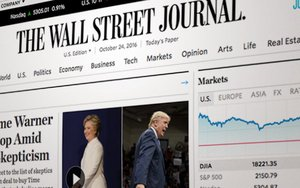
When people think “search,” they still think “Google.”

… And they might say it, too — thanks to the rise of voice search.

Over the years, many things have changed in the world of cyberspace. But one thing seems to be pretty much a constant:  When people are in “search” mode online, most of them are playing in Google’s ballpark.

This behavior has been underscored yet again in a new survey of ~800 consumers conducted by Fivesight Research.

Take a look at these two statistics that show how strong Google’s search popularity remains today:

  • Desktop users: ~79% of searches are on Google
  • Smartphone users: ~86% use Google

The smartphone figure above is even more telling in that the percentage is that high whether users are on an iPhone or an Android system.

But here’s another very interesting finding from the Fivesight survey: Google’s biggest competition isn’t other search engines like Bing or Yahoo.  Instead, it’s Siri, which now accounts for ~6% of mobile search market share.

So what we’re seeing in search isn’t a shift to other providers, but rather a shift into new technologies. To illustrate, nearly three in four consumers are using voice technologies such as Siri, Google Now and Microsoft Cortana to supplement their traditional search activities.

Some marketing specialists contend that “voice search is the new search” – and it’s hard not to agree with them. Certainly, voice search has become easier in the past year or so as more mobile devices as well as personal home assistants like Amazon Alexa have been adopted by the marketplace.

It also helps that voice recognition technology continues to improve in quality, dramatically reducing the incidences of “machine mistakes” in understanding the meaning of voice search queries.

But whether it’s traditional or voice-activated, I suspect Google will continue to dominate the search segment for years to come.

That may or may not be a good thing for consumers. But it’s certainly a good thing for Google – seeing as how woefully ineffective the company has been in coming up with any other business endeavor even remotely as financially lucrative as its search business.

Putting the best face forward at Twitter.

tdWhen business results look disappointing, one can certainly sympathize with the efforts of company management to explain it away in the most innocuous of terms.

This may be what’s behind Twitter CEO Jack Dorsey’s description of his company’s 2016 performance as “transformative” – whatever that means.

Falling short of industry analysts’ forecasts yet again, Twitter experienced a revenue increase of only about 1% year-over-year during 2016.

Monthly active users didn’t look much better either, with the total number barely budging.

While I have no actual proof, one explanation of tepid active user growth may be that Twitter became the de facto “place for politics” in the 2016 U.S. Presidential election — which didn’t actually end in November and continues apace even today.

Simply put, for many people, politics isn’t their cup of tea — certainly not on a 24/7/365 diet, ad nauseum.

Quite telling, too, was the fact that advertising revenue showed an absolute decline during the 4th Quarter, dropping below $640 million for the period.

Even more disturbing for investors, the company’s explanation about the steps Twitter is taking to address its performance shortfalls smacks of vacuousness, to wit this statement from CEO Dorsey:

“While revenue growth continues to lag audience growth, we are applying the same focused approach that drove audience growth to our revenue product portfolio, focusing on our strengths and the real-time nature of our service.”

“This will take time, but we’re moving fast to show results,” Dorsey continued, rather unconvincingly.

One bright spot in the otherwise disappointing company results is that revenues from international operations – about 39% of total overall revenues – climbed ~12% during the year, as compared to a ~5% revenue drop domestically.

Overall however, industry watchers are predicting more in the way of bad rather than good news in 2017. Principal analyst Debra Aho Williamson at digital media market research firm eMarketer put it this way:

“Twitter is losing traction fast. It is starting to shed once-promising products such as Vine, and [to] sell off parts of its business such as its Fabric app development platform.  At the same time, some surveys indicate that Twitter is becoming less integral to advertisers’ spending plans.  That doesn’t bode well for future ad revenue growth.”

With a prognosis like that, can the next big drop in Twitter’s share price be far behind?

What do you think?

Is the Phenomenon of “Fake News” Overhyped?

fnIn the wake of recent election campaigns and referenda in places like the United States, the United Kingdom, France, Austria and the Philippines, it seems that everyone’s talking about “fake news” these days.

People all across the political and socio-economic spectrum are questioning whether the publishing and sharing of “faux” news items is having a deleterious impact on public opinion and actually changing the outcome of consequential events.

The exact definition of the term is difficult to discern, as some people are inclined to level the “fake news” charge against anyone with whom they disagree.

Beyond this, I’ve noticed that some people assign nefarious motives – political or otherwise – to the dissemination of all such news stories.  Often the motive is different, however, as over-hyped headlines – many of them having nothing to do with politics or public policy but instead focusing on celebrities or “freak” news events – serve as catnip-like clickbait for viewers who can’t resist their curiosity to find out more.

From the news consumer’s perspective, the vast majority of people think they can spot “fake” news stories when they encounter them. A recent Pew survey found that ~40% of respondents felt “very confident” knowing whether a news story is authentic, and another ~45% felt “somewhat confident” of that fact.

But how accurate are those perceptions really? A recent survey from BuzzFeed and Ipsos Public Affairs found that people who use Facebook as their primary source of news believed fake news headlines more than eight out of ten times.

That’s hardly reassuring.

And to underscore how many people are using Facebook versus more traditional news outlets as a “major” source for their news, this BuzzFeed chart showing the Top 15 information sources says it all:

  • CNN: ~27% of respondents use as a “major source” of news
  • Fox News: ~27%
  • Facebook: ~23%
  • New York Times: ~18%
  • Google News: ~17%
  • Yahoo News: ~16%
  • Washington Post: ~12%
  • Huffington Post: ~11%
  • Twitter: ~10%
  • BuzzFeed News: ~8%
  • Business Insider: ~7%
  • Snapchat: ~6%
  • Drudge Report: ~5%
  • Vice: ~5%
  • Vox: ~4%

Facebook’s algorithm change in 2016 to emphasize friends’ posts over publishers’ has turned that social platform into a pretty big hotbed of fake news activity, as people can’t resist sharing even the most outlandish stories to their network of friends.

Never mind Facebook’s recent steps to change the dynamics by sponsoring fact-checking initiatives and banning fraudulent websites from its ad network; by the accounts I’ve read, it hasn’t done all that much to curb the orgy of misinformation.

Automated ad buying isn’t helping at all either, as it’s enabling the fake news “ecosystem” big-time. As Digiday senior editor Lucia Moses explains it:

“One popular method … is tapping the competitive market for native ad widgets. Taboola, Revcontent, Adblade and Content.ad are prominently displayed on sites identified with fake news, while there are a few retargeted and programmatic ads sprinkled in. Publishers install these native ad widgets with a simple snippet of code — typically after an approval process — and when readers click on paid links in the widget, the host publisher makes money.  The ads are made to appear like related-content suggestions and often promote sensational headlines and direct-marketing offers.”

So attempting to solve the “fake news” problem is a lot more complicated than some people might realize – and it certainly isn’t going to improve because of any sort of “political” change of heart. Forrester market analyst Susan Bidel sums it up thus:

“While steps taken by … entities to curb fake news are admirable, as long as fake news generators can make money from their efforts, the problem won’t go away.”

So there we are. Bottom-line, fake news is going to be with us for the duration – whether people like it or not.

What about you? Do you think you can spot every fake news story?  Or do you think at least of few of them come in below radar?

The fundamental problem with newspapers’ online endeavors.

olnIt’s no secret that the newspaper industry has been struggling with finding a lucrative business model to augment or replace the traditional print medium supported by subscriptions and advertising.

The problem is, their efforts are thwarted by market realities at every intersection, setting up the potential for head-on crashes everywhere.

In October, the results of an analysis conducted by several University of Texas researchers were published that illustrate the big challenges involved.

The researchers pinpointed 2007 as the year in which most large newspapers’ online versions had been available for about a decade, meaning that they had become “mature” products. The evaluation looked at the total local online readership of the Top 50 American newspapers, and found that nearly all of them have been stagnant in terms of growth over the past decade.

Even worse, since 2011 more than half of the papers have actually lost online readership.

The issue isn’t that people aren’t going online to consume news; the precipitous drop in print newspaper subscriptions proves otherwise. The problem is that many consumers are going to news aggregator sites – places like Yahoo News, CNN.com and other non-newspaper websites – rather than to sites operated by the newspapers.

That leaves online newspapers attracting disappointing advertising revenues that can’t begin to make up for the loss of those dollars on the print side. To wit, the University of Texas study reported that total newspaper industry digital ad revenues increased only about 15% between 2010 and 2014, going from ~$3 billion to ~$3.5 billion.  That’s pretty paltry.

The problem goes beyond ad revenue concerns too. In a market survey conducted in 2012, two-thirds of newspaper subscribers stated that preferred the print version of their daily newspaper over the web version.

I find that finding totally believable. I am a print subscriber to The Wall Street Journal whereas I read other newspaper fare online.  My daily time spent with the print WSJ ranges from 30 minutes to an hour, and I peruse every section of the paper “linearly.”  It’s an immersive experience.

With online newspaper sites, I hunt for one or two topics, check out the headlines and maybe a story or two, and that’s it. It’s more a “hit and run” operation, and I’m out of there in five minutes or less.

The notion of carefully picking my way through all of the menu items on an online newspaper’s navbar? Forget it.

And with such a tentative relationship with online newspapers, do I want to pay for that online access? Nope.

Magnify that to the entire market, and the web traffic stats show the same thing, which is why online advertising revenues are so underwhelming.

Once again, the optimistic goals of newspaper marketers are running up against cold, hard reality. The fact is, people don’t “read” online in the traditional sense, and they’re quick to jump from place to place, in keeping with the “ADD” most all of us have developed in our online behaviors.

There just isn’t a good way that newspapers can take their product and migrate it to the web without losing readers, losing ad revenue – and indeed, losing the differentiation they’ve built for quality long-form journalism.  And so the conundrum continues …

What about your print vs. online newspaper reading habits?  Are your experiences different from mine?  Please leave a comment for the benefit of other readers.

Social media: The biggest casualty of the U.S. presidential election?

smrrOnly one presidential candidate was a winner on election night. But there was more than one loser.

Sure, minor-party candidates lost. But I’d posit that social media itself was a loser as well.

It isn’t an exaggeration to contend that the 18-month long presidential campaign has had a corrosive effect on the social media landscape.

You could even say that the social media landscape became downright “anti-social,” thanks to the 2016 campaign.

For those who might have posted politically-oriented social media posts, they’ve risked receiving strident arguments, flamethrower responses and alienated friends.

Along those lines, a recent Pew Research study found that significant percentages of people have blocked individuals or adjusted their privacy settings on social media to minimize their exposure to all the vitriol.

It’s a far cry from social media’s promise in the “good old days” – not so long ago actually — when these platforms enabled people to stay in touch with friends and make acquaintances across the country and the world that they would never have been able to forge in the days before social platforms.

The easy ability to share information and interests only added to the appeal of social media, as people expanded their horizons along with their network of friends.

Companies and brands got in on the action, too. They found social media a welcoming place – particularly in the case of consumer brands where companies could ride the wave of social interaction and promote all sorts of products, services and worthwhile causes.

Advertising and promotion on social media naturally followed, with many companies allocating as much as 20% or more of their annual marketing budgets to those endeavors.

Until quite recently, that happy scenario seemed to be holding, with brands launching interesting, fun, quirky or cause-oriented shareable content in the hopes that they would “go viral” and pay dividends far in excess of the resource outlay.

What a difference 18 months makes. Suddenly, brands are spending only about half as much on social media marketing as they attempt to stay above the fray.  That also means staying far away from venturing into current topical discussions, lest their prickly digital audiences become instantly polarized.

Unfortunately, for brands who wish to avoid controversy arising from even the most seemingly innocuous of postings, social media is no longer a welcoming meadow of lush green grass and bright flowers. It’s closer to a war-torn field peppered with land mines just waiting to explode.  Hence the hasty retreat.

Unfortunately, just like trying to unscramble an egg, it’s very hard to see social media ever going back to what it used to be.

And for that state of affairs, there’s plenty of blame to go around.

“Dying on the Vine”: Why the video sharing service is now history.

vineRemember back in 2012 when Twitter introduced its Vine video sharing service?

Back then, observers were positively breathless in their accolades for the service, with some positing that Vine represented some sort of tipping point in the world of instant communications.

A little more than four years later … and as of November 1, Vine has just been shuttered. How is it that such a vaunted social media platform went from de rigeur to rigor mortis in such a short time?

There are several key reasons why.

Time and place: The year 2012 was a perfect time to launch Vine, as it coincided with when many companies and brands were shifting their focus towards video communications.  At the time, short-form video was a novelty, making it a kind of dog whistle in the market.  But Instagram, newly acquired by Facebook, swooped in and made a big splash, too, while Snapchat attracted younger audiences.  What was Vine’s response to these competitor moves?  If there was much of any, no one seems to have noticed.

Competing … with yourself: Strange as it may seem, Twitter itself ended up competing with Vine in 2015, launching its own branded video playback capabilities.  When something like that happens, what’s the purpose of the older brand that’s doing the same thing?  Twitter’s simultaneous foray into live-streaming was a further blow to a brand that simply couldn’t compete with these newer video services introduced by Vine’s very own parent company.

Commercial viability? — What commercial viability? In all its time on the scene, Vine never figured out a way to sell advertising on its network.  It had a good germ of an idea in sponsored content, but never seemed to capitalize on the opportunities that presented, either.

Knowing your audience: From the outset, Vine attracted a fairly unique and crowd of users, such as people involved in the hip-hop music scene.  It was vastly different from the typical user base in social media – and yet Vine never did all that much to support these users.  As a result, there was little brand affinity to keep them close when the next “bright, shiny object” came their way.

In the social media space, the rise and fall of platforms can happen with amazing speed. Unlike some other platforms, Vine was a big hit from the get-go … but perhaps that turned out to be a double-edged sword.  Vine never did figure out a way to “mature” with its audiences – which eventually left it behind.

In the end, Vine went out not with a bang, but with a whimper.

TV viewing: More choices than ever … but for viewers it’s a big “so what.”

tmc

In theory, people love to have choices. But in practice, does having many choices always matter?

In the world of TV viewing, the answer seems to be … not so much.

New findings from Nielsen’s Total Audience Report finds that the average number of channels received by American viewers of TV is just over 200. But on average, people view fewer than 20 different TV channels during the course of a month.

That means that people are typically  watching just 10% of the channels available to them.

[For purposes of the Nielsen report, “TV viewing” is defined as watching TV live or via DVR/time-shifted viewing.]

Trends shifting over time.

In a related report published by Marketing Charts, traditional TV viewing has declined in nearly every age group over the past five years.

Here’s how those stats break down:

  • Ages 12-17: Weekly TV viewing is down ~36% over the past five years
  • Ages 18-24: Down ~38%
  • Ages 25-34: Down ~26%
  • Ages 35-49: Down ~12%
  • Ages 50-64: Down ~2%
  • Ages 65+: Up ~5%

Clearly, younger generations are finding outlets for their leisure time other than traditional TV viewing. What’s more, time-shifted viewing remains only a small fraction of all TV viewing — no better than 90/10 split in favor of live TV in any of the six age categories tested.

So we have a combination of tradition asserting itself – people continuing to watch relatively few TV channels – along with some changing behaviors that promise to continue to upend the traditional TV industry.

More findings from the new Nielsen and Marketing Charts reports can be accessed here and here.

Downsizing hits America’s most prestigious business media properties.

bwsjThis past week, the business media world was buzzing about the inadvertent release of information concerning pending layoffs at Barron’s magazine, thanks to editor-in-chief Ed Finn mistakenly hitting “reply all” on a message intended for just one person.

But the more interesting news is what’s happening right now with two of America’s most important national print publishing properties: Barron’s and The Wall Street Journal.

Up until now, it was thought that a select handful of America’s largest and most pervasive publications with national reach and reputation would be the ones least susceptible to problems befalling the industry regarding declining advertising revenues and changing news consumption habits.

At or near the top of the list of those rarefied properties were these two publications for sure.

But now we know a different reality — or at least a more complicated one. WSJ editor-in-chief Gerard Baker announced last week that the publication is seeking a “substantial number” of employee buyouts to limit the extent of involuntary layoffs that will need to happen otherwise.

The WSJ buyout offer been extended to all news employees worldwide – managerial and non-managerial – and includes a lucrative voluntary severance benefit that’s 1.5 times larger than the company’s standard buyout package.

WSJ employees will need to make up their minds quickly, as the buyout offer is good only until the end of October.

wsjbAs for Barron’s, its situation became public only after the Ed Finn memo was received in the New York City newsroom of The Wall Street Journal in error.  The Finn memo, which had been intended for Dow Jones Media Group publisher Almar Latour, speculates on how The Wall Street Journal’s announcement might affect an upcoming round of layoffs at Barron’s.

That bit was “new news” to pretty much everyone.

Aside from the “drama” of news scoops happening because of unintentional actions, the bigger question is this: What do these layoffs and buyouts portend?  Is it the end of the adjustments – or just the beginning?

Clues to that answer come in Gerard Baker’s memo, where he reveals that The Wall Street Journal has “begun an extensive review of operations as part of a broader transformation program.”

Let’s see what kind of “silver bullet” business strategy they end up devising – and whether it will have its intended effect.

Yahoo’s Terrible, Horrible, No-Good Month

ybb

Aren’t you glad you don’t work at Yahoo?

Where to begin … For starters, the Associated Press is reporting that Yahoo disabled its e-mail forwarding service effective the beginning of October.

Yahoo has a rather benign statement in its Help Center “explaining” why the service has been disabled:

“Automatic forwarding sends a copy of incoming messages from one account to another. The feature is under development.  While we work to improve it, we’ve temporarily disabled the ability to turn on Mail Forwarding for new forwarding addresses.  If you’ve already enabled Mail Forwarding for new forwarding addresses in the past, your e-mail will continue to forward to the address you previously configured.”

This hardly passes the snicker test, of course.

Disabling the auto-forwarding feature for new forwarding addresses came at the same time it was revealed that a 2014 hack of Yahoo’s platform resulted in the theft of ~500 million e-mail accounts including information on addresses, phone numbers, passwords, security questions and answers, plus birthdays.

It doesn’t take a genius to conclude that the reason Yahoo disabled its automatic forwarding function for new forwarding addresses was to deter concerned or frightened Yahoo Mail users from making a mass exodus to rival services.

But this is only the latest in a string of stumbles by the company in just the past few weeks.

For one, Yahoo is now defending a class-action lawsuit accusing the company of security negligence in the wake of 2014’s half-billion e-mail accounts theft.

There’s also a report from Reuters that for the past 18 months, Yahoo has been scanning all incoming Yahoo Mail messages for a wide range of keyword phrases — all on behalf of our friends in the federal government.

And if those weren’t enough, the much-ballyhooed announcement this past summer that Verizon was planning to acquire Yahoo for $4.8 billion has devolved to this: Verizon is now asking Yahoo for a $1 billion discount on the purchase.

It’s little wonder some people are calling the company “Whowee” instead of “Yahoo” these days …

What’s Up with Apps These Days?

Results from comScore’s latest annual U.S. Mobile App Report point to some interesting user behaviors.

No one needs to be reminded of how important mobile apps have become in today’s world of communications. Just looking around any crowd of people, it’s clear that usage has become well-nigh ubiquitous.

And now, we have some new stats that help quantify what’s happening, courtesy of the most recent annual Mobile App Report published by global media measurement and analytics firm comScore.

Among the salient findings from this report:

  • Today, mobile devices represent two of every three minutes spent on digital media.
  • Smartphone apps alone account for nearly half of all digital media time spent – and three of every four minutes spent while on mobile.
  • Over the past three years, total time spent on digital media has grown by over 50%. Most all of that growth has been because of mobile apps.
  • Indeed, time spent on desktop media has actually dropped by more than 10%.

Despite the rapid rise of mobile app usage, there are a few findings in the comScore report that point toward some consolidation of the market, with certain apps being the recipient of strong brand loyalties.

Typically, while smartphone users have uploaded many apps on their devices – and may use several dozens of them on a monthly basis – nine out of every ten mobile app minutes are spent with just five top apps.

[Good luck to any app provider attempting to break into that rarefied group of top performers!]

At the same time, “push notification fatigue” appears to be a growing issue: More smartphone users are rejecting app update notifications than ever before.  According to comScore’s recent report, nearly 40% of users rarely or never agree to such update notifications – up significantly from around 30% last year.

Conversely, only about 25% often or always agree to updates, which is down from about one-third of users in last year’s survey.

This last set of figures doesn’t surprise me in the least. With so many apps housed on so many devices, one could easily spend an hour each day accessing nothing but app updates.

Especially considering how little additional functionality these ongoing updates actually deliver, the whole operation falls into the “life’s too short” category.