It had to happen: Google Glass begets facial recognition apps.

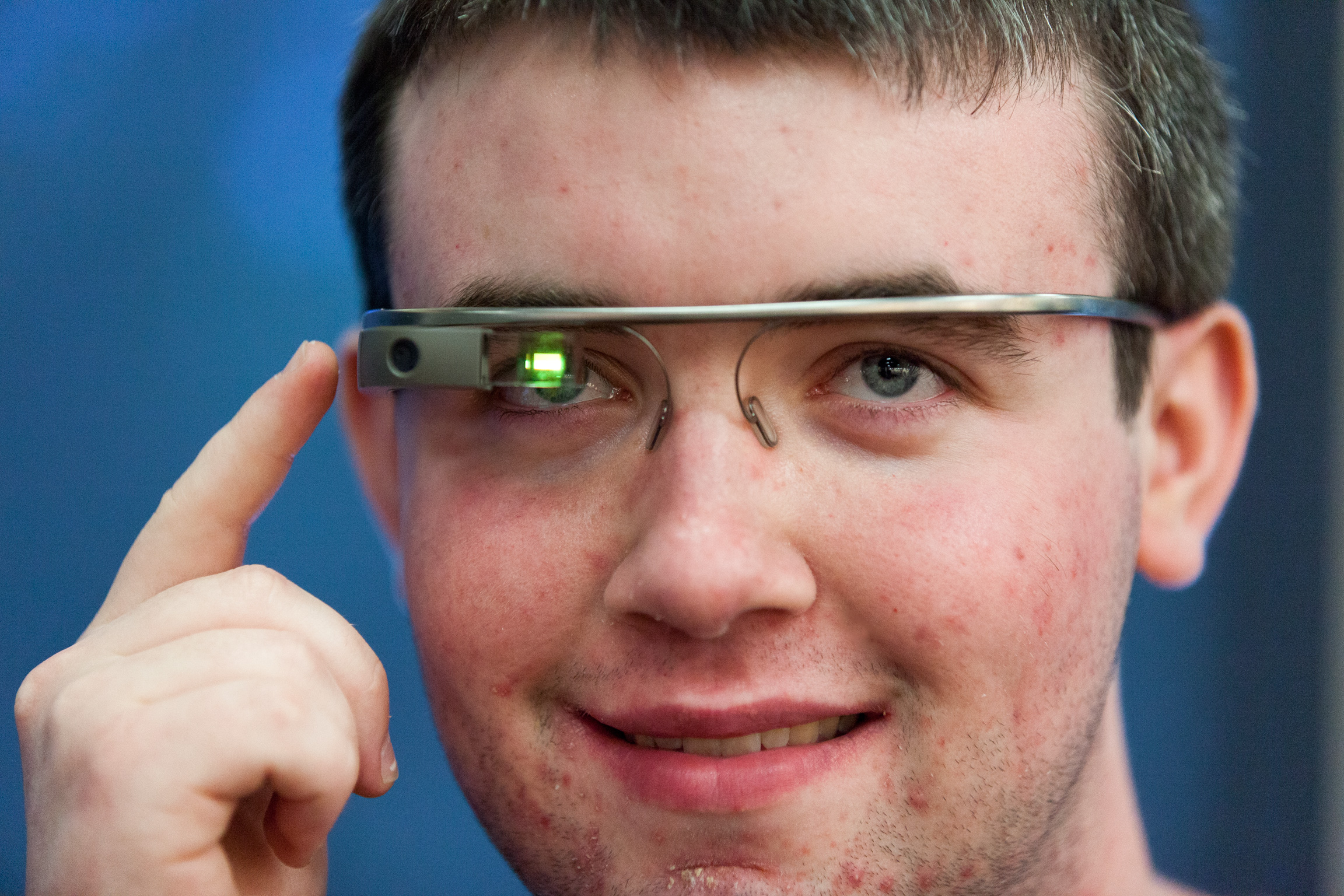
Google Glass wearerWell, that didn’t take long:  Now that Google Glass devices have started to be worn by more than just the first few early adopters, a new facial recognition app has promptly been developed.

It’s an app that enables users to snap a photo of someone, and then search the Internet for more information about the image – essentially, to identify the person by name.

Of course, Google has always maintained that such activities are an inappropriate use of Google Glass devices.  But that hasn’t stopped an outside app developer from doing just that.

The app is called NameTag, and it was introduced in late 2013 by a developer group known as FacialNetwork.  In December, the developer uploaded a video showing how NameTag works.  You can view it on YouTube here — and note that it’s quite controversial with more “dislikes” than “likes” from voters; how often does that happen?

Basically, the Google Glass wearer snaps a picture and the app runs the photo through a database containing ~2.5 million facial images.  If a match is found, it returns that finding along with the name and profile associated with the facial match (e.g., occupation, personal interests and relationship status).

According to the developers, NameTag can detect an image match even from behind obstructions like glasses and a hat.

What does FacialNetwork see as the benefit of its new NameTag app?  The developer touts the potential for dating and relationship-building.  On its website, the following scenario is presented:

“Jane has lots of different social media profiles and loves to meet new people.  By using NameTag, she can link all her social networks to her face and share her information, and meet new people in an instant.”

Personal privacy concernsRight. 

… And I’m sure “Jane” doesn’t worry one bit about the “creepiness” factor of someone learning her name and her personal information before she’s even aware of it …

As if pre-anticipating all of the hackles, NameTag quickly goes on to explain that people can choose whether to have their name and profile information displayed to others.

As entrepreneur and NameTag’s co-creator Kevin Tussy notes, “It’s not about invading anyone’s privacy; it’s about connecting people that [sic] want to be connected … We will even allow users to have one profile that is seen during business hours, and another that is only seen in social situations.”

If all of this sounds like it’ll be a tad more difficult to carry out in real life than it sounds like in theory – that you’re not fully comfortable “assuming” an app like this will actually offer the proper degree of safeguarding – I’m sure you’re not alone in your concerns.

In fact, some people aren’t waiting around to see what “might” happen, but are moving now to take preemptive action.  Certain congresspeople are in on the action.  And consumer advocacy group Public Citizen notes that Google Glass users in certain states could potentially face criminal prosecution in addition to civil penalties for recording people without their knowledge or consent.

Up to now, no one has faced such legal action – but that could be because the technology remains so new that few people are actually using Google Glass devices at this point.

The question is this:  Are people giving their “implicit consent” to be recorded just by talking with someone who’s wearing the device?  (The devices are fairly distinctive looking, after all.)

The answer may lie in whether the person even knows what Google Glass devices are.  One person speaking to another automatically means they know they’re being recorded seems to assume too much – at least at this relatively early stage in the product adoption cycle.

Things remain murky at this point because we’re still in an emerging phase in the application of the technology.  But one thing that seems clear is that we haven’t yet seen the beginning of what promises to be an airing of “dueling rights” in this area of the law.

For those who may already be using Google Glass (I’m not one, by the way), here’s your chance to share your perspectives with other readers here.

Mobile advertising doesn’t work so well … but why?

Lack of advertising engagementOne of the complaints marketers have had about mobile advertising is that the engagement levels are so pitifully low.

But is this really so surprising? … seeing as how clickthrough rates on online banner ads have been in the dumper for years now – well before the explosion of tablet and smartphone usage.

Helpfully, a research study conducted by Praveen Kopalle, a Dartmouth marketing professor, gives us insights as to why mobile ad engagement is so low.  Here are the reasons cited most often in that survey:

  • Mobile screens are too small – 72% of respondents cited this as a reason why they steer clear of mobile ads.
  • Too busy for ads – 70% claimed they don’t have time for ads when they’re on-the-go.
  • Can’t return easily to the content originally being viewed – 69% found this aspect irritating enough to avoid taking action on an ad.
  • Ads take too long to load – 53% cited this factor, which is clearly dependent on the type of mobile device or service available.
  • Not in the mood for ads – 42% identified this as a factor (some things never change).

Other findings in Dr. Kopalle’s survey underscore the fact that mobile advertising needs cut to the chase, because mobile device owners are generally not in “browse” mode while using them.  Consider these contrasting findings between mobile device users and people using desktop or laptop computers:

  • The typical mobile consumer is on his or her smartphone or tablet eight times a day for approximately 15 minutes per session.
  • Desktop and laptops users are more likely to be engaged only once or twice per day – but spend around two hours per session.

Moreover, when mobile devices users are performing information-seeking tasks, nearly half of them reported that ads “do not register” with them. 

The takeaway message for marketers:  In addition to targeting ads to the right audiences, the advertising messages themselves better be super-compelling, because mobile users won’t be paying attention for very long – if at all.

Is AdTrap the answer to our prayers when it comes to blocking online advertising?

ad blocking deviceYou may have heard of AdTrap … or maybe you haven’t.

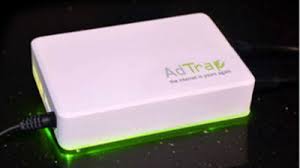
AdTrap is a newly developed device that intercepts online ads before they reach any devices that access a person’s Internet connection.

That basic action means that people are able to surf the web – including viewing videos – without the onslaught of online advertisements that seem to become more and more pervasive with every passing month.

The fundamental promise that the developers of AdTrap are making is a return to the “good ol’ days” of web surfing.

You know, back when most web pages you downloaded contained text and pictures – and virtually no advertising.

AdTrap’s motto is a simple and powerful one:  The Internet is yours again.”

Not surprisingly, there’s a good deal of excitement surrounding this new product.  In fact, interest has been so great that the invention attracted more than $200,000 in funding — raised in a 30-day Kickstarter campaign in early 2013.

Those funds are now being used to manufacture the first AdTrap units for shipment to “early adopter” consumers across the country.

How New an Idea Is This?

advertisingIn actuality, there have been a plethora of (often-free) software and browser plug-ins offered to consumers that can block online advertisements. 

But most of them have significant limitations because they’ve been designed to work only with specific browsers or on specific devices.

Free is good, of course.  But the developers of AdTrap are banking on the willingness of consumers to shell out $139 for their product – a rectangular box that looks a lot like a wireless router and that intercepts advertisements before they reach a laptop, tablet or mobile device.

The beauty of AdTrap is that it will work on every device connected to a person’s network.  Situated between the modem and router, it takes just a few minutes to set up.  

CNN technology correspondent Dan Simon reports that AdTrap does an effective job blocking advertising content.  But not perfectly; ads still appear on Hulu content, for example. 

But the developers of AdTrap report that they’re working on ways to block even more content going forward, including ads on Hulu.

Is this Bigger than Merely Blocking Ads?

Beyond the collective sigh of relief you’re likely hearing from those reading this blog post … what are the larger implications if AdTrap and similar devices are adopted by consumers on a large scale?

One not-so-positive implication may be that websites will no longer offer be able to offer content without charge, since so many publishers’ business models rely on advertising content to help pay most of the bills.

If advertising isn’t appearing thanks to AdTrap, people aren’t getting paid.

So let’s think about this for a minute:  It’s true that the Internet was blissfully free of wall-to-wall advertising 15 years ago compared to today. 

But cyberspace was also far less robust in terms of the quantity and quality of the informational and entertainment content available to us.

So yes … having a device to block 80% or more of the ads served to us is a very attractive proposition.  But if it means that some of our favorite sites move to pay-walls as a result, it might be that making a $139 investment in an AdTrap device isn’t such a “no-brainer” choice in the final analysis.

What do you think of this development — pro or con?  Please share your thoughts with other readers here.

Are small businesses under increasing risk of cyber-attacks?

cyberWhen it comes to cyber-security, high-visibility data breaches get all the press, which is understandable.

But small businesses are also victims of cyber-attacks.  And sometimes those events can be financially devastating.

Now a newly published survey quantifies the extent to which small businesses are at risk.  The National Small Business Association polled nearly 850 U.S. small business owners (most with annual revenues between $500,000 and $25 million) in August 2013).  The NSBA survey found that nearly 45% of the respondents’ businesses had been the victim of cyber attacks such as malware, spyware or banking Trojans.

The average cost of these cyber attacks was reportedly nearly $9,000 – with some dollar amounts going much higher.

Separately, another study shows that a record number of cyber attacks targeted small businesses in 2012.  Verizon’s Data Breach Investigations Report examined 855 data breaches and found that over 70% of them involved victim companies with fewer than 100 employees.

Verizon’s 2013 report is showing a continuing increase in cyber attacks on small business, meaning that 2012 was no fluke.

What’s going on here?

According to the Verizon study’s conclusions as well as comments from security experts like Vikas Bhatia, small and medium-sized businesses could be doing a better job of “offensive defense.”

Among the mistakes commonly observed in small businesses are these:

  • Lack of conducting regular backups of business data
  • Neglecting to store backed up data offsite
  • Failing to test data restore functions on a periodic basis
  • Neglecting to keep antivirus software up to date, including software patches and updates
  • Practicing sloppy password protection behaviors (using plain-language passwords … using identical passwords across multiple accounts, etc.)
  • Not understanding cloud-based data storage and what outsourced providers’ liabilities are (and are not) for protecting data

There’s no question that cyber-security continues to be a big challenge – and probably a growing one – for many companies.

But it’s also pretty evident that many businesses could be doing more to protect themselves from the heartburn (and financial fallout) along the way.

Smartphones and Tablets have Doubled Our Time Spent Online

screenjumpersWhat a difference a few years makes.

Back in February 2010, Americans over the age of 18 spent a total of ~451 billion minutes’ time on the Internet, according to comScore’s Media Metrix research.

By comparison, in February 2013, the total time spent online had nearly doubled to ~890 minutes.

The vast majority of the increase is attributable to tablet computers and smartphones rather than PCs:

  • PC minutes rose from ~388 billion to ~467 billion (+24%).
  • Smartphone minutes grew from ~63 billion to a whopping ~208 billion (+230%).
  • Tablet minutes grew from zero to 115 billion (tablets didn’t exist in 2010).

In fact, taken together, smartphones and tablets now account for nearly 60% of the time online spent by people age 18 to 24.  On the other hand, smartphones account for a relatively small 25% of time spent online by Americans age 50 or older.

This age divide is also clearly evident in comScore’s estimated breakdown of platform adoption:

All American Adults

  • PC only:  ~30%
  • “Screen jumpers” (PC + mobile):  ~63%
  • Mobile platforms only:  ~7%

Young Adults (age 18-24)

  • PC only:  ~22%
  • Screen jumpers:  ~65%
  • Mobile only:  ~13%

Older Adults (age 50+)

  • PC only:  ~48%
  • Screen jumpers:  ~51%
  • Mobile only:  ~1%

The comScore analysis also provides some interesting stats pertaining to online share of minutes by the type of content being accessed.

Most online time spent on PCs:

  • Business/Finance (~68%)
  • TV (~68%)
  • News/Information (~62%)
  • Sports (~62%)
  • Retail (~49%)
  • Health (~54%)

Most online time spent on smartphones:

  • Radio (~77%)
  • Social Media (~58%)
  • Weather (~55%)
  • Games (~48%)

Tablets don’t lead in any single category, but score particularly well in these two:

  • Games (~34% of time online is spent on tablets)
  • TV (~20% of time online is spent on tablets)

More details and insights from the comScore report can be found here.

Evil eye? Google’s vision for the future.

pay-per-gaze creepy disturbingTo understand where Google is heading next in the world of advertising, consider this:  The company has just been granted a patent on its “pay-per-gaze” eye-tracking system.

You might wonder what that might be.

Pay-per-gaze is an ad system that utilizes Google Glass for tracking the ads that consumers see online and elsewhere.  The gaze-tracking capability comes from another Google innovation:  a head-mounted tracking device that communicates with a server.

According to the patent documentation, the tracking devices includes eyeglasses with side-arms that engage the ears of the user … a nose bridge that engages the nose of the user … and lenses through which the user views the external scenes wherein the scene images are captured in real-time.

And it need not be limited to tracking online advertising, either; pay-per-gaze functionality could potentially extend to billboards, magazines, newspapers and other printed media, Google notes.

But the idea is even more revolutionary than that:  Not only does it aim to measure how long an individual looks at an ad, but also how “emotionally invested” the consumer is by virtue of measuring pupil dilation.

So the tracking system not only will show how long someone looks at an ad, but also will measure the emotional response.  The patent also covers a provision for “latent pre-searching” which would display search results over a user’s field of vision using Google Glass or another wearable computer.

If all of this seems like “Big Brotherism” at its worst … you may well be correct.  But Google is doing its best to downplay such sinister connotations.  It’s emphasizing that users can opt out of “pay-per-gaze” tracking, and that all data will be anonymized.

But let’s get this straight:  The world’s biggest search engine was just granted a patent for the most “sticky” form of advertising possible – ads that literally flash in front of someone’s eyes.

And when we add in aspects like measuring pupil dilation, it won’t be long before Google will be able to determine how good eats, or good looks, are affecting our emotional response.

One wonders how much farther we can go with measuring advertising engagement and buying intent. 

Then again, we already have an answer, of sorts.  As early as 2000, experiments with electromagnetic brainwaves have shown that people can literally “think” instructions and thereby cause an action.

Imagine combining Google’s pay-per-gaze and pay-per-emotion with electromagnetic brainwave tracking.  Add in a credit card number, and there’s no telling what could happen just with a fleeting thought or two!

If all of this sounds creepy and disturbing … get used to it.  With the likes of Google and the NSA at the helm, “creepy and disturbing” may well become the “new normal” for society.

Consumers Still Finding Weaknesses in Brands’ Web Presence

Temkin Group logoThe most recently published Temkin Web Experience Ratings of more than 200 companies across 19 industries reveals continuing widespread disappointment with the quality of the “web experience.”

The Temkin Web Experience Ratings are compiled annually by Temkin Group, a Newton, MA-based customer experience research and consulting firm.  The ratings are based on consumer feedback when asked to rate their satisfaction when interacting with each company’s website.

Temkin ratings are established for companies garnering responses from 100 or more of the ~10,000 randomly selected participants in an online survey conducted by the research firm in January 2013.

Rankings are calculated via a “net satisfaction” score based on a 7-point rating scale from “completely satisfied” to “completely dissatisfied” by taking the percentage of consumers selecting the two highest ratings and subtracting the percentage who selected the bottom three ratings.

Just 6% of the brands earned strong or very strong “net” trust ratings, while ten times as many (~63%) were given weak or very weak scores.

And there’s this, too:  Not much improvement is happening.  More than half of the ~150 companies that were included in both the 2012 and 2013 Temkin evaluations earned lower scores this year than last.

Managing partner Bruce Temkin summarized it succinctly:  “The web is a key channel, but online experiences aren’t very good – and are heading in the wrong direction.”

The latest Temkin ratings give Amazon the top-rank position with a 77% overall rating score.  Other companies ranked near the top include Advantage Rent A Car, U.S. Bank and QVC.

At the other end of the scale, MSN, EarthLink and Cablevision earned the lowest ratings – MSN worst of all.

Indeed, the following industries had composite company ratings that ended up in the “very weak” column:

  • Airlines
  • Health plans
  • Internet service providers
  • TV service providers
  • Wireless carriers

Do any of these industries seem like ones that shouldn’t be on this list?

I didn’t think so, either.

Which ones are the industries that score best in the Temkin analysis?  By order of rank, they are as follows:

  • Banks
  • Investment firms
  • Retailers
  • Credit card issuers
  • Hotel chains

Come to think of it, I haven’t encountered problems online with companies or bands in any of these five industries.

It’s also interesting to consider which companies have improved the most over time.  When comparing year-over-year results for the ~150 companies that were included in both the 2012 and 2013 studies, eight of them showed double-digit improvements in their scores:

  • Blue Shield of California
  • Citibank
  • Humana
  • Old Navy
  • Safeway
  • Toyota
  • TriCare
  • U.S. Bank

On the other hand, a much bigger contingent of 21 companies saw their ratings decline by at least 10 points; the six firms that dropped by 15 points of more were these:

  • Bright House Networks
  • Cablevision
  • MSN
  • ShopRite
  • Southwest Airlines
  • United Airlines

You can view the scores (and trends) for all 200+ companies by clicking here to download the full report.

If you notice any rankings that seem surprising – or that don’t comport with your own online experiences – please share your thoughts and perspectives below.

Optify Measures Social Media Activity in the B-to-B Market

Optify logoThis is my fourth and final post about the findings of Optify’s recently published business-to-business online marketing analysis.  The focus of this post is on what Optify found about social media usage.  (You can read my other posts on B-to-B web traffic and advertising here, here and here.)

Optify, which is a developer of digital marketing software for B-to-B marketing professionals, analyzes web behaviors and releases a report each year.  This annual “benchmark” report is particularly important in that the findings are reported from actual web activity, not from surveys.

The key takeaway findings on the social media front are these:

  • Despite all of the continuing hype, social media remains a very small fraction of traffic and leads to B-to-B websites.  In fact, social media has contributed to less than 5% of B-to-B web traffic and leads.
  • Facebook drives the more than half of the social media-generated web traffic to B-to-B websites, versus about one-third from Twitter and most of the remaining traffic from LinkedIn.
  • Visitors who arrive at B-to-B sites from LinkedIn are more likely to view more pages per visit (~2.5 page views on average) than visitors who come from Facebook (~1.9 page views) or Twitter (~1.5 page views).
  • Despite generating more traffic Facebook drives fewer actual B-to-B leads than either Twitter or LinkedIn.
  • At this time, Twitter appears to be the most lucrative social media source for leads, with a higher-than-average conversion rate of ~2.1% (defined as a visitor taking an action such as submitting a form).

Because of this last data point, Optify posits that companies should not shy away from considering social media‘s potential as a source for leads as opposed to being just an  awareness tool.

I’m sure Optify’s figures don’t lie.  But I for one remain unconvinced about social media’s lead generation potential in the B-to-B realm.

More B-to-B Web Behavior Findings from Optify

Optify logoThis is my second post on the very interesting findings from Optify’s analysis of the behavior of visitors to business-to-business websites during 2012.

[Refer to my earlier post for a quick overview of salient “top-line” results.]

As part of its analysis, Optify uncovered some interesting factors pertaining to “organic” web searches, which represent ~41% of all visits to B-to-B websites.  Here’s what stands out in particular:

  • Forget all of the talk about Bing/Yahoo taking a bite out of Google on the search front. Optify found that Google is responsible for nearly 90% of all organic search activity in the B-to-B realm, making it the #1 referring source of traffic – and it isn’t even close.  (Bing’s coming in at a whopping ~6% of the search traffic.)
  • Organic search visits from Bing do show slightly better engagement rates in the form of more page views per visit, as well as better conversion rates (e.g., filling out a form). But with such low referring traffic to begin with, it’s fair to say that Google was — and remains — the cat’s meow when it comes to organic search.
  • “Branded” searches – ones that include the name of the company – account for nearly one-third of all visits from organic search. Plus, they show the highest engagement levels as well: ~3.7 page views per visit on average.

Optify notes a few clouds on the horizon when it comes to evaluating the success of a company’s organic search program. Ever since Google introduced its “blocked search data” securred socket layer (SSL) option (https://google.com), the incidence of blocked referring keyword data has increased rapidly:

  • Block referring keyword data now represents over 40% of all search queries.
  • Non-branded keywords that are known (and thus available for analysis) have dropped to just 35% of all organic searches.

Here’s the bad news:  As blocked keyword searches continue to grow in popularity – and who wouldn’t choose this option when it’s so easy and readily available – it’s creating a veritable “data oblivion” confronting marketers in their attempts to analyze and improve their SEO performance.

In a subsequent blog post, I’ll summarize key findings from Optify pertaining to paid search (SEM) and social media in the B-to-B realm.