The Sanders/Trump phenomenon: A view from outside the United States.

photo1This past Tuesday evening as I watched Bernie Sanders and Donald Trump vanquish their rivals handily in the New Hampshire presidential primary election, I received an e-mail from my brother, Nelson Nones, with his observations on “what it all means.”

As someone who has lived and worked outside the United States for years, Nelson’s views are often quite perceptive — perhaps because he is able to look at things from afar and can see the “landscape” better than those of us who are much closer to the action.

Call it a “forest versus trees” perspective.

And when it comes to the 2016 presidential election, it is Nelson’s view that the Sanders/Trump phenomenon is absolutely real and not something based on personality or celebrity — for good or for ill.

Shown below is what Nelson wrote to me.

… On the Underlying Dynamics

For context into what’s happening in the United States, the Pew Research Center’s recent report on the wealth gap in the United States is instructive.

In a nutshell, over the past 30 years Pew’s data points reveal: 

  • Upper-income families currently represent ~20% of the total, and their wealth (measured by median net worth) has doubled. 
  • Middle-income families represent 46% of the total. Their wealth barely changed (up 2%). 
  • Lower-income families therefore represent ~34% of the total, but their wealth fell 18%.

Now, after the end of the Cold War in 1992 until the onset of the Great Recession in 2007, the wealth of all three groups did rise, albeit by varying degrees: 

  • Upper-income by 112%
  • Middle-income by 68%
  • Lower-income by 30%

Here’s how they fared during the Great Recession (2007-10): 

  • Upper-income wealth declined by 17%
  • Middle-income wealth fell by 39%
  • Lower-income wealth fell by 42%

And after the Great Recession:

  • Upper-income families recovered 36% of their wealth lost during the Great Recession
  • Middle-income families recovered none
  • Lower-income families lost an additional 7% relative to their wealth in 2007

So, if we assume wealth to be a proxy for the feeling of well-being, then one could surmise that ~80% of American families feel like victims today — of which nearly half feel they are still being victimized.  

… On “Anger”

Are people feeling angry about this? You bet.   

Who are they going to blame? The other ~20% and foreigners, of course. 

Never mind the exculpatory hard data proffered by defenders of the nation’s elites revealing that big banks paid back all the bailout money they received during the Great Recession, or that bankers cannot be jailed for their alleged misdeeds unless and until proven guilty by jurors in courts of law (like anyone else), or that pharmaceutical companies’ margins on $45 billion of profit, at 12%, aren’t “quite” as obscene as they appear at first glance.   

None of those facts can ever restore wealth that’s been lost and never recovered, or is still falling. When you feel like a victim, such hard data are utterly and completely irrelevant.  

Both Bernie Sanders and Donald Trump are tapping into this anger with great success. As I watched both Sanders’s and Trump’s victory speeches, to vastly oversimplify, here is what I heard.  Sanders essentially said:

“It’s not fair that most Americans can’t get ahead or are falling behind. I’ll expropriate money from the rich by taxing Wall Street bankers and give it to you in the form of free tuition, student debt restructuring, lower healthcare costs and single-payer healthcare!” 

Trump essentially said:

“Political hacks are negotiating bad deals, letting China, Japan and Mexico take our money away from us every day. As the world’s greatest businessman, I’ll negotiate great deals fast to give you universal healthcare, and beat these countries so you get your money back – without having to share it with all those illegal immigrants!”

Photo2In my view, what both Sanders and Trump recognize is that ~80% of American families may have lost 40% of their wealth since 2007 with little or no hope of recovering it … but they haven’t lost any of their voting power.  

It makes no difference that the prescriptions offered by Sanders and Trump – squeezing money from Wall Street, China, Japan and Mexico, for example – are nonsense. As a lawyer I once knew always said, “Winning isn’t everything; it’s the only thing.”  To have any chance of accomplishing something useful (or not) as President, you have to win first.   

… On Populism being the Winning Ticket

In this election, under present circumstances, populism is a sure winner. 

The wealthiest ~20% of families (Democrats as well as Republicans) who represent the “establishment” in the eyes of the angry Sanders and Trump crowds, don’t quite smell the coffee yet.  

The angry crowds are out for money this election cycle, and I believe they hold enough votes to elect one of the two populist candidates (Sanders or Trump) who is promising “money.”   

… Not “experience,” “pragmatism,” “conservativism,” “liberalism,” “socialism,” “limited government,” “feminism,” “pro-life,” “pro-choice,” “pro-LGBT,” “hope,” “change,” or whatever.  But money.

To protect as much of their wealth and status as they can, the elites have little choice but to scuttle their aspirational platitudes and learn to deal with it.

So there you have it — a view of the presidential election from the outside looking in. I think there’s food for thought here — and very possibly a look at where we’ll be in another nine months.

What do other readers think? Agree or disagree?  Please share your observations here.

A nation of “haves” vs. “have-nots”? Gallup tests the perceptions.

pictureIn any presidential political season, there’s always plenty of rhetoric about the American economy, how well it’s performing for the average voter, and people’s perceptions of how they’re doing socioeconomically.

As it turns out, the Gallup Survey has been testing this issue annually for years now — going all the way back to 1988.

The question posed to Americans in Gallup’s surveys is a simple one: Do you consider yourself personally to be part of the “haves” or “have-nots” in America?

Gallup’s latest survey was fielded in July 2015.  Nearly 2,300 U.S. adults aged 18 and older were part of the research.

In response to the “haves vs. have-nots” question, ~58% of respondents considered themselves to be “haves” in U.S. society, while ~38% placed themselves in the “have-nots” segment. (The remaining ~14% see themselves borderline between the two, or they don’t have an opinion.)

Over time, Gallup has found that the percentage of Americans who perceive themselves to be part of the “have-nots” in society rose pretty steadily from 1988 to 1998, but since that time the percentages have leveled off — even during the worst years of the Great Recession from 2009-2011.

And so, the “haves” percentage has fluctuated in a tight band between 57% and 60% in each year since the late 1990s.

It seems that heightened discussions about social inequality in America haven’t resulted in a higher percentage of people thinking that they are on the less fortunate side of the country’s socioeconomic divide.

However, considering that the latest Gallup survey was conducted in July 2015 — and that since that time there have been more news events drawing attention to the issues of social justice — one wonders if we may be on the cusp of some changing thinking on the subject.

Another persistent finding in Gallup’s surveys is this:  Even among families of quite modest means (annual household incomes of $35,000 or lower), only a little more than half in that segment consider themselves to be part of the “have-nots” group.

Education-wise, the survey findings are similar, with fewer than half of the respondents who don’t possess college degrees considering themselves part of the “have-nots” segment.

In reporting on the Gallup survey results, an article published in the November 2015 issue of Quirk’s Marketing Research Review magazine stated:

“The stratification of U.S. society into unequal socioeconomic groups has long been a fixture of philosophic, political and cultural debate. It appears to have remained or even expanded as a fairly dominant leitmotif in the ongoing 2016 election, particularly among the Democratic presidential candidates. 

[Nevertheless,] the results … in this analysis show that a majority of U.S. adults do not think of American society as being divided along economic lines, and a slightly higher percentage say that if society is divided, they personally are on the ‘haves’ side of the equation rather than the ‘have-nots.'”

More information about the Gallup survey results can be viewed here.

What are your thoughts? Do the perceptions Americans have of socioeconomic inequality — or the lack of it — match the reality?  Or are we poised to see some new significant shifts in the way Americans view socioeconomic divisions in this country?

How to Lie with Statistics: Commercial Airlines Edition

airlineIt’s become rather predictable. Government pronouncements claim that because the national unemployment rate is down to around 5%, it means that the U.S. economy is humming along.

But in fact, that conclusion doesn’t square neatly with the reality that the unemployment percentage is calculated based on the lowest level of workplace participation in decades.

So, which is it?  A strong economic upturn … or a middling recovery?  When the average citizen is the judge rather than breathless PR flacks, it’s the latter.

The same could be said about the airlines.

The amount of “happy-talk” about passenger airline travel is quite high these days.  Some of the news is undoubtedly welcome:  The lowest jet fuel prices in recent memory are making it cheaper to fly cross-country today than in years.

But upon further scrutiny, another spate of good news seems to be little more than blue smoke and mirrors. For a number of years now, the passenger airlines have been crowing about their on-time flight arrival performance.

The statistics purport to show that on-time performance rates for commercial airlines have been steadily improving.

But look a little closer … and the skies aren’t quite as clear-blue as all that.

A study by OAG Aviation Worldwide, a UK-based analytical firm that analyzes travel data, finds that airlines have been padding their flight-time schedules going on 20 years now.

Here’s a representative example of what’s been happening:  OAG evaluated 1,400+ commercial flights scheduled between Los Angeles International Airport and San Francisco International Airport.  Back in 1996, not even one of the flights between these two airports was scheduled to take longer than 90 minutes.

And yet … by 2015 the airlines had allotted flight times of between 91 and 110 minutes for nearly half of the flights scheduled between those two airports.

Of course, it’s axiomatic that if the scheduled flight times are lengthened upwards of 10%, that will take a so-so on-time flight arrival statistic and transform it overnight into a pretty impressive one.

… And the transformation’s been accomplished without changing a thing where it actually counts: on the ground (or in the air, I could say).

logoFor the record, no one at the airlines is acknowledging this statistical sleight-of-hand. Asked to comment on the OAG study’s findings, a spokesperson for the trade group Airlines for America (A4A) responded with this rather mealy-mouthed statement:

“We have the same goals as our customers, which is to get them, their luggage and packages to their destination safety and on time.”

Well, at least they’re not fudging on the safety part …

Organizational Management: Zappos Meets Reality

ZLIt’s always interesting to read about the concept of flattened or “matrix” organizational structures for companies, and how they offer a much more creative and fulfilling environment for employees when compared to working within a more traditional hierarchical organizational structure.

… And then you read about a company that actually tries to implement such an organizational model — and gets thrown against the rocks in the process.

The latest example is Zappos, the online shoe and clothing retailer which has built its business and reputation on exquisite customer service. For years it’s also been known as a company willing to experiment with nontraditional human resources models.

The most famous of these is known as “the offer,” where new hires are given the opportunity to take a $2,000 stipend in lieu of remaining on the job – the idea being that it’s a practical as well as humane way to ensure that Zappos employees are the best “fit” for the company.

The company’s latest endeavor has been to introduce a new management structure known as a “holocracy.” This structure, adopted by Zappos in 2014, aims to facilitate (or codify, actually) collaboration among workers by essentially eliminating workplace hierarchies – as in no titles and no direct-report bosses.

In Zappos’ holocracy environment, employees now work through their job responsibilities, strategies and tactics via a web-based app known as the “Glass Frog.”

I think you might know where this is headed: Self-governance isn’t a tidy business, and there’s a good dose of mixed signals and even confusion that comes along with it.

When structures are flattened and titles eliminated, it causes disruption in ways big and small:

  • How do strategic initiatives and tactical tasks get done efficiently?
  • Who is responsible for what? 
  • How do co-workers (as well as outsiders) know what each employee “does”?
  • How are employees monitored and evaluated on their work performance and contribution to the success of the enterprise?

And how about this: Try determining salaries for existing and prospective new employees after titles have been eliminated.

Guess what happens when confusion reigns in any organization? Attrition rates rise.

As reported this month by Bourree Lam in The Atlantic, in the case of Zapppos, nearly one in five employees have taken buyouts since last spring, resulting in an annual turnover rate of ~30%.  That’s dramatically higher than the typical attrition rate at companies.

Weeding out less productive workers is a staple in managing for business efficiencies, productivity and profits. But when nearly one-third of your entire staff is leaving the company within a 12-month period, you’re getting into territory where “institutional knowledge” is in serious danger of being lost.

Research by Stanford University’s Graduate School of Business and other institutions shows that the more “egalitarian” an organizational structure is, the more unpredictable and potentially disorienting it is to workers. Simply put, most people prefer a defined “pecking order.”  They might grumble about corporate hierarchies, but those structures are more “predictable” and many workers find them to be more psychologically comfortable.

hoThe reality is that holocracries, flattened and matrix organizational structures are often less efficient than hierarchical ones. They may well spur more innovation and creative thinking, but the price paid in lost efficiency may be too high for many companies.

In my personal experience working with a matrix organization (not as an employee but as a person providing business support services to the company), I’ve seen where a matrix structure can actually work. It certainly helps if the business has strong, industry-leading products that are protected by patents and that benefit from being able to command high prices and correspondingly high product margins.

Zappos isn’t operating in any such marketplace. It has little or no protection against aggressive market competitors entering its space.  Profit margins in retail are famously tight.  It’s just not clear that any company can operate successfully in that space for any length of time without keeping very tight controls over operating expenses and also squeezing as much productivity out of each employee as possible.

Despite the challenges, it appears that Zappos is doubling down on its holocracy structure. Here’s what CEO Tony Hsieh wrote in 2014 to his employees:

“Self-management and self-organization is not for everyone, and not everyone will necessarily want to move forward in the direction of the … strategy statements that were recently rolled out. Therefore, there will be a special version of “the offer” on a companywide scale, in which each employee will be offered at least 3 months’ severance … if he/she feels that self-management, self-organization and our … strategy statement as published in Glass Frog are not the right fit.”

With a pronouncement like that coupled with a big financial carrot, it’s understandable why so many employees have taken up Zappos’ severance package offer.

The next question is this: Will Zappos emerge as a stronger, more creative and more nimble company as a result of its transition to a holocracy structure?  Or will the initiative turn out to have been a massive miscalculation?

If you work in a flattened or matrix organization structure and have observations to share about its positive and negative aspects, please leave comments. I’m sure other readers would be quite interested to read them.

Suddenly, GoPro isn’t so “Go-Go” …

untitled2Most likely, I’ll never be a GoPro customer.

The only direct interaction I’ve had with the maker of action cameras was several years ago during the Great Target Credit Card Breach of 2013, when suddenly a half-dozen GoPro purchases mysteriously appeared on my card statement.

But other than that, my connection with GoPro and its line of cameras has been nonexistent — which isn’t at all surprising considering that at my age, I’m hardly an “action adventurer.”

Unfortunately for GoPro, many other people aren’t, either – and it’s one reason why the company’s financial results have been pretty ugly coming off of the most recent holiday season.

This past week, GoPro announced that it is cutting nearly 10% of its workforce (more than 100 people) because of weak sales during the 4th Quarter.

In a holiday quarter when product purchases should have grown revenues considerably, the weaker-than-expected sales volume of ~$435 million meant that GoPro’s revenues were far short of the $510 million originally projected.

From the financial market’s perspective, this news was sufficiently negative that trading of GoPro shares had to be halted briefly this past Wednesday.

untitled
GoPro shares over the past six months.

The company promises to divulge more information about its financial results in early February, but some observers are already beginning to paint the picture of what’s out of kilter:

  • GoPro misjudged the price consumers were willing to pay for its Hero4 Session cube cam, introduced in July 2015, resulting in two dramatic drops of the sticker price in September and December down to $199. 
  • Competitors are entering the field, putting further downward pressure on pricing. 
  • There’s a ceiling on the demand for action cameras because “action adventurer” consumers are such a small slice of the general population.

But does any of this come as a particular surprise?

Like in any other consumer electronics product category, the trajectory of high growth among early adopters leads to new market entrants, followed by the hardware becoming essentially a commodity.

… And the whole process is as swift as it is inevitable.

GoPro is branching into newer segments like camera drones — and not a moment too soon. But the reality is that in a product segment like action cameras, any supplier will always be just one step ahead of commoditization.  And for this reason, product mix reinvention has to be happening continuously.

Facebook reigns supreme among smartphone apps — at least in the United States.

faWhich was the most popular smartphone app in the United States during 2015? If you guessed Facebook, you’d be correct.

According to Nielsen estimates, the Facebook app notched more than 125 million average unique users per month during 2015. It was an ~8% increase in the app’s user volume over the previous year.

The second most popular smartphone app was YouTube, but at fewer than 100 million, its average unique user volume was substantially lower than Facebook’s.

The Nielsen estimates are calculated based on a monthly survey of 30,000+ mobile subscribers age 13 and older in the United States, as well as a panel of ~9,000 English-speaking adults (age 18+).

Here is Nielsen’s “Top Ten” chart for the most popular smartphone apps in 2015:

  • Facebook app: ~127 million average unique monthly users
  • YouTube: ~98 million
  • Facebook Messenger: ~96 million
  • Google Search: ~95 million
  • Google Play: ~90 million
  • Google Maps: ~88 million
  • Gmail: ~75 million
  • Instagram: ~56 million
  • Apple Music: ~55 million
  • Apple Maps: ~47 million

Within the top ten list, the two apps with the highest user growth in 2015 were Facebook Messenger, which charted an increase in average monthly users of ~31%, and Apple Music, with ~26% growth.

Also noted by Nielsen, the level of smartphone penetration ticked up yet again in 2015, so that today four out of five mobile subscribers are using a smartphone rather than a feature phone.

fa anAs for the ongoing competition between Apple and Android for smartphone hegemony, it remains a real donnybrook but with Android ahead.

As of Q3 2015, Android devices represented ~52.5% of the subscriber base whereas ~42.5% of Americans used Apple iOS devices to access their apps.  (The remainder is made up of Blackberry users and phones operating on Windows.)

Additional information about the Nielsen evaluation and analysis can be viewed here.  It will be interesting to see how these trends might change in 2016.  Would anyone care to make any predictions?

Memo to newspaper publishers: Don’t ‘diss’ your print subscribers.

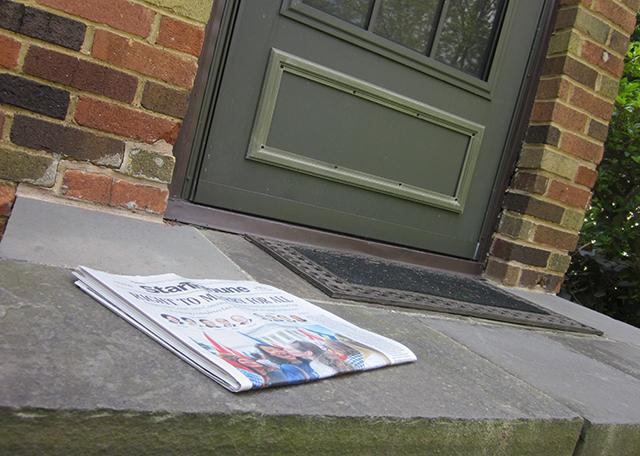
nindA few weeks ago, the Boston Globe stubbed its toe in major fashion when it changed the company it uses to deliver ~115,000 hard-copy versions of the daily paper in the Boston metro area.

And the problems continue to persist even now.

No doubt, the decision to switch home delivery services was made out of a desire to save money rather than to improve service.  And one can understand why management might have been looking for ways to cut production costs on the print version compared to the “go-go” online/digital realm.

But focusing on solely millennials and other younger customers can come back to “bite you on the bottom line” – which is exactly what happened in the case of the Globe.

Evidently, the new delivery service was untested – at least in terms of taking on a client with volumes as large as Boston’s leading newspaper.

As it turned out, tens of thousands of papers weren’t delivered, sparking a cataclysm of loud, negative feedback.

The pique of customers went well-beyond failing to receive something that had been paid for. In the case of the Globe’s extensive Baby Boomer subscriber base, missing home delivery struck at the heart of the time-honored rituals of how they receive and consume their news.

Consider this: The average subscriber to the Boston Globe pays around $700 per year for their home-delivery subscription.

That’s more than $80 million per year in income for the paper – before factoring in advertising revenue.

Of course, the costs of producing and delivering the print product exceeds that of digital. But this subscription base is more loyal than digital news consumers precisely because they value how the news is presented to them.

Let’s not forget that for people born before 1965, most are emotionally attached to print far more than those in other demographic groups. As Gordon Plutsky, a director of applied intelligence at IDG, writes about the Boston Globe snafu:

“[It’s] not just the physical paper, but the ritual of getting the paper off their driveway or front steps and starting their day spreading out the broadsheet and scanning the news. They missed curling up with coffee or tea and working the crossword puzzle or cutting coupons.  It is easy to forget that until the mid-‘90s, this was the only way to read the news and, for Boomers, it is how they learned to read and interact with the world.  Their brains are wired for print in the same way Gen Z is wired for mobile.”

Perhaps the Globe’s business and administrative staffers lost sight of that fact. Maybe they treated their “unsexy” print subscribers as an afterthought while forgetting that this segment of their customer base is critical to the very survival of their paper – and the industry – in a period of transition.

True, delivering the news to print customers is more expensive than doing so digitally. But these customers are more predictable and loyal, versus fickle and finicky.

… But only if the product is delivered. Fail in that fundamental function, and the gig is up.

nosThe Boston Globe’s print readers are hardly unique. Recently, Pew Research Center surveyed consumers in three urban markets.  Despite the differences in these markets (geographic, economic, social), a highly significant percentage of respondents in all three metro areas reported that they read only the print version of their local newspaper:

  • Denver, CO: ~46% read only the print version of their local newspaper
  • Macon, GA: ~48% read print only
  • Sioux City, IA-NE-SD: ~53% read print only

This isn’t to suggest that Boomer audiences are a bunch of rubes who aren’t connected to the digital world. Far from it:  They tend to be better educated and more wealthy (with more disposable income) than other demographic segments.  Their attachment to print isn’t in lieu of digital, but more in concert with their online habits.

Unlike other generations, they’re not single-channel as much as omni-channel consumers. The keys to newspaper publishers’ continued relevance are bound up in how they serve this older but critically important segment of their customer base.

Speaking personally, I can “take it or leave it” when it comes to print.  I don’t subscribe to a daily print paper, and the bulk of my news comes to me from digital sources.  But there’s something quite comfortable about sitting down with a quality daily paper and reading the news stories therein — including long-form journalism pieces that are difficult to find very many places these days.

There are millions more people across the country that are happy to continue paying for the privilege of consuming the news in just such a fashion.  Indeed, they’re the newspaper industry’s most loyal readers.

Holiday Sales: “Many Happy Returns”

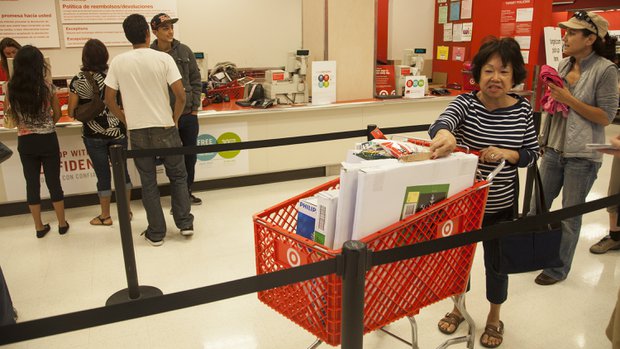
retHere’s an interesting statistic coming out of the holiday season this year: Nearly one in four consumers has returned at least one of the gifts they received.

For gifts purchased online, returns are an even bigger part of the equation – as in one third of all online gift purchases being returned.

It’s part of a trend that’s growing at a pretty swift pace. In 2014, a total of $285 billion worth of merchandise was returned in the U.S., a 6% increase over the previous year and more than double the growth rate of retail sales as a whole.

Industry observers are expecting higher figures again for 2015 once the stats are fully tallied.

Which holiday gift items tend to be returned most often? In a survey of ~500 U.S. consumers conducted between December 28 and 31, 2015 by mobile app shopping circular developer Retale, the following gift categories were cited most frequently by respondents:

  • Jewelry: ~32%
  • Electronic products: ~29%
  • Gift cards: ~27%
  • Clothes/apparel: ~26%
  • Home décor/home improvement items: ~23%

Consumers may have gravitated to online shopping big-time this past holiday season, but as for the gift return “experience,” it’s pretty clear that consumers continue to prefer making a return at the store (~64%) rather than online (~12%).

Evidently, the “hassle factor” of shipping merchandise back to the seller – not to mention the cost of return shipping if that isn’t offered free of charge – is more onerous than getting in the car and driving to the store outlet.

As for the mountains of merchandise that retailers are having to deal with, it’s caused the growth of an entirely new business niche: reverse logistics firms.

These companies input information on each returned item and determine the most lucrative way for the retailer to dispose of it – which can include sending it to a wholesaler, selling it to a liquidator for scrap, or sending it to a distribution center to be repaired and resold.  Online “refurbished products” stores on Amazon and eBay enable retailers realize up to 70% of an item’s worth by selling those items directly to value-conscious consumers, compared to recouping only 20% or 30% in the past.

It’s part of the action –> reaction aspects of retail that pretty much define this industry.

Customer Satisfaction: Going in the Wrong Direction?

The new American Customer Satisfaction Index report points to disappointing trends over the past year.

acsiAnother year has gone by — and with it the unsettling revelation that companies may be more talk than action when it comes to improving their customer satisfaction levels with customers.

The latest evidence of this comes from newly released ASCI (American Customer Satisfaction Index) figures. The data were compiled from results reported by ACSI in 2015 based on surveys conducted from Q4 2014 though Q3 2015.

What the ACSI report shows is that customer satisfaction is trending in the wrong direction. Of the 43 industries tracked by ASCI, only five of them registered an overall improvement in customer satisfaction score, while the other 38 declined or stayed the same.

The ASCI index includes more than 325 measures, with some companies represented in multiple industries where they hold substantial market share. Each company’s rating is based on a total possible high-score of 100.

Here’s the unpleasant bottom-line finding: In nearly 60% of the cases where year-over-year comparisons were possible, customer satisfaction scores have declined over the past year.

Where are the biggest problem areas? Perhaps not surprisingly, four of the five companies that experienced the largest declines in customer satisfaction were in the communications sector:   Comcast, AT&T, Cox Communications and Time Warner Cable.

ccComcast experienced a particularly bad result, with its ASCI score dropping ~10 percentage points to 54, tied for second-lowest among all companies included on the index. Cox Communications’ rating declined ~9 points to 58, and Time Warner Cable showed a similar percentage decline all the way down to a 51 score – the lowest rating recorded among all the companies on the index.

On the other hand, there were some bright spots in the latest ASCI report — and a lot of it has to do with Internet-based sectors.

Indeed, three of the five industries which charted overall improvements in customer satisfaction ratings are Internet-based, including Internet retail (up ~5 percentage points to an index of 81, the highest total achieved by any of the industries categories).

Other industries that exhibited an improvement in customer satisfaction ratings over the past were online travel services (which improved by ~1.5 percentage points to a composites score of 78) and social media (up ~4 percentage points to 78).

Two other industries that notched improved composite scores were household appliances – doing quite well with an ~81 score — and passenger air travel which, while still mired in a low index of 71, actually is during a tad better than in earlier years.

Even though the overall trends in customer satisfaction haven’t been in the right direction, more than 70 companies managed to achieve ACSI scores of 80 or better in the most recent evaluation, which has to be considered a very positive outcome. Most of these firms are manufacturers rather than service companies – which also continues a trend observed in prior-year surveys.

Additional results and detailed findings can be viewed here. Do any of the company findings surprise you?

Digiday ID’s the most “overhyped” marketing developments of 2015.

Digiday logoWhat were the most overhyped marketing stories in 2015? Media company Digiday‘s brand reporter Tanya Dua has come up with a list of four that she feels fits the bill.  See if you agree.

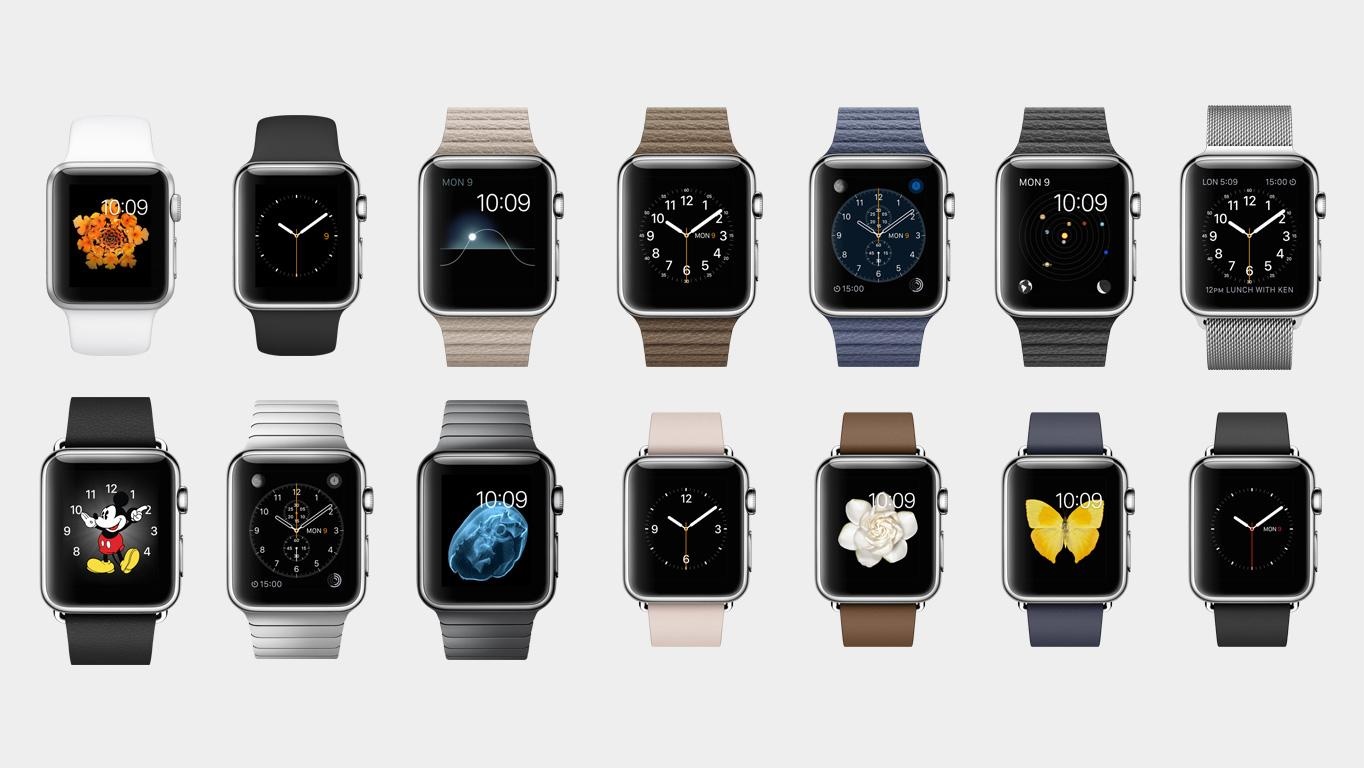
Apple Watch

Apple WatchDua notes that the Apple Watch was announced with so much fanfare that developers began making apps for it a half-year before the product hit the shelves — including big consumer players like Target and American Airlines.  But sales of the Apple Watch have been tepid at best.  There’s no way the marketplace performance of the product has come even remotely close to the company’s hopse for it.

Thom Gruhler, a CMO at Microsoft, says it well:

“When it [comes] down to the Apple Watch, one big question has still not been answered: Will anyone end up really ‘needing’ to engage with this shiny new technology?  What happened in 2015 was a disappointing start.”

Others appear to be even less charitable. A few are even equating the launch of the Apple Watch with that of another product that was similarly hyped:  Remember the Segway?  Everyone was supposed to end up having one of those — whereas the reality is closer to no one having them, with the exception of a few security cops and a few “trendy” businesses with long hallways.

Wearable Tech

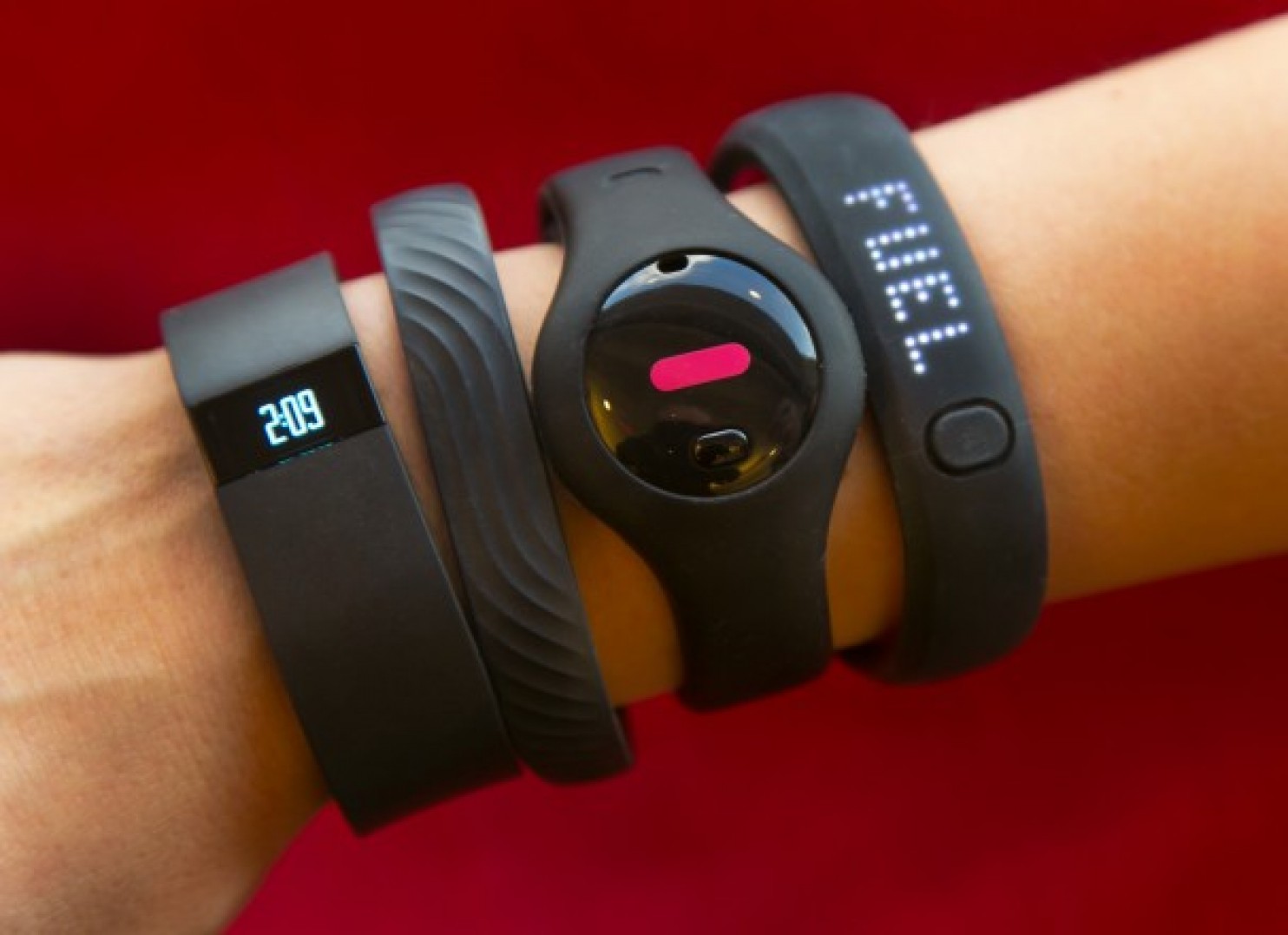
wearableMany prognosticators were expecting that the “big data” promise of using wearable technology for experiences that were predictive and personalized would be fulfilled in 2015.  That’s hardly what’s happened.  According to Dua, wearables have yet to deliver anything like that in any meaningful way.

She quotes Julie Lee, Managing Director of marketing communications firm Maxus USA’s Chicago office:

“Technology, design and user experiences still need to be worked out. Though many companies are making great strides, we continue to watch this space to see if ‘what’s possible’ can truly become possible.  Wearables still hold great potential, but we’ll need to address today’s obstacles before we can become a ‘wearables-first’ market.”

Tanya Dua cites two other developments she feels were overhyped in 2015: Influencer Partnerships and Virtual Reality.

The problem with influencer marketing is when there’s little natural synergy between brands seeking to connect with their consumers more directly. “Authenticity” matters — and too often influencers are rather awkwardly tied to products few people would ever associate with them.

As for virtual reality, the problem is one of practical implementation and adoption by consumers; it hasn’t been happening — mainly due to lack of content and available hardware. Without those pieces of the puzzle in place, marketers simply can’t justify the cost having their brands present in the mix.  Instead, look for this trend to gather more steam in 2017 and years further out, Dua contends.

What do you think? Is Tanya Dua correct in labeling these marketing trends as “overhyped”?  What else would you add to the list?  Please share your thoughts with other readers here.