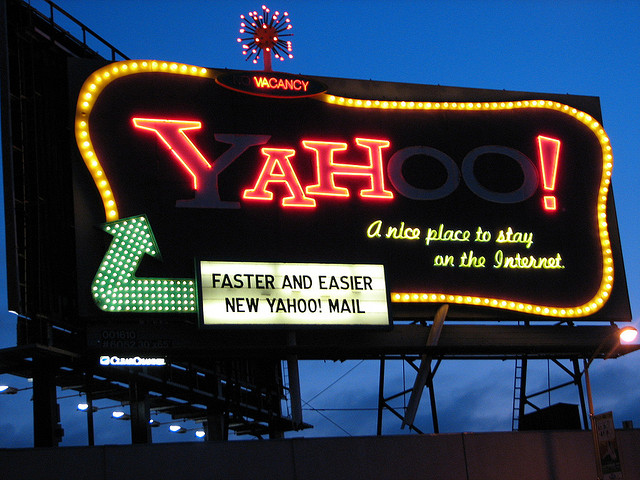
Yahoo’s Terrible, Horrible, No-Good Month

ybb

Aren’t you glad you don’t work at Yahoo?

Where to begin … For starters, the Associated Press is reporting that Yahoo disabled its e-mail forwarding service effective the beginning of October.

Yahoo has a rather benign statement in its Help Center “explaining” why the service has been disabled:

“Automatic forwarding sends a copy of incoming messages from one account to another. The feature is under development.  While we work to improve it, we’ve temporarily disabled the ability to turn on Mail Forwarding for new forwarding addresses.  If you’ve already enabled Mail Forwarding for new forwarding addresses in the past, your e-mail will continue to forward to the address you previously configured.”

This hardly passes the snicker test, of course.

Disabling the auto-forwarding feature for new forwarding addresses came at the same time it was revealed that a 2014 hack of Yahoo’s platform resulted in the theft of ~500 million e-mail accounts including information on addresses, phone numbers, passwords, security questions and answers, plus birthdays.

It doesn’t take a genius to conclude that the reason Yahoo disabled its automatic forwarding function for new forwarding addresses was to deter concerned or frightened Yahoo Mail users from making a mass exodus to rival services.

But this is only the latest in a string of stumbles by the company in just the past few weeks.

For one, Yahoo is now defending a class-action lawsuit accusing the company of security negligence in the wake of 2014’s half-billion e-mail accounts theft.

There’s also a report from Reuters that for the past 18 months, Yahoo has been scanning all incoming Yahoo Mail messages for a wide range of keyword phrases — all on behalf of our friends in the federal government.

And if those weren’t enough, the much-ballyhooed announcement this past summer that Verizon was planning to acquire Yahoo for $4.8 billion has devolved to this: Verizon is now asking Yahoo for a $1 billion discount on the purchase.

It’s little wonder some people are calling the company “Whowee” instead of “Yahoo” these days …

What’s Up with Apps These Days?

Results from comScore’s latest annual U.S. Mobile App Report point to some interesting user behaviors.

No one needs to be reminded of how important mobile apps have become in today’s world of communications. Just looking around any crowd of people, it’s clear that usage has become well-nigh ubiquitous.

And now, we have some new stats that help quantify what’s happening, courtesy of the most recent annual Mobile App Report published by global media measurement and analytics firm comScore.

Among the salient findings from this report:

  • Today, mobile devices represent two of every three minutes spent on digital media.
  • Smartphone apps alone account for nearly half of all digital media time spent – and three of every four minutes spent while on mobile.
  • Over the past three years, total time spent on digital media has grown by over 50%. Most all of that growth has been because of mobile apps.
  • Indeed, time spent on desktop media has actually dropped by more than 10%.

Despite the rapid rise of mobile app usage, there are a few findings in the comScore report that point toward some consolidation of the market, with certain apps being the recipient of strong brand loyalties.

Typically, while smartphone users have uploaded many apps on their devices – and may use several dozens of them on a monthly basis – nine out of every ten mobile app minutes are spent with just five top apps.

[Good luck to any app provider attempting to break into that rarefied group of top performers!]

At the same time, “push notification fatigue” appears to be a growing issue: More smartphone users are rejecting app update notifications than ever before.  According to comScore’s recent report, nearly 40% of users rarely or never agree to such update notifications – up significantly from around 30% last year.

Conversely, only about 25% often or always agree to updates, which is down from about one-third of users in last year’s survey.

This last set of figures doesn’t surprise me in the least. With so many apps housed on so many devices, one could easily spend an hour each day accessing nothing but app updates.

Especially considering how little additional functionality these ongoing updates actually deliver, the whole operation falls into the “life’s too short” category.

The ad blocking phenomenon: It’s all about human nature.

noadThe rapid rise in consumer adoption of ad blocking software is threatening the traditional advertising model for publishers. For some, it seems like a topsy-turvy world where none of the old assumptions or the old rules apply.

But author and MarComm über-thought leader Gord Hotchkiss reminds us that the consumer behaviors we are witnesses are as old as the hills.

In a recent MediaPost column titled “Why Our Brains Are Blocking Ads,” Hotchkiss points out that the environment for online ads is vastly different from the environment where traditional advertising flourished for decades – primarily in magazines, newspapers and television.

Gord Hotchkiss
Gord Hotchkiss

He notes that in the past, the majority of people’s interaction with advertising was done while our brains were in “idling” mode – meaning that they had no specific task at hand. Instead, people were looking for something to capture their attention within a TV program, a newspaper or magazine article.

Hotchkiss contends that in such an environment, the brain is in an “accepting” state and thus is more open to advertising messages:

“We were looking for something interesting, we were primed to be in a positive frame of mind, and our brains could easily handle the contextual switches required to consider an ad and its message.”

Contrast this to the delivery of most digital advertising in today’s world, which is happening when people are in more of a “foraging” mode – involved in a task to find information and answers with our attention focused on that task.

In such an environment, advertising isn’t only a distraction; often, it’s a source of frustration. As Hotchkiss notes:

“The reason we’re blocking [digital] ads is that in the context those ads are being delivered, irrelevant ads are – quite literally – painful. Even relevant ads have a very high threshold to get over.”

Hotchkiss concludes that the rapid rise of ad blocking adoption isn’t about the technology per se.  It has to do with the hardwiring of our brains.  New technologies haven’t caused fundamental changes in human behavior – they’ve simply enabled new behaviors that weren’t an option before.

adbAs is becoming increasingly obvious, the implications for the advertising business are huge:  Ad blocking software is projected to lower digital ad revenues by more than $40 billion in 2016 alone, according to estimates by digital data research firm eMarketer.

Looking back on it, actually it seems like it was all so inevitable.

Are wearable devices wearing out their welcome?

fb

So-called “wearable” interactive devices – products like Fitbit and Apple Watch – aren’t exactly new. In some cases, they’ve been in the market in a pretty big way for several years now.  Plenty of them are being produced and are readily available from popular retailers.

And plenty of consumers have tried them, too. Forrester Research has found that about one in five U.S. consumers (~21%) used some form of wearable product in 2015.

That sounds pretty decent … until you discover that in similar consumer research conducted this year, the percentage of consumers who use wearables has actually declined to ~14%.

The findings are part of Forrester’s annual State of Consumers & Technology Benchmark research. The research involves online surveys of a large group of ~60,000 U.S. adults age 18 and over, as well as an additional 6,000 Canadian respondents.

Not surprisingly, the demographic group most likely to be users of wearables are Gen Y’ers – people ages 28 to 36 years old. Within this group, about three-fourths report that they have ever used a wearable device … but only ~28% report that they are using one or more this year.

Forrester’s research found the same trend in Gen Z (respondents between 18 and 27 years old), where ~26% have used wearable devices in the past, but only ~15% are doing so currently.

The question is … does this mean that wearables are merely a passing fad? Or is it more a situation where the wearable technology isn’t delivering on consumer expectations?

The Forrester research points to the latter explanation. Gina Fleming, leader of Forrester’s marketing data science work team, put it this way:

“Younger consumers tend to have the highest expectations for technology and for companies. They tried these devices, and oftentimes it didn’t meet their expectations in their current use case.  Young consumers tend to be early adopters, but are also fast to move on if they’re not satisfied.”

One interesting finding of the survey is that among the older cohorts – respondents over the age of 36 – their usage has increased in the past year rather than decreased as was found with younger respondents.

Among the respondents who currently use at least one wearable device, there are no real surprises in which ones are the most popular, with Fitbit and Apple Watch heading the list:

  • Fitbit: Used by ~40% of all current wearable device users
  • Apple Watch: ~32%
  • Samsung Galaxy Gear: ~27%
  • Microsoft Band: ~21%
  • Sony SmartBand: ~19%
  • Pebble Smart Watch: ~17%

Looking to the future, although marketers of wearable devices might be happy to see positive trends among older consumers, the usage levels in broad terms tend to be significantly lower than with younger consumers.

It’s within that younger group where the high degree of “churn” appears to offer the biggest opportunities – as well as risks – for wearable device purveyors.

What about your own personal experiences with wearables? Have you found yourself using wearable devices less today than a year ago?  And if so, why?

Ad fraud: It’s worse than you think.

It isn’t so much the size of the problem, but rather its implications.

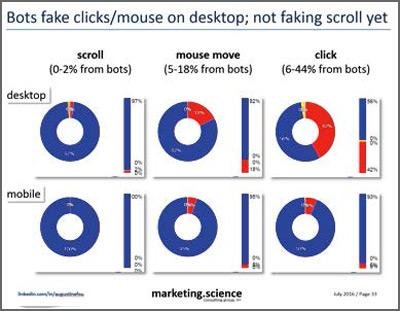
affaA recently published report by White Ops, a digital advertising security and fraud detection company, reveals that the source of most online ad fraud in the United States isn’t large data centers, but rather millions of infected browsers in devices owned by people like you and me.

This is an important finding, because when bots run in browsers, they appear as “real people” to most advertising analytics and many fraud detection systems.

As a result, they are more difficult to detect and much harder to stop.

These fraudulent bots that look like “people” visit publishers, which serve ads to them and collect revenues.

faaf

Of course, once detected, the value of these “bot-bound” ads plummets in the bidding markets.  But is it really a self-correcting problem?   Hardly.

The challenge is that even as those browsers are being detected and rejected as the source of fraudulent traffic, new browsers are being infected and attracting top-dollar ad revenue just as quickly.

It may be that only 3% of all browsers account for well over half of the entire fraud activity by dollar volume … but that 3% is changing all the time.

Even worse, White Ops reports that access to these infected browsers is happening on a “black market” of sorts, where one can buy the right to direct a browser-resident bot to visit a website and generate fraudulent revenues.

… to the tune of billions of dollars every year.  According to ad traffic platform developer eZanga, advertisers are wasting more than $6 billion every year in fraudulent advertising spending.  For some advertisers involved in programmatic buying, fake impressions and clicks represent a majority of their revenue outlay — even as much as 70%.

The solution to this mess in online advertising is hard to see. It isn’t something as “simple and elegant” as blacklisting fake sites, because the fraudsters are dynamically building websites from stolen content, creating (and deleting) hundreds of them every minute.

They’ve taken the very attributes of the worldwide web which make it so easy and useful … and have thrown them back in our faces.

Virus protection software? To these fraudsters, it’s a joke.  Most anti-virus resources cannot even hope to keep pace.  Indeed, some of them have been hacked themselves – their code stolen and made available on the so-called “deep web.”  Is it any wonder that so many Internet-connected devices – from smartphones to home automation systems – contain weaknesses that make them subject to attack?

The problems would go away almost overnight if all infected devices were cut off from the Internet. But we all know that this is an impossibility; no one is going to throw the baby out with the bathwater.

It might help if more people in the ad industry would be willing to admit that there is a big problem, as well as to be more amenable to involve federal law enforcement in attacking it.  But I’m not sure even that would make all that much difference.

There’s no doubt we’ve built a Frankenstein-like monster.  But it’s one we love as well as hate.  Good luck squaring that circle!

Another for-profit higher educational institution bites the dust …

it

Last week, ITT Technical Institute, a for-profit higher educational institution enrolling ~40,000 students on more than 130 campuses across the country, announced that it is shutting down, while also laying off the lion’s share of its more than 8,000 employees.

This development comes hard on the heels of the closure of Corinthian Colleges last year. Together, it raises the question as to whether such “glorified trade schools” are doing any kind of service to students who seek to better themselves but who don’t have the scholastic record – or the money – to attend traditional two-year or four-year colleges.

tlpThere’s no question of the pent-up demand for higher learning. Guidance counselors push continued schooling as the next logical step for high school students, and society in general promotes a college education as the ticket to the good life.

For-profit colleges have benefited greatly from an environment which prizes higher education as the next logical step for high school graduates, and during the Great Recession beginning eight years ago, these schools continued to promote their curricula heavily while churning out more students into what was a very weak job market.

Students graduating from not-for-profit institutions had a hard enough time landing employment in their chosen fields … and for graduates of ITT, Corinthian and other such schools it was even worse.

corinthian_colleges_logoThe U.S. Department of Education had had its eye on both ITT and Corinthian for a number of years. Becoming alarmed at the inability of graduates to pay off their federally funded student loans, the Department ultimately banned both schools from enrolling any new students who rely on federal financial aid – which was nearly all of them, of course.

An angry ITT Technical Institute pronounced the sanctions unwarranted, inappropriate and unconstitutional – amounting to a death sentence.

A news release from the school stated, “These unwarranted actions, taken without proving a single allegation, are a lawless execution.”

As is often the case in such situations, there’s more than meets the eye. At the same time, ITT Technical Institute is also facing fraud charges from the SEC plus a lawsuit from the Consumer Financial Protection Bureau.

Not only that, the institution has been under investigation at the state level in 19 different jurisdictions.

Academic accreditation is also an issue, as the ACICS (Accrediting Council for Independent Colleges & Schools) determined that the school was not in compliance with ACICS’ accreditation criteria.  ACICS cited a whole range of questionable practices in admissions, recruitment standards, retention, job placement and institutional integrity.

The school itself, using aggressive and pervasive advertising while pushing its “power packed studies” in fields such as IT, electronics, CAD design and health services, also informed prospective enrollees that credits earned at ITT Technical Institute would be “unlikely to transfer.”

This sorry state of affairs at ITT-TI now makes it that much more difficult for ~40,000 students to pursue their career goals. It’s yet another example of how a laudatory mission can lead to negative consequences for the very people who need help in launching their working lives the most.

Ben Miller, who is a director for post-secondary education at the Center for American Progress, puts the blame nowhere but on the school:

“Years of mismanagement by ITT leadership put it in a position where the Education Department’s action was necessary.”

In the coming years, it will be interesting to see the degree to which other for-profit institutions with far-flung operations – Brightwood/Tesst, Capella, Strayer, the University of Phoenix and others – will fare under the klieg lights of heightened scrutiny.

Twitter is looking more and more like the old, hidebound player in social platforms.

tWe’ve been hearing for a while now that Twitter’s go-go-days might be in the rear-view mirror.

But even so, the latest growth forecast for the company still seems pretty shocking for a “new media” participant.

In its most recent forecast of Twitter usage in the United States, eMarketer has lowered its projections of Twitter growth in usage to essentially “treading water” status.

More specifically, digital data research company eMarketer forecasts that by the end of the year, ~52 million U.S. consumers will be accessing their Twitter accounts at least once per month.

That will represent just a 2% increase for the year.

Long-term growth prospects for Twitter don’t look any better. At one point, eMarketer was forecasting growth estimates of nearly 14 million new Twitter users by 2020.  But today, that forecast has been downgraded significantly to only about 3.5 million new users.

In the world of social media platforms, such paltry growth expectations mean that Twitter’s share of domestic social network users will continue to decline. (It’s at around 28% now, which is already a bit of a drop from last year.)

What’s making Twitter seem like such a “passé player” in the go-go world of social media? Oscar Orozco, an analyst at eMarketer, sums up its challenges succinctly:

“Twitter continues to struggle with growing its user base because new users often find the product unwieldy and difficult to navigate, which makes it challenging to find long-term value in being an active user. Also, [Twitter’s] new product initiatives have had little impact in attracting new users.”

Who’s eating into Twitter’s market presence? How about Snapchat and Instagram, for starters.  A host of other messaging apps are also hurting Twitter’s growth prospects.

It hasn’t helped that Twitter has been struggling mightily to monetize its service offering. While it has made valiant efforts to do so, Facebook and LinkedIn have done a more effective job of leveraging their massive user data into attracting advertising dollars.

Facebook is a cash machine … LinkedIn does a respectable job … while Twitter seems almost hopeless by comparison.

After flying high for so long – even to the degree that many companies still speak about social media as one mashup term “Facebook-Twitter-LinkedIn,” Twitter’s decline is all the more surprising.  Poignant, even.

Are self-driving cars finally set to become the breakout stars of the highway?

Uber's first self-driving fleet of cars arrives in Pittsburgh in August, 2016.
Uber’s first self-driving fleet of cars arrives in Pittsburgh in August, 2016.

It looks as if self-driving cars are poised to make the leap from “stuff of science fiction” to “regular sight on the roads” within the coming half-decade.

In the past few weeks, CEO Mark Fields and other senior leadership people at Ford Motor Company have stated as much. They’re giving their predictions on what’s going to happen with self-driving cars, along with explaining what their own company has been doing to move the ball forward.

Here are some key takeaways from the Ford pronouncements:

  • Rather than being a novelty, self-driving cars will start being a regular sight on the highways by 2021.
  • Most of the first self-driving automobiles will be conventional cars or hybrids, rather than full electric vehicles.
  • The first self-driving cars on the road will be heavily geared towards ride-sharing fleets and package-delivery services, rather than vehicles sold to the general consumer market.
  • Self-driving technology will be too expensive for individual ownership – at least until 2025 or beyond.

Several additional predictions from other industry observers are also worth noting:

  • Johana Bhuiyan of Vox Media’s Recode predicts that the price of ride-hailing services like Lyft or Uber will decline because of lower human resources requirements (drivers), thanks to self-driving vehicles.
  • Brian Johnson, an analyst at Barclays, believes that once self-driving vehicles are in widespread use, auto sales will decline precipitously (as in nearly 40%), as more people come to rely on ride-hailing services that are priced significantly more affordably than taxi or ride-hailing services have been up to now.

If these predictions are accurate, it means that the biggest advancement in consumer transportation since the inception of the automobile itself is right on our doorstep.

Consumer banking changes … but there’s a lot that stays the same, too.

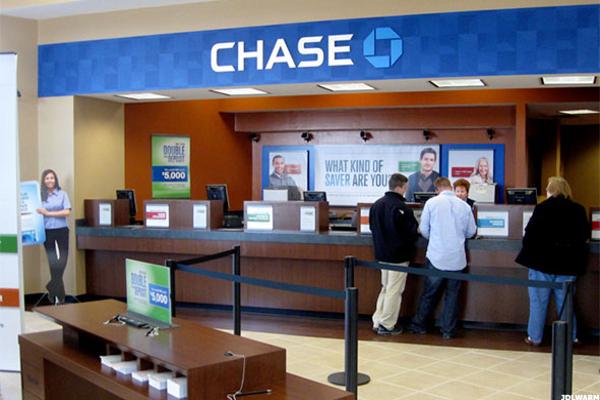
cbThere’s no doubt that electronic banking is a win-win for both bank customers and banks themselves. Not only has convenience been improved exponentially, but electronic banking has helped financial institutions expand the scope of their services without incurring as much of the cost associated with bricks-and-mortar branch banking expansion.

And yet … with nearly a half-century of electronic banking behind us, consumer attitudes about personalized banking services persist.

We’re reminded of this in Nielsen’s latest survey of American consumers, conducted this summer. The study shows that while apps, online banking services, and the granddaddy of them all — ATMs — have made banking easier than ever before, there’s still a fundamental desire for physical branches.

The reason? The “customer experience” plays a major role in financial services, and for many consumers, that experience plays out in the trust that comes with personal interaction.

Nielsen’s June 2016 research shows that consumers prefer using a physical bank branch for a variety of reasons — paramount among them being the personal interaction with bank employees.  Here’s how this and the other reasons stack up:

  • Personal service and interaction with bank associates: ~31% cited as a reason for preferring visiting a physical banking facility
  • Convenience: ~24%
  • Ease of use: ~14%
  • Concern about the security of a transaction: ~14%
  • The dollar amount of the transaction: ~5%
  • Prefer not to use a computer or mobile device to interact with the bank: ~4%

Note that an aversion to using computers or mobile devices is hardly a factor in consumers’ preferences to dealing with a physical banking location. It might have been at one time, but that factor is rapidly disappearing as a reason.

cnWhich activities are best “aligned” with the personal experience many consumers expect to receive? Nielsen found that these are the most important ones to accommodate: 

  • Opening checking or time savings accounts
  • Cashing and depositing checks
  • Seeking financial advice
  • Taking out a loan

The Nielsen study provides clues for financial institutions as to how they can align their products and services at each physical location — which might not be the same at each branch, based on the “dynamics” of the customer base being served.

More information about the Nielsen study can be viewed here.

How about you? How often do you take trips to the bank versus handling everything online?  Would you miss having your branch easily accessible if suddenly it was located more than 10 miles away from you?  Please share your perspectives with other readers.