Like synthetic fabrics, synthetic media has its good and bad attributes.

Decades ago, people had a choice of cloth fibers like cotton, wool and silk. Each of these natural cloths had positive attributes … as well as negative ones, too.

Cotton is comfortable to wear, but wrinkles when washed. Wool is great for the cold weather months, but needs to be dry-cleaned.  Too, moths and other insects love to burrow their way through woolen clothing, making many an item made from wool ready for the trash far too soon.

Silk? It has all the detriments of cotton and wool without any of the positives — except that it looks rich and expensive if one wishes to put on airs or otherwise “make a statement.”

Beginning in the 1940s, polyesters and other synthetic fibers were introduced, giving rise to all sorts of new clothing items that touted a variety of positive attributes: They washed up fine, didn’t need ironing, and kept their shape over time.

Never mind the fact that the clothing didn’t breathe, and made more than a few people stink to the heavens after wearing a synthetic cloth shirt for barely an hour on a hot summer day.

Along these same lines, today we have synthetic media. It’s essentially how people and machines are collaborating to create media that is algorithmically created (or modified).

In its earliest incarnations, synthetic media was a blend of “real” and “faux” components. Think of a newscast with your favorite, very real anchor person … but the background, screens and graphics are computer-generated.

But things have gone much further than that in recent times. Text, photography and videos are being created by software with such precision and seeming authenticity that it’s nearly impossible to determine what content is “real” versus what has been “synthesized.”

On the plus side, content can be automatically translated and delivered in multiple languages to different audiences spanning the world, bringing more news and information to more people simultaneously. But what if the avatar (host) could be customized to be more “familiar” to different audiences — and therefore more engaging and believable to them?

There’s a flipside to all of this innovation. So-called “deepfakes” (a recent term that took no time at all to be added to the major dictionary databases) harness digital technology to superimpose faces onto video clips in ways that are so realistic, they appear to be totally authentic.

Considering the advances in the technology, one can only imagine the plethora of “news” items that will be unleashed into cyberspace and on social media platforms in the coming months and years. Most likely, they’ll have the effect of making more than a few people suspicious of all news and information — regardless of the source.

Which brings us back to synthetic fabrics. They’re with us and always will be; there’s no turning back from them.  But people have learned how to use them for what makes sense, and eschew the rest.  We need to figure out how to do the same with synthetic media.

The Demise of the Urban Commuter Tabloids

The end of the line: The final edition of Express at the McPherson Square Metro stop in Washington, DC.

I’ve blogged before about the major struggles of the so-called alt-weekly press in recent times as the Internet has upended both the business model and the editorial mission of such papers.

But what about urban commuter publications? These are the tabloid freebies that sprang over the decades up to serve the daily public transit population in large urban areas, offering quick-read news and entertainment during subway, train and bus commutes.

Unlike the alt-weeklies with their often-edgy or otherwise counterculture editorial slant, the commuter tabloids were generally more conventional in their content — focusing less on controversial POV topics and instead on “what’s happening” in headline news and on the dining, arts and entertainment front.

One such publication that I came to know quite well was Skyway News — named after the iconic skyway system in downtown Minneapolis — where professionals could grab a copy of the tabloid while dashing off to grab their public transport.  For me, reading Skyway News was a way to pass the time while taking my 35-minute bus commute (yes – it took that long to travel just three miles in the city during rush hour).

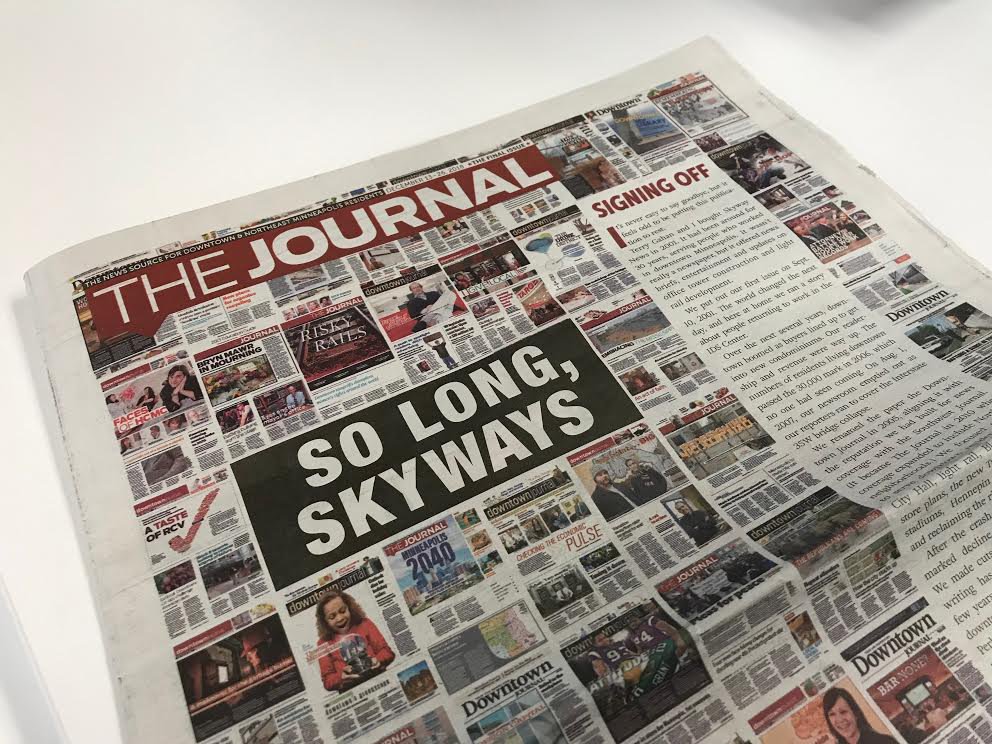
An amazing 48-year run: Skyway News / The Journal (Minneapolis, 1970-2018).

Alas, Skyway News, which debuted in 1970, eventually went the way of so many alt-weekly papers.  First it tried expanding its circulation (and editorial focus) to cover residential Northeast Minneapolis, changing its name to The Journal in the process … but finally shut down for good late last year.

Still, it was an amazing 48-year run for a paper that never had a circulation exceeding 30,000.

This week, we’re hearing news that one of the most successful of the urban commuter tabloid ventures has bitten the dust, too. In this case it’s Washington DC’s vaunted Express, a free commuter tabloid published by the Washington Post since 2003.

In his customary colorful way, Dan Caccavaro – the tabloid’s founding editor who remained in that position for the entire 16 years of the publication’s existence – explained to readers what was behind the paper’s demise:

The final edition of the Express tabloid paper (September 2019).

“When we launched in 2003, there was no such thing as an iPhone. It would be another year before Harvard students would start using a novel social network called Facebook to keep tabs on their classmates.  No one was tweeting anything – or Instagramming or Snapchatting.  And most of us still mocked our “CrackBerry”-addicted friends who just couldn’t wait until they got to work to check their email.   

How quaint.”

The headline of Caccavaro’s editorial says it all: “Hope you enjoy your stinkin’ phones.”

While circulation of the Express had been declining since its height of nearly 200,000 copies to around 130,000 today and while the paper’s finances had slipped into loss territory, the death knell came when the DC metro system introduced Wi-Fi service on its trains.  With that move, the ability for the Express to engage the attentions of DC’s metro commuters died.

Whereas at one time the Express and its quick-read news format was “an integral part of the morning commute for Washingtonians,” the ability for people to stay online during their commute effectively made the Express an irrelevance.

As Caccavaro explained in his final editorial salvo:

Express editor Dan Caccavaro then …

“It wasn’t unusual in [the] early days to see two-thirds of riders on a rush-hour train reading Express … The appetite for Express was so great, in fact, that we more than once considered printing an afternoon edition.  

This Monday morning as I rode the train to work, I was struck by a very different observation. Three people on my crowded Blue Line train were reading Express … one man had his nose in an old-fashioned book. Almost everyone else was staring at a phone.”

Express editor Dan Caccavaro now.

What’s particularly ironic is that the Express, with its lively, quick-read character and attractive, colorful layout, was the precursor to the kind of news and information that everyone expects to see continuously fed to them on their devices.  So as it acclimated a generation of readers to being quickly-informed, entertained and pleasantly distracted during their commutes, Express actually sowed the seeds for the wholesale shift to mobile screens to receive information in the same fashion.

With the closure of Express, there can’t be more than a handful of urban commuter tabloids left in existence in America.  I can’t think of single one.  But if you’re aware of any, please enlighten us – and let us know what might be the secret behind their continuing relevance.

The “woke” workplace? Employees vote thumbs-down.

Most of us have probably heard the old adage that one should never talk about politics or religion at a party (unless its an election party or at the social hour following religious services, I suppose).

But what about at work?

In the “old days” – like when I started in business some 40 years ago – a similar unspoken rule applied; at the office, it just wasn’t “seemly” for people to wear their partisan or “cause” labels on their sleeves.

But that was before the bitterly disputed presidential campaign of 2000. Ever since those fateful 35 days following that election, it’s been downhill in the decorum department pretty much nonstop.

And after the election campaign of 2016, it’s gotten even worse.

Now we read stories about employees revolting against their own employers for seemingly “cavorting with the devil” (Wayfair selling furnishings to border detention facilities), employees losing their jobs – or at the least feeing compelled to leave their place of employment – due to the unpopularity of their political viewpoints (Google), and the like.

Add to this the social “virtue signaling” of some companies and brands who have become involved in social action initiatives (Gillette’s “shaming” of purported male personality traits in its “toxic masculinity” ad campaign).

With the 2020 presidential election campaign on our doorstep and the prospects of continued “high dudgeon” on the part of many people we can charitably refer to as being “highly sensitized” to the campaign, it’s worth wondering what everyday employees think of all this socio-political drama.

If the results of a new survey are any indication, the answer is … “not much.”

Recently, Washington, DC-based business management consulting firm Clutch surveyed ~500 full-time employees working at a cross-section of American businesses ranging from small employers to enterprises with more than 1,000 workers. The breakdown of the research sample included respondents whose philosophical leanings mirror the country’s as a whole (34% conservative, 25% liberal, 21% moderate, 13% apolitical).

What these respondents said should make everyone want to go back to the standards of yesteryear — you know, when socio-political advocacy in the office was considered the height of boorishness.

Among the salient findings from the survey:

  • Most respondents (~60%) don’t know if their political beliefs align with those of their coworkers. What’s more, they don’t care to know what their coworkers think politically.
  • Money, not socio-political alignment, motivates where people choose to work. Whether or not their personal views align with their colleagues’ is of no (or very little) concern to the respondents.  What’s more, few care.
  • Less than one in ten of the survey respondents feel that a “dominant” political viewpoint in the office that doesn’t happen to align with theirs is a source of discomfort. But either way, they’d prefer that such discussions not happen in the first place.
  • Despite the well-intentioned actions of some companies and brands, the majority of respondents feel that engaging in political or similar “cause” expressions adds no value to a company’s culture – nor does it create a healthy exchange of ideas in the workplace. Only about one-third of the respondents think that airing differing views will have beneficial outcomes within the office, while for everyone else, such discussions are viewed as having a “net negative” effect, adding no incremental value to a company’s “culture.”
  • At the same time that respondents wish for a less politically charged atmosphere in the office, a majority of them disagree with the notion of “codifying” political expression and expected behaviors in an employee manual or some other formal written policy statement. In other words, what constitutes “being an adult” isn’t something that should have to be spelled out in so many words.
  • What do respondents think of company owners or leaders expressing their political opinions or taking stands on controversial issues? That’s frowned upon, too. A clear majority of employees (~60%) disagree that company leadership should take stances on political issues – even if they’re relevant to their company’s own products or services. Instead, employees expect leaders to foster a culture of respect at work, including setting a standard that discourages political conversations up and down the chain.

There’s an important side benefit to discouraging discussion of socio-political topics in the office setting. All it takes is for a few “loudmouth” employees to risk creating a hostile work environment – and thus the open up grounds for complaints that could ultimately result in enormous financial costs to the company.

And one important final point came out of the Clutch research: For many employees, a part of their identities as people is connected to where they work.  Often, being an employee means more than simply having a job that pays the bills.  Anything that companies and brands can do to make that identity “work” for the vast majority of their employees will go a good way towards keeping morale high and avoiding the kind of fraught “drama” that can make it onto social media or even the news broadcasts.

[More information about the Clutch survey results can be accessed here.]

What about you?  What’s been your personal experience with employers in the “woke” era? Is your workplace one that is tolerant of all viewpoints while avoiding showing explicit (or implicit) support for any one view?  How successful has your company been in the current environment?  Please share your thoughts with other readers here.

Cookie-blocking is having a big impact on ad revenues … now what?

When Google feels the need to go public about the state of the current ad revenue ecosystem, you know something’s up.

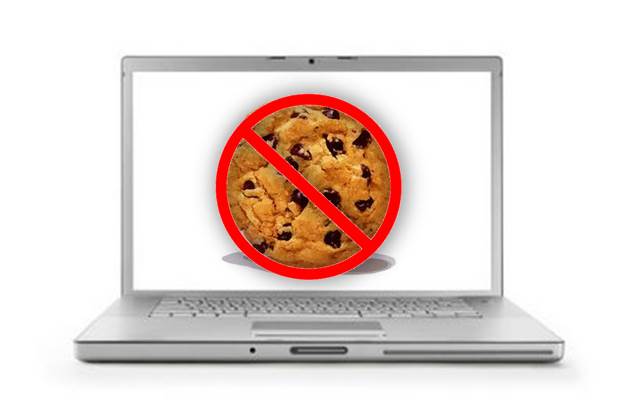
And “what’s up” is actually “what’s down.” According to a new study by Google, digital publishers are losing more than half of their potential ad revenue, on average, when readers set their web browser preferences to block cookies – those data files used to track the online activity of Internet users.

The impact of cookie-blocking is even bigger on news publishers, which are foregoing ad revenues of around 62%, according to the Google study.

The way Google conducted its investigation was to run a 4-month test among ~500 global publishers (May to August 2019). Google disabled cookies on a randomly selected part of each publisher’s traffic, which enabled it to compare results with and without the cookie-blocking functionality employed.

It’s only natural that Google would be keen to understand the revenue impact of cookie-blocking. Despite its best efforts to diversify its business, Alphabet, Google’s parent company, continues to rely heavily on ad revenues – to the tune of more than 85% of its entire business volume.

While that percent is down a little from the 90%+ figures of 5 or 10 years ago, in spite of diversifying into cloud computing and hardware such as mobile phones, the dizzyingly high percentage of Google revenues coming from ad sales hasn’t budged at all in more recent times.

And yet … even with all the cookie-blocking activity that’s now going on, it’s likely that this isn’t the biggest threat to Google’s business model. That distinction would go to governmental regulatory agencies and lawmakers – the people who are cracking down on the sharing of consumer data that underpins the rationale of media sales.

The regulatory pressures are biggest in Europe, but consumer privacy concerns are driving similar efforts in North America as well.

Figuring that a multipronged effort makes sense in order to counteract these trends, this week Google aired a proposal to give online users more control over how their data is being used in digital advertising, and seeking comments and feedback from interest parties.

On a parallel track, it has also initiated a project dubbed “Privacy Sandbox” to give publishers, advertisers, technology firms and web developers a vehicle to share proposals that will, in the words of Google, “protect consumer privacy while supporting the digital ad marketplace.”

Well, readers – what do you think? Do these initiatives have the potential to change the ecosystem to something more positive and actually achieve their objectives?  Or is this just another “fool’s errand” where attractive-sounding platitudes sufficiently (or insufficiently) mask a dimmer reality?

Company e-newsletters: Much ado about … what?

One of my clients is a multinational manufacturing firm that has published its own “glossy” company magazine for years now. The multi-page periodical is published several times a year, in several regional editions including one for the North American market.

It’s a magazine that’s full of interesting customer “case histories” accompanied by large, eye-catching photos. The stories are well-written and sufficiently “breezy” in character to read quickly and without strenuous effort.  The North American edition is direct-mailed to a sizable target audience of mid-five figures.

And I wonder how many people actually read it.

The reason for my suspicion stems from the time we were asked to produce a survey asking about readers’ topic preferences for the magazine. The questionnaire was bound into one of the North American issues, including a postage-paid return envelope.  The survey was simple and brief (tick-boxes with no open-ended questions).  And there was an incentive offered to participate.

In short, it was the kind of survey that anyone who engaged with the publication even marginally would find worthwhile and easy to complete.

… Except that (practically) no one did so.

The unavoidable conclusion: people were so unengaged with the publication that they weren’t even opening the magazine to discover that there was a survey to fill out.

In the world of company e-mail newsletters, is the same dynamic is at work? One might think not.  After all, readers must opt-in to receive them – suggesting that their engagement level would tend to be higher.

Well … no.

A just-published study titled How Audiences View Content Marketing, finds that company e-newsletters are just as “disengaging” as the printed pieces of yesteryear.

The study’s results are based on a survey conducted by digital web design firm Blue Fountain Media. Among the findings outlined in the report are these interesting nuggets:

  • One in five respondents completely ignore the e-newsletters they receive, while more than half scan headlines before deciding to read anything.
  • Two-thirds of respondents admitted that the main reason for opting in to receive e-newsletters is to take advantage of special offers or discounts, while only around 20% expressed any interest at all in receiving information about the company.
  • More than half of respondents (~52%) feel that newsletter content is too “commercial” (as in “too sales-y”). Other complaints are that the e-newsletters are “too long” (~21%) or “boring” (~19%).

Even more alarming is this finding: Approximately one-third of the respondents felt that e-newsletter content is so lame, it actually leads them to question using the product or service.

That seems like marketing going in reverse!

What Blue Fountain has uncovered may be indicative of another challenge as well:  the diminishing allure of content marketing. Over time, readers have become cautious about accepting online content as the gospel truth; this research pegs it at two-thirds of respondents feeling this way.

At the same time, only about one-third of the respondents think that they can distinguish well between fact-based content versus content with an “agenda” behind it. And therein lies the basis for suspicion or distrust.

On the plus side, the research found that readers are more apt to engage with video content, so that may be a way for e-newsletters to fight back in the battle for relevance.  But it still seems a pretty tall order.

I address the topic of company e-newsletters in a second blog post to follow.  Stay tuned …

Do consumers really understand “native advertising” labeling?

There’s no question that “native advertising” – paid editorial content – has become a popular “go-to” marketing tactic. After all, it’s based on the time-tested notion that people don’t like advertising, and they’re more likely to pay attention to information that looks more like a news article than an ad.

Back in the days of print-only media, paid editorial placements were often labeled as “advertorials.” But these days we’re seeing a plethora of ways to label them – whether identified as “sponsored content,” “paid posts,” or using some kind of lead-in descriptor such as “presented by …”

Behind all of the verbal gymnastics is the notion that people may not easily distinguish native advertising from true editorial if the identification can be kept somewhat euphemistic. At the same time, the verbal “sleight of hand” raises concerns about the obfuscation that seems to be going on.

These dynamics have been tested. One such test, conducted several years ago by ad tech company TripleLift, used biometric eye-tracking to see how people would view the same piece of native advertising, that carries different disclosure labeling.

The results were revealing. Here are the percentages of participants who saw each ad, based on how the content was labeled:

  • Presented by” labeling: ~39% saw the content
  • “Sponsored by” labeling: ~29%
  • “Promoted by” labeling: ~26%
  • “Brought to you by” labeling: ~24%
  • “Advertisement” labeling: ~23%

Notice that the content that was labeled “advertisement” was noticed the least often. This provides yet more confirmation that people ignore ads.  When advertisers used softer/fuzzier terms like “presented by” and “sponsored by,” they achieved a bigger lift in the content being noticed.

It comes as little surprise that those same “presented by” and “sponsored by” labels are also the most potentially confusing to people regarding whether the item is paid content. And when people find out the truth, they tend to feel deceived.

Members of the Association of National Advertisers look at it the same way. In an ANA survey of its members conducted several years ago, two-thirds of the respondents agreed that there should be “clear disclosure” of native ads – even if there’s a lack of consensus regarding who should be responsible for the labeling or what constitutes “clear” disclosure.

Asked which labeling describes native ad disclosure “very well,” here’s what the ANA survey found:

  • “Advertisement”: 62% say this labeling describes native ad placements “very well”
  • “Paid content”: 37%
  • “Paid posts”: 34%
  • “Sponsored by”: 31%
  • “Native advertising”: 12%
  • “Presented by”: 11%
  • “Promoted by”: 11%
  • “Branded content”: 8%
  • “Featured partner”: 8%

Considering that the findings are all over the map, it would be nice if a universal method of disclosure could be devised. But the language that’s agreed upon shouldn’t scare away readers, since in so many cases native advertising isn’t directly pitching a product or service.  Labeling such content “advertising” would be as much of a misnomer as failing to divulge the company paying for the placement.

My personal preference for adopting consistent labeling language among the options above would be “Sponsored by …”  What’s yours?

For good or for ill, political advertising has just one trajectory: “Up”.

For those of us who hope that we’d seen the apex of political advertising in 2016 or 2018, it looks like we’re in for a rude awakening. Just-released projections from Advertising Analytics and Cross Screen Media predict that political advertising will exceed $6 billion in 2020 — nearly half of it allocated to the presidential contest alone.

And if we thought that broadcast TV and cable TV advertising might be leveling off because of the explosion of digital advertising, that’s incorrect as well. As it turns out, political advertising across all sectors is going to be up significantly.  Here’s what’s forecast:

More specifically, the analysts project ~8 million broadcast airings of political ads in 2020, which is significantly above both the 2016 and the 2018 figures. Meanwhile, digital advertising will grow by the biggest percentage, but will still make up less than 30% of the total expenditures.

One thing appears to be completely static, however:  where most of the ad dollars will be spent. It seems that the same ~15 states will remain the big battlegrounds in 2020, so the lion’s share of the advertising will be just as concentrated as it was in 2016.  Here are the report’s state projections:

Might it be time to move to a nice one-party state like Rhode Island, Washington, North Dakota or Mississippi? Perhaps — if only for the campaign season …

For those gluttons for punishment who’d like to view the full report, it can be accessed here.

The “creeping crisis” for newspapers seeps into yet another corner of the industry.

Newspaper revenue trend lines are problematic, to say the least.

The travails of the newspaper industry aren’t anything new or surprising. For the past decade, the business model of America’s newspapers has been under incredible pressures.  Among the major causes are these:

  • The availability of up-to-the-minute, real-time news from alternative (online) sources
  • the explosion of options people have available to find their news
  • The ability to consume news free of charge using most of these alternative sources
  • The decline of newspaper subscriptions and readership, leading to a steep decline in advertising revenues

Exacerbating these challenges is the fact that producing and disseminating a paper-based product is substantially more costly than electronic delivery of news. And with high fixed costs being spread over fewer readers, the problems become even more daunting.

But one relative bright spot in the newspaper segment — at least up until recently — has been local papers. In markets without local TV stations, such papers continued to be a way for the citizenry to read up on local news and events.  It’s been the place where they could see their friends and neighbors written about and pictured.  And let’s not forget high-school sports and local “human-interest” news items that generally couldn’t be found anywhere else.

Whatever online “community” presence there might be covering these smaller markets — towns ranging from 5,000 to 50,000 population — is all-too-often sub-standard — in some cases embarrassingly bad.

But now it seems that the same problems afflicting the newspaper segment in general have seeped into this last bastion of the business.

It’s particularly ominous in places where daily (or near-daily) newspapers are published, as compared to weekly pubs. A case in point is the local paper in Youngstown, Ohio — a town of 65,000 people.  Its daily paper, The Vindicator, has just announced that it will be shutting its doors after 150 years in business.

The same family has owned The Vindicator for four generations (since 1887).  It isn’t that the longstanding owners didn’t try mightily to keep the paper going.  In a statement to its readers, the family outlined the paper’s recent struggles to come up with a stable business model, including working with employees and unions and investing in new, more efficient presses.  Efforts to raise the price of the paper or drive revenue to the digital side of the operation failed to secure sufficient funds, either.

Quoting from management’s statement:

“In spite of our best efforts, advertising and circulation revenues have continued to decline and The Vindicator continues to operate at a loss.

Due to [these] great financial hardships, we spent the last year searching for a buyer to continue to operate The Vindicator and preserve as many jobs as possible, while maintaining the paper’s voice in the community. That search has been unsuccessful.”

Youngstown, Ohio

As a result, the paper will cease publication by the end of the summer. With it the jobs of nearly 150 employees and ~250 paper carriers will disappear.  But something else will be lost as well — the sense of community that these home-town newspapers are uncommonly able to foster and deliver.

For a city like Youngstown, which has seen its population decline with the loss of manufacturing jobs, it’s yet another whammy.

Because of the population loss dynamics, it might seem like local conditions are the cause of The Vindicator‘s situation, but some see a bigger story.  One such observer is Nieman Journalism Lab’s Joshua Benton, who writes:

“I don’t think this is just a Youngstown story. I fear we’ll look back on this someday as the beginning of an important — and negative — shift in local news in America.”

What do you think? Is this the start of a new, even more dire phase for the newspaper industry?  Is there the loss of a newspaper that has his your own community particularly hard? Please share your thoughts with other readers here.

Roads to … nowhere?

Google Maps admits its business listings are riddled with errors and outright fraudulent entries.

The news reports hit fast and furious this week when the media got wind of the millions upon millions of “faux” business listings on Google Maps, thanks to a new Wall Street Journal exposé.

It’s true that there are a ton of map listings displayed by Google on search engine results pages, but the latest estimates are that there are more than 11 million falsely listed businesses that pop up on Google searches on any given business day.

That number may seem eyebrow-raising, but it’s hardly “new news.” Recall the reports that date as far back as a half-decade — to wit:

  • In 2014, cyber-security expert Bryan Seely showed how easy it was to use the Internet’s open architecture to record telephone conversations and create fraudulent Google Maps listings and locations.
  • In 2017, Google released a report titled Pinning Down Abuse on Google Maps, wherein it was estimated that one in ten fake listings belonged to actual real-live businesses such as restaurants and motels, but that nefarious third-parties had claimed ownership of them. Why do this? So that the unscrupulous bad-actors could deceive the targeted businesses into paying search referral fees.

Google is owning up to its continuing challenges, this week issuing a statement as follows:

“We understand the concerns of those people and businesses impacted by local business scammers, and back in 2017 we announced the progress we’d made. There was still work to be done then, and there’s still work to be done now.  We have an entire team dedicated to addressing these issues and taking constant action to remove profiles that violate our policies.”

But is “constant action” enough? Certain business trades are so riddled with fake listings, it’s probably best to steer clear of them altogether.  Electricians, plumbers and other contractors are particularly sketchy categories, where roughly 40% of Google Maps listings are estimated to be fraudulent entries.

The Wall Street Journal‘s recent exposé, published on June 24th, reported on a search its researchers conducted for plumbers in New York City.  Of the top 20 Google search results returned, only two actually exist where they’re reported to be located and accept customers at the addresses listed.  That’s pretty awful performance even if you’re grading on a curve.

A measure of progress has been made; Google reports that in 2018 it removed some 3 million fake business listings. But that still leaves another 11 million of them out there, silently mocking …