Magazine Profitability Strategies: Prevention Magazine Goes for a Radical Solution

pmWhen a business model becomes problematic, sometimes the only solution is to step outside the circle with some seriously radical thinking.

That seems to be what magazine publisher Rodale has done with its flagship media property, Prevention magazine.

As reported by Jeffrey Trachtenberg this past week in The Wall Street Journal, beginning with the July issue, Prevention will no longer accept print advertising.

It’s a major step for a publication as venerable as Prevention, in print since 1950 and an important player in the magazine segment focusing on nutrition, fitness and weight loss.

According to the Trachtenberg piece, Prevention magazine has actually seen an increase in ad pages – up over 8% to 700+ ad pages in 2015 over the year before.  But here’s the rub:  ad revenues were actually down because of circulation losses.

The magazine hasn’t turned a profit in a number of years, either, although other related Rodale titles have (Runner’s World and Men’s Health).

The radical surgery planned for the publication means that the number of pages of a typical magazine issue will decline dramatically. So the cost of printing and shipping will go down.  In order to make up for the loss in ad revenue, the magazine’s subscription price is set to more than double to nearly $50 per year.

Price-conscious as consumers are, that action is expected to drive circulation figures down even further – from around 1.5 million to roughly 500,000 if the company’s projections are correct.

Is this an ingenious idea that will preserve and strengthen a highly regarded publication? Or a desperate action that will end up simply driving this magazine into oblivion in a novel way?

Maria Rodale

Maria Rodale, CEO of the family-owned publication company, thinks the former. As she stated to reporter Trachtenberg:

“We’re walking away from revenue but we’re also walking away from a lot of expense. Let’s serve our readers and charge them for it.”

Rodale anticipates that Prevention magazine’s operating expenses will be reduced by more than 50%.

What are the implications of that?  Maria Rodale again:

“If you have to run the numbers out with an advertising model, it’s hard to see it ever getting to profitability. With a non-advertising model, it quickly becomes profitable.”

… But I’m not so sure. This radical departure from the traditional ad-supported publication model may pay short-term dividends.  But will it turn out to be merely a momentary respite before the next downward slide – this time into irrelevance?

With so much information being so easily accessible online (and free of charge) – particularly in the areas of preventive health – I can easily envision fewer and fewer people wishing to shell out $50+ per year for the benefit of receiving a monthly publication that may or not contain highly relevant and valuable information each and every issue.

What do you think? Is this a silver-bullet solution?  Or a zinc zeppelin?

OSHA names the Top 10 most frequent workplace violations — some of which may surprise you.

fpWhat hazards represent the biggest threats to employees at worksites across America? We all may have our own suspicions … but the federal government has been keeping records about them for years.

In fact, this week the Occupational Safety & Health Administration (OSHA) has published its annual list of the Top Ten most frequently cited violations it has found following inspections of worksites its officials undertake on a regular (and unannounced) basis.

The OSHA listing shines a light on the types of safety issues that are most pronounced in the workplace. Here’s OSHA’s latest list, based on the 12-month period from October 2014 through September 2015.  It’s headlined by fall protection, which is the most frequent OSHA standards violation:

  1. Fall protection violations (construction standard)
  2. Hazard communication (general industry standard)
  3. Scaffolding (construction)
  4. Respiratory protection (industry)
  5. Control of hazardous energy (lockout/tagout) (industry)
  6. Powered industrial trucks (industry)
  7. Ladders (construction)
  8. Electrical (wiring methods, components and equipment)
  9. Machine guarding
  10. Electrical (general requirements)

olOSHA publishes the list once per year to alert U.S. employers about the most common violations being cited so that they’ll take precautions to fix similar hazards in their own companies before OSHA officials show up to carry out an inspection.

Reviewing the list, some of the categories fall into the “everyone knows” category. Who doesn’t think that fall protection, scaffolding and ladders are major contributors to injuries in the workplace?

But then there are other OSHA violations like electrical systems and industrial trucks; it’s a little surprising to me to find them among the most frequently cited violations.

Which workplace threats do you think represent the biggest safety hazards to workers? Share your thoughts with other readers here.

Who are the World’s Most Reputable Companies in 2016?

I’ve blogged before about the international reputation of leading companies and brands as calculated by various survey firms such as Harris Interactive.

RI logoOne of these ratings studies is conducted by market research firm Reputation Institute, which collected nearly 250,000 ratings during the first quarter of 2016 from members of the public in 15 major countries throughout the world.

The nations included in the company reputation evaluation were the United States, Canada, Mexico and Brazil in the Americas … France, Germany, Italy, Spain, the United Kingdom and Russia in Europe … India, China, South Korea and Japan in Asia … as well as Australia.

Approximately 200 leading companies were rated by respondents on a total of seven key dimensions of reputation, including:

  • Products and services
  • Innovation
  • Workplace
  • Governance
  • Citizenship
  • Leadership
  • Performance

In the 2016 evaluation, the top-rated companies scored “excellent” (a rating of 80 or higher on a 100-poinst scale) or “strong” (a rating of 70-79) in all seven reputation categories. 2016’s “Top 10” most reputable firms turned out to be these (ranked in order of their score):

#1 Rolex

#2 The Walt Disney Company

#3 Google

#4 BMW Group

#5 Daimler

#6 LEGO Group

#7 Microsoft

#8 Canon

#9 Sony

#10 Apple

Different companies scored highest on specific attributes, however:

  • Apple: #1 in Innovation and in Leadership
  • Google: #1 in Performance and in Workplace
  • Rolex: #1 in Products & Services
  • The Walt Disney Company: #1 in Citizenship and in Governance

VAt the other end of the scale, which company do you suppose was the one that suffered the worst year-over-year performance?

That dubious honor goes to Volkswagen.  In the wake of an emissions scandal affecting the brand internationally, VW’s reputation score plummeted nearly 14 points, which was enough to drop it out of the Top 100 brand listing altogether.

It’s quite a decline from the VW’s #14 position last year.

The complete list of this year’s Top 100 Reputable Companies can be accessed via this link. You may see some surprises …

High-performance sales personnel: They excel in the same ways they always have …

spUnquestionably, technology has had a major impact on the way salespeople in the B-to-B arena go about doing their daily jobs.

Technology platforms and tech-oriented work practices have leeched into every aspect of sales management — from planning and execution to data mining and reference … sales call and results tracking … and compensation.

fall 2015 survey of U.S. business executives conducted by Brainshark and Forbes Insights confirms the degree to which technology investments are occurring as companies make efforts to improve sales productivity.

Here’s what the survey, which included U.S.-based executives from over 200 companies with annual revenues exceeding $50 million, found in terms of the types of investments that are being made:

  • Sales enablement technologies: ~55% are investing in these tools
  • Analytics: ~54%
  • CRM systems: ~53%
  • Learning technologies: ~45%
  • Mobile sales support technologies: ~44%
  • Social platforms: ~32%

And yet … when those same business executives were asked to identity the #1 most important characteristic of their strongest sales team members, technology-related characteristics don’t show up all that much.

As it turns out, tech adoption is a relatively minor part of being a high-performing salesperson. Instead, this survey found that the most important key characteristic of high-performing salespeople is “the ability to sell value over price.”

Here is the relative importance of five characteristics evaluated in the research – and where tech adoption fits among them:

  • The ability to sell value over price: ~81% identify as a key characteristic of high-performing salespeople
  • Consistency of execution: ~74%
  • Time spent with clients: ~48%
  • Leveraging marketing and sales content assets: ~26%
  • Adoption of technology: ~22%

The takeaway is that even though technology tools are helpful, there’s no substitute for the time-honored selling behaviors that separate the star sales performers from all the others.

For more information on the study findings, follow this link.

The Federal Trade Commission vs. Native Advertising: Score One for the FTC

ptpbIt’s pretty much a given these days that “native advertising” has it all over traditional advertising when it comes to prompting prospects to try a new product or service. Study after study shows that positive recommendations and ratings from family members, friends, key influencers and even simply fellow users are what prompt people to try it for themselves.

These dynamics mean that suppliers are looking for as many opportunities to publicize their offerings through these native channels as they can.

There’s a bit of a problem, however. Bloggers and other influencers have become wise to this reality — and many are taking it all the way to the bank.  The market is replete with conventions and other events such as the annual Haven Conference, at which these key influencers congregate and “hold court” with suppliers.

While there is no prescribed agenda regarding what’s discussed between suppliers and influencers, generally speaking there’s a whole lot of quid pro quo going on:  Things like receiving copious free samples in exchange for publishing product reviews, receiving monetary payments for mentioning products and brands in blog articles and on social media posts, and more.

One can’t really blame the influencers for peddling their influence to the highest bidder. After all, many successful bloggers and other influential people derive most or all of their livelihood from their online activities.  It’s only natural for someone whose influences ranges widely and deep to expect to be compensated for publicizing a product, a service or a brand — whether or not they themselves think it’s the best thing since sliced bread.

But there’s a growing problem regarding the “pay to play” aspects of native advertising. This past December, the Federal Trade Commission reiterated its opinion that such sweetheart deals are tantamount to advertising, and therefore must be prominently identified as such in online and other informational content.

Of course, including a prominent announcement that payment has been exchanged for an influencer’s commentary significantly lowers the positive impact of native advertising, in that the commentary being valued by consumers precisely because of its inherent objectivity and credibility is no longer much of a hook.

Until recently, it wasn’t clear how strict the FTC was going to be about enforcing its stated policy about disclosing financial remuneration for brand coverage by influencers.

L+TLWell, now we know.  It’s in the form of a settlement reach this month by the FTC with retailer Lord & Taylor over a particular online ad campaign that contained native advertising and social media components.  It’s the first time the FTC has brought an enforcement action since its native ad guidelines were published.

The settlement pertains to a promotional campaign for Lord & Taylor’s Design Lab private-label line of spring dresses. The initiative reached more than 11 million Instagram users, and the particular sundress at the center of the publicity campaign sold out quickly as a result.

The native advertising portion of the promo effort stemmed from an article about DesignLab that appeared in the online magazine Nylon.  That article was paid for by Lord & Taylor, which also reviewed and approved the article’s content prior to publication.

As could be expected, no notification that the piece was a paid ad placement was included when the article was published.

Skating close to the edge even more, the social portion of the promo campaign involved the retailer giving the sundress to approximately 50 top fashion bloggers, along with paying each blogger between $1,000 and $4,000 to model the dress in photos that were then posted to Instagram.

The bloggers were allowed to style the dress in their own way, but they were asked to reference the dress in their posts by using the campaign hashtag #DesignLab as well as @lordandtaylor.

Furthermore, the retailer reviewed and approved these social media posts before they went live, which enabled them to make stylistic edits before-the-fact as well.

Here’s an excerpt from the FTC’s statement about the Lord & Taylor action:

“None of the Instagram posts presented to respondents for pre-approval included a disclosure that the influencer had received the dress for free, that she had been compensated for the post, or that the post was a part of a Lord & Taylor advertising campaign.”

Clearly, the FTC is now putting muscle behind its 2009 opinion (and reiterated last year) that failing to disclose that an endorsement has been paid for is a deceptive practice.

In this particular “test case,” Lord & Taylor is getting off somewhat easy in that there have been no monetary penalties levied against the retailer. However, the company has signed a consent decree that is in place for the next two decades, which would mean “swift and stiff” penalties if the retailer were to transgress in the future.

Other terms of the settlement mandate that Lord & Taylor require its endorsers to sign and submit written statements outlining their obligation to “clearly and conspicuously” disclose any monetary or other material connections they have to the retailer.

Clearly, the Lord & Taylor settlement is a shot across the bow by the FTC, signifying that it means business when it comes to alerting consumers of the financial or other material connections that exist between influencers who are making value judgments on products and services.  In effect, the FTC is saying to the marketing world, “Be very careful …”

It’ll be interesting to see how marketers finesse the challenge of figuring out how to corral the obvious benefits of native advertising while mitigating the dampening effects of “full disclosure.”

Perhaps bloggers and other influencers will need to re-think their own business models as well, seeing as how the “golden goose” of supplier perks seems to have lost some of its luster now.

Stay tuned — this new “lay of the land” is still unfolding.

For authenticity in advertising … perhaps it’s time to stop making it “advertising.”

AT

Take a look at the interesting data in the chart above, courtesy of Nielsen.

Among the things it tells us is this: If there’s one thing that’s universally consistent across all age ranges – from Gen Z and Millennials to the Silent Generation – it’s that nothing has a more positive impact on buying decisions than the recommendation of a family member, a friend or a colleague.

Not only is it true across all age ranges, it’s equally true in business and consumer segments.

The chart also shows us that, broadly speaking, younger people tend to be more receptive to various advertising formats than older age segments.

this isn’t too surprising because with age comes experience – and that also means a higher degree of cynicism about advertising.

Techniques like the “testimonials” from so-called “real people” (who are nonetheless still actors) can’t get past the jaundiced eye of veteran consumers who’ve been around the track many more times than their younger counterparts.

Someone from the Boomer or Silent Generation can smell these things out for the fakery they are like nobody else.

But if friends and colleagues are what move the buy needle the best, how does advertising fit into that scenario? What’s the best way for it to be in the mix?

One way may be “influencer” advertising. This is when industry experts and other respected people are willing to go on record speaking positively about a particular product or service.

Of course, influencers have the best “influence” in the fields where they’re already active, as opposed to endorsements from famous people who don’t have a natural connection to the products they are touting. Such celebrity “testimonials” rarely pass the snicker test.

But if you think about other people like this:

  • An industry thought leader
  • A prominent blogger or social networker in a particular field or on a particular topic
  • A person with a genuine passion for interacting with a particular product or service

… Then you have a person who advocates for your brand in a proactive way.

That’s the most genuine form of persuasion aside from hearing recommendations from those trusted relatives, friends and colleagues.

Of course, none of that will happen without the products and services inspiring passion and advocacy at the outset. If those fundamental factors aren’t part of the mix, we’re back to square one with ineffective faux-testimonials that feel about as genuine as AstroTurf® … and the (lack of) results to match.

Antisocial behavior: Major retailers do much better broadcasting on social media than they do responding.

untitledWhen it comes to social media, it turns out that the major U.S. retail brands are a lot better at dishing it out than consuming it.

On the “dishing out” side of the ledger, these retailers have been posting an ever-increasing number of social messages aimed at their target audiences.

A recent report from Sprout Social Index titled Snubbed on Social shows just how much:  In the 3rd Quarter of 2014, the average number of messages deployed by the typical major retailer was around 150, but in the 3rd Quarter of 2015, the number had grown to in excess of 350.

But what happens when these retailers are on the receiving end of social messages? Sprout Social has determined that the typical retailer receives around 1,500 inbound social messages over a busy quarter (such as during the holiday season).

Of these, approximately 40% of the messages are ones that warrant a response.

But only about 1 in 6 – fewer than 20% of them — actually get one.

And those consumers who are fortunate enough to receive a response are waiting approximately 12 hours to get it. That’s up from ~11 hours a year earlier.

One interesting factoid from the Sprout Social reporting is that customer messages on Twitter tend to get a better response from brands.

But it’s the difference between merely poor (~14% on Twitter) and downright embarrassing (~9% on Facebook).

untitledScott Brandt, chief marketing officer at Sprout Social, states it succinctly: “More often than not, brands are silent when their customers reach out.”

What are the implications of this (non-)behavior?

For one thing, interacting with customers helps drive more interesting and more purchases.  Sprout reports that consumers are seven times more likely to respond to social promotions and other social news if they have had meaningful interaction with the brand.

Obviously, ignoring the social messages that come through isn’t the way to build that engagement.

One dynamic that appears to be at work is that brands continue to use social media as a vehicle for broadcast messaging, whereas many consumers view social platforms as the place for a more conversational, two-way level of engagement.

You know – just like social media is supposed to work.

But there are some seemingly intractable reasons why it’s difficult to put the “theory” of social interaction into “practice.”

For starters, there are so many ways for people to communicate with companies and brands today (versus only by letter, phone or in person not that many years ago), that too many businesses are either stretched to thin or simply don’t feel the need to respond urgently if at all.

Another issue is similarly personnel-related. For brands to respond better would mean hiring and training people who possess the authorization to actually do something about a question or concern.  Low-level staff with low wages and benefits and with no authority to resolve issues is a clear ticket to nowhere.

At the very least, putting a process in place that provides a quick response to all inquiries – even if the initial response is auto-generated – is just plain common sense. The value to the consumer of a response that comes within just a few minutes – even if the message was posted in the dead of night – is what makes consumers bond with a brand.  (Just having their existence validated is huge for some people.)

Contrast that to the other, more common experience of brands ignoring their consumers to death … and where people never forget which companies aren’t good at responding to their questions or concerns. Does anyone think that reputation doesn’t have a dampening effect on sales?

More information about the Spout Social Index can be found here.

Habits die hard … but there are ways to change buyer expectations.

What’s the easiest way to change time-honored expectations? With dollar signs.

Humans are creatures of habit. Even little kids gravitate towards the “patterns” of daily life such as bedtime rituals.

These forces are what make it so challenging for companies and brands to introduce changes that go against habit.

We’ve seen this play out recently in two segments of the travel industry: airlines and hotels.

Challenging in both cases … but the changes in one are being accepted, while summarily rejected in the other.

untitledLet’s start with the initiative that’s flamed out. This past November, Hilton Worldwide launched a pilot at a number of its hotel properties where it began charging guests a penalty of $50 if a reservation needed to be canceled any time after booking.

The rationale for the initiative was the notion that hotels should join the rest of the world when it comes to the way its products are sold. After all, for most any product, once someone purchases it they’ve committed to buy it.

Not so with hotel reservations, where über-flexible cancellation policies have been the modus operandi seemingly forever.

The way that some in the industry see it, the practice of hoteliers tying up inventory at no cost or penalty seems illogical.

It’s why some chains have introduced stricter 24-hour policies wherein the first night room cost is charged to customers who fail to cancel before midnight the day before their arrival, instead of the afternoon of their planned arrival.

hlBut Hilton’s pilot went even further than this, because the cancellation fee would be charged regardless of when the cancellation was requested – even if it was days or weeks before.

Predictably, customers totally hated it.

So much so, Hilton canned the policy less than three months in.

Putting the best spin on things, CEO Christopher Nassetta remarked that Hilton “did get some nuanced intelligence out of the experience.”

Perhaps that intelligence was not quite as nuanced as Nassetta infers! At the bottom of this customer fail is a fundamental axiom:  If you mess with time-honored practices that people have come to expect as the normal course of business, you do so at the risk of major blowback.

But we have another recent developing in the hospitality industry that points to a different result. In this case, it’s in the passenger airline segment.

last classDelta and a few other airlines have been successfully rolling out a new class of travel euphemistically called “basic economy” or “super economy” class.

[Others call it “economy minus” or “last class” air travel.]

Essentially, what the airlines are now offering are the lowest available airfares that will get travelers to their place of destination – and that’s it. All of the basic amenities available to traditional coach class travelers are missing.

If one chooses to travel “super economy,” here’s what’s in store for them:

  • Seats with less leg-room than coach (if that’s even possible)
  • No free snacks or drinks
  • No free in-flight entertainment
  • No free carry-on bags
  • No advance seat assignments
  • No itinerary changes or ticket refunds (even with a service charge)
  • No frequent flier miles

For giving up all of this, customers are being quoted prices for air travel that are so low, they rival ground transportation rates.

But for travelers who don’t have to worry about changes in their travel plans … don’t care about in-flight comforts … or don’t travel frequently and therefore find frequent flier programs irrelevant to their personal situation, the tradeoffs appear to be worth it.

Because the passenger airlines need to make physical adjustments to their planes in order to offer “super economy” class, a lot is riding on the consumers’ acceptance of these tradeoffs. So far, Delta Airlines has found sufficient success with its pilot program to plan for its expansion.  And United and American are now getting ready to offer their own programs.

The key difference between the airline and hotel pilots boils down to providing a price incentive.

Even with time-honored or habitual practices, if you make it financially lucrative enough, you’ll get the behavior changes you’re seeking. Bottom-line, that’s the bottom line.

Speaking personally, seeing as how I feel strapped for space on airline flights already, I doubt I’ll be traveling “super economy” class anytime soon, except perhaps on very short hauls.

But I know for a fact that I’ll never book a room that’s subject to a cancellation fee.

Is Apple setting itself up for failure in the FBI’s Syed Farook Probe?

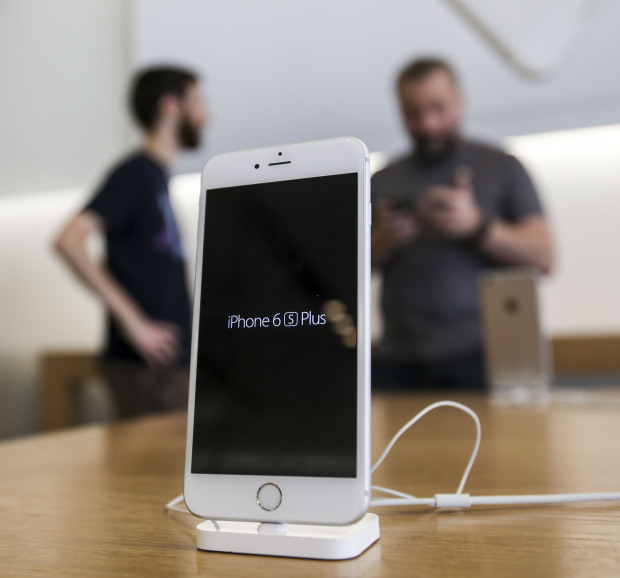
ipThere’s no question that Apple’s refusal to help the FBI gain access to data in one of the iPhones used during the San Bernardino massacre has been getting scads of coverage in the news and business press.

Apple’s concerns, eloquently stated by CEO Tim Cook, are understandable. From the company’s point of view, it is at risk of giving up a significant selling feature of the iPhone to enable a “back door” access to encrypted data..  Apple’s contention is that many people have purchased the latest models of iPhones for precisely the purpose of protecting their data from prying eyes.

On the other hand, the U.S. government’s duty is to protect the American public from terrorist activities.

Passions are strong — and they’re lining up along some predictable social and political fault lines. After having read more than a dozen news articles in the various news and business media over the past week or so, I decided to check in with my brother, Nelson Nones, for an outsider’s perspective.

As someone who has lived and worked outside the United States for decades, Nelson’s perspectives are invariably interesting because they’re formed from the vantage point of “distance.”

Furthermore, Nelson has held very strongly negative views about the efforts of the NSA and other government entities to monitor computer and cellphone records. I’ve given voice to his perspectives on this topic on the Nones Notes blog several times, such as here and here.

So when I asked Nelson to share his perspectives on the Apple/FBI, I was prepared for him to weigh in on the side of Apple.

Well … not so fast. Shown below what he wrote to me:

______________________

This may come as a surprise, but I’m siding with the government on this one. Why?  Three reasons:

Point #1: The device in question is (and was) owned by San Bernardino County, a government entity.

The Fourth Amendment of the U.S. Constitution provides, “The right of the people to be secure in their persons, houses, papers, and effects, against unreasonable searches and seizures, shall not be violated …”

The investigation that the FBI wants to conduct could either be thought of as a seizure of property (the iPhone), or as a search (accessing the iPhone’s contents). Either way, Fourth Amendment protections do not apply in this case.

Within the context of the Fourth Amendment, seizure of property means interfering with an individual’s possessory interests in the property. In this case, the property isn’t (and never was) owned by an individual; it is public property.  Because Farook, an individual, never had a possessory interest in the property, no “unreasonable seizure” can possibly occur.

Also, within the meaning of the Fourth Amendment, an “unreasonable search” occurs when the government violates an individual’s reasonable expectation of privacy. In this case the iPhone was issued to Farook by his employer.  It is well known and understood through legal precedent that employees have no reasonable expectation of privacy when using employer-furnished equipment.  For example, employers can and do routinely monitor the contents of the email accounts they establish for their employees.

Point #2: The person who is the subject of the investigation (Syed Farook) is deceased.

According to Paul J. Stablein, a U.S. criminal defense attorney, “Unlike the concept of privilege (like communications between doctor and patient or lawyer and client), the privacy expectations afforded persons under the Fourth Amendment do not extend past the death of the person who possessed the privacy right.”

So, even if the iPhone belonged to Farook, no reasonable expectation of privacy exists today because Farook is no longer alive.

Point #3: An abundance of probable cause exists to issue a warrant.

In addition to protecting people against unreasonable searches and seizures, the Fourth Amendment also states, “… no warrants shall issue, but upon probable cause, supported by oath or affirmation, and particularly describing the place to be searched, and the persons or things to be seized.”

I strongly believe the U.S. National Security Agency’s mass surveillance was unconstitutional and therefore illegal, due to the impossibility of establishing probable cause for indiscriminately searching the records of any U.S. citizen who might have placed or received a telephone call, sent or received an email message or logged on to their Facebook account.

That’s because these acts do not, in and of themselves, provide any reasonable basis for believing that evidence of a crime exists.

I also strongly believe that U.S. citizens have the right to encrypt their communications. No law exists preventing them from doing so for legal purposes. Conducting indiscriminate searches through warrantless “back door” decryption would be just as unconstitutional and illegal as mass surveillance.

In this case, however, multiple witnesses watched Farook and his wife, Tashfeen Malik, open fire on a holiday party, killing 14 people, and then flee after leaving behind three pipe bombs apparently meant to detonate remotely when first responders arrived on the scene.

Additional witnesses include the 23 police offers involved in the shootout where Farook and Malik eventually were killed.

These witnesses have surely given sworn statements attesting to the perpetrators’ crimes.

It is eminently reasonable to believe that evidence of these crimes exists in the iPhone issued to Farook. So, in this case there can be no doubt that all the requirements for issuing a warrant have been met.

For these three reasons, unlike mass surveillance or the possibility of warrantless “back door” decryption, the law of the land sits squarely and undeniably on the FBI’s side.

Apple’s objections.

Apple’s objections, seconded by Edward Snowden, rest on the notion that it’s “too dangerous” to assist the FBI in this case, because the technology Apple would be forced to develop cannot be kept secret.

“Once [this] information is known, or a way to bypass the code is revealed, [iPhone] encryption can be defeated by anyone with that knowledge,” says Tim Cook, Apple’s CEO. Presumably this could include overreaching government agencies, like the National Security Agency, or criminals and repressive foreign regimes.

It is important to note that Apple has not been ordered to invent a “back door” that decrypts the iPhone’s contents. Instead, the FBI wants to unlock the phone quickly by brute force; that is, by automating the entry of different passcode guesses until they discover the passcode that works.

To do this successfully, it’s necessary to bypass two specific iPhone security features. The first renders brute force automation impractical by progressively increasing the minimum time allowed between entries.  The second automatically destroys all of the iPhone’s contents after the maximum allowable number of consecutive incorrect guesses is reached.

Because the iPhone’s operating system must be digitally signed by Apple, only Apple can install the modifications needed to defeat these features.

It’s also important to note that Magistrate Judge Sheri Pym’s order says Apple’s modifications for Farook’s iPhone should have a “unique identifier” so the technology can’t be used to unlock other iPhones.

This past week, Apple has filed a motion to overturn Magistrate Judge Pym’s order. In its motion, the company offers a number of interesting arguments, three of which stand out:

Contention #1: The “unreasonable burden” argument.

Apple argues that complying with Magistrate Judge Pym’s order is unreasonably burdensome because the company would have to allocate between six and ten of its employees, nearly full-time over a 2 to 4 week period, together with additional quality assurance, testing and documentation effort.  Apple also argues that being forced to comply in this case sets a precedent for similar orders in the future which would become an “enormously intrusive burden.”

Contention #2: Contesting the phone search requirement.

Apple isn’t contesting whether or not the FBI can lawfully seize and search the iPhone.  Instead it is contesting Magistrate Judge Pym’s order compelling Apple to assist the FBI in performing the search.  As such, Apple is an “innocent third party.”  According to Apple, the FBI is relying on a case, United States v. New York Telephone, that went all the way to the Supreme Court in 1977.  Ultimately, New York Telephone was ordered to assist the government by installing a “pen register,” which is a simple device for monitoring the phone numbers placed from a specific phone line.

The government argued that it needed the phone company’s assistance to execute a lawful warrant without tipping off the suspects.  The Supreme Court found that complying with this order was not overly burdensome because the phone company routinely used pen registers in its own internal operations, and because it is a highly regulated public utility with a duty to serve the public.  In essence, Apple is arguing that United States v. New York Telephone does not apply, because (unlike the phone company’s prior use of pen registers) it is being compelled to do something it has never undertaken before, and also because it is not a public utility with a duty to serve.

Contention #3: The requirement to write new software.

Lastly, Apple argues that it will have to write new software in order to comply with Magistrate Judge Pym’s order. However, according to Apple, “Under well-settled law, computer code is treated as speech within the meaning of the First Amendment,” so complying with the order amounts to “compelled speech” that the Constitution prohibits.

What do I think of Apple’s arguments?

Regarding the first of the them, based on its own estimates of the effort involved, I’m guessing that Apple wouldn’t incur more than half a million dollars of direct expense to comply with this order. How burdensome is that to a company that just reported annual revenues of nearly $234 billion, and over $53 billion of profit?

Answer:  To Apple, half a million dollars over a four-week period is equivalent to 0.01% of last year’s profitability over an equivalent time span. If the government compensates Apple for its trouble, I don’t see how Apple can win this argument.

Regarding the other two arguments above, as Orin Kerr states in his Washington Post blog, “I don’t know which side would win … the scope of authority under the [All Writs Act] is very unclear as applied to the Apple case.  This case is like a crazy-hard law school exam hypothetical in which a professor gives students an unanswerable problem just to see how they do.”

My take:  There’s no way a magistrate judge can decide this.  If Apple loses, and appeals, this case will eventually end up at the Supreme Court.

What if the back door is forced open?

The concerns of privacy advocates are understandable. Even though I’m convinced the FBI’s legal position is solid, I also believe there is a very real risk that Apple’s modifications, once made, could leak into the wrong hands. But what happens if they do?

First, unlike warrantless “back door” decryption, this technique would work only for iPhones — and it also requires physical possession of a specifically targeted iPhone.

In other words, government agencies and criminals would have to lawfully seize or unlawfully steal an iPhone before they could use such techniques to break in. This is a far cry from past mass surveillance practices conducted in secret.

Moreover, if an iPhone is ever seized or stolen, it is possible to destroy its contents remotely, as soon as its owner realizes it’s gone, before anyone has the time to break in.

Second, Apple might actually find a market for the technology it is being compelled to create. Employers who issue iPhones to their employees certainly have the right to monitor employees’ use of the equipment.  Indeed, they might already have a “duty of care” to prevent their employees from using employer-issued iPhones for illegal or unethical purposes, which they cannot fulfill because of the iPhone’s security features.

Failure to exercise a duty of care creates operational as well as reputational risks, which employers could mitigate by issuing a new variety of “enterprise class” iPhones that they can readily unlock using these techniques.

____________________

So that’s one person’s considered opinion … but we’d be foolish to expect universal agreement on the Apple/FBI tussle. If you have particular views pro or con Apple’s position, please join the discussion and share them with other readers here.


The Sanders/Trump phenomenon: A view from outside the United States.

photo1This past Tuesday evening as I watched Bernie Sanders and Donald Trump vanquish their rivals handily in the New Hampshire presidential primary election, I received an e-mail from my brother, Nelson Nones, with his observations on “what it all means.”

As someone who has lived and worked outside the United States for years, Nelson’s views are often quite perceptive — perhaps because he is able to look at things from afar and can see the “landscape” better than those of us who are much closer to the action.

Call it a “forest versus trees” perspective.

And when it comes to the 2016 presidential election, it is Nelson’s view that the Sanders/Trump phenomenon is absolutely real and not something based on personality or celebrity — for good or for ill.

Shown below is what Nelson wrote to me.

… On the Underlying Dynamics

For context into what’s happening in the United States, the Pew Research Center’s recent report on the wealth gap in the United States is instructive.

In a nutshell, over the past 30 years Pew’s data points reveal: 

  • Upper-income families currently represent ~20% of the total, and their wealth (measured by median net worth) has doubled. 
  • Middle-income families represent 46% of the total. Their wealth barely changed (up 2%). 
  • Lower-income families therefore represent ~34% of the total, but their wealth fell 18%.

Now, after the end of the Cold War in 1992 until the onset of the Great Recession in 2007, the wealth of all three groups did rise, albeit by varying degrees: 

  • Upper-income by 112%
  • Middle-income by 68%
  • Lower-income by 30%

Here’s how they fared during the Great Recession (2007-10): 

  • Upper-income wealth declined by 17%
  • Middle-income wealth fell by 39%
  • Lower-income wealth fell by 42%

And after the Great Recession:

  • Upper-income families recovered 36% of their wealth lost during the Great Recession
  • Middle-income families recovered none
  • Lower-income families lost an additional 7% relative to their wealth in 2007

So, if we assume wealth to be a proxy for the feeling of well-being, then one could surmise that ~80% of American families feel like victims today — of which nearly half feel they are still being victimized.  

… On “Anger”

Are people feeling angry about this? You bet.   

Who are they going to blame? The other ~20% and foreigners, of course. 

Never mind the exculpatory hard data proffered by defenders of the nation’s elites revealing that big banks paid back all the bailout money they received during the Great Recession, or that bankers cannot be jailed for their alleged misdeeds unless and until proven guilty by jurors in courts of law (like anyone else), or that pharmaceutical companies’ margins on $45 billion of profit, at 12%, aren’t “quite” as obscene as they appear at first glance.   

None of those facts can ever restore wealth that’s been lost and never recovered, or is still falling. When you feel like a victim, such hard data are utterly and completely irrelevant.  

Both Bernie Sanders and Donald Trump are tapping into this anger with great success. As I watched both Sanders’s and Trump’s victory speeches, to vastly oversimplify, here is what I heard.  Sanders essentially said:

“It’s not fair that most Americans can’t get ahead or are falling behind. I’ll expropriate money from the rich by taxing Wall Street bankers and give it to you in the form of free tuition, student debt restructuring, lower healthcare costs and single-payer healthcare!” 

Trump essentially said:

“Political hacks are negotiating bad deals, letting China, Japan and Mexico take our money away from us every day. As the world’s greatest businessman, I’ll negotiate great deals fast to give you universal healthcare, and beat these countries so you get your money back – without having to share it with all those illegal immigrants!”

Photo2In my view, what both Sanders and Trump recognize is that ~80% of American families may have lost 40% of their wealth since 2007 with little or no hope of recovering it … but they haven’t lost any of their voting power.  

It makes no difference that the prescriptions offered by Sanders and Trump – squeezing money from Wall Street, China, Japan and Mexico, for example – are nonsense. As a lawyer I once knew always said, “Winning isn’t everything; it’s the only thing.”  To have any chance of accomplishing something useful (or not) as President, you have to win first.   

… On Populism being the Winning Ticket

In this election, under present circumstances, populism is a sure winner. 

The wealthiest ~20% of families (Democrats as well as Republicans) who represent the “establishment” in the eyes of the angry Sanders and Trump crowds, don’t quite smell the coffee yet.  

The angry crowds are out for money this election cycle, and I believe they hold enough votes to elect one of the two populist candidates (Sanders or Trump) who is promising “money.”   

… Not “experience,” “pragmatism,” “conservativism,” “liberalism,” “socialism,” “limited government,” “feminism,” “pro-life,” “pro-choice,” “pro-LGBT,” “hope,” “change,” or whatever.  But money.

To protect as much of their wealth and status as they can, the elites have little choice but to scuttle their aspirational platitudes and learn to deal with it.

So there you have it — a view of the presidential election from the outside looking in. I think there’s food for thought here — and very possibly a look at where we’ll be in another nine months.

What do other readers think? Agree or disagree?  Please share your observations here.