Holiday online shopping dynamics: The 2016 season’s results are already coming in.

ohsOne of the neat aspects of online shopping is the ability to learn about consumer behaviors almost in real-time. No waiting around for published reports that are released months after the fact.

Moreover, we can know quite a bit more than simply gross sales figures, including traffic stats.

In fact, we already have extensive information available about consumer online shopping activities in the 2016 holiday season, thanks to data released by firms such as Connexity’s Hitwise division, which measures consumer behaviors across desktop, tablet and smartphone devices.

From Hitwise, we know that its Top 500 retail websites received more than 335 million visits on Thanksgiving Day alone. That averages out to just under 14 million visits per hour … but the time period of 8 pm to 11 pm had more than 50% greater traffic compared to the hourly average for the day.

Amazon.com was among the retailers receiving extensive traffic volume from 8 pm onward – in its case ~25% of its total traffic on Thanksgiving came in those final four hours of the day.

One supposes that after the “big meal,” the “big game” and the “big cleanup,” consumers decided cap off the day by plunking down at their computers or smartphones for some heavy-duty online shopping.

Hitwise found that Black Friday online shopping dynamics were different, with the top retail sites being busiest in the late morning hours, when site visits were around half again larger than Black Friday’s daily hourly average.

As for Cyber Monday, Hitwise found that consumer online shopping dynamics weren’t very much different from any other typical Monday – except that the overall volume (nearly 330 million visits) was substantially higher than the typical Monday volume of ~200 million visits. That, and a slightly greater-than-average share of online shopping happening in the early morning hours of 6, 7 and 8 am.

hwlAs for the persistent belief that Cyber Monday has more people shopping online during their time in the office, Hitwise is not seeing that phenomenon any longer.

Again, not very surprising in that more consumers have 24/7 access to digital devices in 2016 than they did ten or even just five years ago.

The Hitwise report for 2016 includes extensive findings not just on hourly shopping patterns, but also on product searches and key traffic drivers for the major online shopping websites. More data can be found on the Connexity/Hitwise website.

2016 says goodbye to some iconic American brands …

tcAs in every year, 2016 has seen the fall of famous brands; some are young upstarts that flamed out quickly, but others are venerable names that have been with us for decades.

Here are ten of the more notable casualties of the year – albeit a few of them still kicking but for all intents and purposes, going lights-out:

ap-logoA&P – This brand name goes back 150 years … but eventually even venerable A&P couldn’t survive in the cutthroat grocery market.  Actually, this brand’s been on life support for a while now, but has always managed to scrape by.  No longer.  Albertstons Companies – itself facing big competition in the grocery segment – has purchased the remaining 600 A&P outlets and will re-brand those it keeps open under its Acme brand name.  Nevertheless, at a century and a half it’s been quite a run – one that only a very few other brands can match.

american-appAmerican Apparel – When a once high-flying apparel company has its equally high-flying chief executive fending off salacious reports of secretly recorded sex videos – yes, they’re on the Internet – coupled with spiraling debt levels and plummeting sales, can Chapter 11 be far behind?  You already know the answer.

office-maxOffice Max – Sales at the big three U.S. office supply chains have struggled for a number of years, but Office Max was the one to fall victim first.  Its merger in 2013 with Office Depot began the brand’s slide, and now the final nail is in the coffin with the merger of Office Depot and Staples.  What’s the rationale for continuing to have three store brands under one company umbrella?  Answer:  No reason at all … which is why the weakest of the three brands is now becoming history.

ogOlympic Garden – In a development that some might characterize as divine retribution, the Las Vegas “adult” establishment colloquially known as “The OG” couldn’t handle its myriad legal battles even as it continued to attract big crowds.

radioshakRadioShack – OK, we still see RadioShack outlets in certain locations around the country – typically in small- to medium-sized markets.  But they’re co-branded locations with Sprint.  The reality is that this nearly 100-year-old brand is fading away; the only question is whether we’ll cease seeing the name in five years or just one or two.

searsSears – Another iconic brand name has been struggling mightily in the past decade or so, despite its merger with Kmart.  The company has lost more than $1 billion in each of the past three years.  Now it appears that the Sears name is the one that will disappear as its store locations continue to dwindle – nearly 250 in 2015 and close to another 100 this year.  At that rate, there’ll be none left before long.

simplyhiredSimplyHired – An international job search engine with upwards of 30 million active users that once sparred with the likes of Monster.com, ultimately this HR resource was unable to successfully compete in the space, shutting down in mid-year.

sportsSports Authority – A cautionary tale of what happens to a big retailer when it fails to keep its operations and product offerings fresh and appealing.  This retailer has been absorbed into Dick’s Sporting Goods, which has been far more nimble – and successful – in the “big box” sporting goods niche.

us-airways-logoUS Airways – We knew this had to be coming eventually; in 2013, this airlines’ merger with American Airlines was finalized.  Now that its operating systems are fully consolidated, one of the brand names was bound to disappear – and it’s US Airways.  Just like we all knew that Southwest Airlines would eventually consign the AirTran brand name to the dustbin, the same thing is happening with US Airways now.

vineVine – In October, Twitter shut down this video-sharing app so it could refocus on its (also struggling) core business.  Vine was definitely a flash-in-the-pan brand – barely a half-decade old.

So, now it’s time say a fond farewell to these brands. For a good many of them, the names may soon disappear, but they won’t be forgotten …

Do you have other 2016 brand casualties you’d add to the list?  Please share your choices with other readers here.

Fitbit aims to become the “check engine” light for the body.

… But first it needs to convince consumers that wearables are a “need-to-have” versus a “nice-to-have” product.

fb

Between Fitbits, Apple Watches and other “wearables,” I suspect the holiday season this year will be full of gift-giving of these and other types of interactive gadgetry.

The question is – how many of these items will still be being used by the end of the next year?

According to a recent online survey of ~9,600 consumers in the United States, the United Kingdom and Australia conducted by market research firm Gartner, many of these wearable devices will be destined for the dresser drawer.

The abandonment rate for smartwatches is expected to be ~29%, while for fitness trackers, it’s forecast to be nearly the same at ~30%.

Part of the problem is that while most people typically purchase these products for themselves, more than one-third of fitness trackers and more than a quarter of smartwatches are given as gifts.

When gadgets like these are gifted, often it’s “easy-come, easy-go.”

The Fitbit company knows about these dynamics all-too well. According to an article earlier this month in The Wall Street Journal, the company is struggling to develop its next generation of products and to attract new users.

While that’s going on, for this holiday season, Fitbit’s sales are forecast to grow only in the 2% to 5% range, as compared to double-digit increases in prior quarters.

Essentially, what Fitbit and other brands need to do is to move consumers to start considering wearables as “need-to-have” rather than “nice to have” products — and to avoid the dreaded “fad” moniker (as in “for-a-day”).

This imperative helps explain Fitbit’s attempts to position its products as ones that measure long-term health conditions rather than being simply fitness trackers.

The notion is that physicians could start prescribing Fitbit devices to track patients’ vital signs in heart health, or physical therapists doing the same to help monitor their patients’ at-home exercise routines.

Fitbit is also working on developing trackers that can detect and diagnose long-term health conditions. To that end, what’s critical is to come up with defining functions that other gadgets can’t perform.

Otherwise, consumers are less likely to be interested — figuring that they can get the same kind of functionality out of other devices they already own.

In the meantime, look for wearables to be under the tree this holiday season … and then for many of them to be stuffed in a drawer someplace by next summer.

Clickthrough rates on web banner advertising actually rise! (But they’re still subterranean.)

bbThe headlines last week were near-breathless, announcing that North American clickthrough rates for web banner advertising are rising!

And that’s true on the face of it: According to a new analysis by advertising management company Sizmek based on billions of online ad impressions, the average engagement (clickthrough) rate on a standard banner ad has actually increased.

It’s risen all the way up to 0.14%.

It means that for a standard banner ad, for every 1,000 times it’s served, 1.4 engagements happen.

Here’s what that also means: Don’t bank your business success on online display advertising.

Of course, there are more ways to advertise online than by using standard banner ads. So-called “rich media” ads – ones that incorporate animation and/or sound – perform substantially better.

But it’s all relative, because “substantially better” in this case means that in North America, achieving an average of 2.1 engagements for every 1,000 times a rich media ad is served.

The situation is even worse than these figures imply, actually. When one considers the incidences when viewers accidentally click through on an ad thanks to an errant mouse or a fat finger, even “one out of a thousand” for engagement isn’t really correct.

The Sizmek analysis found that banner ads in certain industries perform better than those in others. Among the “winners” (if one could characterize it that way) are electronic products, apparel, and other retail advertising.

At the bottom?  Automotive, jobs and careers and, ironically, tech and internet advertising.

A glimmer of hope in this continuing saga of hopeless news is in-stream video which, according to the Sizmek study, is generating far higher engagement levels of 1.5% or greater, depending on the degree of interactivity.

But I can’t help but wonder: As the novelty of these newer ad innovations inevitably wears off, won’t we see the same phenomenon occurring over time wherein audiences will become as “blind” to these ads as they are to the standard banner ad today?

As the years roll by and the effectiveness of online banner advertising continues to underwhelm in overwhelming ways, the “drive towards zero” seems to be the relentless theme. I seriously doubt we’re going to see a reversal of that.

The fundamental problem with newspapers’ online endeavors.

olnIt’s no secret that the newspaper industry has been struggling with finding a lucrative business model to augment or replace the traditional print medium supported by subscriptions and advertising.

The problem is, their efforts are thwarted by market realities at every intersection, setting up the potential for head-on crashes everywhere.

In October, the results of an analysis conducted by several University of Texas researchers were published that illustrate the big challenges involved.

The researchers pinpointed 2007 as the year in which most large newspapers’ online versions had been available for about a decade, meaning that they had become “mature” products. The evaluation looked at the total local online readership of the Top 50 American newspapers, and found that nearly all of them have been stagnant in terms of growth over the past decade.

Even worse, since 2011 more than half of the papers have actually lost online readership.

The issue isn’t that people aren’t going online to consume news; the precipitous drop in print newspaper subscriptions proves otherwise. The problem is that many consumers are going to news aggregator sites – places like Yahoo News, CNN.com and other non-newspaper websites – rather than to sites operated by the newspapers.

That leaves online newspapers attracting disappointing advertising revenues that can’t begin to make up for the loss of those dollars on the print side. To wit, the University of Texas study reported that total newspaper industry digital ad revenues increased only about 15% between 2010 and 2014, going from ~$3 billion to ~$3.5 billion.  That’s pretty paltry.

The problem goes beyond ad revenue concerns too. In a market survey conducted in 2012, two-thirds of newspaper subscribers stated that preferred the print version of their daily newspaper over the web version.

I find that finding totally believable. I am a print subscriber to The Wall Street Journal whereas I read other newspaper fare online.  My daily time spent with the print WSJ ranges from 30 minutes to an hour, and I peruse every section of the paper “linearly.”  It’s an immersive experience.

With online newspaper sites, I hunt for one or two topics, check out the headlines and maybe a story or two, and that’s it. It’s more a “hit and run” operation, and I’m out of there in five minutes or less.

The notion of carefully picking my way through all of the menu items on an online newspaper’s navbar? Forget it.

And with such a tentative relationship with online newspapers, do I want to pay for that online access? Nope.

Magnify that to the entire market, and the web traffic stats show the same thing, which is why online advertising revenues are so underwhelming.

Once again, the optimistic goals of newspaper marketers are running up against cold, hard reality. The fact is, people don’t “read” online in the traditional sense, and they’re quick to jump from place to place, in keeping with the “ADD” most all of us have developed in our online behaviors.

There just isn’t a good way that newspapers can take their product and migrate it to the web without losing readers, losing ad revenue – and indeed, losing the differentiation they’ve built for quality long-form journalism.  And so the conundrum continues …

What about your print vs. online newspaper reading habits?  Are your experiences different from mine?  Please leave a comment for the benefit of other readers.

Will consumer spending bring holiday cheer to businesses in 2016?

hdsThe holiday season isn’t yet upon us, and already there are a plethora of prognostications being made as to how holiday sales will stack up compared to prior years.

These predictions come courtesy of numerous forecasters including the National Retail Foundation, Deloitte, Kantar Media, eMarketer, the International Council of Shopping Centers, Market Track and others.

So what’s in store? On balance, forecasters predict that holiday sales in the United States will post an increase of approximately 3.5%.  That’s higher than the 10-year rolling average of 2.5% but down a tick from last year’s 3.7% increase.

Still, at more than $655 billion in total sales, holiday spending continues to be the biggest single driver of the U.S. consumer market.

Hardly surprising, e-commerce sales are expected to continue their double-digit growth over last year’s holiday season, with various predictions ranging from 14% to 17% growth in this sector. Not only are consumers attracted by the convenience of online shopping, many of them believe they can find products at the cheapest price via online sources rather than taking a trip to the shopping mall.

Another factor that drives at least some people to shop on their online devices is their aversion to the crush of holiday shopping at the stores. A McKinsey study has found that nearly one-third of U.S. consumers basically hate Black Friday (the day after Thanksgiving), and make it a point to stay as far away from it as possible.

But there’s one drawback for businesses about online holiday shopper dynamics, however:  Those consumers tend to be less brand loyal than is typical. RJ Metrics calculates that the typical e-commerce business acquires nearly 25% of its new customers during just the months of November and December.  Tempering that healthy statistic is the lifetime value of those consumers, which RJ Metric has determined is about 13% lower than the lifetime value of customers acquired at other times of the year.

You might be wondering what amount of money the typical U.S. consumer will spend on his or her holiday shopping this year. Wait for it:  The 2015 per capita amount is expected to be $935.

That figure may seem quite rich … but it’s actually a little bit lower than 2015’s average spend-per-person, which at $953 happens to have been the all-time high ever recorded.

Does the new $935 forecast signify a reversal of a trend … or is it just a pause in an otherwise ever-increasing amount of money that consumers are willing to plunk down as part of their celebration of the holiday season?

Check back in about a year and we should have an answer.

E-Mail Communications and the “Always On” Culture

It’s a common complaint of people in business:  E-mail is this great big blob that consumes way too much of their day. 

tme

And now we know just how much.  According to a recent report published by Adobe —  “E-Mail Survey 2016,” — white collar adults around the world are spending ~17% more time on e-mail activities today compared to last year.  And on the business side, the growth is even bigger.

According to the findings of this research, which included surveys of ~1,000 American and ~3,000 European white collar workers, the time spent on work e-mails on a typical day is ~4 hours, while personal e-mail communications account for an additional ~3.3 hours.

This combined total of nearly 7.5 hours means that nearly one third of the typical day is spent working with e-mail communication.

Those findings suggest that other than sleeping, people spend more time on e-mail than on any other type of activity.  How frightening is that?

[Findings among Europeans are much different, either, as this infographic illustrates.]

Contributing to the “always on” atmosphere, is the fact that smartphones have definitely become the “go-to” device for e-mail activities. Nearly 85% of the survey respondents reported that they check e-mail regularly on their smartphone, compared to around 70% who check their desktop or laptop regularly for e-mail.

In the workplace, the two devices are used approximately equally for e-mail activities, but on the personal side, smartphones have it all over other desktops and laptops.  Nearly two-thirds report that they use their smartphones regularly for e-mail, compared to fewer than 30% who use other devices.

The other attribute that e-mail affects is the speed at which e-mails engage their recipients. The nature of e-mail is that it is “intrusive” and engenders a sense of time-sensitivity.  For work e-mails that require a response, here’s how quickly those responses happen:

  • Within a few minutes: ~14%
  • Within 1 hour: ~29%
  • 1 to 2 hours: ~24%
  • Within half a day: ~16%
  • Within 1 day: ~10%
  • 1 to 2 days: ~5%
  • Longer than 2 days: ~2%

This means that two-thirds of work-related e-mails elicit a response from the recipient in two hours or sooner. But believe it or not, that’s not good enough; nearly three-fourths of the respondents expect to receive a response to their e-mail within that time period.

What this research proves is that although many people like to complain about e-mail communications taking over their lives, it’s actually become an integral part of daily life, to the degree that those same people are now conditioned to expect e-mail engagement in real-time.

In short, “always on” e-mail is now the norm. And if you don’t like that very much, there’s basically nothing you can do about it.

For more information on the results of the Adobe research, click here.

For physicians on the front lines, burnout is a real concern.

bdoIf you’re like many people, you may have begun to notice some telling changes in the “atmospherics” you encounter in your visits to the doctor’s office.

Perhaps the signs are just subtle, but things seem to be a little more stressed in the office – and a little less comforting for patients.

With the big changes happening in how healthcare services are delivered and how care providers are compensated, perhaps those changes are to be expected.

But a new survey of more than 500 physicians by InCrowd, a Boston-based market intelligence company focusing on the healthcare, pharmaceutical and life sciences fields, points to some unwelcome “collateral damage” that has to be concerning to everyone.

According to the InCrowd research results, three-fourths of the physicians surveyed do not feel that their healthcare facility or practice is doing enough to address the issue of physician burnout.

For the purposes of the research, burnout was defined as “decreased enthusiasm for work, depersonalization, emotional exhaustion, and a low sense of personal accomplishment.”

If three-quarters of the physicians think that too little attention is being paid to burnout issues, that may be one explanation for the changes in the “dynamics” many patients sense when they pay a visit to their doctor.

This doesn’t mean that the majority of physicians feel that they themselves have experienced burnout. But in two particular physician categories – emergency care and primary care – nearly 60% of the physicians surveyed reported that they had personally experienced burnout.

And most of the remaining respondents know other physicians who have experienced the same.

While burnout may be a more extreme condition, for many physicians the average day presents any number of challenges and frustrations. Nearly four in ten respondents reported that they “feel frustrated” by their work at least a few times weekly — or even every day.

dtThe two biggest contributors to this frustration? Time pressures, and working with electronic medical records.

Perhaps the most startling finding from the InCrowd survey is that ~58% of the physician respondents say that they’re either unsure or wouldn’t recommend a career in medicine to a family member or child.

To me, that finding says volumes. When a profession goes from being the object of aspiration to something to be avoided … we really do have a problem.

What’s been your experience at your doctor’s office on recent visits?  Do you sense a degree of tension or stress that’s more than before?  Please share your thoughts with other readers.

“Dying on the Vine”: Why the video sharing service is now history.

vineRemember back in 2012 when Twitter introduced its Vine video sharing service?

Back then, observers were positively breathless in their accolades for the service, with some positing that Vine represented some sort of tipping point in the world of instant communications.

A little more than four years later … and as of November 1, Vine has just been shuttered. How is it that such a vaunted social media platform went from de rigeur to rigor mortis in such a short time?

There are several key reasons why.

Time and place: The year 2012 was a perfect time to launch Vine, as it coincided with when many companies and brands were shifting their focus towards video communications.  At the time, short-form video was a novelty, making it a kind of dog whistle in the market.  But Instagram, newly acquired by Facebook, swooped in and made a big splash, too, while Snapchat attracted younger audiences.  What was Vine’s response to these competitor moves?  If there was much of any, no one seems to have noticed.

Competing … with yourself: Strange as it may seem, Twitter itself ended up competing with Vine in 2015, launching its own branded video playback capabilities.  When something like that happens, what’s the purpose of the older brand that’s doing the same thing?  Twitter’s simultaneous foray into live-streaming was a further blow to a brand that simply couldn’t compete with these newer video services introduced by Vine’s very own parent company.

Commercial viability? — What commercial viability? In all its time on the scene, Vine never figured out a way to sell advertising on its network.  It had a good germ of an idea in sponsored content, but never seemed to capitalize on the opportunities that presented, either.

Knowing your audience: From the outset, Vine attracted a fairly unique and crowd of users, such as people involved in the hip-hop music scene.  It was vastly different from the typical user base in social media – and yet Vine never did all that much to support these users.  As a result, there was little brand affinity to keep them close when the next “bright, shiny object” came their way.

In the social media space, the rise and fall of platforms can happen with amazing speed. Unlike some other platforms, Vine was a big hit from the get-go … but perhaps that turned out to be a double-edged sword.  Vine never did figure out a way to “mature” with its audiences – which eventually left it behind.

In the end, Vine went out not with a bang, but with a whimper.

Downsizing hits America’s most prestigious business media properties.

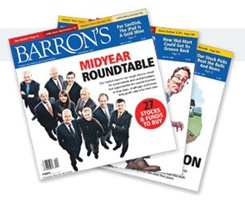
bwsjThis past week, the business media world was buzzing about the inadvertent release of information concerning pending layoffs at Barron’s magazine, thanks to editor-in-chief Ed Finn mistakenly hitting “reply all” on a message intended for just one person.

But the more interesting news is what’s happening right now with two of America’s most important national print publishing properties: Barron’s and The Wall Street Journal.

Up until now, it was thought that a select handful of America’s largest and most pervasive publications with national reach and reputation would be the ones least susceptible to problems befalling the industry regarding declining advertising revenues and changing news consumption habits.

At or near the top of the list of those rarefied properties were these two publications for sure.

But now we know a different reality — or at least a more complicated one. WSJ editor-in-chief Gerard Baker announced last week that the publication is seeking a “substantial number” of employee buyouts to limit the extent of involuntary layoffs that will need to happen otherwise.

The WSJ buyout offer been extended to all news employees worldwide – managerial and non-managerial – and includes a lucrative voluntary severance benefit that’s 1.5 times larger than the company’s standard buyout package.

WSJ employees will need to make up their minds quickly, as the buyout offer is good only until the end of October.

wsjbAs for Barron’s, its situation became public only after the Ed Finn memo was received in the New York City newsroom of The Wall Street Journal in error.  The Finn memo, which had been intended for Dow Jones Media Group publisher Almar Latour, speculates on how The Wall Street Journal’s announcement might affect an upcoming round of layoffs at Barron’s.

That bit was “new news” to pretty much everyone.

Aside from the “drama” of news scoops happening because of unintentional actions, the bigger question is this: What do these layoffs and buyouts portend?  Is it the end of the adjustments – or just the beginning?

Clues to that answer come in Gerard Baker’s memo, where he reveals that The Wall Street Journal has “begun an extensive review of operations as part of a broader transformation program.”

Let’s see what kind of “silver bullet” business strategy they end up devising – and whether it will have its intended effect.