Which brands are America’s most “patriotic”?

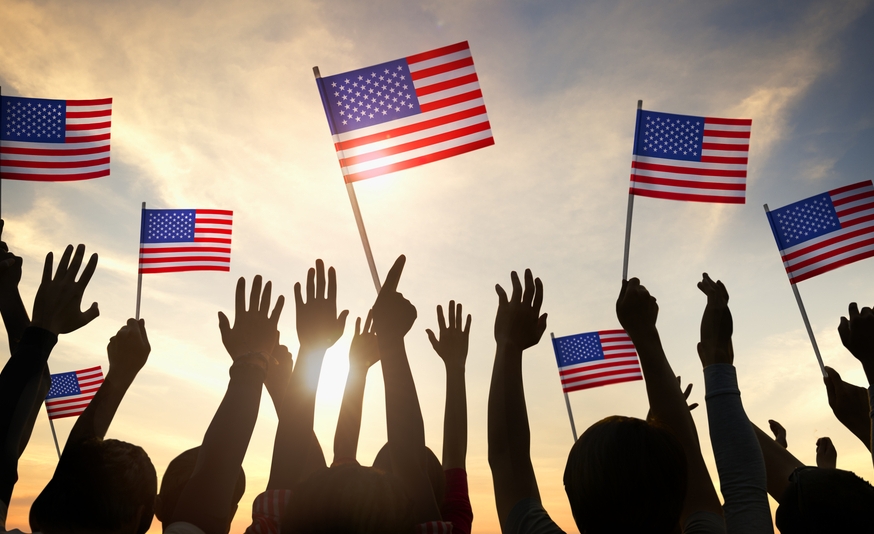
patriotismWith the 4th of July holiday nearly upon us, sharing the results of a recent brand study seems particularly apropos.

Since 2013, Brand Keys, a branding consulting firm, has conducted an annual evaluation of famous American brands to determine which ones are considered by consumers to be the most “patriotic.”

In order to discover those attitudes, Brand Keys surveyed nearly 5,500 consumers between the ages of 16 and 65, asking them to evaluate American brands on a collection of 35 cross-category values – one of which was “patriotism.”  (The number of brands included in the evaluation has varied somewhat from year to year, ranging between 195 and 225.)

Of course “patriotism” is a hyper-qualitative measure that’s based as much on emotion and each individual person’s own point of reference as on anything else.

Brand familiarity and longstanding engagement in the marketplace helps, too.

So it’s not surprising that the American brands scoring highest on the patriotism meter are some of the best-known, iconic names.

For the record, listed below are the “Top 10” most patriotic American brands based on Brand Keys’ most recent survey – the ones that scored 91% or higher on the patriotism scale (out of a possible 100 percentage points):

  • Jeep (98%)
  • Coca-Cola (97%)
  • Disney (96%)
  • Ralph Lauren (95%)
  • Levi Strauss (94%)
  • Ford Motor (93%)
  • Jack Daniels (93%)
  • Harley Davidson (92%)
  • Gillette (92%)
  • Apple (91%)
  • Coors (91%)

The next highest group of ten patriotic brands scored between 85% and 90% on the survey:

  • American Express (90%)
  • Wrigley’s (90%)
  • Gatorade (89%)
  • Zippo (89%)
  • Amazon (88%)
  • Hershey’s (87%)
  • Walmart (87%)
  • Colgate (86%)
  • Coach (85%)
  • New Balance (85%)

[As an aside … the only entity to score a perfect patriotism rating of 100% was the U.S. Armed Services.]

To be sure, “rational” aspects like being an American-based company whose products are actually made in the United States affect the patriotism rating of individual brands.

But other attributes — such as nationally directed customer-service activities and highly publicized involvement in sponsorships and causes that tie to the American experience — are attributes that add to a general image of being patriotic.

Robert Passikoff, Brand Keys’ president, expanded on the idea, stating,

“Today, when it comes to engaging consumers, waving an American flag and actually having an authentic foundation for being able to wave the flag are two entirely different things — and the consumer knows it. 

“If you want to differentiate via brand values – especially one this emotional – if there is believability, good marketing just gets better.” 

This is the third annual report issued by Brand Keys that’s been focused on brand patriotism – one of 35 brand values comparatively surveyed.  Over the three years, there’s been some change in the patriotism rankings, with Colgate, Wrigley’s and Zippo falling out of the Top Ten and being replaced by Jack Daniels, Gillette, Apple and Coors in 2015.

What I find intriguing about the findings is that there isn’t a very strong correlation between the perceived patriotism of specific American brands and whether or not most of their products are made in the United States versus offshore.   Of course, foreign production is more the norm than ever in the global economy.  What’s important is how the consumer reacts to that reality.

jeep patriotismWith that point in mind … what about Jeep?  Now that it is part of the global Fiat organization, should Jeep no longer be considered an American brand?  Whether it is or not, the brand has the distinction of achieving the highest patriotism score outside of the U.S. Armed Services.

The bottom line is this:  Brands, what they “mean” and what they stand for are based on the emotional as well as the rational – with the emotional aspect being the trump card with consumers.

Jeep, with all of its associations with winning  wartime campaigns (particularly World War II), likely will always be a beloved “patriotic” U.S. brand, regardless of its recent Italian parent company ownership.

Are there brands not listed above that you would consider to be “highly patriotic”?  If so, please share your thoughts with other readers here.

What people dislike most about B-to-B websites …

Too many business-to-business websites remain the “poor stepchildren” of the online world even after all these years.

btob websitesSo much attention is devoted to all the great ways retailers and other companies in consumer markets are delighting their customers online.

And it stands to reason:  Those sites are often intrinsically more interesting to focus on and talk about.

Plus, the companies that run those sites go the extra mile to attract and engage their viewers.  After all, consumers can easily click away to another online resource that offers a more compelling and satisfying experience.

Or, as veteran marketing specialist Denison ‘Denny’ Hatch likes to say, “You’re just one mouse-click away from oblivion.”

By comparison, buyers in the B-to-B sphere often have to slog through some pretty awful website navigation and content to find what they’re seeking.  But because their mission is bigger than merely viewing a website for the fun of it, they’ll put up with the substandard online experience anyway.

But this isn’t to say that people are particularly happy about it.

Through my company’s longstanding involvement with the B-to-B marketing world, I’ve encountered plenty of the “deficiencies” that keep business sites from connecting with their audiences in a more fulfilling way.

Sometimes the problems we see are unique to a particular site … but more often, it’s the “SOS” we see across many of them (if you’ll pardon the scatological acronym).

Broadly speaking, issues of website deficiency fall into five categories:

  • They run too slowly.
  • They look like something from the web world’s Neanderthal era.
  • They make it too difficult for people to locate what they’re seeking on the site.
  • Worse yet, they actually lack the information visitors need.
  • They look horrible when viewed on a mobile device — and navigation is no better.

Fortunately, each of these problems can be addressed – often without having to do a total teardown and rebuild.

But corporate inertia can (and often does) get in the way.

Sometimes big changes like Google’s recent “Mobilegeddon” mobile-friendly directives come along that nudge companies into action.  In times like that, it’s often when other needed adjustments and improvements get dealt with as well.

But then things can easily revert back to near-stasis mode until the next big external pressure point comes down the pike and stares people in the face.

Some of this pattern of behavior is a consequence of the commonly held (if erroneous) view that B-to-B websites aren’t ones that need continual attention and updating.

I’d love for more people to reject that notion — if for SEO relevance issues alone.  But after nearly three decades of working with B-to-B clients, I’m pretty much resigned to the fact that there’ll always be some of that dynamic at work.  It just comes with the territory.

Companies behaving (not quite so) badly: Financial services firms continue their slow reputation recovery.

Financial services industryBack in 2009, no industry in the United States took such reputation beating as the financial services segment.  And to find out how much, we needn’t look any further than Harris survey research.

The Harris Poll Reputation Quotient study of American consumers is conducted annually.  The most recent one, which was carried out during the 4th Quarter of 2014, encompassed more than 27,000 people who responded to online polling by Harris.

In the survey, companies are rated on their reputation across 20 different attributes that fall within the following six broad categories:

  • Products and services
  • Financial performance
  • Emotional appeal
  • Social responsibility
  • Workplace environment
  • Vision and leadership

Taken together, the ratings of each company result in calculating an overall reputation score, which the Harris researchers also aggregate to broader industry categories.

Most everyone will recall that in 2009, the U.S. was deep in a recession that had been brought about, at least in part, by problems in the real estate and financial services industry segments.

This was reflected in the sorry performance of financial services firms included in the Harris polling that year.

Back then, only 11% of the survey respondents felt that the financial services industry had a positive reputation.

So it’s safe to conclude that there was no place to go but “up” after that.  And where are we now?  The latest survey does show that the industry has rebounded.

In fact, now more than three times the percentage of people feel that the financial services industry has a positive reputation (35% today vs. 15% then).

But that’s still significantly below other industry segments in the Harris analysis, as we can see plainly here:

  • Technology: ~77% of respondents give positive reputation ratings
  • Consumer products: ~60% give positive reputation ratings
  • Manufacturing: ~54%
  • Telecom: ~53%
  • Automotive: ~46%
  • Energy: ~45%
  • Financial services: ~35%

So … it continues to be a slow slog back to respectability for firms in the financial services field.

Incidentally, within the financial services category, insurance companies tend to score better than commercial banks and investment companies when comparing the results of individual companies in the field.

USAA, Progressive, State Farm and Allstate all score above 70%, whereas Wells Fargo, JP Morgan Chase, Citigroup, BofA and Goldman Sachs all score in the 60% percentile range or below.

Wendy Salomon, vice president of reputation management and public affairs for the Harris Poll, contends that financial services firms could be doing more to improve their reputations more quickly.  Here’s what she’s noted:

“Most financial companies have done a dismal job in recent years of connecting with customers and with the general public on what matters to them.  Yet there’s no reason Americans can’t feel as positively toward financial services firms as they do towards companies they hold in high esteem, such as Amazon or Samsung, which have excellent reputations because they consistently deliver what the general public cares about …  

[Individual] financial firms have a clear choice now:  Prioritize building their reputations and telling their stories, or let others continue to fill that void and remain lumped together with the rest of the industry.”

Here’s another bit of positive news for companies in the financial services field:  They’re no longer stuck in the basement when it comes to reputation.

That honor now goes to two sectors that are Exhibits A and B in the “corporate rogues’ gallery”:  tobacco companies and government.

Both of these choice sectors come in with positive reputation scores hovering around 10%.

I suspect that those two sectors are probably doomed to bounce along the bottom of the scale pretty much forever.

With tobacco, it’s because the product line is no noxious.

And with government?  Well … with the bureaucratic dynamics (stasis?) involved, does anyone actually believe that government can ever instill confidence and faith on the part of consumers?  Even governments’ own employees know better.

Hotel brands and social media: Leading and following at the same time?

If you want to see an industry that’s using social media to best advantage, you needn’t look any further than the hotel trade.

hotels on FBMore than any other industry segment, hotel brands seem to have gotten a very good handle on the whole “local/global” concept.

Hotel properties that are part of a large chain or group originate from the main brand, of course.  And yet, the nature of the business means that they are individual entities as well, across the country and around the world.

For this reason, many local hotels that are part of larger chains have established their own individual social profiles.  That’s turned out to be a great way to attract more consumer engagement compared to social pages that are focused on global hotel branding.

Moreover, the social profiles of hotel properties are the perfect vehicle for promoting programs aimed at generating more bookings via local special offers, vacation deals and the like.

Recently, social media analytics firm Socialbakers researched some of the world’s largest hotel brand groups to determine the extent of their social media presence by looking at the seven most important platforms (Facebook, Twitter, Instagram, Google+, Tumblr, Pinterest and LinkedIn).

hilton logoAs it turns out, seven hotel brand groups have at least 1,000 separate social profiles on these platforms.  In the case of Hilton, it’s nearly 2,000:

  • Hilton Worldwide: ~1,850 separate profiles across the top seven social networks
  • InterContinental Hotels Group:  ~1,550 profiles
  • Marriott International:  ~1,300
  • Starwood Hotels & Resorts Worldwide: ~1,250
  • Wyndham Hotel Group: ~1,250
  • Accor: ~1,200
  • Best Western International:  ~1,000

In looking deeper at the extent of the social profiles these giant brands, Socialbakers found some interesting details that may point to certain individual strategic differences.  Among the findings were these:

.  Facebook is the most popular social platform for everyone – no question – with at least 50% of each brands’ social profiles housed there.

.  Twitter is the next most popular network, with profiles there representing between 20% and 40% of all social profiles for each brand.

.  Starwood Hotels and Accor are somewhat less Facebook-centric than the others – and they also have a more significant presence on Instagram and LinkedIn than the other brands.

.  Pinterest appears to be the least attractive major social platform for individual hotel profiles.

.  Hilton and Marriott have the largest number of social profiles in North America. 

It would seem that the big hotel brands are both leading and following when it comes to their social media presence.

While they may be ahead of the curve compared to many other industries, they are also following the lead of their own consumers – so many of whom rely on conducting their own online research and consulting user reviews to determine where they want to stay – not to mention the best room rates and deals they can find in order to do so.

How about you?  Like me, do you follow certain individual hotel properties on social media, or instead do you focus on hotel brands more broadly?  Please share your perspectives with other readers here.

Online customer care: Is retailer responsiveness going in opposite directions at once?

waiting for a responseAn interesting shift is happening in online customer care:  Response times are improving on social media while they’re getting worse in e-mail communications.

That’s what a new analysis by customer interactive software provider Eptica, as outlined in its 2015 Multichannel Customer Experience Study, is showing.

What Eptica has found is that retailers’ response times to answer customer queries posted on Twitter have improved dramatically in the past year.

Today, a customer query is being answered in an average time of a little over 4 hours.

That’s more than twice fast as in Eptica’s 2014 study, when the average response time clocked in at just over 13 hours.

In addition, the number of tweets successfully handled by retailers stands at around 43%, which is a full ten percentage points higher than what Eptica found in its 2014 study.

While more improvement is needed, the trend line is looking pretty good.  And it makes sense, since the “immediacy” of social media platforms is where many people believe a quick response should be forthcoming.

Crossing Lines

lines crossingBut while customer care response times via social media are improving, the opposite appears to be the case in e-mail customer service – and startlingly so.

Eptica’s evaluation shows that the average time it takes to respond to customer service queries submitted via e-mail is significantly longer than just a year ago.

Then, the average response time was ~36 hours.  Now, it’s nearly 44 hours – or nearly two days.

And while more e-mail customer service queries are successfully handled via e-mail when compared to tweets (~58% versus ~43%), that figure is worsening as well.  Last year, the percentage of e-queries successfully handled was ~63%.

More broadly, there continues to be a pretty significant disconnect between the “ideal” and the “reality” when it comes to online customer care and service.

Nearly all retailers provide an e-mail channel through which consumers may contact them.  But … less than three-fourths of them actually answer the e-mail messages they receive.  Moreover, the responses they provide – often automatically generated – don’t answer the customer’s question.

For a consumer with an issue or a concern, there’s little difference between getting no answer at all and receiving one that’s a “non-response response” in answer to a specific query.  Both seem to convey this message, “We don’t much care, because your issue just isn’t that important to us.”

Turning to social media, nearly 90% of major retailers have a presence on Twitter.  There, the “ignore” factor is even bigger than with e-mail:  ~45% don’t respond to their customers’ queries.

So while the social media figures certainly look better now than they did a year ago, it turns out there’s still a good ways needed to go.

Burgeoning social activity is no reason for retailers to take their foot off the gas pedal when it comes to supporting their customers via e-mail.  E-mail may not be the most exciting channel, but it’s the way millions of consumers prefer to communicate with retailers, companies and brands.  It’s counterproductive and foolish to diss them or treat them like second-class citizens.

In my own personal experience I’ve experienced the exact dynamics as described by Eptica at work – and I’m not afraid to name names.  TruGreen® Lawn Care did a stellar job of avoiding responding to my e-mail and phone queries … but it took less than two hours to get a response from someone at the firm after I posted a not-so-happy tweet about the company’s (lack of) responsiveness.

For me, the “public shaming” aspects of Twitter turned out to be far more of a squeaky wheel than the “private pleading” of an e-mail or phone message.

Do you have personal anecdotes of your own about the dynamics of online customer care?  Please share your thoughts and experiences with other readers here.

Social media and marketing: Is the honeymoon over?

social mediaIt’s no secret that companies large and small have been putting significant energy into social media marketing and networking in recent years.

It’s happened for a variety of reasons – not least as a defensive strategy to keep from losing out over competitors who might be quicker to adopt social media strategies and leverage them for their business.

And yet …

Now that the businesses have a good half-decade of social media marketing under their belt, it’s pretty safe to say that social tactics aren’t very meaningful sales drivers.

That’s not just me talking.  It’s also Forrester Research, which as far back as 2011 and 2012 concluded this after analyzing the primary sales drivers for e-commerce.  Forrester found that less than 1% was driven by social media.

And in subsequent years, it’s gotten no better.

A case in point:  IBM Smarter Commerce, which tracks sales generated by 500 leading retail sites, has reported that Facebook, LinkedIn, YouTube and Twitter combined represent less than 0.5% of the sales generated on Black Friday in the United States.

Those dismal results aren’t to say that social media doesn’t have its benefits.  Generating “buzz” and building social influence certainly have their place and value.

But considering what some businesses have put into social media in terms of their MarComm resources, a channel that contributes less than 1% of sales revenues seems like a pretty paltry result – and very likely a negative ROI, too.

Going forward, it would seem that more companies should pursue social media marketing less out of a fear of losing out to competitors, and more based on whether it proves itself as an effective marketing tactic for them.

Consider the points listed below.  They’ve been true all along, but they’re becoming even more apparent with the passage of time:

1.  Buying “likes” isn’t worth much beyond the most basic tactical “bragging rights” aspects, because “likes” have little intrinsic value and can’t be tied directly to an increased revenue stream.

2.  A great social media presence doesn’t trump having good products and service; even dynamite social media can’t camouflage shortcomings of this kind for long.

3.  Audiences tend to “discount” the value of content that comes directly from a company.  This means publishing compelling content that clears that hurdle requires more skill and expertise than many companies have been willing to allocate to social media content creation.

Calibrating the way they look at social media is the first step companies can take to establish the correct balance between social media marketing activities and expected results.  Instead of treating social media as the connection with customers, view it as a tool to connect with customers.

It’s really just a new link in the same chain of engagement that successful companies have forged with their customers for decades.  In working with my clients, I’ve seen this scenario play out the same basic way time and again; it matters very little what type of business or markets they serve.

What about you?  Have your social media experiences been similar to this — or different?  I welcome hearing your perspectives.

World brands: Who’s up … Who’s down?

brand finance logoEach year, the brand valuation consulting firm Brand Finance produces a report on the strength of the world’s Top 500 brands.

It’s an interesting study in that Brand Finance calculates the values of brands using the so-called “royalty relief” approach – calculating a royalty rate that would be charged for the use of the brand name if it weren’t already owned by the company.

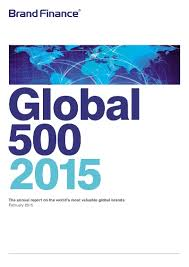
In the 2015 report, just issued, Apple remains the world’s most valuable brand based on this criterion.  The Top 10 listing of world brands is as follows:

brand finance global 500 2015#1  Apple

#2  Samsung

#3  Google

#4  Microsoft

#5  Verizon

#6  AT&T

#7  Amazon

#8  GE

#9  China Mobile

#10 Walmart

Of these, all but China Mobile were in the Top 10 listing in Brand Finance’s 2014 rankings.  Of the others, all maintained their rank except for AT&T and Amazon, which rose, and GE and Walmart, which fell.

The most valuable brands differ by region, however.  In fact, Apple is tops only in North America:

Most valuable brand in North America:  Apple

… in Europe:  BMW

… in Asia/Pacific:  Samsung

… in the Middle East:  Emirates Air

… in Africa:  MTN (M-Cell)

… in South America:  Banco Bradesco

As for which brand’s value is growing the fastest, top honors goes to … Twitter?

That is correct:  According to Brand Finance, Twitter’s value has mushroomed from $1.5 billion in early 2014 to nearly $4.5 billion now.

Other social platform firms that have experienced big growth are Facebook (up nearly 150%) and the Chinese-based Baidu (up over 160%).

What about in non-tech or social media sectors?  There, Chipotle racked up the biggest growth in brand value:  nearly 125%.  At the other end of the scale, the McDonald’s brand has lost about $4 billion in value over the past year.

Most Powerful Brands 

In addition to its brand value analysis, Brand Finance also publishes a ranking of most powerful brands based on its “brand strength index” (BSI).  This index focuses on factors more easily influenced by marketing and brand management activities — namely, marketing investment and brand equity/goodwill.

In this analysis, Brand Finance comes up with a very different set of “top brands” – led by Lego:

Lego logo#1  Lego:  BSI = 93.4

#2  PWC (PricewaterhouseCoopers):  91.8

#3  Red Bull:  91.1

#4 (tie)  McKinsey:  90.1

#4 (tie)  Unilever:  90.1

#6 (tie)  Burberry:  89.7

#6 (tie)  L’Oréal:  89.7

#6 (tie)  Rolex:  89.7

#9 (tie)  Coca-Cola:  89.6

#9 (tie)  Ferrari:  89.6

#9 (tie)  Nike:  89.6

#12 (tie) Walt Disney:  89.5

According to Brand Finance, Lego’s brand power stems from it being a “creative, hands-on toy that encourages creativity in kids and nostalgia in their parents, resulting in a strong cross-generational appeal.”  Lego also has a big consumer marketing presence, thanks to its brand activities in film, TV and comics.

Last year’s top brand was Ferrari, which has now slipped in the rankings.  Brand Finance cited the brand’s 1990s-era “sheen of glory” as wearing a bit thin 20 years on.

For more details on these brands and other aspects of the 2015 evaluation, you can review Brand Finance’s 2015 report here.

Do any of the results come as a surprise to you?  Please share your observations with other readers as to why certain specific brands are coming on strong while others may be fading.

Doing Well by Doing Good: The Panera Bread Experience

Panera Cares

It was an idea that seemed pretty novel back in 2009 – and it was introduced with more than a little fanfare.

Panera Bread, the fast-casual bakery-café chain long known for its corporate citizenship, opened a series of stores in urban areas that touted a “pay what you can” pricing model.

The company’s charitable foundation opened these “Panera Cares” community cafés in five locations:  metro St. Louis, Chicago, Detroit, Boston and Portland, OR.

It was the next logical step for a company that had already set up its Operation Dough-Nation initiative in the 1990s.  Those activities included operating Community Breadbox cash collection boxes and donating unsold bread and baked goods to local hunger relief charities – to the tune of $100 million+ in retail value each year.

As for Panera Cares, the difference between these outlets and other Panera stores is that they operate only on suggested prices with donation boxes.  Each outlet serves approximately 3,500 people weekly.

What’s been the experience of these locations?

Interestingly, Panera chose to open them in thriving urban zones rather than in inner city districts with borderline neighborhoods.

For example, the Lakeview (Chicago) location sits amongst million-dollar townhomes along with people on the street, meaning that there are customers who can help support the café as well as those who can benefit from having a free meal.

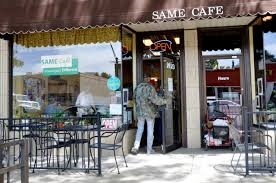
SAME Cafe Denver
SAME Café, Denver, Colorado

The idea of Panera’s foundation was to deliver an experience that was profoundly different from a community soup kitchen or similar locations, which can have an institutional feel (as well as serving institutional-type food).

In this regard, the company’s chairman, Ron Shaich, got the idea from viewing an NBC News profile of SAME Café in Denver, CO, a restaurant founded in 2006 that also operates on a “pay what you can” model.

To make the concept work, consumers who have extra funds are asked to donate them … those who are short of funds can pay less … and those who can’t pay anything can volunteer for an hour and eat for no charge.

One way for the business model to work is operating the stores under the Panera Bread Foundation – a tax-exempt operation.  That enables the business model to be successful even though these stores bring in only about 70% of a conventional Panera outlet’s typical revenue.

Panera Bread logoBut Panera’s attempt to expand the concept beyond its five community cafés and into its regular stores wasn’t as successful.

In 2013, Panera pulled the plug on an experimental “pay what you want” turkey chili menu offering at around 50 St. Louis-area stores.  Customers could pay the $5.89 “suggested” price … they could pay more … pay less … or pay nothing.

The company reported that after an initial burst of publicity and interest, customers stopped realizing the option existed — hence the program’s termination.

But there may be a bit more to it than that.  Ayelet Gneezy, a marketing and behavioral sciences professor at the University of California San Diego, has studied the “psychological dynamics” of offering “pay what you want” systems and finds that consumer behaviors are different depending on the way the offers are communicated.

Ayelet Gneezy
Ayelet Gneezy

Here’s what Dr. Gneezy has found in her research:

●     When people can pay what they want and they also know that half of the price is going to charity, payments and donations rise well beyond what is collected if just one of these two options is offered.

●     It helps to offer a suggested price that is close to what consumers think is fair in relation to the inherent value.  Too far off that mark means that consumer reluctance – and participation – are liable to kick in. 

●     When people are asked to think about how much they wish to pay before doing so … they tend to pay less. 

●     Asking people to pay at least something is more likely to generate sustainable revenues, because laziness tends to win out over a sense of responsibility. 

The bottom line on pay-what-you-want systems appears to be this:  It’s probably not a good idea to adopt the program if you can’t afford to risk losing a good deal of money.  It is possible to minimize or manage the risk, but a lot can go wrong, too.

Fortunately for Panera Bread, its overall organization is large enough and financially strong enough to be able to absorb any misfires regarding its initiatives.

Plus, they’re able to display their social consciously bona fides in the process.

I haven’t encountered “pay-what-you-want” pricing personally.  I wonder if any readers have – and if so, how you responded.  Please share your experiences with other readers.

The world of social media: Facebook here, there and everywhere.

If you think that Facebook has a hammerlock on social media across the world … you’re not off by much.

Facebook NetworkSocial media strategist Vincenzo Cosenza publishes a periodic world map of social networks in which he identifies the social networks that are the most popular in each of the 137 countries he tracks.

His evaluation is facilitated by a combination of website tracking data as aggregated by Alexa and other similar tools.

In viewing how the social media map has changed over time, what we see is that “Facebook blue” now dominates to such a major extent that the world map is looking more and more like a map of the British Empire – with the Spanish and Portuguese Empires thrown in for good measure.

In fact, according to Cosenza’s latest map, Facebook is the dominant social network in no fewer than 130 of the 137 countries being tracked.

That’s ~95% of them.

Not surprisingly considering their large populations, Facebook boasts the most members in the United States, followed by Brazil and then India.  (Brazil overtook India in the rankings in 2012.)

Each year, a few new counties are added to the Facebook column.  Sometimes the shifts are small (Moldova and Latvia are the latest), but this comparison between 2009 and 2014 maps certainly shows the overall trend towards Facebook, including such high-population countries as India, Brazil, Mexico and the Philippines:


global map of social media networks

Of course, a few of the non-Facebook countries are home to a big chunk of the world’s population:

  • China is dominated by QZone
  • VKontakte is the social platform of choice in Russia
  • Iran remains closed to Facebook or any other Western social media, although long-dominant Cloob has been replaced by Facenama as the largest social network there.

As for which social networks are vying for the #2 position after Facebook – in most cases, it’s LinkedIn, Badoo and Twitter.

But when it comes to true competition, it’s really just Facebook and then … all the rest.

Which are America’s Most Disliked Companies?

More than a few perennial “favorites” … plus a couple newcomers.

yuck factorI’ve blogged before about the companies Americans love to hate.  And now, 24/7 Wall St. has published this year’s list of America’s most disliked companies.  As the equity investment data aggregator and investment firm describes it:

“To be truly hated, a company must alienate a large number of people.  It may irritate consumers with bad customer service, upset employees by paying low wages and disappoint Wall Street with underwhelming returns.   

For a small number of companies, such failures are intertwined.  These companies managed to antagonize more than just one group and have become widely disliked.”

In developing its list each year, 24/7 Wall St. reviews various metrics on customer service, employee satisfaction and share price performance.

Only companies with large customer bases are evaluated, based on the premise that for a company to be widely disliked, it needs to be known to a large number of people to begin with.

Among the sources reviewed by 24/7 Wall St. are the following:

This year’s list of the most disliked companies includes the following:

logo#1  General Motors — More than 30 million recalls pertaining to vehicular problems that have been linked to more than 40 deaths brings this company to the top of the list … along with a lot of dissembling about the issue.

#2  Sony — The hacking of the company’s computers and the resulting chaos surrounding the (non)-release of the movie The Interview was just the latest in a string of bad news, including a string of financial losses and fruitless reorganization attempts that seem more like rearranging the deck chairs on the Titanic than a recipe for righting the ship.

#3  DISH Network — Super-poor customer service ratings along with ongoing fights with the Fox network, leading to the blackout of popular programs that have done nothing but rile the customer base even more.

#4  McDonald’s — Its menu has lost favor with consumers — particularly when compared to competitors’ offerings.  Negative press about low employee wages doesn’t help, either.

#5  Bank of America — BofA can never seem to score above the average for its industry.  In fact, it’s been the least popular big bank in the ACSI surveys for years.  Even worse, Zogby Analytics has BofA with the second lowest share of “poor” reviews of any business in its 2014 customer service survey.  On top of that, the bank continues to have major problems in the mortgage sector, with a slew of fines levied to clean up mortgage practices that ran afoul of the U.S. regulators

#6  Uber — No doubt, this app-based ride sharing service is wildly popular with many users, even as it’s the bane of the traditional taxi business in major American and European urban centers.  But few companies so popular have faced as much controversy at the same time.  Perhaps it’s a natural side effect of being a disrupter in the market, but it’s caused many enemies for Uber in the process.

#7  Sprint Corporation — “The great disappearing phone service” might be one way to describe this firm.  Sprint has lost nearly 2.5 million customers in just the past two years.  In fact, it’s had 11 straight quarters of net decline in subscribers.  The result is lost employee jobs (2,000 and counting), along with reduced customer service and industry competitiveness.  And the share price of Sprint stock has fallen by half in the past year.

#8  Spirit Airlines — Imagine this list of maladies in the airline industry:  flight delays, long customer lines, invasive security, lost baggage, hidden fees.  Now imagine them all wrapped up in one air carrier and you have Spirit Airlines.  Enough said.

#9  Wal-Mart — According to ACSI, few companies have lower customer ratings than Wal-Mart.  It’s low even in comparison with other big-box discount and department stores, as well as supermarkets.  Its own employees also rate the company low — and there are 1.4 million of them, so their opinions really matter.  Meanwhile, some consumers see Wal-Mart as hurting or destroying local businesses wherever it chooses to open a store in a new community.

#10  Comcast — Whether we’re talking about its television or Internet services, this company comes in with really horrific customer satisfaction ratings.  They’re “standout bad” in an industry that’s infamous for poor customer care.  It didn’t help when a phone recording of a Comcast customer service representative went viral — the rep who took up nearly half an hour refusing to help a customer cancel his service.

[Interestingly a few companies that were on 24/7 Wall St.’s list last year no longer appear — notably retailers JCPenney and Abercrombie & Fitch.  For Penney’s in particular, it seemed a slam-dunk prediction that it would remain on the list this time around, but the company is actually in the midst of a modest turnaround — and consumers and investors have noticed.]

There’s another interesting and perhaps ironic factor about America’s “least liked” companies.  It’s that four of them also appear on the list of the ten most-advertised brands in the United States.

That is correct:  Based on 2013 U.S.-measured media ad spending as calculated by AdAge, Chevrolet (General Motors), McDonald’s, Walmart Stores and Sprint rank in the Top Ten list of the most-advertised brands:

  • untitled#1 AT&T
  • #2 Verizon
  • #3 GEICO
  • #4 Chevrolet (General Motors)
  • #5 McDonald’s
  • #6 Toyota
  • #7 Ford
  • #8 Walmart Stores
  • #9 Sprint
  • #10 Macy’s

Evidently, “all that advertising” isn’t doing “all that much” to burnish these brands’ image!