Drama and Danger in the World of Social Media

Drug cartels in MexicoI’ve blogged before about how social media has had a major (positive) impact on political and social movements, such as the “Arab Spring” uprisings and the democracy movement in Moldova. But recent news out of Mexico shows how the same social media can contribute to additional fear and violence in a society that already has more than its share of drama and danger.

In recent weeks, CNN has reported that social media is causing citizens living in the regions of Mexico beset by dangerous drug cartel activity to be injured – or even killed. In the border city of Nuevo Laredo, the bodies of a man and a woman were found hanging from a highway overpass, with threatening notes nearby promising a similar fate to other so-called “Internet snitches.”

According to the CNN news story, the two people were killed for messages they had posted online pertaining to drug violence in areas of Mexico where the professional news media are no longer able to do their job.

Because drug trafficker threats have essentially silenced reporting activity in these border regions, the local citizens have resorted to filling the information gap by using social media like Twitter and Facebook to convey the latest information to their fellow citizens.

The notes affixed to the dead bodies in Nuevo Laredo appear to have been left by members of two notorious drug cartels that are intimately engaged in the region’s bloody turf wars.

The killings point to a dangerous new front that’s opened up in the drug wars: In the absence of credible news reporting, many residents of the borderlands have turned to social media platforms for learning and sharing information. Using #hashtags that tie Twitter posts together has become an important “sorting” mechanism by which postings from individual Twitter accounts can be bundled into a sort of jerry-rigged news service. Many examples of “news report bundling” exist, such as for cities like Monterrey, Veracruz, Saltillo and Reynosa.

Andrés Monroy-Hernández of MIT’s Media Lab has studied this phenomenon, and declares that these ad hoc news bureaus have been effective.

“Most of the information is reliable, and the information that is not often goes ignored … [these bureaus] serve as curators and do a decent job at it,” the Mexican native asserts. He also points out that about half of the Twitter messages are actually retweets, meaning that people are cooperating with one another in spreading the information.

But the startling events of last week remind us that local residents who are using social media to navigate the chaos of the drug wars are themselves becoming targets in the drama.

Even the Mexican government is in on the action. Recently, it charged two Veracruz citizens with “terrorism and sabotage” for passing along rumors of a pending cartel attack on a school that resulted in an outbreak of panic at the school property.

The Mexican government’s action set off a wave of criticism from all sides. Amnesty International went on record stating that the drug war “creates a climate of distrust in which rumors circulate on social media as people try to protect themselves, because there is no reliable information available.”

The chaos that is enveloping Mexico – and the tragic consequences that stem from it – seem hard to imagine happening so close to the U.S. border. It’s also a reminder that the “brave new world” of social media can harbor grave dangers in addition to great promise.

And in this case, it can even get you killed.
Are e-Readers Changing our Reading Habits?

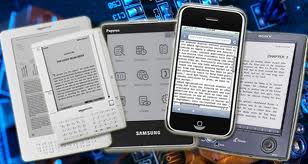
e-reader products available todayE-readers have become the rage. That’s clear from how many people are now using them.

A Harris Interactive survey of ~2,180 consumers in July 2011 has found that ~15% of Americans over age 18 are using an e-reader device. That’s about double the percentage compared to last year’s poll.

Beyond this, another ~15% reported that they’re likely to buy one within the next six months.

The Harris research found some interesting regional differences in e-reader usage. I was quite surprised to learn that e-readers haven’t taken off nearly as strongly in the Midwest as compared to the other three regions of the country:

 Westerners: ~20% have an e-reader
 Easterners: ~19%
 Southerners: ~14%
 Midwesterners: ~9%

What are the characteristics of those who own e-readers, besides where they live? It turns out they’re far more active readers than the rest of the population.

For example, about one third of all survey respondents reported that they read more than 10 books during the year. But for those who own an e-reader, that percentage was nearly 60%.

And just because someone owns an e-reader doesn’t mean they’re stopped purchasing actual books. While one-third of all the survey respondents reported that they haven’t purchased any books in the past year … that percentage was only 6% of those who use e-readers.

The criticism commonly heard that e-readers may be the death knell for traditional books because cause people to download fewer books than they would purchase in physical form may not carry much weight, if the Harris survey results are to be believed.

On the contrary, the e-reader phenomenon appears to be making some people even more voracious readers than before. About one third of the e-reader respondents in the survey reported that they read more now than before – and not just on their e-readers.

Clearly, e-readers represent a phenomenon that’s taken firm hold and is here to stay. But whether it’s radically changing the reading habits of its users … that remains an open question. The early signs suggest “no.”

What about your experience? Have your habits changed with the advent of e-readers? How so?

Air, Water, Food … Internet

Fundamental importance of the InternetIs the Internet today as important to people as the very air they breathe? That’s what the results of a survey of ~2,800 college students and young professionals seem to be telling us.

Market research firm InsightExpress fielded the survey for Cisco Systems, a consumer electronics, networking, voice and communications technology/services company.

The research effort collected responses from the USA and 13 other countries in the developed world plus emerging powerhouse economies (Australia, Canada, the U.K., France, Germany, Italy, Spain, Russia, India, China, Japan, Brazil and Mexico).

What did the survey discover? More than half of the respondents said they couldn’t live without the Internet – it’s that vital to their lives.

In fact, for many the Internet is more important than dating, partying, and wheels.

Intriguing findings from the survey include:

 ~55% of college students and ~62% of young professionals believe that the Internet is such an integral part of their lives, they could not live without it.

 If forced to make a choice between access to the Internet and access to a car, ~64% of the respondents would choose having the Internet connection.

 “Virtual” relationships are gaining on face-to-face interaction. More than one quarter of the college respondents reported that staying updated on Facebook is more important to them than partying, dating, listening to music, or visiting with friends.

 Smartphones are on the cusp of eclipsing desktop computers as the most prevalent means of connecting with this segment of society … which then makes it not much of a stretch to learn that ~60% of these same young professionals feel that “having an office” is unnecessary for being competitive.

And here’s another thing: These respondents are used to constant interruptions. ~80% report being interrupted by instant messaging and social media updates at least once per hour … and over 30% reported having five or more such interruptions hourly.

To me, this sounds more like disruption than interruption.

Marie Hattar, Cisco Systems’ marketing vice president, concludes that the survey findings “should make businesses re-examine how they need to evolve in order to attract talent and shape their business models.”

She also noted that “CIOs need to plan and scale their networks now to address the security and mobility demands that the next generation workforce will put on their infrastructure … in conjunction with a proper assessment of corporate policies.”

As the survey makes clear, at the rate things are evolving, the office environment will look and feel nothing like it did just a few short years ago. And it may be the biggest single transformation in the business world we’ve yet seen.

Gallup Sees Deterioration in Americans’ Perceptions of Major Industry Sectors

Decline in perceptions of U.S. industriesThe past decade hasn’t been kind to the image of most industries in the United States. And given the economic and sociopolitical upheavals experienced by nearly every strata of society, it’s not hard to understand why.

This isn’t just conjecture, either. For years, the Gallup polling organization has surveyed Americans’ opinions of 25 major industry sectors every August to determine if their overall opinion of each of them is positive, neutral or negative.

The results of the 2011 survey of 1,008 respondents (age 18 and over) have now been released, and they show that a majority of Americans view just five of the 25 industries in a positive light:

 Computer industry: ~72% rate positive
 Restaurant industry: ~61%
 Farming and agriculture: ~57%
 The Internet: ~56%
 Grocery industry: ~52%

Interestingly, when comparing these results to ten years ago (August 2001), just two of these five sectors have improved their positive ratings: the Internet and the computer industry.

At the other end of the scale, seven of the 25 industry sectors scored 30% or lower in positive ratings:

 Banking industry: ~30% rate positive
 Airline industry: ~29%
 Legal field: ~29%
 Healthcare industry: ~27%
 Real estate industry: ~23%
 Oil and gas industry: ~20%
 Federal government: ~17%

The remaining 13 industries in Gallup’s survey came in between 30% and 50% on the scale – hardly stellar ratings, but not in the basement like the hapless sectors listed above.

Over the past decade, Gallup has observed that a clear majority of the industries – 19 of the 25 – have seen declines in their positive scores.

The most precipitous ones include the usual suspects, led by – you guessed it – the federal government:

 Federal government: Down 24 percentage points since 2001
 Real estate industry: Down 23 points
 Banking: Down 17 points
 Educational field: Down 15 points
 Accounting industry: Down 11 points
 Healthcare industry: Down 10 points

It’s little wonder why we’re seeing these six industries striking out so badly with the American public; they’re precisely the ones associated most with various political or economic problems.

By contrast, the positive views about the computer industry and the Internet reflect the continuing innovation and financial success of many businesses in this sector.

This can’t be lost on consumers – many of whom have directly benefited through the steady stream of new products and services introduced by companies in these sectors over the past decade.

And as for agriculture, groceries and restaurants … well, we all have to eat, no matter what the economic situation! Besides, there’s been little controversy seen in these categories, and they’re mature sectors have been smooth-running in this country for years.

One hopes the next decade will witness a reversal in the downward trajectory of the public’s perceptions of American industries. In at least a few of the cases, it’s hard to imagine how they could sink any lower!

Personalized e-mail campaigns? Nothing personal … but it’s not that important.

e-mail personalizationIt’s been a nagging question about direct marketing for years now: To what degree does personalizing a mass marketing program improve audience engagement and action?

Back in the old days, personalization was difficult to pull off, because the limitations of printing meant that the way people’s names were inserted into letters looked awkward and even jarring – different typeface, different ink concentration, etc.

Instead of creating a positive impact that suggested a personal relationship with the recipient, the effect was often just the opposite: the ill-fitting interpolations screaming “mass mailer.”

Today, with so many marketers targeting consumers electronically versus via postal mail, personalization has become a common technique used for the same purpose: to draw the reader’s attention by making the e-communiqué “unique” to him or her. Plus, it’s much easier to accomplish.

But how is this working out in the digital age? The latest e-mail marketing metrics report from email marketing and newsletter services provider MailerMailer, LLC, issued in July 2011, uses data compiled from more than 977 million opt-in e-mail newsletters in a sampling of over 1,600 customers. It found that adding the recipient’s first or last name to the subject line of an e-mail often generates negative, not positive results.

On the other hand, personalization within the message portion of the e-mail makes it a tad more likely to lead the recipient to interact with the message.

Here are the open rates MailerMailer found based on the degree of personalization:

 Subject line personalized: 4.1% open rate
 Both subject line and message personalized: 4.6% open rate
 Message personalized: 12.6% open rate
 No personalization at all: 11.4% open rate

[MailerMailer claims that personalized subject lines perform less favorably because this has been such a common tactic used by spammers in recent years. I claims the method has been so overused, recipients now associate all such e-mails as spam.]

And what about clickthrough rates — the more important metric? MailerMailer’s findings track neatly with the open rate trends, as follows:

 Subject line personalized: 0.8% clickthrough rate
 Both subject line and message personalized: 1.1% clickthrough rate
 Message personalized: 3.0% clickthrough rate
 No personalization at all: 3.0% clickthrough rate

So another thing the MailerMailer report is telling us is that the effort to personalize e-mails may not be worth it in the end. It’s true that a slightly higher open rate may occur with personalized message content … but the clickthrough rate, which is the more important metric, doesn’t budge at all with personalization versus without it.

So it would seem that personalizing e-mails isn’t something that’s going to “make or break” your direct marketing campaign’s success rate. Better to focus on the other classic success factors: the message, the offer, and the target recipients list. You know … just like always.

PR Firms at Loggerheads with Bloggerheads

PR mistakes with bloggersTime was, we could get a chuckle out of television commercials where unsuspecting consumers were surprised to find out that the restaurant coffee was really Folgers®, or the day spa’s skin moisturizer treatment for their hands was actually Palmolive® dish detergent.

There was something rather endearing about those consumer reactions – and they were uniformly positive ones as well.

But to show how far removed we are from those halcyon days, consider this recent attempt to pull a fast one on unsuspecting dinner guests at a “faux” restaurant in Midtown Manhattan: Cooked up by the Ketchum public relations unit of Omnicom Group for its client, ConAgra Foods, New York-based food bloggers and “mommy” bloggers were invited to dine at “Sotto Terra,” an underground restaurant supposedly run by Chef George Duran of TLC’s Ultimate Cake Off cable program.

But Sotto Terra, far from being the “intimate Italian restaurant” of the invitation, was nothing more than an elaborate set-up – hidden cameras and all – to get bloggers to sample ConAgra’s newest offerings in the Marie Callender’s line of frozen entrees and desserts … and presumably to extol the virtues of the cuisine.

In fact, no such restaurant even exists. Rather, it was all a staged scene in a Greenwich Village brownstone. The invitation promised a “delicious four-course meal” accompanied by Chef Duran’s “one-of-a-kind sangria” … along with a talk by famed food industry expert Phil Lempert on new taste trends in food.

The invitation also promised a “special surprise” for those who attended the dinner on one of five evenings.

The special surprise, of course, was revealing the actual provenance of the food items being served. “The twist at the end was not dissimilar to what brands like Pizza Hut and Domino’s have done in the recent past, with success,” noted Stephanie Moritz, a public relations flack at ConAgra.

The plan was to use the video footage captured at the dinners for promotional clips on ConAgra’s website and on YouTube … as well as for the bloggers who attended to generate cyber-buzz about being pleasantly surprised at the revelation.

But this is 2011, not 1981 or 1991. And bloggers are also quite different from the average consumer. Ketchum and ConAgra apparently forgot about the “90-9-1 rule” of online content: 1% create content … 9% comment on that content … and 90% simply lurk.

Not only are bloggers part of the 1%, they take their role seriously and certainly don’t appreciate being fooled. So instead of the food taking center stage, the event itself became the topic of (uniformly negative) conversation on the blogs. A few examples:

 “We discussed with the group the sad state of chemical-filled foods. And yet, you still fed me the exact thing I said I did not want to eat.” (Lon Binder, FoodMayhem Blog)

 “[I] pointed out that the reason I ate organic, fresh and good food was because my calories are very precious to me, so I want to use them wisely. Yet they were serving us a frozen meal, loaded with sodium. I’m NOT their target consumer, and they were totally off by thinking I would buy or promote their highly processed frozen goods after tricking me to taste it.” (Cindy Zhou, Chubby Chinese Girl Blog)

 “Our entire meal was a SHAM! We were unwitting participants in a bait-and-switch for Marie Callender’s new frozen three-cheese lasagna and there were cameras watching our reactions.” (Suzanne Chan, Mom Confessionals Blog)

I loved reading the PR personnel’s “spin” of the events the way they transpired: “Once we sensed it was not meeting attendees’ expectations, that’s where we stopped, we listened and we adjusted,” Stephanie Moritz remarked.

… By which she means the remaining dinner evenings were canceled.

Looking back is 20/20 hindsight, of course. But it does seem like most PR professionals could have seen this negative reaction coming from a mile away. PR agencies exist to provide not only publicity for their clients, but also counsel. Sure, the event sounds like a fun lark with a bit of a twist – and I can just picture the breathlessly animated PR brainstorming session at Ketchum that produced this idea.

But is duping bloggers and making them out to be fools the correct tactic? … Especially considering that their megaphone, augmented by the viral nature of social media, is much more effective and far-reaching than ConAgra’s corporate website ever could hope to be.

When the Public Relations Society of America was contacted by the New York Times for comment, Deborah Silverman, chairperson of the PRSA’s Board of Ethics and Professional Standards, responded by stating that the Ketchum/ConAgra PR stunt was “unfortunate” and “not quite where they should be in terms of honesty.”

Ya think?

Fraud and Abuse in Government Programs: It’s Really Not About Politics

Medicare and Medicaid Fraud and Abuse ... It's PervasiveMalcolm Sparrow, esteemed author and professor at Harvard University’s Kennedy School of Government, has been alerting us recently about the problems with various government programs like Medicare and Medicaid.

He’s painting a pretty bleak picture, actually. And the issues have little or nothing to do with ideology, but of competence.

Dr. Sparrow’s main argument is that the seemingly endless stream of horror stories about Medicare and Medicaid scams proves that many people are using these programs as “personal tills.” The number of cases that have come to light in recent years runs into the hundreds and involve millions of dollars – and there are likely many more incidences that have not ever been uncovered.

Seeking to find common threads between the many cases of fraud and abuse, Dr. Sparrow has concluded that the system’s vulnerability comes not from how it is designed, but because of the payment mechanisms the federal government has chosen to utilize.

It turns out that most Medicare and Medicaid funds are paid out automatically in response to electronic claims received from a slew of healthcare providers. Most of these claims are processed using rules-based systems – with no human interaction at all.

What this means is that fraudsters need only learn the rules, and then proceed to submit hundreds or thousands of bogus claims electronically – with little risk of detection.

And here’s a real kicker: If someone makes a mistake in their submission, the government returns a computer-generated message explaining the error(s) – thereby enabling the fraudulent activity to continue!

In short, those who are gaming the system find it nearly effortless to receive payments for fabricated claims … all because the systems check for billing “correctness” but not for “truthfulness.”

Dr. Sparrow’s conclusion: “The simple rule for getting rich quick through health care fraud is [to] bill your lies correctly.”

The thing that makes this state of affairs doubly distressing is that the government has been aware of the propensity for abuse for years now.

Dr. Sparrow quotes one Medicaid fraud investigator back in 1995 warning about the fraud risk of electronic claims processing: “Thieves get to steal megabucks at the speed of light, and we get to chase after them in a horse and buggy. No rational businessman would ever invent a system like this.”

But did this realization make a difference in “business as usual”? Nope.

Why? Dr. Sparrow believes it’s because the processing efficiencies of such payment systems are so obvious and tangible. But the problem with such an approach is that it becomes a sitting duck for fraud. Dr. Sparrow sets up the scenario like this:

“The recipe for disaster is now clear. Whatever the nature of the payments … pay them electronically. Set up the system with honest claimants in mind. Allow claims to be submitted electronically. Set the administrative budget low enough that the bulk of the claims have to be paid without verification.”

He then proceeds to conjecture how these programs make it so far down the road with so little in the way of critical evaluation:

“To make things really dangerous, add a degree of urgency to the public purpose … Urgency tends to trump caution and raises policymakers’ perception of the ‘business-acceptable risk.’ And if it’s a really ‘valuable’ program, supporters and officials will be loath to hear any criticism of it, and to discount reports of fraud.”

After painting such a bleak picture, Dr. Sparrow does not leave us without a path forward to a possible solution. He notes that fixing vulnerabilities in Medicare, Medicaid and other federal programs would offer good promise for long-term deficit reduction – an action that both political parties could support. But there needs to be the political will to make major structural and procedural reforms to the programs in order to meet the objective.

Call me a curmudgeon, but I’m a bit less optimistic than Dr. Sparrow; much as I’d love to believe that these changes could happen with everyone on board with the program, I’m not holding my breath waiting for them to happen anytime soon.

Where in the World do Americans Wish to Vacation?

World of travel: Americans see Italy as their #1 overseas vacation destination.Have you ever wondered where Americans would wish to vacation overseas if they had the opportunity and the financial wherewithal? It’s a topic that that Harris Interactive surveys every year.

The results are now in for the 2011 survey, which queried nearly 2,200 adults online in July … and for a second year in a row, Italy comes in first place in popularity.

Countries in Europe and Oceania remain the most popular vacation countries for Americans, a finding Harris has observed in annual surveys ever since 2008. This year, the Top 10 countries chosen by respondents for vacation destination are as follows:

#1: Italy
#2: Great Britain
#3: Australia
#4: Ireland
#5: France
#6: Greece
#7: Spain
#8: Germany
#9: Japan
#10: Canada

Since 2008, the biggest shift in popularity has been in Spain (up three notches) and in Japan (down two spots). What’s causing this? One too many natural disasters in Japan? … The increased popularity of the Costa del Sol?

While Italy is the top pick in 2011 for both men and women, there are some differences when looking at the next-ranked countries:

 For men, the #2 choice is Australia, followed by Great Britain.

 For women, the #2 choice is Great Britain, and Ireland is #3.

 Baby boomers as well as respondents over the age of 65 choose Great Britain over Italy as the top vacation destination.

In viewing the 2011 results, I was somewhat surprised by the lack of any Caribbean countries on the list.

If Harris continues to conduct this survey annually, it will be interesting to see how the results change over time. I’d predict that Brazil and Argentina may start making the Top Ten list before too long. (Speaking for myself, those two would be my picks a lot sooner than some of the other countries listed above.)

More survey stats and a history of results can be found here.

What’s the Very Latest with Consumers and How They’re Using QR Codes?

Scanning a QR code with a smartphoneI’ve written before about QR (quick response) codes and how they’re viewed as a marketer’s dream.

What can be better than the ability for consumers to point-and-click their smartphones for instant access to product details, a coupon or other information … without them having to type in a web address?

But it’s been observed that U.S. consumers are a bit more reticent to use them compared to their Japanese counterparts (where QR codes got their start).

And a July 2011 survey of ~500 adult social media users conducted by research firm Lab42 (Chicago, IL) found that nearly 60% of the respondents were not familiar with QR codes. Furthermore, only ~13% of the respondents were able to use a QR code when prompted to do so in the research, suggesting that many of those saying they were familiar with QR codes may never have actually used them — or maybe only experimented with them once or twice.

But now that some time has elapsed since QR codes have made their debut in America, we have access to field research to help us understand how U.S. consumers are actually interacting with them.

The data comes in the form of a new MobiLens study by comScore, which has found that ~14 million mobile users in the U.S. scanned a QR code on their “smart” mobile device at least once during June 2011.

That figure represents ~6% of the total mobile audience over the age of 13. Not a big percentage, but considering that smartphones still represent only a minority of all mobile phones in circulation (just shy of 40%), it shows that use of QR codes is happening to some degree.

And what are the demographic characteristics of QR code users? According to comScore, they’re more likely to be male (~61% of the code scanning audience) … they definitely skew younger (~53% are between the ages of 18 and 34) … and they’re more likely to be upper-income folks (~36% have household incomes of $100,000+).

What are the most popular sources of scanned QR codes? The study shows that this skews more toward “traditional” media: magazines and newspapers:

 Printed magazines or newspapers: ~49% of the QR code audience
 Product packaging: ~35%
 Websites on a PC: ~27%
 Posters, flyers or kiosks: ~24%
 Business cards or sales brochures: ~13%
 Storefronts: ~13%
 Television: ~12%

I got a chuckle out of the fact that QR codes published on websites receive so many scans … it would seem to me that if someone is already sitting at a desktop or laptop computer, what’s the point of scanning a QR code into a smartphone? But I’m sure people have their reasons.

And where are people situated when they’re scanning a QR code? To hear many marketers tell it, they’re most excited about placing QR codes on billboards or in other public paces. But comScore has found out that most people are scanning QR codes not while “out and about” … but when sitting at home:

 Scanning QR codes at home: ~58% of the QR code audience
 … At a retail store: ~39%
 … At the grocery store: ~25%
 … At work: ~20%
 … Outside, or when using public transit: ~13%
 … In a restaurant: ~8%

If you’re interested in reviewing additional findings from the comScore MobiLens study, you can find them here. Because of the “newness and novelty” of QR codes in the American market, not doubt comScore will be returning to this research topic regularly to chart how consumer behaviors continue to evolve over time.

Mobile Phone Users: Driven to Distraction?

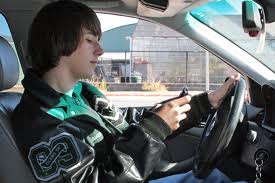
Texting while driving ... and other unsafe habits of cellphone usersIt’s pretty well determined by now that the plethora of new communications conveniences that have come on the scene in recent years have done just as much to complicate our lives as to simplify them.

Certainly, they have introduced new types of dangers. Take mobile phones and driving. For those who have heard the sickening cellphone recording of the young driver who has a fatal car accident while discussing wedding plans with her family over the phone … it’s a chilling example of the worst kind of thing that can happen.

But despite the fact that people claim to understand the risks of driving while using a mobile phone, most Americans continue just such behavior, believing themselves to be better than average drivers.

At least, that’s the finding of research firm Harris Interactive, which surveyed nearly 2,200 American adult cellphone users in June 2011.

About two-thirds of those queried in the Harris online survey admitted to using their cellphones while driving. In addition, nearly one in four send or read text messages while they’re behind the wheel.

As stark as those figure are, they are actually down somewhat from an earlier Harris survey conducted in 2009. In that study, ~72% of drivers with cellphones reported that they used them while driving, and nearly 30% texted while driving.

The newer figures remain disconcerting, though, because cellphone distraction is reported to cause more than 300,000 injuries in the United States each year – and several thousand fatalities as well.

A study published by Human Factors Quarterly has concluded that motorists who are engaged in cellphone conversations while driving are actually less capable of handling the wheel than intoxicated drivers with a blood alcohol level exceeding .08.

But back to the Harris survey. It found that ~57% of the respondents consider themselves to be “better than average” drivers (only 1% consider themselves worse than average). And for men, that figure is even higher at 66%. Since it’s basically impossible for two thirds of the male drivers to be above average, clearly the perception is not matched by the reality.

Not surprisingly, some of the more alarming findings from Harris are coming from the younger set. Texting while driving is much more common in this cohort; nearly half of the drivers under the age of 35 reported that they send or read text message while driving.

Oh, and by the way … ~60% of drivers continue to use handheld phones while driving, rather than the hands-free models. (Not that the hands-models have been shown to be that much safer … although that’s what most respondents in the Harris survey believe.)

More of the sobering findings from the Harris research survey can be found here.