Hotel brands and social media: Leading and following at the same time?

If you want to see an industry that’s using social media to best advantage, you needn’t look any further than the hotel trade.
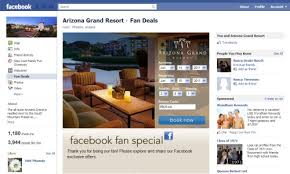
hotels on FBMore than any other industry segment, hotel brands seem to have gotten a very good handle on the whole “local/global” concept.

Hotel properties that are part of a large chain or group originate from the main brand, of course.  And yet, the nature of the business means that they are individual entities as well, across the country and around the world.

For this reason, many local hotels that are part of larger chains have established their own individual social profiles.  That’s turned out to be a great way to attract more consumer engagement compared to social pages that are focused on global hotel branding.

Moreover, the social profiles of hotel properties are the perfect vehicle for promoting programs aimed at generating more bookings via local special offers, vacation deals and the like.

Recently, social media analytics firm Socialbakers researched some of the world’s largest hotel brand groups to determine the extent of their social media presence by looking at the seven most important platforms (Facebook, Twitter, Instagram, Google+, Tumblr, Pinterest and LinkedIn).

hilton logoAs it turns out, seven hotel brand groups have at least 1,000 separate social profiles on these platforms.  In the case of Hilton, it’s nearly 2,000:

  • Hilton Worldwide: ~1,850 separate profiles across the top seven social networks
  • InterContinental Hotels Group:  ~1,550 profiles
  • Marriott International:  ~1,300
  • Starwood Hotels & Resorts Worldwide: ~1,250
  • Wyndham Hotel Group: ~1,250
  • Accor: ~1,200
  • Best Western International:  ~1,000

In looking deeper at the extent of the social profiles these giant brands, Socialbakers found some interesting details that may point to certain individual strategic differences.  Among the findings were these:

.  Facebook is the most popular social platform for everyone – no question – with at least 50% of each brands’ social profiles housed there.

.  Twitter is the next most popular network, with profiles there representing between 20% and 40% of all social profiles for each brand.

.  Starwood Hotels and Accor are somewhat less Facebook-centric than the others – and they also have a more significant presence on Instagram and LinkedIn than the other brands.

.  Pinterest appears to be the least attractive major social platform for individual hotel profiles.

.  Hilton and Marriott have the largest number of social profiles in North America. 

It would seem that the big hotel brands are both leading and following when it comes to their social media presence.

While they may be ahead of the curve compared to many other industries, they are also following the lead of their own consumers – so many of whom rely on conducting their own online research and consulting user reviews to determine where they want to stay – not to mention the best room rates and deals they can find in order to do so.

How about you?  Like me, do you follow certain individual hotel properties on social media, or instead do you focus on hotel brands more broadly?  Please share your perspectives with other readers here.

Bird dropping: Instagram overtakes Twitter in the social media derby.

Instagram logo

It seems like the jockeying for position among social networks is never-ending.

The latest case in point:  Instagram, which is presently the fastest growing social media network in the United States.

According to the latest figures released by digital market research company eMarketer, as of February 2015 Instagram now has over 64 million users in America.

That’s a ~60% increase in just one year, and it puts Instagram in third place among all social networks, surpassing Twitter for the first time.

Not only that, eMarketer forecasts that Instagram will add more than 10 million additional users in the United States this year:

  • Facebook: ~157 million U.S. users forecast in 2015
  • LinkedIn: ~115 million
  • Instagram: ~78 million
  • Twitter: ~53 million
  • Pinterest: ~47 million
  • Tumblr: ~20 million

       (Source:  eMarketer and LinkedIn, February 2015.)

eMarketer also forecasts that Twitter will continue to fall further behind Instagram in the upcoming years, since Twitter’s annual growth is expected to be in only the single digits throughout the rest of the decade.

Based on the overall American population, Instagram has now a market penetration of nearly 25%.  Of course, that’s well behind Facebook, which has nearly 50% penetration.

Untitled-1But Instagram’s user base is skewed heavily towards teens and millennials – people between the ages of 12 and 34.  This makes Instagram a bit more of a threat to LinkedIn and even Facebook than you might think at first.

Facebook’s user base has been skewing older in recent years.  If those trends continue, we could see a measurable drop-off in Facebook’s share of users, with a corresponding rise in Instagram’s penetration.

Of course, we mustn’t forget that Facebook was the social media network of choice for younger people at one time, too.  After all, it got its start on college campuses.  But now that Facebook has solid adoption among older Americans (age 40 and over), no longer does it seem like a “cool” network for some millennials and teens.

So it would be foolish to assume that Instagram is a slam-dunk to continue to be the “network of choice” for younger people in the years hence.  One never knows what new network might suddenly appear on the horizon and capture their hearts.

Still, Instagram’s rise has been noteworthy.  And it certainly puts the lie to the notion that there wasn’t room for a new network to enter the increasingly crowded social media space and make a big splash.

Personally as an “aging boomer,” I don’t have an Instagram account, and neither do most of my acquaintances.  What about your own personal experience or professional experiences with this network?

Social media and marketing: Is the honeymoon over?

social mediaIt’s no secret that companies large and small have been putting significant energy into social media marketing and networking in recent years.

It’s happened for a variety of reasons – not least as a defensive strategy to keep from losing out over competitors who might be quicker to adopt social media strategies and leverage them for their business.

And yet …

Now that the businesses have a good half-decade of social media marketing under their belt, it’s pretty safe to say that social tactics aren’t very meaningful sales drivers.

That’s not just me talking.  It’s also Forrester Research, which as far back as 2011 and 2012 concluded this after analyzing the primary sales drivers for e-commerce.  Forrester found that less than 1% was driven by social media.

And in subsequent years, it’s gotten no better.

A case in point:  IBM Smarter Commerce, which tracks sales generated by 500 leading retail sites, has reported that Facebook, LinkedIn, YouTube and Twitter combined represent less than 0.5% of the sales generated on Black Friday in the United States.

Those dismal results aren’t to say that social media doesn’t have its benefits.  Generating “buzz” and building social influence certainly have their place and value.

But considering what some businesses have put into social media in terms of their MarComm resources, a channel that contributes less than 1% of sales revenues seems like a pretty paltry result – and very likely a negative ROI, too.

Going forward, it would seem that more companies should pursue social media marketing less out of a fear of losing out to competitors, and more based on whether it proves itself as an effective marketing tactic for them.

Consider the points listed below.  They’ve been true all along, but they’re becoming even more apparent with the passage of time:

1.  Buying “likes” isn’t worth much beyond the most basic tactical “bragging rights” aspects, because “likes” have little intrinsic value and can’t be tied directly to an increased revenue stream.

2.  A great social media presence doesn’t trump having good products and service; even dynamite social media can’t camouflage shortcomings of this kind for long.

3.  Audiences tend to “discount” the value of content that comes directly from a company.  This means publishing compelling content that clears that hurdle requires more skill and expertise than many companies have been willing to allocate to social media content creation.

Calibrating the way they look at social media is the first step companies can take to establish the correct balance between social media marketing activities and expected results.  Instead of treating social media as the connection with customers, view it as a tool to connect with customers.

It’s really just a new link in the same chain of engagement that successful companies have forged with their customers for decades.  In working with my clients, I’ve seen this scenario play out the same basic way time and again; it matters very little what type of business or markets they serve.

What about you?  Have your social media experiences been similar to this — or different?  I welcome hearing your perspectives.

The world of social media: Facebook here, there and everywhere.

If you think that Facebook has a hammerlock on social media across the world … you’re not off by much.

Facebook NetworkSocial media strategist Vincenzo Cosenza publishes a periodic world map of social networks in which he identifies the social networks that are the most popular in each of the 137 countries he tracks.

His evaluation is facilitated by a combination of website tracking data as aggregated by Alexa and other similar tools.

In viewing how the social media map has changed over time, what we see is that “Facebook blue” now dominates to such a major extent that the world map is looking more and more like a map of the British Empire – with the Spanish and Portuguese Empires thrown in for good measure.

In fact, according to Cosenza’s latest map, Facebook is the dominant social network in no fewer than 130 of the 137 countries being tracked.

That’s ~95% of them.

Not surprisingly considering their large populations, Facebook boasts the most members in the United States, followed by Brazil and then India.  (Brazil overtook India in the rankings in 2012.)

Each year, a few new counties are added to the Facebook column.  Sometimes the shifts are small (Moldova and Latvia are the latest), but this comparison between 2009 and 2014 maps certainly shows the overall trend towards Facebook, including such high-population countries as India, Brazil, Mexico and the Philippines:


global map of social media networks

Of course, a few of the non-Facebook countries are home to a big chunk of the world’s population:

  • China is dominated by QZone
  • VKontakte is the social platform of choice in Russia
  • Iran remains closed to Facebook or any other Western social media, although long-dominant Cloob has been replaced by Facenama as the largest social network there.

As for which social networks are vying for the #2 position after Facebook – in most cases, it’s LinkedIn, Badoo and Twitter.

But when it comes to true competition, it’s really just Facebook and then … all the rest.

A Bombshell Forrester Finding? Brands are Wasting Time and Money on Facebook and Twitter

Forrester logo

This past week, marketing research firm Forrester published a new analytical report titled “Social Relationship Strategies that Work.”

The bottom-line conclusion of this report is that brand marketers are generally wasting their time and money focusing on social platforms that don’t provide either the extensive reach or the proper context for valuable interactions with customers and prospects.

In particular, Forrester’s research has determined that Facebook and Twitter posts from top brands are reaching only about 2% of their followers.

Engagement is far worse than even that:  A miniscule 0.07% of followers are actually interacting with those posts.

Much has been made of Facebook’s recent decision to reduce free-traffic posts on newsfeeds in favor of promoted (paid) posts.  But Forrester’s figures suggest that the lack of engagement on social platforms is about far more than just the reduction in non-promoted posts.

Nate Elliott Forrester
Nate Elliott

Nate Elliott, a Forrester vice president and principal analyst, believes that brand managers need to make major changes in how they’re going about marketing in the social sphere.  He notes:

“It’s clear that Facebook and Twitter don’t offer the relationships that marketing leaders crave.  Yet most brands still use these sites as the centerpiece of their social efforts, thereby wasting significant financial, technological and human resources on social networks that don’t deliver value.”

With Twitter and Facebook being such spectacular duds when it comes to social platforms, what does Forrester recommend that brand marketers do instead?

One option is to develop proprietary “branded communities” where fans can hang out in zones where brands can be their own traffic cops, instead of relying on a giant social platform to do the work (or not do the work) for them.

e-mailEven better is to return to greater reliance on an old standby tactic: e-mail marketing.

If this seems like “back to the future,” Forrester’s Elliott reminds us how e-mail can work quite elegantly as the centerpiece of a brand’s social marketing effort:

“Your e-mails get delivered more than 90% of the time, while your Facebook posts get delivered 2% of the time — and no one’s looking over your shoulder telling you what you can and can’t say in your e-mails.  If you have to choose between adding a subscriber to your e-mail list and gaining a new Facebook fan, go for e-mail every time.”

I can’t say that I disagree with Nate Elliott’s position.

Now it’s time to hear from the rest of you marketing professionals.  How successful have you been in building engagement on social platforms like Twitter, Facebook and LinkedIn?  Have your efforts in social paid off as well as in your e-mail marketing initiatives?  Let us know.

America’s Smallest Businesses Get Hands-On with Digital Marketing

DIYAs more MarComm activities increasingly migrate to the web and to social media platforms, small businesses are increasingly taking a DIY approach in their marketing programs.

That’s the major takeaway from a survey of nearly 2,600 small business owners conducted by Insight By Design for Webs, a subsidiary of Vistaprint.

For purposes of the study, small businesses were defined as those having 10 or fewer employees.  The results of the field survey, which was conducted in the spring of 2014, were published in Vistaprint’s 2014 Digital Usage Study.

vistaprint-logoTwo-thirds of the small business respondents reported that they are actively using digital products to market their businesses.  Of those who have websites for their business, nearly 60% of them created their own websites using DIY tools.

An even larger proportion — 80% — act as their own webmasters.

Small businesses consider customer acquisition and generating new customer leads as the most important reasons for maintaining a web presence.

In the social media realm, Facebook is the most popular platform for promoting small businesses — so said nearly 90% of the survey respondents who are active in social media marketing.

Facebook is viewed as not only a vehicle for building brand awareness and acquiring new customers, but also for building a network of followers and engaging with them over time.

The survey’s respondents reported that all of the other major social platforms lag far behind Facebook in importance:

  • Facebook: ~88% consider it to be a highly important social media channel for their business
  • LinkedIn: ~39%
  • Twitter: ~31%
  • Google+: ~22%
  • Pinterest: ~20%
  • YouTube: ~17%

In line with its perceived importance as a marketing channel, about two-thirds of businesses that have Facebook business profiles are also engaged with paid advertising campaigns on the social platform — or are considering doing so.

No question, small businesses have concluded that social media marketing is the best way for them to create brand awareness and expand their reach in a very low-cost yet effective manner.  So don’t look for any slowdown in the adoption of social strategies going forward.

Does Social Media Buzz Actually Win Elections?

social media politicsWes Green, one of the faithful readers of the Nones Notes Blog, posed a question as part of a comment on my recent post about the disconnect Gallup has observed between social media marketing promise and reality.

Wes’ question asked to what degree social media activity actually decides U.S. elections.

In other words, is social media “buzz” enabling campaigns to win elections that would have been won by a different candidate otherwise?

If you look at the sheer volume of YouTube posts, Facebook pages and sharing of breaking news on Twitter that’s being pushed out there by political campaigns, surely they must think that these social platforms are having an impact.

But what about a more scientific look into it?  I searched around for answers and found one such analysis.

Shortly before NM Incite, a social media intelligence joint venture of Nielsen and McKinsey, was shut down in 2013, it had looked at precisely these dynamics through the prism of the U.S. federal election campaigns of 2010 and 2012.

Here are two important pieces of data NM Incite uncovered:

  • Observation #1: In three out of four election campaigns, the candidate who was the most frequently mentioned on social media was the one who ultimately won the election.
  • Observation #2: The share of online “buzz” for each winning candidate was higher than the share of votes the winner actually won.

These two observations raise the next question: Is there a “causal” relation between social media presence and positive results on election night?  These findings don’t tell us that.

Instead, it may be that winning candidates are doing a better job at more than merely social media to win their races.  Their campaigns are just better organized and more adept at hitting on all cylinders.

Here’s one other finding from NM Incite’s evaluation that suggests that social may be an ornamentation and not the tree:  States with higher levels of voter turnout tend to be the ones with lower levels of online buzz about their candidates.

So there’s little evidence to suggest that social media buzz is generating higher voter participation.

I’d say we need more research on this topic. It’s a rapidly changing environment, no doubt.  An analysis that dates back to 2010 and 2012 is like a lifetime in online political campaigning.  Has anyone come across any newer research?

Gallup puts the Kibosh on Social Media’s Marketing Hype

“Social media are not the powerful and persuasive marketing force many companies hoped they would be.”Gallup, Inc. 

social media verdictThat’s one of several key conclusions from a report issued this past summer by research firm Gallup, Inc. The report examined the influence of social media on consumer purchase decision-making.

The Gallup findings are based on web and mail polling it conducted with ~18,000 American consumers during 2013.

When asked about the influence of social media on buyer behaviors, ~62% of the respondents reported that social media has “no influence at all” on their purchasing decisions.

By contrast, ~30% stated that social media has “some influence,” while only ~5% reported that social media has “a great deal of influence” over their purchasing decisions.

Compare these middling results with the fact that U.S. companies spent well over $5 billion on social media advertising in 2013, and the two figures seem out of proportion.

Actually, the disconnect between “people and products” on social media shouldn’t be too surprising, in that ~94% of the Gallup respondents reported that the reason they go on social media platforms is to connect with friends and family members.

The percentage of people who use social media to follow trends and/or to find reviews or other information on products is far lower: ~29% according to the Gallup survey.

But it’s the magnitude of the difference that may be surprising.

And here’s another thing: In its report, Gallup states that “consumers are highly adept at tuning out brand-related Facebook and Twitter content.”

It’s yet another data point supporting the growing realization that social media has failed to live up to its early marketing hype. So it should come as little surprise that more companies have been refining their strategies to stress quality over quantity when it comes to both fan acquisition and to published content.

More findings from the Gallup report can be viewed here.

Pinterest: Will it ever become a male hangout?

Pinterest logoHere’s a statistic about social media platform Pinterest that will probably surprise few people:  As of June 2014 statistics reported by digital analytics firm comScore, its user base is more than 70% female.

… Which means that Pinterest remains the most “gender imbalanced” of all the major social media platforms.

For the record, other social platforms have far more gender balance among their user bases – with at least 45% being male:

  • SnapChat:  52% male
  • Tumblr:  52%
  • Twitter:  48%
  • Facebook:  47%
  • Instagram:  45%
  • Pinterest:  28%

But here’s the thing:  Pinterest has been trying mightily hard to attract more male participants, but the proportional figures have yet to budge.

This points to a fundamental challenge.  It’s very difficult to change the image and atmospherics of a social platform once they’ve become so firmly entrenched.

And it’s not just a question of image.  The platform’s content says it all.

Jill Sherman, vice president of social and content strategy at marketing communications firm DigitasLBi, puts it this way:

“If you pull up Pinterest and go into any content section, you will see purses, dresses and women’s shoes — because women are the user base.  When 70% of the users are female, then 70% of the content is going to be female-oriented.” 

Pinterest for menHope springs eternal, however.  Pinterest is continuing its effort to attract more men.

Or at least … to make the site more “guy friendly” when a new member goes there signs up.  This means making sure to show items more stereotypically catering to men’s interests rather than things like women’s fashion items.

But how to get men to the stage of even signing up?  That challenge falls to Pinterest’s new “head of brand” – who just happens to be a man.

David Rubin
David Rubin

He’s David Rubin, erstwhile senior vice president of marketing at Unilever, where he worked on marketing the Axe brand of men’s body care products.

Mr. Rubin might wish to start his tenure by asking himself what would bring him to engage with Pinterest more … because according to news reports, Rubin had posted only 22 items on Pinterest prior to joining the company.

DigitasLBi’s Jill Sherman sees a challenge for Pinterest that is fundamentally basic.  “They haven’t cracked the motivation code:  How to attract men and keep them using the platform beyond saving things that pique their interest.”

I agree – and I’d go a step further.  Convincing people to visit Pinterest to find or view something of interest “feels” like a function a search engine such as Google Images is doing quite well already.  Who needs “yet another place” to tap into that functionality?  Especially if one is a male of the species?

In order for Pinterest to evolve beyond where it is today, perhaps it needs to look at what Facebook and others have been doing to create communities and interaction beyond just pretty pictures and videos.

It could be a tall order.