Bing Plays the Bouncer Role in a Big Way

untitledMicrosoft Bing has just released stats chronicling its efforts to do its part to keep the Internet a safe space. Its 2015 statistics are nothing short of breathtaking.

Bing did its part by rejecting a total of 250 million ad impressions … banning ~150,000 advertisements … and blocking around 50,000 websites outright.

It didn’t stop there. Bing also reports that it blocked more than 3 million pages and 30 million ads due to spam and misleading content.

What were some of the reasons behind the blocking? Here are a few clues as to where Bing’s efforts were strongest (although I don’t doubt that there are some others that Bing is keeping closer to its vest so as not to raise any alarms):

  • Healthcare/pharma phishing attacks: ~2,000 advertisers and ~800,000 ads blocked in 2015
  • Selling of counterfeit goods: 7,000 advertisers and 700,000+ ads blocked
  • Tech support scams: ~25,000 websites and ~15 million ads blocked
  • Trademark infringement factors: ~50 million ad placements rejected

Bing doesn’t say exactly how it identifies such a ginormous amount of fraudulent or otherwise nefarious advertising, except to report that the company has improved its handling of many aspects based on clues ranging from toll-free numbers analysis to dead links analysis.

According to Neha Garg, a program manager of ad quality at Bing:

“There have even been times our machine learning algorithms have flagged accounts that look innocent at first glance … but on close examination we find malicious intent. The back-end machinery runs 24/7 and used hundreds of attributes to look for patterns which help spot suspicious ads among billions of genuine ones.”

We’re thankful to Bing and Google for all that they do to control the incidence of advertising that carries malicious malware that could potentially cause many other problems above and beyond the mere “irritation factor.”

Of course, there’s always room for improvement, isn’t there?

Saints and Sinners: The Ten Most Sinful Cities in the United States … and the most Saintly

deWhich cities in America are the “most sinful” of the bunch? Perhaps they’re the ones whose monikers or mottos seem to suggest as much:

  • Always turned on.
  • Big beach. Big fun.
  • The city that never sleeps.
  • Glitter Gulch
  • Live large. Think big.
  • More than you ever dreamed.
  • Sin City
  • Sleaze City
  • Tinseltown
  • Town on the make.
  • What happens here, stays here.
  • What we dream, we do.
  • The wickedest little city in America.

While some of the descriptions above hardly represent what city boosters would want to convey about their burgs, a surprising number of them are actually the end-result of formal marketing and branding efforts – focus-group tested and all.

[How many cities do you think you can name for these slogans?]

tr logoBut put all of that aside now … because the online residential real estate website Trulia has been busy doing its own analysis of which cities qualify as being among the nation’s most “sinful.” Earlier this month, it published its listing of the ten most “sinful cities” in the United States.

How did Trulia compile the list? For starters, it limited its research to the 150 largest metropolitan areas.

Next, it used a variety of data such as drinking habits, the number of adult entertainment venues and the number of gambling establishments to determine the cities where it’s easiest to succumb to the eight deadly sins – among them gluttony, greed, lust, sloth and vanity.

For each “offense,” Trulia examined statistical measures that serve as key clues – stats like how many adult entertainment venues there are (for lust), and exercise statistics (for sloth).

Obviously, a mega-city like New York or Los Angeles is going to offer many more outlets catering to the sinful nature of mankind compared to smaller urban centers. So Tulia has “common-sized” the data based on per capita population, making it possible to determine the destination in which it’s easiest to satisfy one’s whims (or vices).

So – drumroll please – here’s the resulting Trulia Top Ten, listed below beginning with #10 and moving up to the ignominious honor of being the most sinful city of the bunch:

  • #10 Columbus, OH
  • #9   San Antonio, TX
  • #8   Las Vegas, NV
  • #7   Shreveport, LA
  • #6   Louisville, KY
  • #5   Toledo, OH
  • #4   Tampa, FL
  • #3   Philadelphia, PA
  • #2   Atlantic City, NJ
  • #1   New Orleans, LA  

I suppose few people would quarrel with New Orleans coming in at #1 on the list; anyone who has spent any time in that city knows must know how much of an “anything goes” atmosphere exists there. (Few tourists seem to avert their eyes to what they see, either.)

Atlantic City? Las Vegas?  Pretty much the same thing.

But what about Louisville, or Toledo, or … Shreveport?? OMG!

Of course, the same statistics Trulia crunched to determine who sits atop the “Sin City” list also reveal which cities are their polar opposites – the places Trulia calls America’s “saintly sanctuaries.”

Which cities are those?  Here’s that list:

  • #10 Cambridge, MA
  • #9   Greeley, CO
  • #8   Asheville, NC
  • #7   Boise, ID
  • #6   Claremont-Lebanon, NH
  • #5   Raleigh, NC
  • #4   Tuscaloosa, AL
  • #3   Ft. Collins, CO
  • #2   Ogden, UT
  • #1   Provo, UT

I think fewer surprises are on this list.

Tr

For details on the Trulia analysis and to read more about the methodology employed, click here.

What’s your take? Based on your own personal observations or even first-hand experience, which cities would you characterize as the most “sinful” … and the most “saintly”?  We’re all interested to know!

The Federal Trade Commission vs. Native Advertising: Score One for the FTC

ptpbIt’s pretty much a given these days that “native advertising” has it all over traditional advertising when it comes to prompting prospects to try a new product or service. Study after study shows that positive recommendations and ratings from family members, friends, key influencers and even simply fellow users are what prompt people to try it for themselves.

These dynamics mean that suppliers are looking for as many opportunities to publicize their offerings through these native channels as they can.

There’s a bit of a problem, however. Bloggers and other influencers have become wise to this reality — and many are taking it all the way to the bank.  The market is replete with conventions and other events such as the annual Haven Conference, at which these key influencers congregate and “hold court” with suppliers.

While there is no prescribed agenda regarding what’s discussed between suppliers and influencers, generally speaking there’s a whole lot of quid pro quo going on:  Things like receiving copious free samples in exchange for publishing product reviews, receiving monetary payments for mentioning products and brands in blog articles and on social media posts, and more.

One can’t really blame the influencers for peddling their influence to the highest bidder. After all, many successful bloggers and other influential people derive most or all of their livelihood from their online activities.  It’s only natural for someone whose influences ranges widely and deep to expect to be compensated for publicizing a product, a service or a brand — whether or not they themselves think it’s the best thing since sliced bread.

But there’s a growing problem regarding the “pay to play” aspects of native advertising. This past December, the Federal Trade Commission reiterated its opinion that such sweetheart deals are tantamount to advertising, and therefore must be prominently identified as such in online and other informational content.

Of course, including a prominent announcement that payment has been exchanged for an influencer’s commentary significantly lowers the positive impact of native advertising, in that the commentary being valued by consumers precisely because of its inherent objectivity and credibility is no longer much of a hook.

Until recently, it wasn’t clear how strict the FTC was going to be about enforcing its stated policy about disclosing financial remuneration for brand coverage by influencers.

L+TLWell, now we know.  It’s in the form of a settlement reach this month by the FTC with retailer Lord & Taylor over a particular online ad campaign that contained native advertising and social media components.  It’s the first time the FTC has brought an enforcement action since its native ad guidelines were published.

The settlement pertains to a promotional campaign for Lord & Taylor’s Design Lab private-label line of spring dresses. The initiative reached more than 11 million Instagram users, and the particular sundress at the center of the publicity campaign sold out quickly as a result.

The native advertising portion of the promo effort stemmed from an article about DesignLab that appeared in the online magazine Nylon.  That article was paid for by Lord & Taylor, which also reviewed and approved the article’s content prior to publication.

As could be expected, no notification that the piece was a paid ad placement was included when the article was published.

Skating close to the edge even more, the social portion of the promo campaign involved the retailer giving the sundress to approximately 50 top fashion bloggers, along with paying each blogger between $1,000 and $4,000 to model the dress in photos that were then posted to Instagram.

The bloggers were allowed to style the dress in their own way, but they were asked to reference the dress in their posts by using the campaign hashtag #DesignLab as well as @lordandtaylor.

Furthermore, the retailer reviewed and approved these social media posts before they went live, which enabled them to make stylistic edits before-the-fact as well.

Here’s an excerpt from the FTC’s statement about the Lord & Taylor action:

“None of the Instagram posts presented to respondents for pre-approval included a disclosure that the influencer had received the dress for free, that she had been compensated for the post, or that the post was a part of a Lord & Taylor advertising campaign.”

Clearly, the FTC is now putting muscle behind its 2009 opinion (and reiterated last year) that failing to disclose that an endorsement has been paid for is a deceptive practice.

In this particular “test case,” Lord & Taylor is getting off somewhat easy in that there have been no monetary penalties levied against the retailer. However, the company has signed a consent decree that is in place for the next two decades, which would mean “swift and stiff” penalties if the retailer were to transgress in the future.

Other terms of the settlement mandate that Lord & Taylor require its endorsers to sign and submit written statements outlining their obligation to “clearly and conspicuously” disclose any monetary or other material connections they have to the retailer.

Clearly, the Lord & Taylor settlement is a shot across the bow by the FTC, signifying that it means business when it comes to alerting consumers of the financial or other material connections that exist between influencers who are making value judgments on products and services.  In effect, the FTC is saying to the marketing world, “Be very careful …”

It’ll be interesting to see how marketers finesse the challenge of figuring out how to corral the obvious benefits of native advertising while mitigating the dampening effects of “full disclosure.”

Perhaps bloggers and other influencers will need to re-think their own business models as well, seeing as how the “golden goose” of supplier perks seems to have lost some of its luster now.

Stay tuned — this new “lay of the land” is still unfolding.

For authenticity in advertising … perhaps it’s time to stop making it “advertising.”

AT

Take a look at the interesting data in the chart above, courtesy of Nielsen.

Among the things it tells us is this: If there’s one thing that’s universally consistent across all age ranges – from Gen Z and Millennials to the Silent Generation – it’s that nothing has a more positive impact on buying decisions than the recommendation of a family member, a friend or a colleague.

Not only is it true across all age ranges, it’s equally true in business and consumer segments.

The chart also shows us that, broadly speaking, younger people tend to be more receptive to various advertising formats than older age segments.

this isn’t too surprising because with age comes experience – and that also means a higher degree of cynicism about advertising.

Techniques like the “testimonials” from so-called “real people” (who are nonetheless still actors) can’t get past the jaundiced eye of veteran consumers who’ve been around the track many more times than their younger counterparts.

Someone from the Boomer or Silent Generation can smell these things out for the fakery they are like nobody else.

But if friends and colleagues are what move the buy needle the best, how does advertising fit into that scenario? What’s the best way for it to be in the mix?

One way may be “influencer” advertising. This is when industry experts and other respected people are willing to go on record speaking positively about a particular product or service.

Of course, influencers have the best “influence” in the fields where they’re already active, as opposed to endorsements from famous people who don’t have a natural connection to the products they are touting. Such celebrity “testimonials” rarely pass the snicker test.

But if you think about other people like this:

  • An industry thought leader
  • A prominent blogger or social networker in a particular field or on a particular topic
  • A person with a genuine passion for interacting with a particular product or service

… Then you have a person who advocates for your brand in a proactive way.

That’s the most genuine form of persuasion aside from hearing recommendations from those trusted relatives, friends and colleagues.

Of course, none of that will happen without the products and services inspiring passion and advocacy at the outset. If those fundamental factors aren’t part of the mix, we’re back to square one with ineffective faux-testimonials that feel about as genuine as AstroTurf® … and the (lack of) results to match.

Our Visual World

vcThe old adage that a picture is worth a thousand words has ever-greater resonance as time goes on. And when visuals come up against text – it’s really no contest at all.

Marcel Just, PhD, who directs the Center for Cognitive Brain Imaging at Carnegie Mellon University in Pittsburgh, PA, states the case plainly:

“Processing print isn’t something the human brain was built for. The printed word is a human artifact.  It’s very convenient and it’s worked very well for us for 5,000 years, but it’s an invention of human beings.   

By contrast, Mother Nature has built into our brain our ability to see the visual world and interpret it. Even the spoken language is much more a ‘given’ biologically than reading written language.”

So it’s fundamental that photos, other pictorial graphics and videos are effective with audiences across the board – not just with certain demographics. This universality makes the visual world so much more universal than the world as seen through an “education level” or a “language” prism.

3M Company has done research to attempt to measure this impact quantitatively. It has found that ~90% of all information transmitted to the brain is visual.  And now, the growth of digital communications has provided all sorts of ways to gauge the effectiveness of those visual communications.

Consider these points:

  • Visual content is processed 60,000 times faster than text.
  • Humans retain only about 20% of what they read … just ~10% of what they hear … but ~80% of what they see.
  • ~80% of the text on most pages of content doesn’t get read.
  • Twitter tweets containing images generate ~20 more clickthroughs … ~90% more “favorites” … and ~150% more re-tweets.
  • Social media posts including video clips do dramatically better – outstripping text-only posts by a factor of ten times.

The implications for advertisers couldn’t be clearer. The explosion in digital content only makes it that much more important to catch the audience’s attention, because typically advertisers have only seconds to do so.

And that attention-getting content is going to be visual.

Twitter’s Continuing Monetization Challenge

Press reports have been pretty consistent over the past year or so about the underwhelming financial performance of Twitter.  Here’s the trend line for Twitter shares of stock since the beginning of 2014:


Twitter share price trend


… And beyond the financial performance, I’ve been writing about Twitter’s fundamental business challenges off and on for well over five years now.

While Twitter undoubtedly has its place in the social realm — its place in “breaking news” is a biggie — it remains a frustrating platform for advertisers, which is one reason Twitter’s business model has turned out to be less effective than Facebook’s.

Recent stats from eMarketer reveal that over 50 million Internet users in the United States are accessing their Twitter accounts via any device at least monthly.

That equates to about fifth of U.S. Internet users — and nearly three in ten people active on social networks.

So … this means that many people are seeing ads on Twitter. And that’s confirmed through an evaluation conducted by Cowen & Company which finds that well over half of U.S. adult Twitter users are e encountering ads on their Twitter feed at least every 10 or 20 tweets.

Predictably, most of the advertising pertains to retail, app installations and travel. Those are pretty relevant as broad advertising categories.

It’s just … many Twitter users aren’t finding the ads effective.  Here’s what Cowen’s findings show in terms of user feelings about Twitter advertising:

  • Ads on Twitter are relevant and/or insightful: ~3%
  • Ads are OK: ~26%
  • Ads are not really relevant: ~45%
  • Ads are usually a poor fit: ~14%

These results suggest that advertisers need to improve their targeting capabilities significantly if they wish to reach the right audience segments with relevant messages.

More fundamentally, current attitudes about Twitter advertising pose continuing challenges for Twitter as it attempts to further-monetize its platform. The tepid performance of Twitter shares since the beginning of 2014 underscores how the company continues to cast about for answers to that fundamental challenge.  I wonder when (or if) the company will ever figure it all out.

Holiday Sales: “Many Happy Returns”

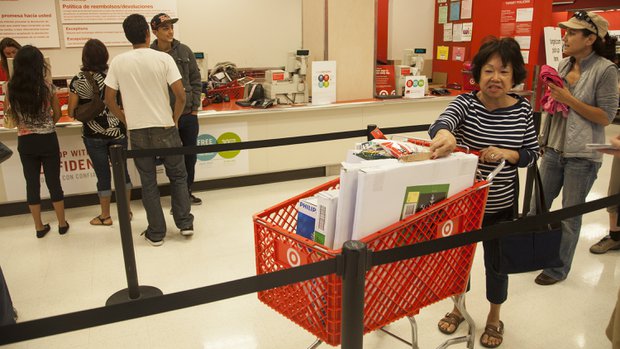
retHere’s an interesting statistic coming out of the holiday season this year: Nearly one in four consumers has returned at least one of the gifts they received.

For gifts purchased online, returns are an even bigger part of the equation – as in one third of all online gift purchases being returned.

It’s part of a trend that’s growing at a pretty swift pace. In 2014, a total of $285 billion worth of merchandise was returned in the U.S., a 6% increase over the previous year and more than double the growth rate of retail sales as a whole.

Industry observers are expecting higher figures again for 2015 once the stats are fully tallied.

Which holiday gift items tend to be returned most often? In a survey of ~500 U.S. consumers conducted between December 28 and 31, 2015 by mobile app shopping circular developer Retale, the following gift categories were cited most frequently by respondents:

  • Jewelry: ~32%
  • Electronic products: ~29%
  • Gift cards: ~27%
  • Clothes/apparel: ~26%
  • Home décor/home improvement items: ~23%

Consumers may have gravitated to online shopping big-time this past holiday season, but as for the gift return “experience,” it’s pretty clear that consumers continue to prefer making a return at the store (~64%) rather than online (~12%).

Evidently, the “hassle factor” of shipping merchandise back to the seller – not to mention the cost of return shipping if that isn’t offered free of charge – is more onerous than getting in the car and driving to the store outlet.

As for the mountains of merchandise that retailers are having to deal with, it’s caused the growth of an entirely new business niche: reverse logistics firms.

These companies input information on each returned item and determine the most lucrative way for the retailer to dispose of it – which can include sending it to a wholesaler, selling it to a liquidator for scrap, or sending it to a distribution center to be repaired and resold.  Online “refurbished products” stores on Amazon and eBay enable retailers realize up to 70% of an item’s worth by selling those items directly to value-conscious consumers, compared to recouping only 20% or 30% in the past.

It’s part of the action –> reaction aspects of retail that pretty much define this industry.

Digiday ID’s the most “overhyped” marketing developments of 2015.

Digiday logoWhat were the most overhyped marketing stories in 2015? Media company Digiday‘s brand reporter Tanya Dua has come up with a list of four that she feels fits the bill.  See if you agree.

Apple Watch

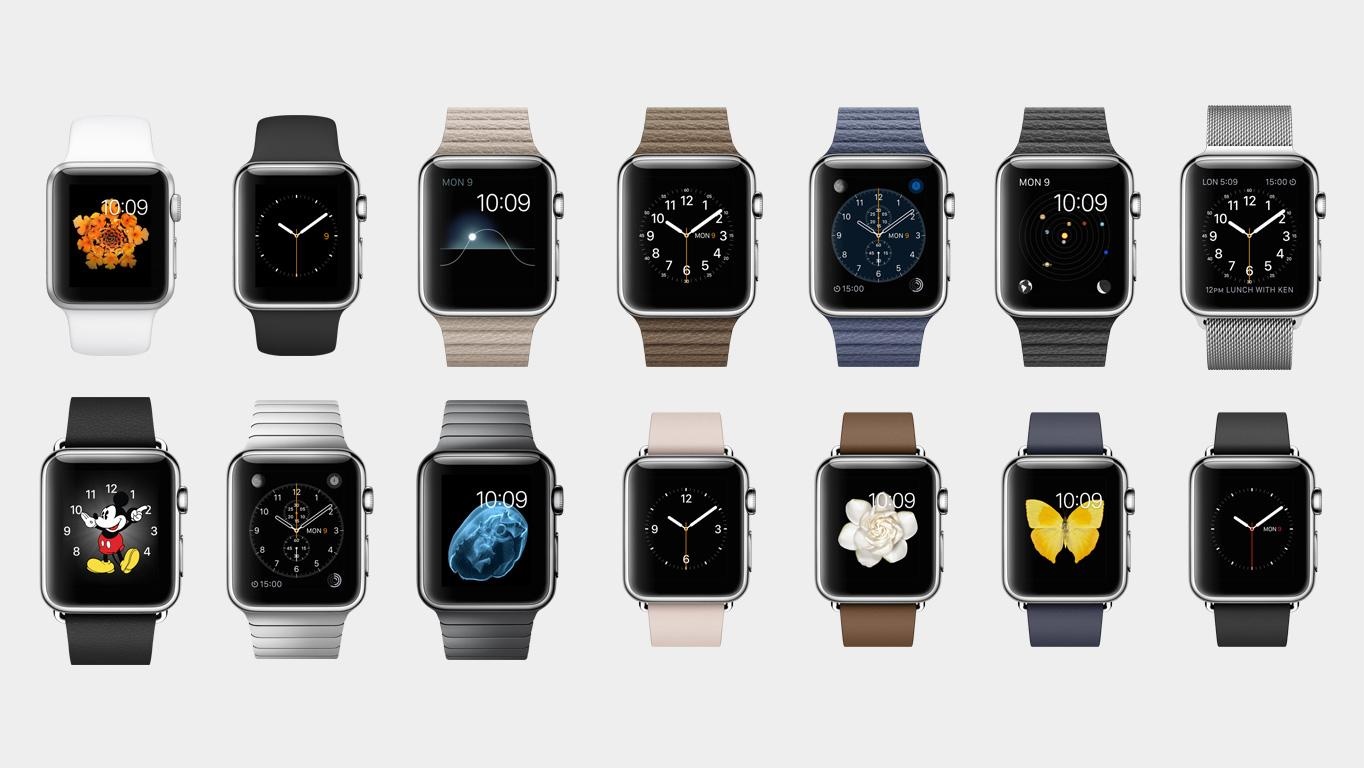
Apple WatchDua notes that the Apple Watch was announced with so much fanfare that developers began making apps for it a half-year before the product hit the shelves — including big consumer players like Target and American Airlines.  But sales of the Apple Watch have been tepid at best.  There’s no way the marketplace performance of the product has come even remotely close to the company’s hopse for it.

Thom Gruhler, a CMO at Microsoft, says it well:

“When it [comes] down to the Apple Watch, one big question has still not been answered: Will anyone end up really ‘needing’ to engage with this shiny new technology?  What happened in 2015 was a disappointing start.”

Others appear to be even less charitable. A few are even equating the launch of the Apple Watch with that of another product that was similarly hyped:  Remember the Segway?  Everyone was supposed to end up having one of those — whereas the reality is closer to no one having them, with the exception of a few security cops and a few “trendy” businesses with long hallways.

Wearable Tech

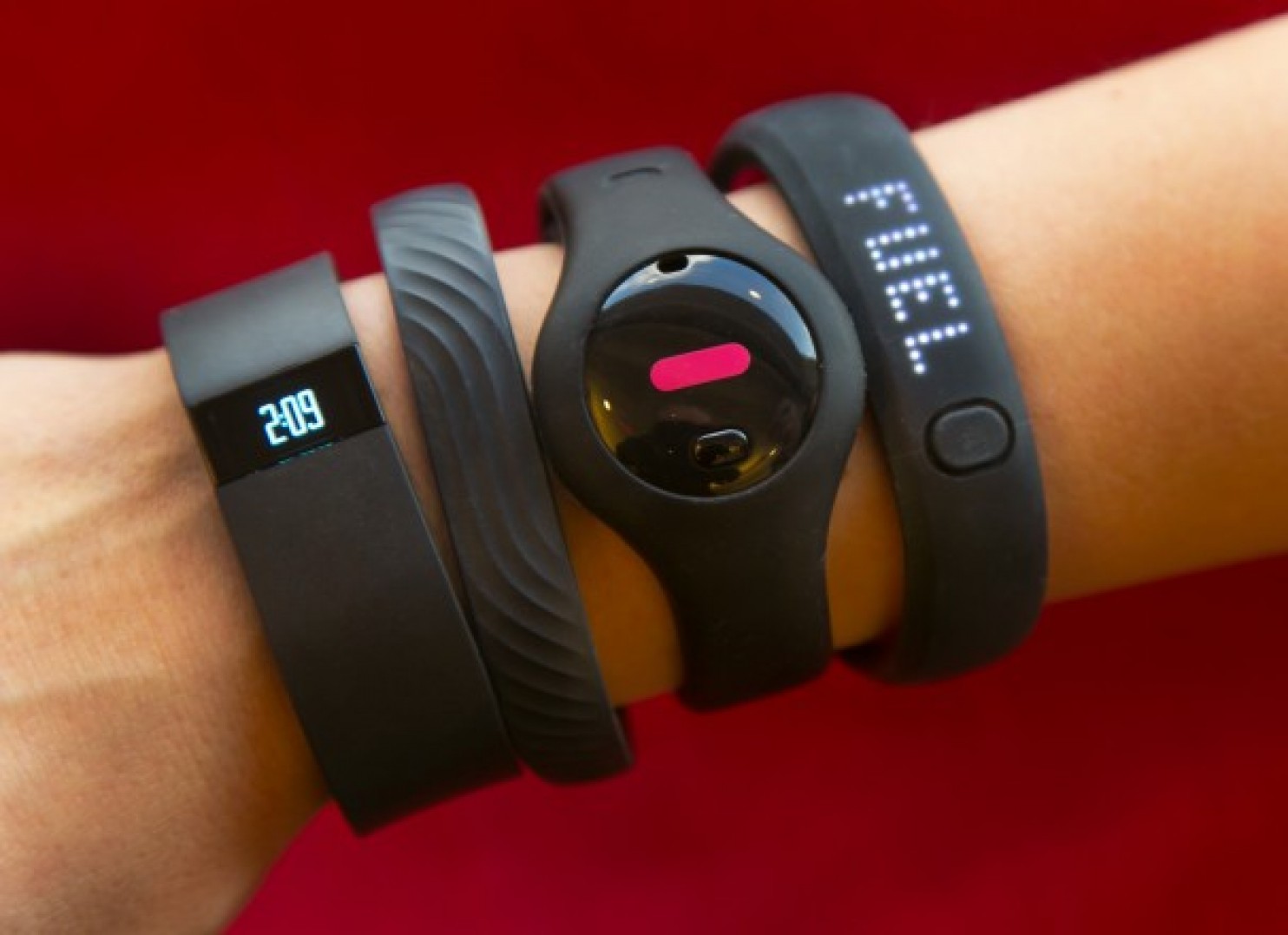
wearableMany prognosticators were expecting that the “big data” promise of using wearable technology for experiences that were predictive and personalized would be fulfilled in 2015.  That’s hardly what’s happened.  According to Dua, wearables have yet to deliver anything like that in any meaningful way.

She quotes Julie Lee, Managing Director of marketing communications firm Maxus USA’s Chicago office:

“Technology, design and user experiences still need to be worked out. Though many companies are making great strides, we continue to watch this space to see if ‘what’s possible’ can truly become possible.  Wearables still hold great potential, but we’ll need to address today’s obstacles before we can become a ‘wearables-first’ market.”

Tanya Dua cites two other developments she feels were overhyped in 2015: Influencer Partnerships and Virtual Reality.

The problem with influencer marketing is when there’s little natural synergy between brands seeking to connect with their consumers more directly. “Authenticity” matters — and too often influencers are rather awkwardly tied to products few people would ever associate with them.

As for virtual reality, the problem is one of practical implementation and adoption by consumers; it hasn’t been happening — mainly due to lack of content and available hardware. Without those pieces of the puzzle in place, marketers simply can’t justify the cost having their brands present in the mix.  Instead, look for this trend to gather more steam in 2017 and years further out, Dua contends.

What do you think? Is Tanya Dua correct in labeling these marketing trends as “overhyped”?  What else would you add to the list?  Please share your thoughts with other readers here.

The FTC Cracks Down on Native Advertising Abuse

But what difference will it make? Only time will tell …

FTIt had to happen: After years of publications uploading native advertising content that’s barely labeled as such, the Federal Trade Commission has handed down new guidelines that leave very little wiggle room in what constitutes proper labeling of paid advertising material.

Published under the title Enforcement Policy Statement on Deceptively Formatted Advertisements, the FTC’s new guidelines, which run more than 10 pages in length, make it more difficult than ever to “camouflage” advertising as “legitimate” news content.

What it boils down to is the stipulation that any sponsored content must be clearly labeled as advertising – using wording that the vast majority of readers will understand instantly.

Here’s how the FTC guidelines describe it:

“Terms likely to be understood include ‘Ad,’ ‘Advertisement,’ ‘Paid Advertisement,’ ‘Sponsored Advertising Content,’ or some variation thereof. Advertisers should not use terms such as ‘Promoted’ or “Promoted Stories,’ which in this context are, at best, ambiguous and potentially could mislead consumers that advertising content is endorsed by a publisher site.”

Another key provision is warning against advertising content mimicking the look and feel of surrounding editorial content – things like the layout characteristics, headline design treatment, the use of fonts and photography.

And here’s another kicker: the FTC lumps offending advertisers in the same pile as the people who create the materials, in that its policy statement doesn’t apply just to advertisers.  So ad agencies, MarComm companies and graphic designers, beware.

Quoting again from the FTC document:

“In appropriate circumstances the FTC has taken action against other parties who helped create deceptive advertising content – for example, ad agencies and operators of affiliate advertising networks. Everyone who participates directly or indirectly in creating or presenting native ads should make sure that ads don’t mislead consumers about their commercial nature. 

“Marketers who use native advertising have a particular interest in ensuring that anyone participating in the promotion of their products is familiar with the basic truth-in-advertising principle that an ad should be identifiable as an ad to consumers.”

Of course, these new guidelines are only going to make it harder for advertisers – and publishers – to be able to utilize advertising techniques that have, up to now, been far more effective than online display advertising.

iab-logoPredictably, we’re hearing mealy-mouthed statements from the industry in response. A spokesperson for the Interactive Advertising Bureau had this to say:

“While guidance serves great benefit to the industry, it must also be technically feasible, creatively relevant, and not stifle innovation. To that end, we have reservations about some elements of the Commission’s guidance.”

What bothers the Interactive Advertising Bureau in particular is the “plain language” provisions in the FTC’s guidelines, which IAB considers “overly descriptive.”

Translation: there’s concern that publishers can no longer label advertising using such euphemisms as “partner content” or “promoted post.”

Others seem less concerned, however. Sites such as Mashable and Huffington Post appear to be onboard with the new guidelines.

Besides, as one spokesperson said, “When the FTC issues guidelines, you’re better off when you follow them than when you don’t.”

… That sounds about right.

Consumer E-Mail Marketing: Too Much of a Good Thing?

igAdvertisers often complain about the drawbacks of online display advertising — and it’s not hard to figure out why.

Online display ad viewability, which is defined by the Media Rating Council as at least 50% of an ad’s pixels being in-view for at least one continuous second, is running under 45% these days — meaning that fewer than half of online display ads meet the definition of being viewable.

That’s actually a lower percentage than before; viewability charted closer to 50% in 2014, according to the global media valuation platform Integral Ad Science.

Because of these middling viewability rates, many advertisers look to e-mail marketing as the panacea. Not only is e-mail marketing inexpensive, the rational goes, it’s also more likely to attract and engage recipients.

But here too, the evidence is that there is mediocre visibility, too. And in this case, it’s actual willful ignorance.

According to the results of a study conducted earlier this year by business technology research firm Technology Advice, ~40% of the ~1,300 U.S. adults surveyed reported that they completely ignore marketing-oriented e-mails.

Of the ~60% who reported that they do open marketing e-mails, only a little over 15% do so on a regular basis.

Here’s a breakdown of the underwhelming stats that were gathered by Technology Advice:

  • ~58% of recipients read from 0 to 25% of marketing-oriented e-mails sent to them
  • ~21% read 25% to 50% of the marketing e-mail sent to them
  • ~13% read 50% to 75% of them
  • Just ~8% read 75% to 100% of them

In an attempt to “juice” these figures, marketers are experimenting with robust personalization in e-mails that become evident even before anyone opens them (e.g., personalization showing in the subject line), along with offering clearly marked discounts and other promo attractions.

In this regard, consumers do expect businesses to provide “value” in exchange for their attention, which explains by ~40% of the survey’s respondents are responding to discounts and similar promotional offers above all other types of e-communiqués.

But with such modest levels of people interacting with any marketing-oriented e-mails at all, there’s a question as to how whether these ploys to improvement engagement are just nibbling around the edges.

Because the reality is, there’s a big portion of the market that’s become jaded about e-mail.

Another approach seems counter-intuitive but just might be working better: reducing the frequency of e-mail solicitations from advertisers.  That theory is supported by the Technology Advice research, which found that nearly 45% of respondents feel that businesses would improve their marketing effectiveness by actually sending them less frequent e-mails.

A case of “less is more”? Probably so.