Storm Clouds on the Horizon for National Food Brands?

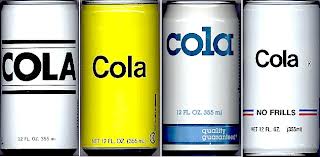
Archer Farms store brand (Target)

Generic Food BrandsAre we seeing the beginning of an upheaval when it comes to national food brands?

Over the past 30 years or so, the United States has faced its share of recessions and sharp economic cycles, with the resulting stresses on consumer budgets.

Through it all, so-called “store” and generic food brands have continued to represent only about 15% to 20% of all retail food dollar sales.

National food brands have done their part to promote themselves as the “quality” choice over store brands, as well as to promote product sales through couponing and various other attempts to beat back the “value” alternatives.

Their success has been pretty decent, all things considered … up to now. But that might be about to change.

Rabobank’s Food & Agribusiness Research and Advisory Group has just issued a report predicting that private-label food brands are poised to jump to a 25%-30% share of the market over the next ten years.

That would make the U.S. similar to what has happened in Europe, where one in three products purchased today is a retailer-branded product.

What’s behind the anticipated rise in store brands? The Rabobank report cites several contributing causes:

  • Food retailers have more sales reach and sales clout than ever. It’s not just traditional supermarkets but also warehouse clubs, drugstore chains and dollar stores.
  • Retailers are expanding their private-label initiatives into more than simply “low cost/high value” lines.
  • Stores are putting greater marketing muscle behind their own store brands – witness Target and its Market Pantry, Archer Farms and Up & Up product families.

Nicholas Fereday of Rabobank sums it up this way:

“Retailer brands have matured from their original positioning as ‘cheap and cheerless’ generic products into a more diverse range of national brand equivalents, and more recently, highly innovative premium products … On grocery shelves around the U.S., from convenience stores to upscale supermarkets, retail brands now complete successfully and often win against national brands, earning consumer trust in terms of pricing, quality, image and value.”

What are the ways the national brands can fight back against the store-brand trend? Rabobank suggests one good approach is to develop completely new products that address unmet needs.

Otherwise, they’ll end up being on the losing end of the equation, since the marketing efforts as well as attractive pricing of the store brands will ultimately prove irresistible to the majority of consumers.

Consumer buying behaviors: The power of choice … or not?

Toothpaste Aisle -- too many choicesIf you were to poll consumers, most would probably tell you that they love to be given many choices or options when it comes to merchandise and services.

And why not? Everyone recalls hearing about the “bad old days” of the Soviet Union and Communist China, when people had the choice of one type of bread or one color of clothing.

In the United States and other Western economies, we’ve long provided consumers a vast array of selection — sometimes with very little actual differentiation.  And those choices have proliferated all the more in recent years. 

[Take a walk up the toothpaste aisle at your local retail store and you’ll see “product choice, circa 2012″  in action – and on steroids.]

From the mundane to the important in goods and services, we have more choices today than ever before. But how well are we coping with having all of these options?

Not well at all, according to Barry Schwartz, the author of an important book on the topic. His book, The Paradox of Choice: Why More is Less, was published back in 2005 but is still quite timely today – perhaps even more when considering what’s happened in the ensuing years to things like the latest range of satellite television viewing package offerings from DirecTV.

Dr. Schwartz, who is a professor of social theory at Swarthmore College, posits that people are often overwhelmed by everyday decisions that have become increasingly complex due to the burgeoning number of available choices and options.

This over-abundance of choice happens not merely in the realm of toothpaste, but also in big decision areas such as selecting a healthcare provider, making investment decisions, deciding whether to move to a new city or state, or selecting a college or other educational program.

According to Dr. Schwartz, this is what often happens when confronted by so many choices:

 People question their decisions before they even make them

 The myriad of choices can set up unrealistically high expectations

 Depending on the importance of the decision to be made, too many choices can actually lead to decision-making paralysis

At what point the lines of “too few choices à la Havana” and “too many choices à la Atlanta” cross, differs depending on the situation: What might be a beautiful array of options for one person may induce an unacceptable degree of stress for another.

Dr. Schwartz lays out a number of suggestions for people who find that the bevy of choices produces too much stress, too much anxiety, or simply too much “busyness” in their lives. In turn, Harvard Business Review bloggers Anna Bird, Karen Freeman and Patrick Spenner help by coming at it from the other side.

This trio of business writers tells marketers, “If customers ask for more choice, don’t listen.” Their advice, as paraphrased by search marketing über-specialist Gord Hotchkiss, is this:

“The harder consumers find it to make purchase decisions, the more likely they are to overthink the decision and repeatedly change their minds or give up on the purchase altogether. In fact, regression analysis points to decision complexity and resulting cognitive overload as the single biggest barrier to purchase.

“Provide them with fewer choices, and make them as relevant and compelling as possible. Ease the burden of risk by providing information that reassures.”

Hotchkiss offers a few additional words of wisdom as well:

“Realize that one of the components of risk is the degree of bias in the information we’re given. If that information reeks of marketing hyperbole, it will be discounted immediately.”

So the bottom line for marketers could be this:  Simplifying product and service offerings may deliver just what consumers actually need (as opposed to what they say) … while also making employees’ lives in the product management department a whole lot easier.

Data-Driven Pricing: Biting the Hand that Feeds

Data-driven-pricingWe hear the claim all the time: Online shopping gives you the best opportunity to find the best pricing on goods.

But here’s the rude reality: Developments in “data-driven pricing” is putting the lie to that assertion.

Although it’s a turn of phrase that hasn’t received very much play – at least until now – data-driven pricing is the latest method by which sellers are hankering to extract every last dollar they can from buyers.

Think of it as the digital version of global zone pricing in the petroleum industry, wherein gas companies charge filling stations in well-heeled areas more for the exact same gasoline product that they sell for less elsewhere.

But in the digital realm, online retailers like travel sites are keeping track of customer IP addresses and recording past shopping activities in order to serve up higher prices to the people who are interacting with their sites.

These retailers are taking customer loyalty … and standing it on its head.

Using browsing and shopping data collected about each customer – including every time a site is visited via Google search results – retailers can determine in real-time if they can get away with charging a higher price.

And that may well be why you paid $75 more for your air ticket than the person seated next to you on the plane who also purchased their ticket online on the exact same day.

Now, this scenario isn’t universally true. When there are many retailers to choose from on a particular item, along with ample supply of a good, the consumer can usually hold out for the lowest combination of price, shipping (hopefully little or none), and sales taxes (hopefully none).

But on items ranging from airline tickets to concert tickets, the online consumer is often up against a stacked deck.

Believing that online shopping is the slam-dunk way to extract the lowest price from the retail channel is a notion that’s out of date at best … and naïve at worst. Simply put, data-driven systems have gotten a whole lot “smarter.”

Some consumers might respond by hesitating before buying – no longer assuming that the price they’re being offered is the “lowest available” one.

So here’s a question: When consumers become more cautious about buying online, who’s hurt more?

The consumer? Or the suddenly smarter retailer?

Consumers and coupons: The latest stats are in.

Consumers are redeeming coupons more than ever in 2011Coupons are big business in the USA. According to the latest Coupon Facts Report published by NCH/Valassis, a whopping $470 billion worth of coupons were offered by consumer package goods marketers in 2011.

Of this, an estimated $4.6 billion in coupons were redeemed. That represents more than 3.5 billion individual coupons at an average value of ~$1.30 per coupon.

It’s not surprising to learn that the offering of coupons by manufacturers spiked during the recessionary period that began in late 2008, when shoppers were more value-conscious than ever.

But by 2011, manufacturer behavior changed. In fact,this past year saw the first decrease in coupon offerings since 2008 (the drop was 8%) … although the volume hasn’t declined anywhere close to the volume of coupons consumer goods manufacturers offered back before the recession started:

 2007: $373 billion in coupon value distributed
 2008: $379 billion
 2009: $445 billion
 2010: $511 billion
 2011: $470 billion

Not every consumer category behaved similarly in 2011. Grocery product marketers reduced the total quantity of coupons they made available during the year, while marketers of health and beauty products showed no such decline.

With the increased popularity of digital couponing, one would expect that the growth rate in this segment would significantly outpace that of traditional coupons.

That turns out to be correct: NCH estimates that ~11% more print-at-home and paperless coupon offers were distributed in 2011 compared to the previous year.

But digital couponing still represents only a very small fraction of the total coupon landscape, which continues to be dominated by the free-standing inserts that are found in nearly every Sunday newspaper published in America. Here’s how FSIs dominate:

 Free-standing inserts: ~89% of U.S. coupon distribution in 2011
 In-store handouts: ~4%
 Direct mail: ~2%
 Magazines: ~2%
 Coupons inside or on product packaging: ~1%
 Digital couponing (paperless or print-at-home): ~1%

One other interesting study finding is that even though manufacturers reduced the volume of their coupon offerings during 2011 … consumers themselves showed no inclination to reduce their participation.

In fact, coupon redemption was up more than 9% in 2011 versus 2010. Clearly, many people are still thinking in “recession mode” when it comes to squeezing every ounce of productivity from their shopping dollar.

Computer Voices: (Virtually) All Female

Computer voices, voice-activated features, overwhelmingly femaleOwners of the new Apple iPhone 4S are no doubt becoming familiar with the new voice-activated feature, dubbed “Siri.”

Listening to the computer voice, it’s clear that Siri is a “she,” not a “he” … which has some journalists thinking about the fact that computer voices are overwhelmingly female.

There are some exceptions. The famous “You’ve got mail!” voice from AOL’s dial-up days is one. Plus the fact that nearly all voice-activated features in Germany utilize a male voice.

But otherwise, it’s nearly universal that these voices are female. The question is why?

Journalist Brandon Griggs, writing for CNN recently, reports that “one answer may lie in biology. Scientific studies have shown that people generally find women’s voices to be more pleasing than men’s.”

Clifford Nass, a professor of communications and computer science at Stanford University who has studied this topic closely, contends that it’s much easier to find a female voice that people like rather than a male voice.

“It’s a well-established phenomenon that the human brain is developed to like female voices,” Nass maintains. As proof, he cites a study in which fetuses were found to react to the sound of their mother’s voice … but not to their father’s.

I think another reason may be acclimatization. During World War II, my mother worked in air traffic control at the Parris Island Marine Corps Base. There were only women working these positions, and for a very practical reason: Their voices really stood out in the cockpit among the male pilots.

And what about telephone operators? For decades, they were nearly100% female voices.

Beginning in the 1980s, when auto makers first began installing automated voice prompts in cars (remember “Lights are on” and “Your door is ajar”?), consumer research found that drivers overwhelmingly preferred female voices to male ones. So is it any wonder that nearly all GPS navigation systems today have female-sounding speech as the default voice?

Not surprisingly, there are some people who contend that using a female voice as a “virtual assistant” is sexist in nature. But I’m not sure we can attribute “overt” sexism to the choices companies have made in this regard. Like with the auto companies, these decisions are probably based on market research.

So at best, it’s possible that the choice reflects some gender stereotyping that already exists in the general public.

On balance, I think it’s a positive that so many computer voices are female. After all, these voices have been selected based on attributes like warmth, friendliness and competence.

If that makes it sexist, so be it … but it puts most of the gold stars on the female side of the ledger, that’s for sure!

Social Couponing and “Daily Deal” Sites: Storm Clouds on a Blue Horizon?

Daily deals and other online couponsI’ve blogged in the past about the risks and rewards of social couponing. Recently, we’ve been getting some conflicting reports about the online couponing phenomenon.

On the positive side, according to a new market forecast by local media expert and advertising firm BIA/Kelsey, American consumer spending on coupon “deals” – including daily deals, instant deals and flash sales – is expected to grow at a healthy compound annual growth rate of ~37% between 2010 to 2015.

That would mean that Americans will be spending ~$4.2 billion in this segment by 2015. And that’s an increase of ~$300 million over BIA/Kelsey’s earlier 2015 forecast, released by them just this past March.

The BIA report also makes the following observations and prognostications about the segment:

Groupon and LivingSocial – the leading players in this market – have expanded rapidly. With low barriers to entry, more participants have entered as well, including vertical sites and local media companies.

 There’s been substantial growth in the number of registered users who are active in buying coupons.

 More specialization in deal sites – by market segment and by geography – is leading to more activity by registered users.

 An increase in both the number of transactions and the average price per transaction will occur.

Counterbalancing this rosy report is the experience of market leader Groupon in its attempts to take itself public. That endeavor has been accompanied by the release of financial figures that show company performance well below expectations.

And the challenges go well beyond Groupon: The Wall Street Journal’s Shayndi Raice is reporting that a shakeout has already begun among the ~530 daily deal sites that have been formed in recent times. So far in 2011, nearly one-third have shut down or been sold (~170 of them), according to daily deal site aggregator Yipit. Even sites like Yelp and Facebook have pulled back from their daily deal coupon activities.

According to reporter Raice, at the root of the challenge is the cost of acquiring registered users for the couponing services. At the outset, the novelty of the segment and the resulting PR buzz made it relatively easy to attract “early adopter” consumers and participating merchants, so only a relatively modest sales promotion budget was needed.

But, Raice notes, “It now takes more spending to get to remaining consumers and to cut through the noise created by so many competitors.”

Groupon’s own statistics from regulatory filings in connection with its bid to go public illustrate this dramatically. Here’s how the average cost to acquire a new custom jumped over the span of just one year:

 March 2010: $7.99 average acquisition cost-per-customer
 June 2010: $20.93
 March 2011: $30.74

Groupon was forced to spend nearly $380 million in marketing initiatives during the first half of 2011, compared to only around $35 million a year earlier. In the heightened competitive environment, not only must companies vie for new consumers, they need to sell new merchants on the program as well.

Those marketing and selling requirements translate into nearly 1,000 Groupon sales employees in North America alone, while second-ranked LivingSocial has ~700 … each of whom earns an average $100,000 in salary plus commission.

Considering these daunting dollar figures, it’s hardly a surprise that there’s a shakeout happening, with the less-heeled participants having to exit the market or sell themselves off.

In hindsight, it appears that many entrepreneurs and investors may have been tempted by the deceptively low barriers to entry into the “online deals” coupon game – basically a website … a few merchants offering coupon discounts … and some e-mail offers to consumers. But the real costs come with trying to scale operations so that the individual coupon offers result in sufficient income and fees that will offset the relatively labor-intensive operating model.

Obviously, many have yet to find the sweet spot in this business.

PR Firms at Loggerheads with Bloggerheads

PR mistakes with bloggersTime was, we could get a chuckle out of television commercials where unsuspecting consumers were surprised to find out that the restaurant coffee was really Folgers®, or the day spa’s skin moisturizer treatment for their hands was actually Palmolive® dish detergent.

There was something rather endearing about those consumer reactions – and they were uniformly positive ones as well.

But to show how far removed we are from those halcyon days, consider this recent attempt to pull a fast one on unsuspecting dinner guests at a “faux” restaurant in Midtown Manhattan: Cooked up by the Ketchum public relations unit of Omnicom Group for its client, ConAgra Foods, New York-based food bloggers and “mommy” bloggers were invited to dine at “Sotto Terra,” an underground restaurant supposedly run by Chef George Duran of TLC’s Ultimate Cake Off cable program.

But Sotto Terra, far from being the “intimate Italian restaurant” of the invitation, was nothing more than an elaborate set-up – hidden cameras and all – to get bloggers to sample ConAgra’s newest offerings in the Marie Callender’s line of frozen entrees and desserts … and presumably to extol the virtues of the cuisine.

In fact, no such restaurant even exists. Rather, it was all a staged scene in a Greenwich Village brownstone. The invitation promised a “delicious four-course meal” accompanied by Chef Duran’s “one-of-a-kind sangria” … along with a talk by famed food industry expert Phil Lempert on new taste trends in food.

The invitation also promised a “special surprise” for those who attended the dinner on one of five evenings.

The special surprise, of course, was revealing the actual provenance of the food items being served. “The twist at the end was not dissimilar to what brands like Pizza Hut and Domino’s have done in the recent past, with success,” noted Stephanie Moritz, a public relations flack at ConAgra.

The plan was to use the video footage captured at the dinners for promotional clips on ConAgra’s website and on YouTube … as well as for the bloggers who attended to generate cyber-buzz about being pleasantly surprised at the revelation.

But this is 2011, not 1981 or 1991. And bloggers are also quite different from the average consumer. Ketchum and ConAgra apparently forgot about the “90-9-1 rule” of online content: 1% create content … 9% comment on that content … and 90% simply lurk.

Not only are bloggers part of the 1%, they take their role seriously and certainly don’t appreciate being fooled. So instead of the food taking center stage, the event itself became the topic of (uniformly negative) conversation on the blogs. A few examples:

 “We discussed with the group the sad state of chemical-filled foods. And yet, you still fed me the exact thing I said I did not want to eat.” (Lon Binder, FoodMayhem Blog)

 “[I] pointed out that the reason I ate organic, fresh and good food was because my calories are very precious to me, so I want to use them wisely. Yet they were serving us a frozen meal, loaded with sodium. I’m NOT their target consumer, and they were totally off by thinking I would buy or promote their highly processed frozen goods after tricking me to taste it.” (Cindy Zhou, Chubby Chinese Girl Blog)

 “Our entire meal was a SHAM! We were unwitting participants in a bait-and-switch for Marie Callender’s new frozen three-cheese lasagna and there were cameras watching our reactions.” (Suzanne Chan, Mom Confessionals Blog)

I loved reading the PR personnel’s “spin” of the events the way they transpired: “Once we sensed it was not meeting attendees’ expectations, that’s where we stopped, we listened and we adjusted,” Stephanie Moritz remarked.

… By which she means the remaining dinner evenings were canceled.

Looking back is 20/20 hindsight, of course. But it does seem like most PR professionals could have seen this negative reaction coming from a mile away. PR agencies exist to provide not only publicity for their clients, but also counsel. Sure, the event sounds like a fun lark with a bit of a twist – and I can just picture the breathlessly animated PR brainstorming session at Ketchum that produced this idea.

But is duping bloggers and making them out to be fools the correct tactic? … Especially considering that their megaphone, augmented by the viral nature of social media, is much more effective and far-reaching than ConAgra’s corporate website ever could hope to be.

When the Public Relations Society of America was contacted by the New York Times for comment, Deborah Silverman, chairperson of the PRSA’s Board of Ethics and Professional Standards, responded by stating that the Ketchum/ConAgra PR stunt was “unfortunate” and “not quite where they should be in terms of honesty.”

Ya think?

Shopping in the Internet Age: Let’s Make a Deal

Consumers love their online dealsI hear the complaint often that e-mail has become the preserve of “deal a day” promotions and communications from brands that have devolved into little more than breathless announcements about discounts that are “too good to pass up,” coupled with the obligatory “free shipping” pot-sweetener.

And then the next day, another deal shows up that’s practically the same as the last one …

But how surprising is this, really? Let’s not forget that daily newspaper advertising – the equivalent antecedent to e-mail marketing, has always had a similar focus on price, sales and deals.

It’s just that with e-mail, it seems more ubiquitous because they’re being pitched to us hourly on any number of digital platforms and mobile devices, rather than just once a day with the newspaper delivery.

And there’s no doubt that the sheer volume of deal activity is growing – the low cost of e-mail marketing makes sure of that. Not only is seemingly every consumer brand out there working the e-mail channel like they did catalogues and newspaper advertising in the past, there’s also the bevy of coupon marketers like LivingSocial, Groupon, Yipit and Gilt City, to name just the top few.

Some have discerned a decline in the “quality” of the information that is being provided; whereas there may have once been some educational, informative or “cool” content included along with the special deals, now it’s often devolved into nothing but “price, price, price” and “savings, savings, savings.”

The extent of consumer interaction with “deal-a-day” websites and e-mail offerings was quantified recently in consumer research conducted by Yahoo and Ipsos OTX MediaCT. The survey, fielded in February 2011, discovered that U.S. adults who are on the Internet subscribe to an average of three daily or weekly shopping e-mails or e-newsletters. (And more than half subscribe to two or more.)

How often are people reading these e-communiqués? With daily regularly, it turns out.

Nearly two-thirds of the respondents who subscribe to at least two of these “daily deal” e-mails or e-newsletters report that they read all of the messages that are sent. Here’s how reading frequency breaks out:

 Read several times per day: ~22% of respondents
 … Once per day: ~38%
 … A few times per week: ~23%

 Read once per week: ~7%
 … A few times per month: ~5%
 … Once per month or less: ~5%

The same Yahoo/Ipsos survey measured the degree of pass-along activity, which is one of the most potent aspects of e-mail marketing. Most recipients reported doing this – about 45% doing so on a weekly basis or more frequently:

 Forwarding deals to friends or family several times per week: ~17%
 … Several times per day: ~12%
 … Once per day: ~10%
 … Once per week: ~6%

 Forwarding once per month or less frequently: ~19%
 … Never doing so: ~22%

Despite the complaint commonly heard about groaning e-mail inboxes, the Yahoo/Ipsos survey gives little indication that consumers are in reality becoming all that tired of the onslaught of daily deal promos. In fact, over six in ten respondents in the survey reported that they subscribe to more of them today compared to last year.

Moreover, nearly half of the survey respondents reported that they’re excited to receive them … and that they “can’t wait” to see the latest deals being offered each time.

There’s another way we know that these deals are retaining their relevance: Three-fourths of the respondents reported that these types of e-mails come to their main inbox rather than to a separate account they’ve set up to receive such offers. So there’s little doubt that when people say that these deals are desirable, they actually mean it.

We consumers do like our deals, don’t we? And if you think that the popularity of deals and discounts is due to the recession, that’s belied by the fact that even America’s super-affluent are on the deal bandwagon. Unity Marketing’s recent survey of the wealthiest 2% of Americans — those earning $250,000+ per year — finds that value-priced Amazon is the top shopping destination for ~45% of them. Not only that, ~10% use Groupon for coupons and ~8% use Craigslist.

No, it seems bargain-hunting is the thing for practically everyone.

The European Union Versus Marketers

EU e-Privacy Initiative attacks ad tracking via cookiesI wonder how many marketers are focused on what’s happening in Europe on the digital marketing front? While companies here are busily engaged in making sure ad tracking is being done to the nth degree, in the UK and Continental Europe, new legal restrictions on advertising tracking threaten to upend a lot of these efforts, particularly for multinational brands.

In short, the EU’s e-Privacy Directive restricts the use of “cookies” and virtually all other digital ad tracking methods. And the legal frameworks set up around this directive would require any marketer with users in any EU country to be subject to EU-wide and country-specific privacy legislation.

The new privacy initiatives are far more restrictive than the present US-EU “safe harbor” agreement, which merely requires American companies to notify users when cookies are used on a website. The new regs covering web pages, web apps and mobile apps would require giving notice each time a cookie is used, thereby setting up a flurry of endless notifications that promises to seriously degrade the online browsing experience.

The seemingly reasonable compromise of adding information to a “terms of use” agreement isn’t acceptable to the EU either, unless all users are issued the new agreement and they certify their acceptance.

And just to make sure everyone knows how serious all of this is, the new regs call for the imposition of financial and/or criminal penalties for the non-compliant use of cookies. But for the moment at least, only two relatively small countries besides the UK – Estonia and Denmark – have implemented controls to enforce the EU directives.

Here in the United States, privacy legislation slowly wends its way around Congress, with many legislators understanding that the key to successful commerce online is the ability for marketers to match marketing messages to interested consumers. It’s in Europe where governments appear more than willing to cripple the ability of marketers to do the job they’ve sought to do for decades: Target their audiences with as much precision as possible.

As a result, some European businesses are making noises about abandoning Europe for the United States. The problem is, in the digital age with so much of the branding and commerce blurred between countries, it’s impossible for restrictive moves in one region not to cause negative repercussions somewhere else.

Virgin Mobile’s “Sparah” campaign: Art imitates life … or vice versa?

In recent days, American television viewers have begun to see ads about a “faux” celebrity couple — Spencer Falls and Sarah Carroll – dubbed “Sparah.” What’s up with this?

It turns out that Virgin Mobile dreamed up these entirely fictitious characters as a way to raise interest and generate “buzz” about its Android-powered phones that feature monthly “pay as you go” plans that include unlimited web, data, messaging and e-mail.

The idea is to pique the curiosity of viewers who will then interact with other consumers and go online to view a variety of videos about this “celebrity couple.”

Now, before reading this blog post any further, I’d suggest you take a moment and view the intro ad here.

The “celebrity couple” is being “given” a house in Hollywood Hills, a stylist and an agent/publicist. As their “fame” grows, the “couple” is being asked to “participate” in activities “typical” of A-list celebrities, including photo shoots, store openings and appearances at special events.

As part of their “contract” with Virgin Mobile, the “couple” will be chronicling their “activities” across a variety of social media channels, including Facebook. Twitter and FourSquare.

And of course, the consumer public is being urged to “keep up with Sparah” by following all of the “important activities” of this “celebrity couple.”

Judging from the comments being left by viewers of the “Sparah” videos on YouTube, Virgin Mobile’s campaign is having the desired effect so far. Not only is the campaign generating significant buzz, it’s near-universally positive in tone.

There’s little doubt that Virgin Mobile has come up with a clever and successful way to generate awareness and interest in its phone plans as it competes with other service providers in the market. But what’s also interesting is that Virgin Mobile is shining a light on the hyperbole and “blue smoke and mirrors” that inform so much of social media and celebrity marketing today.

The line between what’s genuine versus what’s “manufactured” in pop culture – whether news or biography or gossip – is a very fine one. That’s always been the case, of course: the successes of a Lillie Langtry or Sarah Bernhardt a century ago would not have been so impressive without it.

But in today’s world, the explosion of interactive communications creates a hothouse-like environment in which the buzz can be born and spread faster than ever. (That’s why it’s often called “going viral.”)

It’s not hard to speculate that Virgin Mobile is conducting this campaign with “tongue planted firmly in cheek.” Still, the marketing pros at the company realize that while people may laugh at the irony of the campaign, at the same time Virgin Mobile is benefiting in a major way from the very things they’re spoofing. And that’s a master stroke.

Art imitating life? Life imitating art? It’s a pointed joke for sure … but on whom?