Making sense of the “Trump Travel Ban”: A view from outside the United States.

ntbSince the President Donald Trump’s executive order pertaining to foreign-national travel into the United States was issued this past weekend, there has been an outcry of criticism from many quarters. I’ve heard a wide range of concerns raised – including some claims that appear to conflict with one another.

As regular readers of the Nones Notes blog know, my brother, Nelson Nones, is someone who has lived and worked outside the Unites States for more than 20 years.  I’ve found Nelson to be a good sounding-board when it comes to making sense of complex or controversial issues that have an international bent.

Certainly, Nelson’s perspectives, coming as they do from an “outside-in” perspective, are always interesting.  That’s why I decided to ask for his views on this latest controversy. Here’s how he responded:

Setting up the “Muslim ban” arguments. 

crAccording to a media release from the Council on American-Islamic Relations (CAIR) on January 27, 2017, the “apparent purpose and underlying motive” of Trump’s order “is to ban people of the Islamic faith from Muslim-majority countries from entering the United States.” 

“To be clear, this is not a Muslim ban, as the media is falsely reporting,” Trump responded in a statement on January 29, 2017. “This is not about religion; this is about terror and keeping our country safe. There are over 40 different countries worldwide that are majority Muslim that are not [among the seven countries] affected by this order [to ban U.S. entry by nationals or dual-nationals of those countries].” 

Also on January 29, 2017, Reince Priebus, Trump’s Chief of Staff, said on NBC’s Meet the Press that other countries could be added to the list, but he didn’t identify any of them.

What are the facts?

In fact, 52 countries in the world are majority Muslim (defined as countries in which Muslims comprise half the total population or more), of which 45 are not affected by the ban on U.S. entry mentioned in Trump’s statement.  

About 12% of the world’s Muslims live in the seven affected countries (Iran, Sudan, Iraq, Yemen, Syria, Somalia and Libya, ranked in descending order by size of the Muslim population), and another 63% live in the other 45 majority Muslim countries. Of the remaining 25% of the world’s Muslim population, four-fifths are concentrated in just six non-majority Muslim countries which are also not affected by the ban on U.S. entry mentioned in Trump’s statement: India, Nigeria, Ethiopia, People’s Republic of China, Tanzania and Russia (also ranked in descending order by size of the Muslim population). 

The U.S. State Department has already announced that it has suspended the issuance of visas to nationals of the seven affected countries until further notice. However, the impact of this suspension is tempered by the U.S. State Department’s previous suspension of all U.S. visa services in three of those countries: Syria (since 2012), Libya (since 2014) and Yemen (since 2015).   

Further, U.S. visa services were not available in Iran because the U. S. does not have diplomatic relations with Iran.  

So, before Trump’s order, U.S. visa services were locally available only in three of the seven affected countries: Sudan, Iraq and Somalia. For nationals of the other affected countries, U.S. visa services were previously available by applying in, though not necessarily traveling to, Armenia (from Iran), Djibouti (from Yemen), Jordan (from Syria), Morocco (from Libya), Turkey (from Iran), and the United Arab Emirates (from Iran). 

Another part of Trump’s order suspends the entire U.S. refugee admissions system for 120 days, and suspends the Syrian refugee program indefinitely. During the fourth quarter of 2016, the U.S. admitted refugees from 63 countries under this system; 47% of those refugees came from the same seven countries affected by the ban on U.S. entry mentioned in Trump’s statement.  Another 3% were nationals of 20 additional majority Muslim countries.  

Consequently, 27 majority Muslim countries are potentially affected in some way by Trump’s order – either by the ban on U.S. entry by nationals or dual nationals of those countries or by suspension of the U.S. refugee admissions system, or both. About 49% of the world’s Muslims live in these 27 countries, and another 26% live in the other 26 majority Muslim countries that are not affected in any way.  

Nevertheless, because the number of non-refugee arrivals into the U.S. from the Middle East and Africa was about 37 times greater than the number of refugees admitted from those areas in 2016, the magnitude of impact on majority Muslim countries from suspending the U.S. refugee admissions system would be considerably lower than that of banning U.S. entry for all nationals and dual nationals from the seven countries mentioned in Trump’s statement.   

As noted, the remaining 25% of the world’s Muslim population lives in non-majority Muslim countries. Thirty-six of those countries are potentially affected by suspension of the U.S. refugee admissions system; but Muslims comprise ten percent or more of the population in only nine of them (including India, Nigeria and Ethiopia) – and those nine countries accounted for only 4% of U.S. refugee admissions during the fourth quarter of 2016.

Nelson’s data sources for the above stats: 

  • Pew Research Center, The Future of the Global Muslim Population (2011) and other sources (Muslim population by country retrieved from Wikipedia)
  • U.S. Department of Commerce, National Travel and Tourism Office (2016) (U.S. arrivals by country)
  • U.S. State Department (2016 refugee arrivals, information on visa services)

Is it a actually Muslim ban? 

Based on the facts, clearly not. 

At least half the world’s Muslims (and perhaps as many as 85% considering the limited impact of suspending the refugee program) are untouched by Trump’s executive order. Depending on how you gauge the impact of suspending the refugee program, this translates into somewhere between one-third and four-fifths of the total population in majority Muslim countries. 

Banning “people of the Islamic faith from Muslim-majority countries from entering the United States” (as CAIR puts it) literally means banning every Muslim from majority Muslim countries. Trump’s order doesn’t come close to accomplishing any such purpose in its present form. Perhaps it might if enough “other countries” are added to the list in the future, but any such action is pure speculation and not a fact today.    

Is it a good idea? 

The facts presented above don’t answer this question one way or the other, but here is my opinion: 

  • It’s a politically brilliant maneuver in terms of playing to Trump supporters. In other words, it looks like a “Muslim ban” when it actually isn’t, despite what CAIR claims. It allows Trump to fulfill a campaign promise that no reasonable people thought possible – without actually doing much of anything substantial.  
  • It’s a boneheaded maneuver in terms of people who already have valid visas, “paroles” and “green cards,” for whom no probable cause exists to deny entry. None of the seven countries mentioned in Trump’s statement, and none of the other countries from which the U.S. accepted refugees in 2016, is a visa-free country or part of the Visa Waiver Program. In other words, everyone from those countries has had to pay steep (and non-refundable) visa application fees ranging anywhere from $160 to $500 per person. I can personally attest that the State Department’s vetting procedures were quite stringent already, and the majority of applications are denied (in Thailand where I am, at least – which happens to be one of the countries from which the U.S. accepted refugees). Those who have been “paroled” (meaning, they are permitted to temporarily leave the U.S. while their “green card” application is pending) and those who hold “green cards” have spent considerable extra time and money, including legal fees, after arriving in the United States. If they were among the unfortunate few who were in transit when Trump signed his order, and hence were returned to their home country, they spent even more time and money on transportation which has gone to waste. Denying entry to such persons without probable cause is an arbitrary denial of liberty and property which, in turn, is a fundamental breach of the Constitution’s due process clauses. It doesn’t matter if the affected people are U.S. citizens or not (the Constitution refers to “persons,” not “citizens”). For this reason, I think the government will lose most if not all the lawsuits that have been, or will be, initiated in these particular cases. 
  • It won’t make the United States safer — put a dent in the threat of terror — because of the simple fact that the overwhelming majority of would-be U.S. visitors and immigrants are untouched by the order. In 2015, only about one-tenth of one percent of U.S. arrivals came from the seven countries mentioned in Trump’s statement, and in 2016 only 2.5% of U.S. arrivals came from the whole of the Middle East and Africa.

So there you have it – a view from outside the United States. I think there’s room for discussion regarding the merits of the order and whether it will actually have the desired effect.

Where do you come down on the executive action? Please share your perspectives with other readers.


Cutting the Telephone Cord

ccA new milestone has been reached in the United States:  For the first time, more than half of all American adults live in households with cellphones but no landline telephones.

That’s the key takeaway finding from a recent survey of ~24,000 Americans age 18 and above conducted by market research firm GfK MRI.

This finding  mean that in just six years, the percentage of adults living in cellphone-only households has doubled. In GfK’s 2010 research, the percentage was just 26%.

Not surprisingly, there are significant differences in the findings based on age demographics:

  • Millennials (born 1977 to 1994): ~71% live in cellphone-only households
  • Generation X (born 1965 to 1976): ~55%
  • Boomers (born 1946 to 1964): ~40%
  • Seniors (born before 1946): ~23%

Interestingly, despite their relatively low adoption rate, the percentage of Seniors living in cellphone-only households actually quadrupled over the past six years.

As for an ethnic breakdown, Hispanic Americans are significantly more likely to live free of landline phones compared to the other three major groups:

  • Hispanic Americans: ~67% live in cellphone-only households
  • Asian Americans: ~54%
  • Whites: ~51%
  • African Americans: ~50%

Perhaps surprisingly, the Northeast region of the United States has the lower incidence of cellphone-only households (~39%), compared rates all over 50% in the other three regions. As it turns out, the Northeast has relatively higher levels bundled communication services (TV, Internet, landline and cellphone services), but one suspects that the figures will come into alignment in the next few years and many of those bundled programs bite the dust.

At this rate of change, could we be seeing effectively the end of landline phone service within the next two decades? It seems likely so.

How about you?  Have your cut the phone cord yet?  And did you regret it for even one minute?

Is the Phenomenon of “Fake News” Overhyped?

fnIn the wake of recent election campaigns and referenda in places like the United States, the United Kingdom, France, Austria and the Philippines, it seems that everyone’s talking about “fake news” these days.

People all across the political and socio-economic spectrum are questioning whether the publishing and sharing of “faux” news items is having a deleterious impact on public opinion and actually changing the outcome of consequential events.

The exact definition of the term is difficult to discern, as some people are inclined to level the “fake news” charge against anyone with whom they disagree.

Beyond this, I’ve noticed that some people assign nefarious motives – political or otherwise – to the dissemination of all such news stories.  Often the motive is different, however, as over-hyped headlines – many of them having nothing to do with politics or public policy but instead focusing on celebrities or “freak” news events – serve as catnip-like clickbait for viewers who can’t resist their curiosity to find out more.

From the news consumer’s perspective, the vast majority of people think they can spot “fake” news stories when they encounter them. A recent Pew survey found that ~40% of respondents felt “very confident” knowing whether a news story is authentic, and another ~45% felt “somewhat confident” of that fact.

But how accurate are those perceptions really? A recent survey from BuzzFeed and Ipsos Public Affairs found that people who use Facebook as their primary source of news believed fake news headlines more than eight out of ten times.

That’s hardly reassuring.

And to underscore how many people are using Facebook versus more traditional news outlets as a “major” source for their news, this BuzzFeed chart showing the Top 15 information sources says it all:

  • CNN: ~27% of respondents use as a “major source” of news
  • Fox News: ~27%
  • Facebook: ~23%
  • New York Times: ~18%
  • Google News: ~17%
  • Yahoo News: ~16%
  • Washington Post: ~12%
  • Huffington Post: ~11%
  • Twitter: ~10%
  • BuzzFeed News: ~8%
  • Business Insider: ~7%
  • Snapchat: ~6%
  • Drudge Report: ~5%
  • Vice: ~5%
  • Vox: ~4%

Facebook’s algorithm change in 2016 to emphasize friends’ posts over publishers’ has turned that social platform into a pretty big hotbed of fake news activity, as people can’t resist sharing even the most outlandish stories to their network of friends.

Never mind Facebook’s recent steps to change the dynamics by sponsoring fact-checking initiatives and banning fraudulent websites from its ad network; by the accounts I’ve read, it hasn’t done all that much to curb the orgy of misinformation.

Automated ad buying isn’t helping at all either, as it’s enabling the fake news “ecosystem” big-time. As Digiday senior editor Lucia Moses explains it:

“One popular method … is tapping the competitive market for native ad widgets. Taboola, Revcontent, Adblade and Content.ad are prominently displayed on sites identified with fake news, while there are a few retargeted and programmatic ads sprinkled in. Publishers install these native ad widgets with a simple snippet of code — typically after an approval process — and when readers click on paid links in the widget, the host publisher makes money.  The ads are made to appear like related-content suggestions and often promote sensational headlines and direct-marketing offers.”

So attempting to solve the “fake news” problem is a lot more complicated than some people might realize – and it certainly isn’t going to improve because of any sort of “political” change of heart. Forrester market analyst Susan Bidel sums it up thus:

“While steps taken by … entities to curb fake news are admirable, as long as fake news generators can make money from their efforts, the problem won’t go away.”

So there we are. Bottom-line, fake news is going to be with us for the duration – whether people like it or not.

What about you? Do you think you can spot every fake news story?  Or do you think at least of few of them come in below radar?

Some good news for the U.S. Postal Service for a change …

psThe U.S. Postal Service has just implemented a price adjustment on first class letter mail – the first rate increase in quite a few years. Some other pricing adjustments have been implemented as well, but on the whole they are modest.

Hopefully the rate increases won’t throw water on the good news that the USPS experienced over the holiday season. According to a Rasmussen Reports consumer survey of ~1,000 American adults age 18 and over conducted at the end of December, Americans used the USPS more in the most recent holiday than in the 2015 season.

The public also continues to give the USPS higher marks than its major competitors – FedEx and UPS – on the way it handles their packages.

For the record, ~21% of the respondents surveyed by Rasmussen reported that they used the U.S. Postal Service more this holiday season than they have in previous years, while ~18% reported they used it less. The remaining ~61% kept their USPS usage at around the same level of activity.

On the commercial side, for many businesses who do not have the kind of high volume shipping needs to qualify for special pricing from FedEx or UPS, the USPS also appears to be a far more lucrative choice from a price-to-value relationship.

usIn mid-2015, FitSmallBusiness.com undertook apple-to-apples comparisons of the three big package delivery firms, and found some startling differences.  For example, to ship a 3-lb. package overnight-delivery from New York City to Los Angeles, using FedEx would set the sender back $83.  UPS was even worse, at $84.

The USPS price?  Just $24.99.

Comparing short-haul rates as well as heavier 10-lb. packages found similar major discrepancies — all in favor of using the U.S. Postal Service. On top of that, the USPS provides free packaging materials, complimentary pick-up service, free insurance and tracking — not to mention flat-rate boxes for packages that weigh up to 70 lbs.

feSealing the deal further, while FedEx’s 50,000+ and UPS’s 63,000+ locations worldwide are certainly nice to rely on, the number of USPS locations dwarfs those figures by a country mile. Those myriad USPS locations also mean that packages can be shipped to P.O. boxes in addition to physical addresses – something that’s out of the reach of either FedEx or UPS.

People love to beat up on the United States Postal Service.  But say what you will about the USPS, its problems and its financial challenges, they’re still a major-league bargain for many consumers and businesses.

Thanks to IOT, search is morphing into “just-in-time knowledge.”

aeIn today’s world of marketing, it’s been obvious for some time that the pace of technological change is dramatically shortening the life cycle of marketing techniques.

Consider online search. Twenty-five years ago it was hardly a blip on the radar screen.  Picking up momentum, paid search soon began to rival traditional forms of advertising, as companies took advantage of promo programs offered by Google and others that aligned neatly with consumers when they were on the hunt for products, services and solutions..

Google has attracted billions upon billions of dollars in search advertising revenue, becoming one of the biggest corporations in the world, even as entire industries have grown up around optimizing companies’ website presence and relevance so as to rank highly in search query results.

And now, thanks to continuing technology evolution and the emergence of the Internet of Things, the next generation of search is now upon us – and it’s looking likely to make keyboards and touchscreens increasingly irrelevant within a few short years.

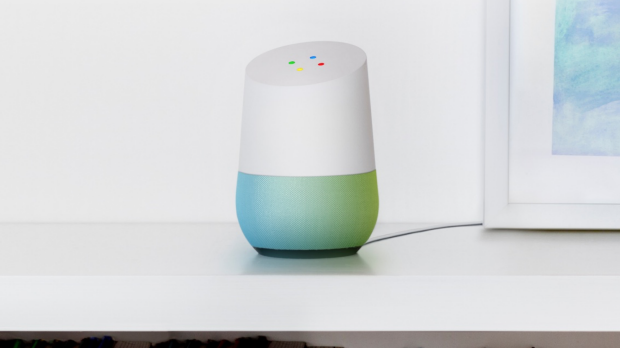
afhSearches without screens are possible thanks to technology like Google Assistant, Amazon Echo/Alexa, and software development kits from providers like Soundhound and Microsoft.

This past October, market forecasting firm Gartner came out with an interesting prediction: Within four years, it forecasts that ~30% of all searches will be carried out without a screen.

It’s happening already, actually. In web search, Amazon Echo answers voice queries, while the Bing knowledge and action graph allows Microsoft to provide answers to queries rather than a set of answer possibilities in the form of links as has been the case up to now.

Gartner envisions voice interactions overtaking typing in search queries because it is so much easier, faster and more intuitive for consumers. By eliminating the need for people to use eyes and hands for search and browsing, voice interactions improve the utility of web sessions even while multitasking takes on ever-increasing degrees of shared activity (walking, driving, socializing, exercising and the like).

Related to this, Gartner also predicts that one in five brands will have abandoned offering mobile apps by 2019. Already, many companies have found disappointing levels of adoption, engagement and ROI pertaining to the mobile apps they’ve introduced, and the prognosis is no better going forward; the online consumer is already moving on.

Gartner’s predictions go even further. It envisions ever-higher levels of what it calls “just-in-time knowledge” – essentially trading out searching for knowledge by simply getting answers to voice queries.

Speaking personally, this prediction concerns me a little. I think that some people may not fully grasp the implications of what Gartner is forecasting.

To me, “just-in-time knowledge” sounds uncomfortably close to being “ill-educated” (as opposed to “uneducated”).  Sometimes, knowing a little bit about something is more dangerous than knowing nothing at all. Bad decisions often come from possessing a bit of knowledge — but with precious little “context” surrounding it.

With “just-in-time knowledge,” think of how many people could now fall into that kind of trap.

Holiday online shopping dynamics: The 2016 season’s results are already coming in.

ohsOne of the neat aspects of online shopping is the ability to learn about consumer behaviors almost in real-time. No waiting around for published reports that are released months after the fact.

Moreover, we can know quite a bit more than simply gross sales figures, including traffic stats.

In fact, we already have extensive information available about consumer online shopping activities in the 2016 holiday season, thanks to data released by firms such as Connexity’s Hitwise division, which measures consumer behaviors across desktop, tablet and smartphone devices.

From Hitwise, we know that its Top 500 retail websites received more than 335 million visits on Thanksgiving Day alone. That averages out to just under 14 million visits per hour … but the time period of 8 pm to 11 pm had more than 50% greater traffic compared to the hourly average for the day.

Amazon.com was among the retailers receiving extensive traffic volume from 8 pm onward – in its case ~25% of its total traffic on Thanksgiving came in those final four hours of the day.

One supposes that after the “big meal,” the “big game” and the “big cleanup,” consumers decided cap off the day by plunking down at their computers or smartphones for some heavy-duty online shopping.

Hitwise found that Black Friday online shopping dynamics were different, with the top retail sites being busiest in the late morning hours, when site visits were around half again larger than Black Friday’s daily hourly average.

As for Cyber Monday, Hitwise found that consumer online shopping dynamics weren’t very much different from any other typical Monday – except that the overall volume (nearly 330 million visits) was substantially higher than the typical Monday volume of ~200 million visits. That, and a slightly greater-than-average share of online shopping happening in the early morning hours of 6, 7 and 8 am.

hwlAs for the persistent belief that Cyber Monday has more people shopping online during their time in the office, Hitwise is not seeing that phenomenon any longer.

Again, not very surprising in that more consumers have 24/7 access to digital devices in 2016 than they did ten or even just five years ago.

The Hitwise report for 2016 includes extensive findings not just on hourly shopping patterns, but also on product searches and key traffic drivers for the major online shopping websites. More data can be found on the Connexity/Hitwise website.

2016 says goodbye to some iconic American brands …

tcAs in every year, 2016 has seen the fall of famous brands; some are young upstarts that flamed out quickly, but others are venerable names that have been with us for decades.

Here are ten of the more notable casualties of the year – albeit a few of them still kicking but for all intents and purposes, going lights-out:

ap-logoA&P – This brand name goes back 150 years … but eventually even venerable A&P couldn’t survive in the cutthroat grocery market.  Actually, this brand’s been on life support for a while now, but has always managed to scrape by.  No longer.  Albertstons Companies – itself facing big competition in the grocery segment – has purchased the remaining 600 A&P outlets and will re-brand those it keeps open under its Acme brand name.  Nevertheless, at a century and a half it’s been quite a run – one that only a very few other brands can match.

american-appAmerican Apparel – When a once high-flying apparel company has its equally high-flying chief executive fending off salacious reports of secretly recorded sex videos – yes, they’re on the Internet – coupled with spiraling debt levels and plummeting sales, can Chapter 11 be far behind?  You already know the answer.

office-maxOffice Max – Sales at the big three U.S. office supply chains have struggled for a number of years, but Office Max was the one to fall victim first.  Its merger in 2013 with Office Depot began the brand’s slide, and now the final nail is in the coffin with the merger of Office Depot and Staples.  What’s the rationale for continuing to have three store brands under one company umbrella?  Answer:  No reason at all … which is why the weakest of the three brands is now becoming history.

ogOlympic Garden – In a development that some might characterize as divine retribution, the Las Vegas “adult” establishment colloquially known as “The OG” couldn’t handle its myriad legal battles even as it continued to attract big crowds.

radioshakRadioShack – OK, we still see RadioShack outlets in certain locations around the country – typically in small- to medium-sized markets.  But they’re co-branded locations with Sprint.  The reality is that this nearly 100-year-old brand is fading away; the only question is whether we’ll cease seeing the name in five years or just one or two.

searsSears – Another iconic brand name has been struggling mightily in the past decade or so, despite its merger with Kmart.  The company has lost more than $1 billion in each of the past three years.  Now it appears that the Sears name is the one that will disappear as its store locations continue to dwindle – nearly 250 in 2015 and close to another 100 this year.  At that rate, there’ll be none left before long.

simplyhiredSimplyHired – An international job search engine with upwards of 30 million active users that once sparred with the likes of Monster.com, ultimately this HR resource was unable to successfully compete in the space, shutting down in mid-year.

sportsSports Authority – A cautionary tale of what happens to a big retailer when it fails to keep its operations and product offerings fresh and appealing.  This retailer has been absorbed into Dick’s Sporting Goods, which has been far more nimble – and successful – in the “big box” sporting goods niche.

us-airways-logoUS Airways – We knew this had to be coming eventually; in 2013, this airlines’ merger with American Airlines was finalized.  Now that its operating systems are fully consolidated, one of the brand names was bound to disappear – and it’s US Airways.  Just like we all knew that Southwest Airlines would eventually consign the AirTran brand name to the dustbin, the same thing is happening with US Airways now.

vineVine – In October, Twitter shut down this video-sharing app so it could refocus on its (also struggling) core business.  Vine was definitely a flash-in-the-pan brand – barely a half-decade old.

So, now it’s time say a fond farewell to these brands. For a good many of them, the names may soon disappear, but they won’t be forgotten …

Do you have other 2016 brand casualties you’d add to the list?  Please share your choices with other readers here.

Fitbit aims to become the “check engine” light for the body.

… But first it needs to convince consumers that wearables are a “need-to-have” versus a “nice-to-have” product.

fb

Between Fitbits, Apple Watches and other “wearables,” I suspect the holiday season this year will be full of gift-giving of these and other types of interactive gadgetry.

The question is – how many of these items will still be being used by the end of the next year?

According to a recent online survey of ~9,600 consumers in the United States, the United Kingdom and Australia conducted by market research firm Gartner, many of these wearable devices will be destined for the dresser drawer.

The abandonment rate for smartwatches is expected to be ~29%, while for fitness trackers, it’s forecast to be nearly the same at ~30%.

Part of the problem is that while most people typically purchase these products for themselves, more than one-third of fitness trackers and more than a quarter of smartwatches are given as gifts.

When gadgets like these are gifted, often it’s “easy-come, easy-go.”

The Fitbit company knows about these dynamics all-too well. According to an article earlier this month in The Wall Street Journal, the company is struggling to develop its next generation of products and to attract new users.

While that’s going on, for this holiday season, Fitbit’s sales are forecast to grow only in the 2% to 5% range, as compared to double-digit increases in prior quarters.

Essentially, what Fitbit and other brands need to do is to move consumers to start considering wearables as “need-to-have” rather than “nice to have” products — and to avoid the dreaded “fad” moniker (as in “for-a-day”).

This imperative helps explain Fitbit’s attempts to position its products as ones that measure long-term health conditions rather than being simply fitness trackers.

The notion is that physicians could start prescribing Fitbit devices to track patients’ vital signs in heart health, or physical therapists doing the same to help monitor their patients’ at-home exercise routines.

Fitbit is also working on developing trackers that can detect and diagnose long-term health conditions. To that end, what’s critical is to come up with defining functions that other gadgets can’t perform.

Otherwise, consumers are less likely to be interested — figuring that they can get the same kind of functionality out of other devices they already own.

In the meantime, look for wearables to be under the tree this holiday season … and then for many of them to be stuffed in a drawer someplace by next summer.

The world of blogging: Just how does it operate?

wbMost people in business know at least one or two people who publish a blog. Chances are, they know people who blog on non-business topics as well.

Have you ever wondered what are the common practices followed by these bloggers? Speaking as someone who has published blog posts since 2009, I certainly have.

Now the “wondering” is over, because Chicago-based web design firm Orbit Media Studies has just published its 2016 Blogger Research Study, which presents the results of surveying ~1,050 bloggers about how they go about their blogging business.

Here are some of the most interesting highlights from the study:

Where do bloggers write their articles?

According to Orbit’s findings, the vast majority of bloggers are creating their content at home or at their home office:

  • At home/home office: ~81% of respondents cited
  • At the office: ~32%
  • Coffee shops or other foodservice establishments: ~19%
  • Co-working spaces: ~4%
  • Other locations: ~7% (primarily on trains or planes, or at a library)

What is the length of a typical blog post?

From the Orbit research findings, it’s pretty clear that the most popular blog post length is 500 to 1,000 words. (This one is, for instance.)  Anything longer than that quickly migrates into the “feature story” mode:

  • Less than 500 words: ~21% of respondents cited
  • 500 – 1,000 words: ~61%
  • 1,000 – 1,500 words: ~13%
  • 1,500 – 2,000 words: ~4%
  • More than 2,000 words: ~1%

Do bloggers use editors, or act as their own editor?

There’s little differentiation in behaviors here; the vast majority of bloggers report that they edit their own work. An even greater ~91% of the survey respondents either edit their own work or use an ad hoc review process.  Bottom line, most blog posts have never been seen by anyone other than the author before going live:

  • Edit own work: ~73% of respondents
  • Show it to one or two people: ~30%
  • Use a formal editor: ~12%
  • Use more than one editor: ~3%

How long does it take to write the typical blog post?

The responses ranged widely, but the most common length of time is between one and two hours:

  • Less than 1 hour: ~17% of respondents cited
  • 1-2 hours: ~37%
  • 2-3 hours: ~20%
  • 3-4 hours: 13%
  • More than 4 hours: ~13%

Are bloggers writing for other people besides themselves?

Generally speaking, bloggers are writing for their own publication, but there are many instances where bloggers are writing for clients as well.

  • 75% – 100% of blogger’s posts written for clients: ~9% of respondents cited
  • 50% – 75%: ~6%
  • 25% – 50%: ~9%
  • 5% – 25%: ~13%
  • 1% – 5%: ~18%
  • 0%: ~47%

How are bloggers driving traffic to their posts?

Two words: social media.  Direct e-mail marketing is also a common technique, as is search engine optimization:

  • Social media marketing:  ~94% of respondents cited
  • Search engine optimization: ~51%
  • E-mail marketing: ~35%
  • Influencer outreach: ~15%
  • Paid services (SEM/social media advertising): ~5%

The high SEO figure is hardly surprising, considering that bloggers are, by definition, focused on writing inherently interesting, newsworthy content.

More details from the Orbit survey can be accessed here.

Clickthrough rates on web banner advertising actually rise! (But they’re still subterranean.)

bbThe headlines last week were near-breathless, announcing that North American clickthrough rates for web banner advertising are rising!

And that’s true on the face of it: According to a new analysis by advertising management company Sizmek based on billions of online ad impressions, the average engagement (clickthrough) rate on a standard banner ad has actually increased.

It’s risen all the way up to 0.14%.

It means that for a standard banner ad, for every 1,000 times it’s served, 1.4 engagements happen.

Here’s what that also means: Don’t bank your business success on online display advertising.

Of course, there are more ways to advertise online than by using standard banner ads. So-called “rich media” ads – ones that incorporate animation and/or sound – perform substantially better.

But it’s all relative, because “substantially better” in this case means that in North America, achieving an average of 2.1 engagements for every 1,000 times a rich media ad is served.

The situation is even worse than these figures imply, actually. When one considers the incidences when viewers accidentally click through on an ad thanks to an errant mouse or a fat finger, even “one out of a thousand” for engagement isn’t really correct.

The Sizmek analysis found that banner ads in certain industries perform better than those in others. Among the “winners” (if one could characterize it that way) are electronic products, apparel, and other retail advertising.

At the bottom?  Automotive, jobs and careers and, ironically, tech and internet advertising.

A glimmer of hope in this continuing saga of hopeless news is in-stream video which, according to the Sizmek study, is generating far higher engagement levels of 1.5% or greater, depending on the degree of interactivity.

But I can’t help but wonder: As the novelty of these newer ad innovations inevitably wears off, won’t we see the same phenomenon occurring over time wherein audiences will become as “blind” to these ads as they are to the standard banner ad today?

As the years roll by and the effectiveness of online banner advertising continues to underwhelm in overwhelming ways, the “drive towards zero” seems to be the relentless theme. I seriously doubt we’re going to see a reversal of that.