Clickthrough rates are only part of the story in online display advertising.Last week, I blogged about the low level of clickthroughs on online display ads – basically a cipher at 0.09%.
In a conversation with a business colleague of mine who is with one of our healthcare client accounts, she mentioned that it’s also important to consider the branding aspects of online display advertising. The idea that people may not click through at that precise moment in time, but are favorably disposed to pay a visit later on.
This got me to looking for additional research into the matter. What I found from several advertising digital media marketing and data reporting companies – MediaMind (Eyeblaster) and comScore – confirms this impression.
An analysis by comScore of consumer clickthrough behavior covering ~140 online display ad campaigns found that only about 20% of the conversions came after clicking on a banner ad. The remaining 80% of conversions happened among those who had seen the ad but not clicked through at the time. Instead, they converted at a later date.
Other interesting points from comScore’s analysis include:
Online display ad campaigns yielded nearly 50% improvement in advertiser website visits as measured over a 30-day period.
Users who were exposed to the online advertising were ~38% more likely to conduct an advertiser-related “branded” keyword search in the subsequent 30-day period.
Users who were exposed to the online advertising were ~17% more likely to make a purchase at the advertiser’s retail store.
Similarly, MediaMind’s analysis of ~100 million conversions from thousands of online ad campaigns has found concurring results – namely, that only ~20% of conversions are the result of a clickthrough, while the vast majority of the conversions happen at some point after viewing the banner ad without clicking on it at that moment.
The takeaway from all this: It’s a mistake to consider online advertising clickthrough rates in a vacuum. Because at best, it’s only a partial measure of the effectiveness of an online ad program.
Holiday spending on the rise? Yes, but ...The “early returns” from this year’s Black Friday retail sales are quite encouraging. Online retail sales are experiencing an even bigger bump in activity. The question is, do these positive early results foreshadow a strong holiday season overall?
Each year, Gallup attempts to answer that question in advance by conducting a poll every November in which it asks U.S. consumers for a prediction of the total amount of money they plan to spend on holiday gifts. This year’s poll findings were published this past week.
And the results? The good news from the consumer economy’s standpoint is that the average personal spending expectation has risen to $714 for 2010, which is ~12% higher than last year’s $638.
The not-so-good news is that we’re still in the doldrums when measured against most of the previous decade. In fact, only in the years of 2009, 2008 and 2002 has expected personal spending been lower than it is this year.
If we take an average of the ten years covering 2000-2009, the expected personal spending found by Gallup’s survey is $747, which means that 2010’s dollar amount doesn’t even come up to the average of the past decade.
Here’s another interesting finding from the survey: Evidently, the increase in expected holiday spending compared to last year is being driven by only a small percentage of consumers. Half of the Gallup respondents reported they would be spending “about the same” this year, whereas one third reported they would actually be spending less.
The remainder – fewer than 15% — reported they would be spending more.
And all of that activity on the Internet? We can be sure a goodly amount of it is driven by the desire to find the very best price available. And to prove that out, the latest online holiday shopping report survey from rich media firm Unicast finds that more than half of consumers are using the Web to research and compare deals between online stores and retail outlets.
The bottom line on all this: It’s a mixed picture with a slight lean on the scale in favor of optimism. Which is a darn sight more positive than what we saw in 2008 and 2009.
In all the debating about health insurance over the past two years, issues of consumer access and allowing pre-existing conditions have been at the forefront of the discussion.
One aspect that’s been much less reported is the issue of insurance fraud. Recently, I read some eye-popping statistics from the Coalition Against Insurance Fraud (CAIF). This not-for-profit organization estimates that the level of annual insurance fraud amounts to the equivalent of ~$950 for each household in the United States.
Moreover, the Insurance Information Institute estimates that fraud accounts for ~10% of the losses in the property and casualty insurance segments, while the National Health Care Anti-Fraud Association reports that ~3% of the U.S. health care industry’s expenditures are due to fraudulent activities.
So we’re not talking chump change.
Insurance fraud to the tune of $80 billion per year doesn’t happen just because of a few bad apples out there. What’s happening is far more serious than that. Indeed, there are highly organized fraud rings operating throughout the country engaging in everything from staging dangerous accidents to setting up bogus medical services.
The problem goes beyond merely the added cost being borne by consumers. CAIF contends that lives can be endangered, too, due to staged auto accidents, arson incidences, and “medical procedures” being performed by phony physicians.
Is it any wonder that insurance companies like GEICO have well-staffed special investigations units devoted to ferreting out illegal insurance activities wherever they can find them.
Insurance fraud has surely been a problem since the dawn of time, because at its heart is the opportunity for financial profit. In response, a plethora of national and state laws aimed at controlling fraudulent activities have been on the books for years (although surprisingly, insurance fraud is a crime in just 48 of the 50 states – what is it about Virginia and Oregon, I wonder?). Most states maintain their own fraud bureaus as well.
But like so much else the government tries to control or influence, all of these earnest efforts to stem fraudulent activities don’t seem to be adding up to much or getting us closer to a fraud-free world.
Now here’s an idea: Let’s pass some more anti-fraud laws!
Online display ad clickthrough rates have stopped declining ... bottoming out at 0.09%.The latest news in online display advertising is that ad clickthrough rates have now leveled off after an extended period of decline – one that was exacerbated by the economic downturn.
So reports digital media marketing firm MediaMind (Eyeblaster). According to a report released this past week, one key reason for the decline being arrested is the greater sophistication of advertisers in targeting online advertising to audiences and groups that are more likely to be interested in them.
That being said, the overall clickthrough rate has leveled off at an abysmal 0.09%.
That is correct: less than one tenth of one percent. In any other business, this would be a rounding error.
If that statistic seems difficult to believe, consider this factoid: The average Internet user in America is delivered more than 2,000 display ads over the course of a single month. We might think that users would be inclined to click on more than just two or three of these ads during a month’s time.
But it’s important to realize that when users are in the mood to shop and buy, they’re typically going straight to the sites they like … or they’re using Google, Bing or some other search engine to find their way.
And it turns out there’s really no such thing as an “average” Internet user, anyway. Research conducted by digital marketing auditing and intelligence firm comScore, Inc. has found that around two-thirds of people on the Internet never click on any display ads during the course of a month. Moreover, only 16% of Internet users are responsible for around 80% of all clicks on display ads.
All the more reason why search marketing continues to be the online advertising powerhouse that it is. And why not? It’s putting your business in front of the customer when s/he is in “search-and-buy” mode … not when s/he’s doing something else.
A funny thing’s happening on the way to nirvana in the environmental world. Consumers are balking.
That’s the conclusion drawn by several articles appearing recently in The Wall Street Journal and Advertising Age.
The Wall Street Journal article, written by Stephanie Simon and published in October 2010, focuses on what motivates consumers to “turn green.” Is it the strength of the environmental message? Appealing to our better nature? A feeling of affinity with nature?
Hardly. It turns out it’s good old fashioned guilt. In particular, if people are aware that their colleagues or neighbors are doing a better job than they are on the green scene, they’re more likely to respond to the peer pressure.
Simon references two recent studies to illustrate the point. In the first, a mid-size hotel attempted to promote towel reuse by placing placards in guest rooms. One placard was headlined “Help Save the Environment,” while another one trumpeted, “Join Your Fellow Guests in Helping to Save the Environment.”
Guests who saw the second placard were 25% more likely to reuse their towels. And in a follow-up to the initial experiment, guests who were informed what percent of past guests in their room had reused towels, the compliance rate went even higher.
In the other study, middle-income residential utility customers in San Marcos, CA were given one of four doorknob hangers that promoted the use of fans instead of air conditioning, each touting a different message:
Hang-tag #1:Save $54 a month on your utility bill!
Hang-tag #2:Prevent the release of 262 pounds of greenhouse gases per month!
Hang-tag #3:Conservation: It’s the socially responsible thing to do!
Hang-tag #4:77% of your neighbors already use fans instead of air conditioning – it’s your community’s popular choice!
The result? Consumers presented with the fourth hang-tag reduced their energy consumption by an average of ~10% … compared to 3% or less reduction in energy consumption for any of the other hang-tags.
But peer pressure lasts only so long, as the study found that all four groups slipped in their conservation as time went on.
If the Wall Street Journal article poses some interesting perspectives regarding motivational factors, a November 2010 Advertising Agearticle by Jack Neff claims that a quiet backlash may be growing against green products and green marketing. Neff reports slowing sales in key green categories such as cleaning products and water filtration devices.
Timothy Kenyon, a senior marketing analyst at GfK Roper Consulting and author of the 2010 Green Gauge® study, dubs the slowdown “green fatigue.” But the phenomenon may be more than simply fatigue, because greater numbers of people are exhibiting outright disbelief in claims that up until now have gone essentially unchallenged.
In fact, 61% of the respondents in that Green Gauge® study believe that green products are too expensive, up significantly from the 53% who held this view in 2008. One-third of respondents think that green products “don’t work as well” (the figure was closer to 25% in 2008). Most startlingly, nearly 40% of the respondents feel that “green products aren’t really better for the environment” – again, up from 30% two years earlier.
With this degree of environmental skepticism now charting with American consumers, the Advertising Age article suggests several ways for companies to keep green marketing relevant and worthwhile as a message platform:
Don’t expect any real sacrifice from consumers – whether it’s paying more, accepting lower performance or sacrificing convenience, it’s likely to be a non-starter.
Don’t overstate the case – many people already think green products don’t work as well as their conventional counterparts, and they will punish brands that purport to perform better but fail to live up to the claim.
Promote product benefits that go beyond “green” – green features are really just tie-breakers in the decision to purchase a product, so it’s better to have something else to talk about as well.
The bottom line these days: Green is no longer gold, and consumers have moved well beyond the siren call of “green for green’s sake.”
The novelty has worn off … and the skepticism has set in.
Samuel J. Stone, the real identity of "B. Virdot," whose act of kindness benefited the citizens of Canton, Ohio in the Winter of 1933.One topic that’s been “done to death” in the world of books is that of the Great Depression. It seems very little new could possibly be written about it. But I’ve come across a very interesting book just published that sheds new light on this chapter of American history – and does so with a personal poignancy that strikes right to the heart.
The holiday cheer was in the form of $5 checks (worth about $100 in today’s money) which were sent to ~150 families in response to letters received that described family hardships of that year – one of the worst of the entire Great Depression. The announcement stated that the identities of the letter-writers would be kept secret “until the very end.”
This act of kindness would remain hidden for decades until Ted Gup’s mother (the daughter of the benefactor) gave the author a suitcase filled with memorabilia from her father, Samuel J. Stone. Among the artifacts was a bundle of letters written to a person named “B. Virdot.”
At first seemingly unrelated to the author’s grandfather, the giveaway clue was an old clipping of the “B. Virdot” newspaper announcement, revealing that “B. Virdot” was, in actuality, Samuel Stone.
The letters sent by families laid low by the economic events of the day revealed that the Great Depression did not discriminate by social class or status. Some of the checks Mr. Stone sent were to former business owners who had lost their companies, savings, insurance policies and homes.
Many other checks were sent to families of more modest means; one was sent to a recently widowed mother of two children who had no savings and a house mortgage. “It looks pretty dark sometimes but we still hold on to that ray of hope – that this terrible depression will soon be over,” she wrote. She went on to state, “I have never received charity of any kind.”
That’s one of the themes that runs through the letters: These were people with dignity, who were not inclined to ask for charity nor even to discuss their plight with others. They had played by the rules in their lives – taking responsible jobs, buying homes, building their savings, raising their families – until the collapse of the economy and closure of the banks robbed them of nearly everything.
Drawing on his investigative reporting background, Ted Gup proceeded to research as many of the families as he could find, to learn more about them and to interview their descendants (he would eventually interview nearly 500 descendants).
One of the interesting aspects of this endeavor was how few of the people he interviewed really understood (or even knew) the hardships that their families had suffered in that time. Yet tell-tale signs were there when descendants were told of the events those many years ago. One son spoke of his mother: “There was a loss of confidence. For her, the good times were wonderful, then all hell broke out. Friends of hers said she had been full of pep and vigor. I didn’t know her that way at all, so I think it probably did a job on her.”
Dignity was important to these people of the 1930s, when folks felt uncomfortable talking about hardships with their relatives or with their children. Yet they opened up to a total stranger in their letters – maybe the only time they ever did so. One man asked “B. Virdot” to reveal his real name to him so that one day he might repay the gift with interest.
But Samuel Stone never did so. Instead, he took his secret to the grave. And his grandson discovered that this wasn’t the only secret his grandfather had kept. Instead of being “Samuel J. Stone, born in Pittsburgh” as he’d always claimed, Ted Gup found out that his grandfather’s real name was Sam Finkelstein … and instead of being from Pennsylvania, he had been born in Dorohoi, Rumania.
Not only that, it turns out that Sam Finkelstein entered the United States illegally and never normalized his immigration status – even after becoming a prosperous businessman in America. Even much later, during World War II when the U.S. government required foreign-born residents to register or risk deportation, Samuel Stone was still afraid to take any chances and did not step forward.
So what in the end was the basis for Samuel Stone’s gesture to his fellow Canton residents? Was it an act of kindness delivered anonymously so that the families in question could maintain their dignity and not have to face the person who knew their innermost hardships and fears? Or was it Stone’s own fear of being discovered as an illegal alien that kept his gifts anonymous?
That part of the story will never be explained. But thanks to Ted Gup, the grandson, we have a surprising new story to add to the chronicles of the Great Depression.
And this one is more inspiring, heartwarming – and intensely personal – than any other I’ve read. As the author himself states, “For one moment, in one forgotten town, one man managed to shrink the vastness of the Depression to a human scale.”
As a side note, Samuel Stone would keep his promise “until the very end,” but 400 of the descendants of those who wrote the letters held a gathering in Canton just last week in a reunion that was never meant to happen — but did, thanks to this book. (And one of those who wrote a letter to “B. Virdot,” now a a 90-year-old woman, was actually on hand for the occasion.)
This book is definitely at the top of my list for holiday gift-giving this season. I heartily recommend it – it’s that good.
Most companies hitched their wagon to search engine optimization long ago. That’s not surprising, because high search rankings are one of the most effective ways to get in front of customers and prospects when they’re in the mood to research and buy.
But up until recently, SEO has generally existed in the world of English. By contrast, SEO campaigns in Spanish and other languages haven’t worked so well. Despite the fact that Spanish is among the most widely spoken of languages, many Spanish-language countries have been behind the curve in Internet connectivity. And you could say the same of other languages.
But that’s not the case today. As more people overseas have become connected, the amount of content in Spanish and other foreign languages has risen dramatically.
Looking back at a bit of history, in the early-1990s essentially all of the search engines were in English only; if you wanted to conduct a web search, you had no other choice. That started to change by the mid-1990s when ~75% of all Internet searches were being conducted in English.
Fast-forward to today. According to Internet World Stats, an information resource that chronicles web usage in more than 230 countries and world regions, searches in English now account for only ~25% of all searches conducted.
Time was … search spoke English only. But the dramatic growth of Hispanic and other non-English digital markets means that companies that take the time to invest in foreign-language content and SEO initiatives will find themselves in the strongest position going forward.
It’s yet another item for the marketing department’s to-do list. Fortunately, help is available … with companies like MSEO.com and SEO Matador providing turnkey programs for implementing SEO campaigns in multiple different languages.
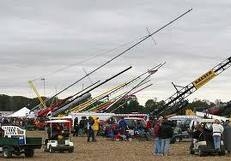
For those who are unfamiliar with this pastime, you might think that people who get their jollies firing pumpkins hundreds or thousands of feet into the air using devices like catapults and pneumatic air cannons might be out of their gourds. But the annual Punkin’ Chunkin’ competition has become something of a national craze – especially after the Discovery Science Channel decided to air a special about the event in 2008. TV ratings were strong and media coverage has expanded each year since.
In fact, this year’s event was the 25th anniversary of a competition that began in its first competition with just four contestants. This year, nearly 100 contestants participated in numerous classes – air, centrifugal, catapult, trebuchet, torsion … and yes, human-powered as well.
When we arrived at the competition venue on Saturday morning – basically a large field in rural Sussex County – it became evident quite quickly that the torrential rains from Thursday had turned the viewing area into a sea of mud. As we were slogging our way up to the viewing area and very nearly coming out of our shoes as they sank into the mire, I couldn’t help but think of a work colleague’s story of surviving his own personal Woodstock Festival “soggy adventure” in 1969.
Let’s just say that the mud, coupled with the brisk winds and cold temperatures, made for a “challenging” outdoor environment.
But all that was soon forgotten when the “big guns” began their loudly impressive battery of air-powered pumpkin chunking. All thoughts of Woodstock disappeared and I was instead reminded of my grand-uncle’s tales of World War I warfare in the muddy trenches of Northern France.
I’d love to report that we were able to see the pumpkins as they were launched into the air to land 3,500 or more feet in the distance … but the truth of the matter is that the projectile pumpkins flew so fast, it was well-nigh impossible to see them. The only pumpkin we saw “airborne” was an unfortunate misfire by one of the catapults, which flung the pumpkin only a few dozen feet above ground level and then landed with a sickening thud.
One thing was abundantly clear: all the contestants take their pumpkin chunking very seriously! In all, it was an exciting time, and it made me realize why the activity has become progressively more popular over time. One of my business clients – Kaeser Compressors – sensed the competition’s potential early on and became a supplier of compressed air for several of the contestants’ air cannon machines as far back 1999. Smart move.
And how popular is pumpkin chunking now? Popular enough that today, you can find any number of produce/harvest farms where you or your kids can step behind an air-powered cannon and shoot off your very own pumpkins.
Take a weekend outing. Pick up your pumpkins, Indian corn and mums, purchase some natural apple cider … and smash a few pumpkins for good measure. Some families are making it an annual tradition.
Perhaps the greatest proof of all that this pastime has really made it onto the big boards: Believe it or not, a European pumpkin chunking championship is now being held every year in Belgium.
First Euro Disney … now Punkin’ Chunkin’. For sure, the American cultural takeover of Europe is now complete!
When it comes to the evolution of online search, as one wag put it, “If you drop your pencil, you miss a week.”
It does seem that significant new developments in search crop up almost monthly – each one having the potential to up-end the tactics and techniques that harried companies attempt to put in place to keep up with the latest methods to target and influence customers. It’s simply not possible to bury your head in the sand, even if you wanted to.
Two of the newest developments in search include the introduction of a beta version of the new Blekko search engine with its built-in focus on SEO analytics — I’ll save that topic for a future blog post — along with a joint press conference held last week by Facebook and Microsoft where they announced new functionalities to the Bing search engine. More specifically, Bing will now be displaying search results based on the experiences and preferences of people’s Facebook friends.
What makes the Bing/Facebook development particularly intriguing is that it adds a dimension to search that is genuinely new and different. Up until now, every consumer had his or her “search engine of choice” based on any number of reasons or preferences. But generally speaking, that preference wouldn’t be based on the content of the search results. That’s because the ability for search engines to deliver truly unique search results has been very difficult because they’ve all been based on essentially the same search algorithms.
[To prove the point, run the same search term on Yahoo and Google, and you’ll likely see natural search results are pretty similar one to another. There might be a different mix of image and video results, but generally speaking, the results are based on the same “crawling” capabilities of search bots.]
The Bing/Facebook deal changes the paradigm in that new information heretofore residing behind Facebook’s wall will now be visible to selected searchers.
The implications of this are pretty interesting to contemplate. It’s one thing for people to read reviews or ratings written by total strangers about a restaurant or store on a site like Yelp. But now, if someone sees “likes,” ratings or comments from their Facebook friends, those will presumably carry more weight. With this new font of information, as time goes on the number of products, brands and services that people will be rating will surely rise.
The implications are potentially enormous. Brands like Zappos have grown in popularity, and in consumer loyalty, because of their “authenticity.” The new Bing/Facebook module will provide ways for smaller brands to engender similar fierce loyalty on a smaller scale … without having to make the same huge brand-building commitment.
Of course, there’s a flip side to this. A company’s product had better be good … or else all of those hoped-for positive ratings and reviews could turn out to be the exact opposite!
The rise of the Internet has changed the way the couponing business operates. Not only are people logging online to find coupons rather than searching for them in the local paper, so-called “social couponing” has also entered the scene. This is where online coupon offers become active only after a minimum number of registered users sign on to them.
Groupon is probably the best-known of these couponing platforms, although there are others active in the field including MyCityDeal, Half Off Depot, BuyWithMe and LivingSocial. [Interestingly the idea of social couponing originated in the People’s Republic of China.]
The concept, as Groupon does it, is pretty simple. It offers one “Groupon” per day in distinct market segments. If a predetermined specified number of people sign up for the coupon offer, the deal then becomes available to all; otherwise, the offer doesn’t take effect.
Groupon makes its money by getting a percentage of the deal from the participating retailers.
In theory, social couponing reduces the risk for retailers, who can treat the coupons as brand promotion tools in addition to offering discounts or freebies. But research carried out recently by the Jones Graduate School of Business at Rice University throws a bit of cold water on this hot idea.
The Rice research, which included ~150 businesses, found that the Groupon campaigns were unprofitable ventures for one-third of them. Furthermore, ~40% of the companies studied stated that, based on their experience, they don’t plan to run another social coupon promotion.
The Rice study measured program success based on two criteria: what portion of customers spent more than the coupon amount … and to what degree did customers subsequently make follow-up purchases without the coupon offer. Those companies that reported their campaigns had not been profitable also reported that only ~25% of the coupon redeemers spent more than the face value of the coupon.
Beyond that, fewer than 15% made a subsequent purchase at full price.
In contrast, firms that reported having profitable promotions stated that about half of the coupon redeemers spent more than value of the coupon, and ~30% of them made follow-up purchases at regular prices.
But even some of these firms were wary about conducting another campaign, believing that the Groupon offer did not attract the “right” kind of customers.
What types of offers did well? The Rice study found that foodservice offers performed best in terms of the quantity of offers redeemed. Other categories that scored relatively well were tourism offers, educational services, salons and spas – but each of these drew less than half the response level that restaurants achieved.
Utpal Dholakia, an associate professor of marketing at Rice and leader of the research study, concluded, “There is disillusionment with the extreme price-sensitive nature and transactional orientation of these consumers.” Dr. Dholakia went on to point out that “they are not the relational customers that they had hoped for, or the ones … necessary for their businesses’ long-term success.”
What’s the caveat for businesses thinking about jumping into social couponing? Such a program may well contribute to a surge in business. But many of these new customers will be price-conscious in the extreme, holding a bargain-hunting agenda above everything else.










 Nones Notes