It’s natural to assume that these days, pretty much all Americans go online regularly. And indeed, that is the case. According to a survey of ~2,000 Americans age 18 and older conducted recently by the Pew Research Center, more than three in four respondents (~77%) reported that they go online at least once each day.
But even more interesting perhaps is another finding from the Pew survey: More than one in four Americans (~26%) report that they are online “almost constantly”.
That proportion is up from one in five just a couple years ago.
Even for people who go online but don’t use a mobile device, nearly 55% report that they go online at least daily, although just 5% of them report being online continually.
Looking further into the Pew findings, the “always on” population is skewed younger … better educated … ethnically diverse … and with higher incomes:
Gender
Men: ~25%
Women: ~27%
Age
18-29: ~39%
30-49: ~36%
50-64: ~17%
65 or older: ~8%
Education Level
High school degree or less: ~20%
Some college: ~28%
College degree or more: ~34%
Race
Non-white: ~33%
White: ~23%
Income Level
Less than $30K annual income: ~24%
$30-$75K annual income: ~25%
$75K or higher annual income: ~35%
Location
Living in urban areas: ~32%
Living in suburban areas: ~27%
Living in rural areas: ~15%
Regarding location, one explanation for the lower “always on” characteristics of rural dwellers may be that interconnectivity isn’t as simple and easy as it is in urban environments.
Or perhaps it’s because rural areas offer more attractive options for people to spend their time doing more fulfilling things than being tethered to the online world 24/7/365 …
Which is it? Your thoughts on this or the other dynamics uncovered by Pew are welcomed. You can also read more about the survey findings here.
Lawmakers’ cringeworthy questioning of Facebook’s Mark Zuckerberg calls into question the government’s ability to regulate social media.
Facebook CEO Mark Zuckerberg on Capitol Hill, April 2018. (Saul Loeb/AFP/Getty Images)
With the testimony on Capitol Hill last week by Facebook CEO Mark Zuckerberg, there’s heightened concern about the negative side effects of social media platforms. But in listening to lawmakers questioning Zuckerberg, it became painfully obvious that our Federal legislators have next to no understanding of the role of advertising in social media – or even how social media works in its most basic form.
Younger staff members may have written the questions for their legislative bosses, but it was clear that the lawmakers were ill-equipped to handle Zuckerberg’s alternatively pat, platitudinous and evasive responses and to come back with meaningful follow-up questions.
Even the younger senators and congresspeople didn’t acquit themselves well.
It made me think of something else, too. The questioners – and nearly everyone else, it seems – are missing this fundamental point about social media: Facebook and other social media platforms aren’t much different from old-fashioned print media, commercial radio and TV/cable in that that they all generate the vast bulk of their earnings from advertising.
It’s true that in addition to advertising revenues, print publications usually charge subscribers for paper copies of their publications. In the past, this was because 1) they could … but 2) also to help defray the cost of paper, ink, printing and physical distribution of their product to news outlets or directly to homes.
Commercial radio and TV haven’t had those costs, but neither did they have a practical way of charging their audiences for broadcasts – at least not until cable and satellite came along – and so they made their product available to their audiences at no charge.
The big difference between social media platforms and traditional media is that social platforms can do something that the marketers of old could only dream about: target their advertising based on personally identifiable demographics.
Think about it: Not so many years ago, the only demographics available to marketers came from census publications, which by law cannot reveal any personally identifiable information. Moreover, the U.S. census is taken only every ten years, so the data ages pretty quickly.
Beyond census information, advertisers using print media could rely on audit reports from ABC and BPA. If it was a business-to-business publication, some demographic data was available based on subscriber-provided information (freely provided in exchange for receiving those magazines free of charge). But in the case of consumer publications, the audit information wouldn’t give an advertiser anything beyond the number of copies printed and sold, and (sometimes) a geographic breakdown of where mail subscribers lived.
Advertisers using radio or TV media had to rely on researchers like Nielsen — but that research surveyed only a small sample of the audience.
What this meant was that the only way advertisers could “move the needle” in a market was to spend scads of cash on broadcasting their messages to the largest possible audience. As a connecting mechanism, this is hugely inefficient.
The value proposition that Zuckerberg’s Facebook and other social media platforms provide is the ability to connect advertisers with more people for less spend, due to these platforms’ abilities to use personally identifiable demographics for targeting the advertisements.
Want to find people who enjoy doing DIY projects but who live just in areas where your company has local distribution of your products? Through Facebook, you can narrow-cast your reach by targeting consumers involved with particular activities and interests in addition to geography, age, gender, or whatever other characteristics you might wish to use as filters.
That’s massively more efficient and effective than relying on something like median household income within a zip code or census tract. It also means that your message will be more targeted — and hence more relevant — to the people who see it.
All of this is immensely more efficient for advertisers, which is why social media advertising (in addition to search advertising on Google) has taken off while other forms of advertising have plateaued or declined.
But there’s a downside: Social media is being manipulated (“abused” might be the better term) by “black hats” – people who couldn’t do such things in the past using census information or Nielsen ratings or magazine audit statements.
Here’s another reality: Facebook and other social media platforms have been so fixated on their value proposition that they failed to conceive of — or plan for — the behavior inspired by the evil side of humanity or those who feel no guilt about taking advantage of security vulnerabilities for financial or political gain.
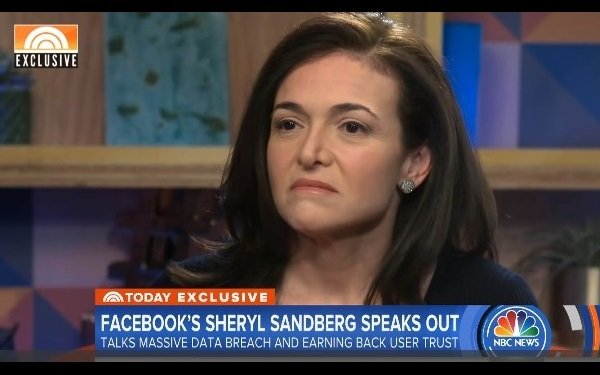
Facebook COO Sheryl Sandberg interviewed on the Today Show, April 2018.
Now that that reality has begun to sink in, it’ll be interesting to see how Mark Zuckerberg and Sheryl Sandberg of Facebook — not to mention other social media business leaders — respond to the threat.
They’ll need to do something — and it’ll have to be something more compelling than CEO Zuckerberg’s constant refrain at the Capitol Hill hearings (“I’ll have my team look into that.”) or COO Sandberg’s litany (“I’m glad you asked that question, because it’s an important one.”) on her parade of TV/cable interviews. The share price of these companies’ stock will continue to pummeled until investors understand what changes are going to be made that will actually achieve concrete results.
Have you noticed how, despite installing adblocking software on your computer or mobile device, a lot of online advertising is still making it through to you?
That isn’t just your imagination. It’s happening – and it’s getting worse.
According to a recent report based on findings prepared by researchers at the University of Iowa, Syracuse University and the University of California – Riverside, the extent of “end runs” being successfully made around adblockers is quite high – and it’s growing.
According to the research, more than 30% of the Top 10,000 Alexa-ranked websites are thwarting adblockers in order that millions of visitors will continue to see online advertisements despite running adblocking software.
As the universities’ report states:
“Online publishers consider adblockers a major threat to the ad-powered ‘free’ web. They have started to retaliate against adblockers by employing anti-adblockers, which can detect and stop adblock users.
To counter this retaliation, adblockers in turn try to detect and filter anti-adblocking scripts.”
Some of the more “forthright” publishers are being at least a little transparent about the process – first asking visitors to stop blocking ads. If those appeals go unheeded, the next step is to notify visitors that if they fail to whitelist the site, they will no longer be able to access any of its content.
The problem with this scenario is that many visitors simply go elsewhere for content when faced with such a choice. Still, it’s nice that some online publishers are giving people the choice to opt in … in an environment where the publisher’s content can be monetized to some degree.
Other sites aren’t so courteous; instead, they’re overriding the adblock software and serving up the advertising anyway. That certainly isn’t the way to “make friends and influence people.”
But “violating consumer intent” is kind of where we are in this arena at the moment, unfortunately.
It isn’t anything particularly special to hear people talking about the declining market for print newspapers, and how market dynamics and demographic trends have put the traditional newspaper publishing model at risk.
At the same time, most newspaper publications have found it quite challenging to “migrate” their print customers to paid-subscription digital platforms. The plethora of free news sites online makes it difficult to entice people to pay for digital access to the news – even if the quality of the “free” coverage is lower.
New York Times CEO Mark Thompson, appearing on CNBC’s Power Lunch program (February 12, 2018).
But it was quite something to hear a forecast made by Mark Thompson, The New York Times’ CEO. Earlier this month, Thompson made remarks during CNBC’s Power Lunch broadcast that amounted to a prediction that the NYT’s print edition won’t be around in another ten years.
Thompson went on to explain that his company’s objective is to build the digital product even while print is going away:
“The key thing for us is that we’re pivoting. Our plan is to go on serving our loyal print subscribers as long as we can. But meanwhile, to build up the digital business so that we can have a successful growing company and a successful news operation long after print is gone.”
It’s one thing for newspapers in various cities across the country to be facing the eventuality of throwing in the towel on their print product. It’s quite another for a newspaper as vaunted as The New York Times to be candidly predicting this result happening.
It would seem that the NYT, along with the Washington Post, The Wall Street Journal and possibly USA Today would be the four papers most able to preserve their print editions because of their business models (USA Today’s hotel distribution program) or simply because of their vaunted reputations as America’s only daily newspapers with anything approaching nationwide distribution.
I guess this is what makes the Thompson remarks so eyebrow-raising. If there isn’t a long-term future for The New York Times when it comes to print, what does that say about the rest of the newspaper industry? “Hopeless” seems like the watchword.
It will be interesting indeed if, a decade from now, we find no print newspapers being published in this country save for hyper-local news publications – the ones which rely on print subscribers seeing their friends and family in the paper for weddings, funerals, community activities, school sports and other such parochial (or vanity) purposes.
When people stop reporting statistics on an industry, it could be a sign of increasing irrelevance.
Unfortunately, that seems to be what’s happening in the newspaper and print magazine segment, slowly but surely. Over the past few years, there’s been a steady decline in the number of benchmark reports being published about the industry.
In 2014, Publishers Information Bureau, the longstanding publisher of annual statistics on print advertising pages and ad revenues for magazine titles, ceased providing such data after migrating to a digital audience reporting format.
A year later, the Newspaper Association of America (aka the News Media Alliance) stopped reporting annual revenue figures for the newspaper industry.
Its counterpart in the radio media segment – the Radio Advertising Bureau – has done the same thing as well.
No longer reporting on advertising and revenues is one thing. But now the American Society of News Editors has stopped publishing annual estimates on the total number of journalists working in the newsrooms of America.
For years, those statistics have been a proxy for gauging the overall health of American journalism. And in recent years, what the stats were showing was something pretty ugly.
Between 2001 and 2015, ASNE’s statistics showed a decline in the number of journalists of more than 40%, with the total head count dropping from ~56,400 to ~32,900 over the period.
Perhaps it’s understandable that the news industry doesn’t want to chronicle the continuing decline of a once-vibrant and vaunted profession. But stopping the reporting of stats on it may be sending the wrong message – or adding to the implosion.
At a time of heightened incidences of “fake news” in the media, and when the business model for traditional journalism is increasingly precarious, to take the “real facts” of what’s happening and shove them under the carpet seems short-sighted at best.
By averting our eyes to what’s happening, it could well be exacerbating the trend lines. And then at some point, it won’t be that much of a stretch to think of journalism as a quaint, historical concept that is irrelevant in today’s world.
I hope we never get there. But at the rate we’re going, it’s looking more and more like the “great disappearing journalism.”
Just a few years ago, who would have been willing to predict that YouTube’s user base would outstrip China Central Television, the world’s largest TV network?
Yet, that’s exactly what’s happened: As of today, around 2 billion unique users watch a YouTube video at least once every 90 days, whereas CCT has around 1.2 billion viewers.
Consider that in 2013, YouTube’s user base was hovering around 1 billion. So that’s quite a jump in fewer than five years.
Here’s another interesting YouTube factoid: Nearly 400 hours of video content is being uploaded to YouTube each and every minute.
For anyone who’s tallying, this amounts to 65 years of video uploaded to the channel per day. No wonder YouTube has become the single most popular “go-to” place for video content.
But there’s more: Taken as a whole, YouTube viewers across the world are watching more than 1 billion hours of video daily. That’s happening not just because of the wealth of video content available; it’s also because of YouTube’s highly effective algorithms to personalize video offerings.
One of the big reasons YouTube’s viewership has expanded so quickly goes back to the year 2012, which is when the channel started building those algorithms that tap user data and offer personalized video lineups. The whole purpose was to give viewers more reasons to watch more YouTube content.
And the tactic is succeeding beautifully.
Another factor is Google and its enormous reach as a search engine. Being that YouTube and Google are part of the same commercial enterprise, it’s only natural that Google would include YouTube video links at the top of its search engine results pages, where viewers are inclined to notice them and to click through to view them.
Moreover, Google pre-installs the YouTube app on its Android software, which runs nearly 90% of all smartphones worldwide.
The average run time for a YouTube video is around three minutes, with some 5 billion videos being watched on YouTube in the typical day.
Considering all of these stats, it’s very easy to understand how Internet viewing of video content is well on the way to eclipsing overall television viewing before much longer. As of 2015, TV viewing still outpaced interview viewing by about margin of about 56% to 44%. But when you consider that TV viewing is stagnant (or actually declining a bit), while interview viewing continues to gallop ahead, the two lines will likely cross in the next year or two.
What about you? Like me, have you found that your video viewing habits have changed in the direction of YouTube and away from other platforms?
The rationale behind the guidelines is that the FTC wants advertisers to be prevented from presenting paid content in ways that mask the fact that it’s a form of advertising. Essentially, it wants to avoid leaving the erroneous impression that the advertiser did not create — or influence the creation — of the content, or that it paid a fee in order for the news to be published.
But what native advertising content developer Polar has found is that the explicit disclosures the FTC wishes advertisers to include as part of their stories tend to have a negative impact on readership.
… Which is precisely what native advertising is trying to avoid, of course.
After all, the whole point of these articles is to appear that they’re published due to their inherent newsworthiness, rather than because advertisers wish to push a sales message disguised as “narrative” so strongly, they’re willing to fork over big bucks for the privilege.
In its evaluation, Polar analyzed ~140 native placements across 65 publishers, and found that only ~55% of them used the term “sponsored” as a way to label the content.
As for the term “advertisement” or “advertorial,” the incidence of usage was far lower; less than 5% of the native placements identified their content as such.
Correlated to these findings was that more euphemistic terms like “partner content” tend to perform better in terms of reader engagement than do more explicit disclosures of an advertiser relationship.
“Promoted” was found to be the best performing term, garnering a 0.19% clickthrough rate as compared to “sponsored,” with just a 0.16% clickthrough rate.
[Interestingly, on desktop devices “sponsored” marginal outperformed “promoted,” whereas on mobile devices it was just the opposite.]
More broadly, the Polar investigation also found that nearly one-third of the pay-to-play native advertising placements it evaluated failed to comply at all with the FTC guidelines (as in zip/zero/nada) – which brings up a whole other set of issues at a time of heightened awareness of the “fake news” phenomenon online.
There are a growing number of reasons why more marketers these days are referring to the largest social media platform as “Fakebook.”
Back last year, it came to light that Facebook’s video view volumes were being significantly overstated – and the outcry was big enough that the famously tightly controlled social platform finally agreed to submit its metrics reporting to outside oversight.
To be sure, that decision was “helped along” by certain big brands threatening to significantly cut back their Facebook advertising or cease it altogether.
Now comes another interesting wrinkle. According to Facebook’s statistics, the social network claims it can reach millions of Americans across several important age demographics, as follows:
18-24 year-olds: ~41 million people
25-34 year-olds: ~60 million people
35-49 year-olds: ~61 million people
There’s one slight problem with these stats: U.S. Census Bureau data indicates that the total number of people living in the United States falling in the 18-49 age grouping is 137 million.
That’s a substantially lower figure than the 162 million people counted by Facebook – 25 million (18%) smaller, to be precise.
What could be the reason(s) for the overcount? As reported by Business Insider journalist Alex Heath, a Facebook spokesperson has attributed the “over-counting” to foreign tourists engaging with Facebook’s platform while they’re in the United States.
That seems like a pretty lame explanation – particularly since U.S. tourism outside the country is a reciprocal activity that likely cancels out foreign tourism.
There’s also the fact that there are multiple Facebook accounts maintained by some people. But it stretches credulity to think that multiple accounts explain more than a small portion of the differential.
Facebook rightly points out that its audience reach stats are designed to estimate how many people in a given geographic area are eligible to see an ad that a business might choose to run, and that this projected reach has no bearing on the actual delivery and billing of ads in a campaign.
In other words, the advertising would be reaching “real” people in any case.
Still, such discrepancies aren’t good to have in an environment where many marketers already believe that social media advertising promises more than it actually delivers. After all, “reality check” information like this is just a click away in cyberspace …
Sparring over the guarantees and limits of free speech seems to be growing rather than abating.
How controversial? The advertising rejected by the Washington Metropolitan Area Transit Authority as being too political for public display.
The most recent indication of just how much confusion there is on the topic of free speech comes in the form of a recently filed lawsuit brought by the American Civil Liberties Union against the Washington Metropolitan Area Transit Authority (WMATA) – a public agency popularly known as the DC Metro.
The issue sparking the lawsuit related to a number of ads which the WMATA refused to display due to concerns over the advertising content being “too political for public display.”
Countering WMATA’s efforts to avoid “offending” its customers, the ACLU chose to sue on behalf of itself as well as three companies and organizations that includes:
Carafem – a healthcare network specializing in birth control and medication abortion
Milo Worldwide, LLC – the corporate entity behind the libertarian political advocate and “extreme commentator” Milo Yiannopolous
PETA Foundation(aka FSAP – Foundation to Support Animal Protection) – an animal rights/welfare organization
The lawsuit claims that WMATA refused to display advertising from these organizations for fear of offending some of the people who use its transportation services.
In announcing its intention to defend itself against the ACLU suit, a WMATA spokesperson stated:
“In 2015, WMATA’s board of directors changed its advertising forum to a nonpublic forum and adopted commercial advertising guidelines that prohibit issue-oriented ads, including political, religious and advocacy ads. WMATA intends to vigorously defend its commercial advertising guidelines, which are reasonable and viewpoint-neutral.”
On the point of whether the advertising in question is “issues-oriented,” there is sharp disagreement.
Gabe Walters, manager of legislative affairs for the PETA Foundation, emphasizes that “the government cannot pick and choose who gets to speak based on their viewpoint – no matter how controversial.”
A spokesperson for Milo Yiannopoulos echoed the PETA Foundation statement: “On this issue we are united: It is not for the government to chase so-called ‘controversial’ content out of the public square.”
Considering the ads that were rejected, a case could be made that they’re hardly “controversial” on their face:
The Milo Worldwide ads featured a photo of Milo Yiannopoulos.
The Carafem ad copy stated simply “for abortion up to 10 weeks.”
The PETA ad showed a pig with the caption, “I’m ME, not MEAT. See the Individual. Go Vegan.”
The ACLU ad stated the First Amendment language verbatim.
The ACLU suit contends that none of the advertising in question negates any kind of fundamental right to free speech. Moreover, the abortion pill provided by Carafem is FDA-approved as well as accepted by the American Medical Association.
Even more problematic for the WMATA’s defense, at the same time the agency was rejecting the PETA ad, it approved one from Chipotle promoting a menu item made with pork.
The only difference between them according to the ACLU? The Chipotle ad sends the message that it’s good to eat pork, whereas the PETA ad says the opposite.
Looking at the contours of the lawsuit and the facts of the case, I think the WMATA defense is on pretty shaky ground, and for this reason, I’m pretty sure that the ACLU lawsuit is going to succeed.
Indeed, it’s somewhat distressing that such a suit had to be filed at all, because its point is the First Amendment and what it’s all about: protecting everyone’s speech.
That people are having to re-litigate the issue of free speech in 2017 speaks volumes about the level of confusion that has been introduced into the public sphere in decent years.
In a written statement, the company complained that what was originally designed to “serve as a forum for thoughtful and intelligent debate that would allow our global audience to engage with one another” had devolved into a free-for-all, with the comments sections “hijacked by users hiding behind pseudonyms spewing vitriol, bigotry, racism and sectarianism.”
“The possibility of having any form of debate was virtually nonexistent,” the al-Jazeera statement added – as if any further explanation for their action was needed.
I have a comment of my own in response to al-Jazeera: “Welcome to reality.”
Al-Jazeera is hardly an innocuous website in cyberspace. It reports on some of the most explosive developments affecting the most volatile regions of the world. Considering the sparring parties in these never-ending conflicts, complaining about “sectarianism” is almost laughable.
Is there a more “sectarian” group of people on the face of the earth than those who are exorcised about the inhabitants of the Middle East – or of Muslims, Christians and Jews in general? I don’t know of any.
As for the comments section being a repository of derision and hate, how is anyone surprised? What other result could one expect – especially since there was little or no attempt by al-Jazeera personnel to moderate the comments section?
The fact is, unmoderated comments sections that also allow for poster anonymity are a blanket invitation for “the inmates running the asylum.” Comments that are left in these “anything’s allowed” forums chase the well-intentioned participants away – and fast.
On the other hand, I’ve found plenty of well-moderated forums and comments sections that are as valuable as the underlying articles themselves.
That doesn’t happen all by itself, of course. Good moderation takes effective policies – requiring commentators to identify themselves for a start. It also requires an ever-watchful eye.
Evidently, al-Jazeera and others like them found the not-insignificant effort required to perform this degree of moderation to be unworthy of their time or financial resources. And as a result, their forums became worthless.

 It’s natural to assume that these days, pretty much all Americans go online regularly. And indeed, that is the case. According to a survey of ~2,000 Americans age 18 and older conducted recently by the Pew Research Center, more than three in four respondents (~77%) reported that they go online at least once each day.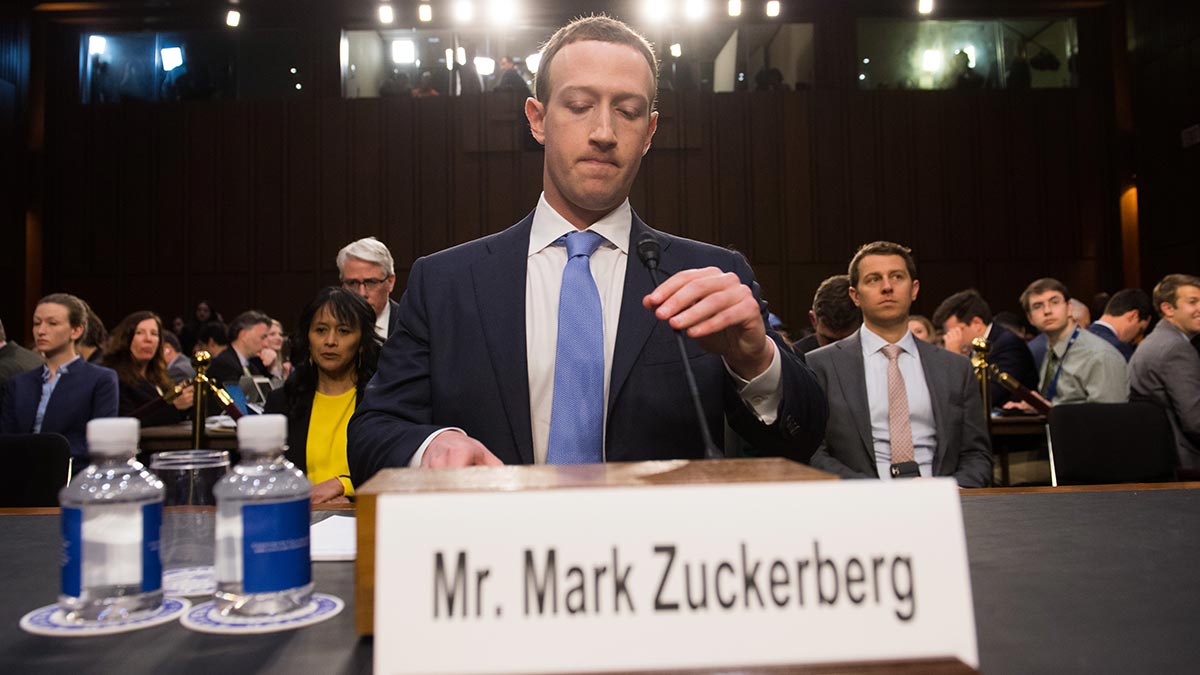










 Nones Notes