Our Visual World

vcThe old adage that a picture is worth a thousand words has ever-greater resonance as time goes on. And when visuals come up against text – it’s really no contest at all.

Marcel Just, PhD, who directs the Center for Cognitive Brain Imaging at Carnegie Mellon University in Pittsburgh, PA, states the case plainly:

“Processing print isn’t something the human brain was built for. The printed word is a human artifact.  It’s very convenient and it’s worked very well for us for 5,000 years, but it’s an invention of human beings.   

By contrast, Mother Nature has built into our brain our ability to see the visual world and interpret it. Even the spoken language is much more a ‘given’ biologically than reading written language.”

So it’s fundamental that photos, other pictorial graphics and videos are effective with audiences across the board – not just with certain demographics. This universality makes the visual world so much more universal than the world as seen through an “education level” or a “language” prism.

3M Company has done research to attempt to measure this impact quantitatively. It has found that ~90% of all information transmitted to the brain is visual.  And now, the growth of digital communications has provided all sorts of ways to gauge the effectiveness of those visual communications.

Consider these points:

  • Visual content is processed 60,000 times faster than text.
  • Humans retain only about 20% of what they read … just ~10% of what they hear … but ~80% of what they see.
  • ~80% of the text on most pages of content doesn’t get read.
  • Twitter tweets containing images generate ~20 more clickthroughs … ~90% more “favorites” … and ~150% more re-tweets.
  • Social media posts including video clips do dramatically better – outstripping text-only posts by a factor of ten times.

The implications for advertisers couldn’t be clearer. The explosion in digital content only makes it that much more important to catch the audience’s attention, because typically advertisers have only seconds to do so.

And that attention-getting content is going to be visual.

Twitter’s Continuing Monetization Challenge

Press reports have been pretty consistent over the past year or so about the underwhelming financial performance of Twitter.  Here’s the trend line for Twitter shares of stock since the beginning of 2014:


Twitter share price trend


… And beyond the financial performance, I’ve been writing about Twitter’s fundamental business challenges off and on for well over five years now.

While Twitter undoubtedly has its place in the social realm — its place in “breaking news” is a biggie — it remains a frustrating platform for advertisers, which is one reason Twitter’s business model has turned out to be less effective than Facebook’s.

Recent stats from eMarketer reveal that over 50 million Internet users in the United States are accessing their Twitter accounts via any device at least monthly.

That equates to about fifth of U.S. Internet users — and nearly three in ten people active on social networks.

So … this means that many people are seeing ads on Twitter. And that’s confirmed through an evaluation conducted by Cowen & Company which finds that well over half of U.S. adult Twitter users are e encountering ads on their Twitter feed at least every 10 or 20 tweets.

Predictably, most of the advertising pertains to retail, app installations and travel. Those are pretty relevant as broad advertising categories.

It’s just … many Twitter users aren’t finding the ads effective.  Here’s what Cowen’s findings show in terms of user feelings about Twitter advertising:

  • Ads on Twitter are relevant and/or insightful: ~3%
  • Ads are OK: ~26%
  • Ads are not really relevant: ~45%
  • Ads are usually a poor fit: ~14%

These results suggest that advertisers need to improve their targeting capabilities significantly if they wish to reach the right audience segments with relevant messages.

More fundamentally, current attitudes about Twitter advertising pose continuing challenges for Twitter as it attempts to further-monetize its platform. The tepid performance of Twitter shares since the beginning of 2014 underscores how the company continues to cast about for answers to that fundamental challenge.  I wonder when (or if) the company will ever figure it all out.

Suddenly, GoPro isn’t so “Go-Go” …

untitled2Most likely, I’ll never be a GoPro customer.

The only direct interaction I’ve had with the maker of action cameras was several years ago during the Great Target Credit Card Breach of 2013, when suddenly a half-dozen GoPro purchases mysteriously appeared on my card statement.

But other than that, my connection with GoPro and its line of cameras has been nonexistent — which isn’t at all surprising considering that at my age, I’m hardly an “action adventurer.”

Unfortunately for GoPro, many other people aren’t, either – and it’s one reason why the company’s financial results have been pretty ugly coming off of the most recent holiday season.

This past week, GoPro announced that it is cutting nearly 10% of its workforce (more than 100 people) because of weak sales during the 4th Quarter.

In a holiday quarter when product purchases should have grown revenues considerably, the weaker-than-expected sales volume of ~$435 million meant that GoPro’s revenues were far short of the $510 million originally projected.

From the financial market’s perspective, this news was sufficiently negative that trading of GoPro shares had to be halted briefly this past Wednesday.

untitled
GoPro shares over the past six months.

The company promises to divulge more information about its financial results in early February, but some observers are already beginning to paint the picture of what’s out of kilter:

  • GoPro misjudged the price consumers were willing to pay for its Hero4 Session cube cam, introduced in July 2015, resulting in two dramatic drops of the sticker price in September and December down to $199. 
  • Competitors are entering the field, putting further downward pressure on pricing. 
  • There’s a ceiling on the demand for action cameras because “action adventurer” consumers are such a small slice of the general population.

But does any of this come as a particular surprise?

Like in any other consumer electronics product category, the trajectory of high growth among early adopters leads to new market entrants, followed by the hardware becoming essentially a commodity.

… And the whole process is as swift as it is inevitable.

GoPro is branching into newer segments like camera drones — and not a moment too soon. But the reality is that in a product segment like action cameras, any supplier will always be just one step ahead of commoditization.  And for this reason, product mix reinvention has to be happening continuously.

Holiday Sales: “Many Happy Returns”

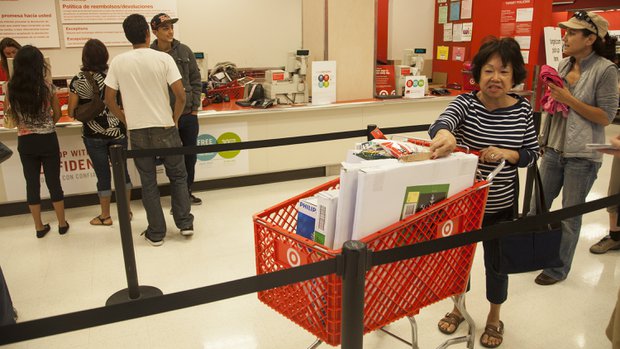
retHere’s an interesting statistic coming out of the holiday season this year: Nearly one in four consumers has returned at least one of the gifts they received.

For gifts purchased online, returns are an even bigger part of the equation – as in one third of all online gift purchases being returned.

It’s part of a trend that’s growing at a pretty swift pace. In 2014, a total of $285 billion worth of merchandise was returned in the U.S., a 6% increase over the previous year and more than double the growth rate of retail sales as a whole.

Industry observers are expecting higher figures again for 2015 once the stats are fully tallied.

Which holiday gift items tend to be returned most often? In a survey of ~500 U.S. consumers conducted between December 28 and 31, 2015 by mobile app shopping circular developer Retale, the following gift categories were cited most frequently by respondents:

  • Jewelry: ~32%
  • Electronic products: ~29%
  • Gift cards: ~27%
  • Clothes/apparel: ~26%
  • Home décor/home improvement items: ~23%

Consumers may have gravitated to online shopping big-time this past holiday season, but as for the gift return “experience,” it’s pretty clear that consumers continue to prefer making a return at the store (~64%) rather than online (~12%).

Evidently, the “hassle factor” of shipping merchandise back to the seller – not to mention the cost of return shipping if that isn’t offered free of charge – is more onerous than getting in the car and driving to the store outlet.

As for the mountains of merchandise that retailers are having to deal with, it’s caused the growth of an entirely new business niche: reverse logistics firms.

These companies input information on each returned item and determine the most lucrative way for the retailer to dispose of it – which can include sending it to a wholesaler, selling it to a liquidator for scrap, or sending it to a distribution center to be repaired and resold.  Online “refurbished products” stores on Amazon and eBay enable retailers realize up to 70% of an item’s worth by selling those items directly to value-conscious consumers, compared to recouping only 20% or 30% in the past.

It’s part of the action –> reaction aspects of retail that pretty much define this industry.

The FTC Cracks Down on Native Advertising Abuse

But what difference will it make? Only time will tell …

FTIt had to happen: After years of publications uploading native advertising content that’s barely labeled as such, the Federal Trade Commission has handed down new guidelines that leave very little wiggle room in what constitutes proper labeling of paid advertising material.

Published under the title Enforcement Policy Statement on Deceptively Formatted Advertisements, the FTC’s new guidelines, which run more than 10 pages in length, make it more difficult than ever to “camouflage” advertising as “legitimate” news content.

What it boils down to is the stipulation that any sponsored content must be clearly labeled as advertising – using wording that the vast majority of readers will understand instantly.

Here’s how the FTC guidelines describe it:

“Terms likely to be understood include ‘Ad,’ ‘Advertisement,’ ‘Paid Advertisement,’ ‘Sponsored Advertising Content,’ or some variation thereof. Advertisers should not use terms such as ‘Promoted’ or “Promoted Stories,’ which in this context are, at best, ambiguous and potentially could mislead consumers that advertising content is endorsed by a publisher site.”

Another key provision is warning against advertising content mimicking the look and feel of surrounding editorial content – things like the layout characteristics, headline design treatment, the use of fonts and photography.

And here’s another kicker: the FTC lumps offending advertisers in the same pile as the people who create the materials, in that its policy statement doesn’t apply just to advertisers.  So ad agencies, MarComm companies and graphic designers, beware.

Quoting again from the FTC document:

“In appropriate circumstances the FTC has taken action against other parties who helped create deceptive advertising content – for example, ad agencies and operators of affiliate advertising networks. Everyone who participates directly or indirectly in creating or presenting native ads should make sure that ads don’t mislead consumers about their commercial nature. 

“Marketers who use native advertising have a particular interest in ensuring that anyone participating in the promotion of their products is familiar with the basic truth-in-advertising principle that an ad should be identifiable as an ad to consumers.”

Of course, these new guidelines are only going to make it harder for advertisers – and publishers – to be able to utilize advertising techniques that have, up to now, been far more effective than online display advertising.

iab-logoPredictably, we’re hearing mealy-mouthed statements from the industry in response. A spokesperson for the Interactive Advertising Bureau had this to say:

“While guidance serves great benefit to the industry, it must also be technically feasible, creatively relevant, and not stifle innovation. To that end, we have reservations about some elements of the Commission’s guidance.”

What bothers the Interactive Advertising Bureau in particular is the “plain language” provisions in the FTC’s guidelines, which IAB considers “overly descriptive.”

Translation: there’s concern that publishers can no longer label advertising using such euphemisms as “partner content” or “promoted post.”

Others seem less concerned, however. Sites such as Mashable and Huffington Post appear to be onboard with the new guidelines.

Besides, as one spokesperson said, “When the FTC issues guidelines, you’re better off when you follow them than when you don’t.”

… That sounds about right.

Consumer E-Mail Marketing: Too Much of a Good Thing?

igAdvertisers often complain about the drawbacks of online display advertising — and it’s not hard to figure out why.

Online display ad viewability, which is defined by the Media Rating Council as at least 50% of an ad’s pixels being in-view for at least one continuous second, is running under 45% these days — meaning that fewer than half of online display ads meet the definition of being viewable.

That’s actually a lower percentage than before; viewability charted closer to 50% in 2014, according to the global media valuation platform Integral Ad Science.

Because of these middling viewability rates, many advertisers look to e-mail marketing as the panacea. Not only is e-mail marketing inexpensive, the rational goes, it’s also more likely to attract and engage recipients.

But here too, the evidence is that there is mediocre visibility, too. And in this case, it’s actual willful ignorance.

According to the results of a study conducted earlier this year by business technology research firm Technology Advice, ~40% of the ~1,300 U.S. adults surveyed reported that they completely ignore marketing-oriented e-mails.

Of the ~60% who reported that they do open marketing e-mails, only a little over 15% do so on a regular basis.

Here’s a breakdown of the underwhelming stats that were gathered by Technology Advice:

  • ~58% of recipients read from 0 to 25% of marketing-oriented e-mails sent to them
  • ~21% read 25% to 50% of the marketing e-mail sent to them
  • ~13% read 50% to 75% of them
  • Just ~8% read 75% to 100% of them

In an attempt to “juice” these figures, marketers are experimenting with robust personalization in e-mails that become evident even before anyone opens them (e.g., personalization showing in the subject line), along with offering clearly marked discounts and other promo attractions.

In this regard, consumers do expect businesses to provide “value” in exchange for their attention, which explains by ~40% of the survey’s respondents are responding to discounts and similar promotional offers above all other types of e-communiqués.

But with such modest levels of people interacting with any marketing-oriented e-mails at all, there’s a question as to how whether these ploys to improvement engagement are just nibbling around the edges.

Because the reality is, there’s a big portion of the market that’s become jaded about e-mail.

Another approach seems counter-intuitive but just might be working better: reducing the frequency of e-mail solicitations from advertisers.  That theory is supported by the Technology Advice research, which found that nearly 45% of respondents feel that businesses would improve their marketing effectiveness by actually sending them less frequent e-mails.

A case of “less is more”? Probably so.

What’s in a name? When it comes to senior living communities – plenty.

BrooksideFor those of us “of a certain age,” it seems hard to believe that within five years, most of the Baby Boomer generation will be of retirement age.

… This also means that millions of people will be thinking about downsizing, right-sizing, or whatever the applicable term may be.

All sorts of considerations come into play when making such a decision; climate, social, cultural and recreation opportunities, plus proximity to relatives are some of the most common.

But when the dust settles, most people will actually end up “aging in place.”

That’s one key finding from a recent survey of ~4,000 American Baby Boomer households that was conducted by the Demand Institute Housing & Community.

Not only do nearly two-thirds of the respondents plan to stay in their current homes, the majority of them feel that their homes are well-suited for aging – even if they’re multi-story, don’t offer accessibility features, or aren’t particularly low-maintenance structures.

But the survey suggests another interesting dynamic that may also be at work:  the notion that senior living communities are primarily places for people who have serious health issues or who can’t take care of themselves on their own.

Let’s face it.  Baby Boomers don’t consider themselves part of that cohort at all, which they equate with people who are substantially more elderly than themselves.

When you think about it, so many of the terms used to describe senior living facilities convey exactly the wrong thing to Baby Boomers.  The names may well be accurate descriptions of the properties in question, but they fairly scream “geriatrics.”

community

I’ve run across quite a few descriptors.  A good number of them reside in the same wheelhouse – which is to say, distinctly unattractive.  Meanwhile, other alternative names are often too narrowly descriptive as well, because one important aspect of senior living is to access to continuing care if and when that becomes necessary.

Either way, those charged with marketing these properties clearly prefer the word “community” over the word “center” or “home.”  But you can be the judge of how successful these names really are:

  • 55+ communities
  • Active adult communities
  • Age-restricted communities
  • Continuing care retirement communities
  • Elder cohousing communities
  • Independent living communities
  • Leisure communities
  • Mature living communities
  • Senior housing communities
  • Senior living communities

The bottom line on this is pretty fundamental:  Few people – regardless of how old they are – wish to be reminded of the limitations of life on a downward curve.  It’s just not compatible with the positive attributes that are so much a part of human nature.  Anything we can do to avoid being reminded of our mortality, we’ll do.

Obviously, that reluctance to face the reality of aging is of concern to property developers in the housing industry as well.  One of the actions coming out of field research such as the Diamond study is a new initiative to establish an alternative “umbrella descriptor” that works across the entire spectrum of senior living facilities.

It will be interesting to see where that exercise will end up.  As for me, I’m guessing it’ll still telegraph “geriatric.”  But perhaps we’ll end up being surprised.

Old Forester: A storied brand attempts a comeback.

Old Forrester bourbonA half century ago, Old Forester bourbon was the big brand name in the spirits business.  As the flagship brand of the Brown-Forman Corporation, it routinely sold in quantities approaching one million cases each year.

Back in the day, Old Forester was marketed as “America’s Guest Whiskey” – the one to bring out when company came to visit.  (I remember finding an ancient bottle of Old Forrester when cleaning out my late mother-in-law’s liquor cabinet.)

Forward to today.  Despite a recent rise in bourbon sales, Old Forester is a near-forgotten brand entry.  Shipments barely topped 100,000 cases last year, and nearly half of all sales came from just two states:  Alabama and Kentucky.

What the heck happened?

In broad terms, American tastes in distilled beverages shifted away from scotch and bourbon to vodka and gin.  Wine became more popular, too.

But those changes affected the entire market for bourbon, scotch and other whiskeys.  What made Old Forrester sink so low in a category that’s actually been on an upward trend since 2000?

Two words:  “Jack Daniels.”

BF logoIn 1956, Louisville-based Brown-Forman, the makers of Old Forrester, acquired the iconic Jack Daniels brand, and promptly started marketing it big-time.

Jack Daniels advertising has been pretty constant in the decades since.

Then in the mid-1990s, Brown-Forman introduced Woodford Reserve, which it marketed as premium bourbon — much as Old Forester had been a half-century before.

With all of the attention lavished on these two brands, Old Forester got squeezed out of the action.

But as it turns, out, there may be a second act for Old Forrester after all.  Starting in 2001, bourbon shipments have been on a pretty steady upward trend, with total shipments now topping 1 billion liters annually.

Mad-Men-Season-6Some have attributed the growth in bourbon consumption to the success of the Mad Men TV series, but I suspect there’s a lot more to it than just that.

Besides, even with Mad Men going off the air, market forecast firm Cowen & Company predicts American whiskey growth rates will clock in at nearly 10% per year until 2020 at least.

Because of those dynamics, it comes as little surprise that brands like Bulleit Bourbon have been so very aggressive in the market.

New entrants abound, too, as there are now more than 26 distillery licenses issued by the state of Kentucky (up from just ten in 2011).

Evidently, the key managers at Brown-Forman must have decided that they weren’t going to let the market pass them by, and so they’ve committed to a major initiative to resuscitate the Old Forester brand name.  Major commitments and goals include:

  • Building a new distillery in Louisville that will open next year
  • Expanding the geographic reach of brand sales
  • Undertaking a $20 million marketing effort including digital advertising, point-of-sale promotion and bar promotions
  • Increasing annual shipments to 500,000+ cases within five years

What are the chances that Old Forester can regain its lost luster and once again become one of America’s esteemed bourbon brands?

Brown-Forman's Campbell Brown, a fifth-generation family member, heads up the Old Forrester branding initiative.
Brown-Forman’s Campbell Brown, a fifth-generation family member, heads up the Old Forrester branding initiative.

There are no guarantees, of course.  But starting with a venerable brand name … and then appointing a seasoned industry veteran — and fifth generation Brown family member as well — to head the effort may give this initiative pretty decent odds of success.

We’ll check back in four or five years and see how it all turns out.

The “100% ad viewability” gambit: Gimmick or game-changer?

Say hello to the ad industry’s newest acronym: vCPM (viewable cost-per-thousand).

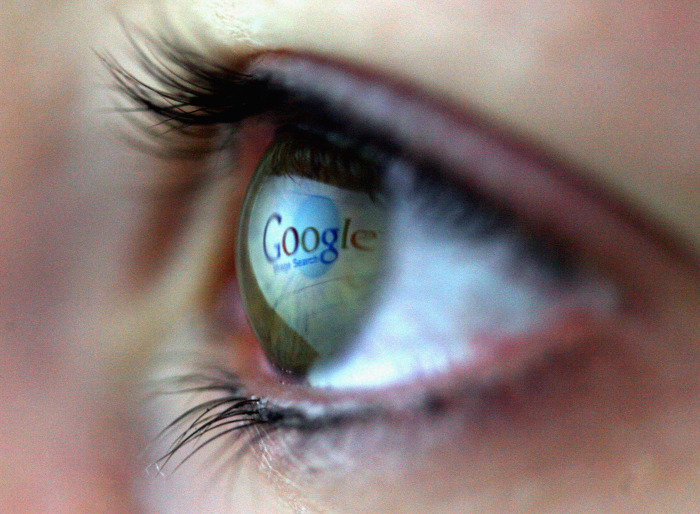
viewabilityA few weeks back, Google announced that it will be introducing 100% viewable ads in the coming months, bringing all online ad campaigns bought on a CPM basis into view across its Google Display Network.

The news comes as a relief to advertisers, who have long complained about the high percentage of ads that never have a chance to be viewed by “real people.”

The statistic that Google likes to reference is that approximately 55% of all display ads are never viewed due to a myriad of factors — such as appearing being below the fold, being scrolled out of view, or showing up in a background tab.

And the problem is only growing larger with the increased adoption of ad blocker software tools.

Google isn’t the only that’s one coming up with in-view advertising guarantees. Facebook recently announced that it will begin selling 100% viewable ads in its News Feed area.

But some are questioning how much of a better benefit 100% viewability will be in actuality. For one thing, ad rates for these program are sure to be higher than for conventional ad buying contracts.

For another, neither Facebook nor Google have stated how long an ad would need to remain in view before an advertiser gets charged. Whether it’s 1 second, 2 seconds or 5 seconds makes a huge difference in the real worth of that exposure to the consumer.

Then there’s the realm of mobile advertising. In a startling analysis conducted and reported on by The New York Times, a mix of advertising and editorial on the mobile home pages of the top 50 news sites was measured.  What the analysis found was that mobile airtime is being chewed up by advertising content far more than by the editorial content people are tuning in to view.

Boston.com mobile readers are a case in point. The analysis found that its readers spend an average of ~31 seconds waiting for ads to load versus ~8 seconds waiting for the editorial content to load.  That translates into a home page visitor paying $9.50 per month — just to view the ads.

ad blockerWhen there’s suddenly a cost implication in addition to the basic “irritation factor,” expect more smartphone and tablet users to avail themselves of ad blockers even more than they do today.

As if on cud, Apple is now allowing ad blockers on the iPhone, giving consumers the ability to conserve data, make websites load faster, and save on usage charges all in one fell swoop.

Sounds like a pretty sweet deal all-around.