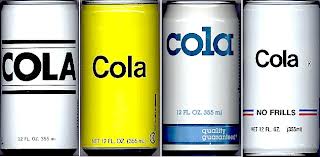
Storm Clouds on the Horizon for National Food Brands?

Archer Farms store brand (Target)

Generic Food BrandsAre we seeing the beginning of an upheaval when it comes to national food brands?

Over the past 30 years or so, the United States has faced its share of recessions and sharp economic cycles, with the resulting stresses on consumer budgets.

Through it all, so-called “store” and generic food brands have continued to represent only about 15% to 20% of all retail food dollar sales.

National food brands have done their part to promote themselves as the “quality” choice over store brands, as well as to promote product sales through couponing and various other attempts to beat back the “value” alternatives.

Their success has been pretty decent, all things considered … up to now. But that might be about to change.

Rabobank’s Food & Agribusiness Research and Advisory Group has just issued a report predicting that private-label food brands are poised to jump to a 25%-30% share of the market over the next ten years.

That would make the U.S. similar to what has happened in Europe, where one in three products purchased today is a retailer-branded product.

What’s behind the anticipated rise in store brands? The Rabobank report cites several contributing causes:

  • Food retailers have more sales reach and sales clout than ever. It’s not just traditional supermarkets but also warehouse clubs, drugstore chains and dollar stores.
  • Retailers are expanding their private-label initiatives into more than simply “low cost/high value” lines.
  • Stores are putting greater marketing muscle behind their own store brands – witness Target and its Market Pantry, Archer Farms and Up & Up product families.

Nicholas Fereday of Rabobank sums it up this way:

“Retailer brands have matured from their original positioning as ‘cheap and cheerless’ generic products into a more diverse range of national brand equivalents, and more recently, highly innovative premium products … On grocery shelves around the U.S., from convenience stores to upscale supermarkets, retail brands now complete successfully and often win against national brands, earning consumer trust in terms of pricing, quality, image and value.”

What are the ways the national brands can fight back against the store-brand trend? Rabobank suggests one good approach is to develop completely new products that address unmet needs.

Otherwise, they’ll end up being on the losing end of the equation, since the marketing efforts as well as attractive pricing of the store brands will ultimately prove irresistible to the majority of consumers.

The Free Lunch Ends on Facebook

Promoted posts on Facebook is the only way to get exposure anymore.
Promoted posts are the only way to ensure decent exposure on Facebook now.

It had to happen.  Suffering from a raft of unflattering news stories about its inability to monetize the Facebook business model and under withering criticism from investors whose post-IPO stock price has been battered, Facebook has been rolling out new policies aimed at redressing the situation.

The result?  No longer can companies or organizations utilize Facebook as a way to advance their brand “on the cheap.”

Under a program that began rolling out this summer and has snowballed in recent months, businesses must pay Facebook anywhere from a fiver to triple figures to “promote” each of their posts to the people who have “liked” their pages plus the friends of those users.

And woe to the company that doesn’t choose to play along or “pay along” … because the average percentage of fans who sees any given non-promoted post has plummeted to … just 16%, according to digital marketing intelligence firm comScore.

Facebook views this as a pretty significant play, because its research shows that Facebook friends rarely visit a brand’s Facebook page on a proactive basis. 

Instead, the vast degree of interaction with brands on Facebook comes from viewing newsfeed posts that appear on a user’s own Facebook wall.

What this means is that the effort that goes into creating a brand page on Facebook, along with a stream of compelling content, is pretty much wasted if abrand isn’t  willing to spend the bucks to “buy”exposure on other pages.

So the new situation in an ever-changing environment boils down to this:

  • Company or brand pages on Facebook are (still) free to create.  
  • To increase reach, companies undertake to juice the volume of “likes” and “fans” through coupons, sweepstakes, contests and other schemes that cost money.
  • And now, companies must spend more money to “promote” their updates on their fan’s own wall pages.  Otherwise, only a fraction of them will ever see them.

Something else seems clear as well:  The promotion dollars are becoming serious money

Even for a local or regional supplier of products or services that wishes to promote its brand to its fan base, a yearly budget of $5,000 to $10,000 is likely what’s required take to generate an meaningful degree of exposure.

Many small businesses were attracted to Facebook initially because of its free platform and potential reach to many people.  Some use Facebook as their de facto web presence and haven’t even bothered to build their own proprietary websites.

So the latest moves by Facebook come as a pretty big dash of cold water.  It’s particularly tough for smaller businesses, where a $10,000 or $20,000 advertising investment is a major budget item, not a blip on the marketing radar screen.

What’s the alternative?  Alas, pretty much all of the other important social platforms have wised up, it seems. 

For those businesses who may wish to scout around for other places in cyberspace where they can piggyback their marketing efforts on a free platform, they won’t find all that much out there anymore.  Everyone seems to be busily implementing “pay-to-play” schemes as well.

FourSquare now has “promoted updates” in which businesses pay to be listed higher in search results on its mobile app.  And LinkedIn has an entire suite of “pay-for” options for promoting companies and brands to target audiences.

It’s clearly a new world in the social sphere … but one that reverts back to the traditional advertising monetary model:  “How much money do you have to spend?”

Twitter Followers: Fake, Faux or Farcical?

Fake followers:  They're all over Twitter
Fake followers: They’re all over Twitter.

I’ve blogged before about the nagging suspicions many people have about the true level of engagement on Twitter. Some have referred to Twitter accounts as “digital Potemkin Villages” and other (unprintable) characterizations.

And now we have the latest indications that Twitter’s “blue smoke and mirrors” extends to the most important global brands.

Status People, a purveyor of social media management platforms, has develop an analytical tool it calls the “Fake Follower Checker” that evaluates the characteristics of brand followers to determine to what extent they are “real people” as opposed to fakers.

According to Status People, up to half of the followers of the 20 most important global brands are either complete fakes, or inactive.

Of course, it is possible that some brand followers do nothing but follow … and rarely if ever post tweets of their own. But it’s also easy to surmise that the value of an inactive follower isn’t nearly as high as one who engages on the Twitter platform.

Details on how Status People conducts its Twitter follower analysis can be found here. In a nutshell, Status People sampled up to 1,000 records and assessed activity against a number of spam criteria. Those criteria included the degree to which Twitter accounts have few or no followers and few or no tweets … but that follow many other Twitter accounts.

For the record, here are the proportion of major brand followers on Twitter that Status People deems are “good” versus “inactive” or “fake,” ranked from highest to lowest percentage score:

  • Gillette: 64% “good” followers
  • GE: 61%
  • Oracle: 60%
  • Toyota: 60%
  • Cisco: 54%
  • IBM: 53%
  • Mercedes: 53%
  • H-P: 52%
  • Disney: 51%
  • McDonalds: 51%
  • Coca-Cola: 50%
  • Honda: 50%
  • Louis Vuitton: 50%
  • Samsung: 46%
  • Intel: 44%
  • BMW: 43%
  • Microsoft: 42%
  • Nokia: 37%
  • Google: 27%

And what about one of the biggest U.S. brands out there right now:  Brand Obama?  Of the President’s nearly 19 million followers on Twitter, the reports are that nearly three-fourths of them are fake, too. 

Some have questioned why Status People has gone to all of this effort shine a light on Twitter fakery. “What harm is done?” these folks seem to be asking.

In response, Status People contends that fake Twitter accounts exist to build status and power beyond what is legitimate, and that those behind them are gaming the system in an effort to burnish brand credentials unfairly.

But I think it’s actually worse than that.  Twitter fakers run the risk of turning the entire Twitter enterprise into one big farce. I know too many people who have completely turned away from Twitter in the past year, becoming convinced that the entire platform is simply an elaborate façade masking a “whole lot of nothing.”

This can’t be what the folks at Twitter want people to think of their own brand!

What does e-mail engagement mean to consumers? Getting a discount.

e-mail engagement is all about providing discounts to customersIf you suspect that most people opt in to receive commercial e-mails so that they can receive discounts on the products want … you’re absolutely right.

The latest proof of this is in a survey of ~1,000 consumers conducted earlier this year by BlueHornet, a San Diego-based e-mail marketing services company.

That survey found that the percentage of consumers signing up to receive commercial e-mails in order to receive discounts is a whopping 95%.

So while marketers may want to believe that “engagement” with consumers is all about brand affinity and excitement … all that is much less important to them than simply getting a good deal on the product or service.

There will always be a desire for companies to nurture personalized, relevant conversations with customers via their e-mail communications.

After all, a highly engaged customer base that sees a brand as tops in its field … perhaps leader in innovation and technology … and above all, a brand that makes a true difference in the customer’s personal or business life.

All of these objectives represent Holy Grail of marketing. By all means, marketers can and should strive for this level of brand engagement – however hard to attain it may be.

But to make it a whole lot easier easier, offer a coupon or discount as well.  Preferably big.

What people say: More believable than what brands say.

Word of mouth and review/ratings sites trump branding activityWord of mouth has always been a powerful influencer over the success or failure of a product in the market. So when surveys show that consumers value the opinion of their friends most when it comes to the value of a product, there’s nothing particularly unusual about that news.

But consider the explosion in the popularity of review sites like Angie’s List and Yelp, plus other sources of information and opinion in cyberspace over the past few years. These have made it possible to access the opinions of significantly more people than ever before.

Nielsen’s most recent Global Trust in Advertising Survey, which queried ~28,000 consumers around the world in late 2011, found that ~92% of respondents trust word-of-mouth recommendations from friends and family members.

Interestingly, that percentage is actually up from 2007, when Nielsen found ~75% of respondents trusting their friends as a good source of information.

What about online consumer reviews written by complete strangers? Consumers’ trust levels in those information sources has also gone up; it’s ~70% today compared to ~55% back in 2007.

The picture is different with branding and advertising, however. Trust in traditional advertising (TV, radio, magazines and newspapers) has dropped in recent years. Today, only about 47% of Nielsen survey respondents say they trust those sources of information.

Online advertising has actually improved its standing with consumers, but trust levels are still mired in the 30s: 36% trust online video ads … ~33% trust online banner ads … ~39% trust paid search engine advertising.

And when it comes to branded content like company websites, consumer trust in these “owned media” is running below 60%, while e-mail communiqués are scoring even lower on the trust scale (around 50%).

The Nielsen survey results underscore why developing a robust social media presence has become such an important strategy for so many brands. Clearly, recommendations and reviews from friends and strangers alike is having the strongest impact on the purchase decisions that are being made.

Of course, building a social media presence is only half the battle: Whether the content is positive, neutral or negative has huge implications as well. A few negative reviews or ratings can stop a purchaser dead in his or her tracks. Just ask anyone in the hospitality industry, whose establishments are in some senses almost held hostage by TripAdvisor and other rating sites.

“Fanning out” when it comes to brands and social media engagement.

Social media may well be taking the famous 90-9-1 principle of online engagement … and bringing it to new lows.

It’s hard not to come to this conclusion when reviewing the results of research conducted by the Ehrenberg-Bass Institute for Marketing Science. This Australian-based University think-tank studied the actual engagement levels of people who have “liked” the top 200 brands on Facebook by considering the degree to which fans actually shared posts or commented on the brand.

Over a six-week period of study, Ehrenberg-Bass found that fewer than one half of one percent of the brand fans actually “engaged” in any way at all.

The conclusion? It turns out that social media fan bases and actual engagement are two very different things.

Categories that do somewhat better in “engagement” are ones like alcohol, cars and electronics. But interestingly enough, the study also found that the so-called “passion” brands – such as Harley-Davidson, Porsche or Nike – don’t perform much better than “regular” brands: 0.66% engagement versus 0.35%.

In its report conclusions, Ehrenburg-Bass questions whether the Herculean efforts being made by some brands to “bribe” their way to thousands of “fans” and “likes” is really worth the cost in terms of the added product discounts, coupons and other goodies that are being proffered to entice consumers to become brand fans.

When you boil it down, the Ehrenburg-Bass research confirms yet again a basic truism about branding: Much as we would love to think otherwise, the marketplace isn’t nearly as enamored with our brands and products as we think they should be.

To us, the branding so important. To them … it’s just one big shrug of the shoulders.

The companies everyone love to hate.

Bad company ratingsIt seems that there are certain companies people like to criticize all the time. One that I’ve heard quite a bit of grumbling about in recent months is Comcast.

Now comes along a report from 24/7 Wall St, an equity investment data aggregator and investment firm, which has compiled a list of the “Ten Most Hated” companies in America.

Its list is based on reviewing a variety of qualitative and quantitative attributes. Companies were examined based on total return to shareholders in comparison to the broader market plus competitors in the same sectors.

Financial analyst opinions on publicly held companies were also reviewed, as well as findings from consumer surveys conducted by diverse sources (the University of Michigan’s American Customer Satisfaction Index, Consumer Reports, J.D. Power & Associates, ForeSee, etc.)

Also evaluated was the Flame Index, which uses an algorithm to review ~12,000 websites to rank companies based on the frequency of negative words and terms associated with them.

Lastly, an analysis of media coverage to determine the extent of negative and positive news coverage was conducted.

Stripping away such quasi-governmental agencies as the U.S. Post Office, Freddie Mac and Fannie Mae, it leaves us with an interesting list of the “worst of the worst.”

Some of the companies that made the 24/7 Wall St list – and the reasons for them achieving the dubious honor – include:

American Airlines – Not only has this airline filed for Chapter 11 bankruptcy, it’s rated the worst airline for customer service. It’s performing at or near the bottom of the heap on attributes like on-time departures, flight cancellations, and baggage handling problems. American Airlines’ University of Michigan ACS index of 63 is dramatically lower than Southwest – the industry’s leader which scored an 81 on the index.

Facebook – This behemoth may claim a user base of 800 million+, but that doesn’t stop people from having major grievances with the company. A recent customer satisfaction survey conducted by IBOPE Zogby found that ~30% of users consider Facebook’s customer service to be “poor.” (Anyone who has ever actually tried to interface with the company might be tempted to ask, “What customer service?” Facebook has also received negative press coverage for sneakily instituting, with no warning, privacy settings that change how it shares personal information with others.

Best Buy – This company is still smarting over self-inflicted problems during the holiday season when it ran out of popular merchandise it sold online … then neglected to inform buyers of the fact until just two days before Christmas. The retailer’s explanations (excuses?) seemed lame. It’s one reason ForeSee dropped Best Buy from being the second-ranked company for retail satisfaction prior to the holiday season (just behind Amazon). Now Best Buy is ranked so poorly, it no longer appears among the Top 20 national retailers. To make matters worse, Forbes magazine predicts that Best Buy is a prime candidate for simply disappearing … the only question is whether it will happen before or after Sears/Kmart bites the dust.

Netflix – Here’s a company that’s gone from the “highest of the high” to the “lowest of the low” in one fell swoop. Instituting dramatically higher pricing in August 2011 resulted in the rapid loss of more than 800,000 Netflix subscribers … accompanied by the company’s stock price plummeting 30% from over $300 per share to $215 in under six months (and more than 60% for the full year).

Johnson & Johnson – When an iconic brand like J&J can manage to have a slew of two dozen product recalls over a two-year period – including with Motrin and Children’s Tylenol – it’s bound to have a dramatic impact on company performance and reputation. The FDA took over three Tylenol plants in March 2011, and OTC drug sales are off double digits compared to the previous year. While J&J’s stock price hasn’t tanked in the event, it has remained flat – which is horrendous performance compared to the rest of the pharma industry.

For the record, the five other companies named to 24/7 Wall St.’s “Ten Worst” list were:

 AT&T
 Bank of America
 Goldman Sachs
 Nokia
 Sears

… And I’m sure all of us can think of reasons why these also gained entry onto the “rogue’s gallery” of corporations.

ICANN’s Brand-Named Internet Domain Scheme Encounters Strong Resistance

The ANA and others are trying to stop ICANN from implementing its new brand-named Internet domain plan.In late June, I blogged about the proposed new initiative by the Internet Corporation for Assigned Names and Numbers (ICANN) to broaden top-level domain names to include the use of company- or brand-name suffixes.

The idea is that famous brands could begin using their well-known monikers to further distinguish their activities on the Internet. ICANN’s spokespeople are on record claiming that the new guidelines will “usher in a new Internet age.”

Well … not so fast. The more people have been looking into this scheme, the less they like it. One of the biggest issues is the “pay to play” aspect. Unlike the days when people could purchase a domain name for just a few dollars … then squat on it until someone was willing to pay hundreds of thousands to use it, the cost to secure a new domain suffix like .pepsi or .hyundai will start at ~$185,000 … and go up from there.

That’s not chump change. But here’s the thing: For securing a famous brand name as a top-level domain name, it still represents a dandy opportunity for someone with funding (or a group of investors) to nab the “best brands” early on … then hold out to resell then name for a smart sum far greater than what they paid.

Which puts the onus back on the large companies who will feel compelled to pay the $185,000+ right off the bat – even if they have no intention of using the top-level domain name now or ever.

So it’s a very nice revenue stream to ICANN, ponied up by major international companies who don’t want the risk of having their names “hijacked” by someone bent on extortion – or worse, nefarious brand doings.

The concern is so great that the Association of National Advertisers, an organization made up of large national/international brand marketers, has issued an official communication to ICANN, warning that its scheme could have “potentially disastrous consequences” for marketers if the plan is implemented as proposed.

The letter also states that the ICANN scheme is likely to cause “irreparable harm and damage” to marketers, even as it “contravenes the legal rights of brand owners” and “jeopardizes the safety of consumers.”

Bob Liodice, president of ANA, has gone further in criticism of the ICANN proposal. “The decision to go forward with the program also violates sound public policy and contravenes ICANN’s Code of Conduct and its undertaking with the United States Department of Commerce,” he emphasizes.

Liodice contends that if the ICANN plan moves forward, it would create an ugly free-for-all environment in which many brand marketers would need to divert legal, financial and technical resources to applying for, managing and protecting their top-level domains … or risk the consequences.

“They are essentially being forced to buy their own brands from ICANN at an initial price of $185,000,” Liodice points out.

The sharp criticism of the plan ensures that these issues aren’t anywhere close to being resolved – and it probably puts ICANN’s anticipated January program launch date in question.

Stay tuned … ’cause it’s going to be a wild ride over the next few months!

Big Branding News on the Internet Domain Name Front

ICANN logoIt was only a matter of time. Internet domain names are now poised to move to a new level of branding sophistication.

This past week, the Internet Corporation for Assigned Names and Numbers (ICANN) decided to broaden domain name suffixes to encompass pretty much anything. Instead of being restricted to suffixes like .com and .net that we’re so used to seeing, beginning in January 2012, companies will be able to apply for the use of any suffix.

At one level, there’s a practical reason for the change in policy. As happened with telephone lines in an earlier era when a host of new FAX numbers and cellphones came onstream, the inventory of available web addresses under the original system of .com, .edu, .gov and .org has been drying up. Recent moves to authorize the use of .biz, .us and .xxx have been merely stopgap measures that have done little to alleviate the pending inventory crunch.

But the latest ICANN move will likely have ripple effects that go well beyond the practical issue of available web addresses. Industry observers anticipate that the new policies will unleash a flurry of branding activity as leading companies apply for the right to use their own brand names as suffixes.

In fact, Peter Dengate Thrush, chairman of ICANN’s board of directors, believes the move will “usher in a new Internet age.”

It’s expected that major consumer brands like Coca Cola and Toyota will be among the first to nab new domain suffixes like .coke or .toyota.

It’s a natural tactic for companies to employ as a defensive step against unscrupulous use of their brand names by other parties. But it’s also an effective way to gain more control over their overall online web presence via the ability to send visitors more directly to various portions of their world in cyberspace.

Of course, we can’t expect these new suffixes to be acquired on the cheap. Gone are the days when someone could purchase an address like “weather.com” for a just few dollars … and then sell it later on for hundreds of thousands.

In fact, it’s being reported by the Los Angeles Times that the cost to secure a new domain will be in the neighborhood of $185,000 – hardly chump change. At that price tag, only well-established organizations will be in a position to apply – and those applications must also be able to show that they have the technical capabilities to keep the domain running. So no cyber-squatters need apply.

Bloomberg Businessweek predicts that leading companies may invest upwards of $500,000 each to secure their brand identities online and to prevent them from being “hijacked” by others. It certainly gives a fresh new meaning to the term “eminent domain”!

Online Display Ad Effectiveness: Skepticism Persists

Online Display AdvertisingAs the variety of options for online advertising have steadily increased over the years, the reputation of display advertising effectiveness has suffered. Part of this is in the statistics: abysmal clickthrough rates on many online display ads with percentages that trend toward the microscopic.

But another part is just plain intuition. People understand that when folks go online, they’re usually on a mission – whether it’s information-seeking, looking for products to purchase, or avocational pursuits.

Simply put, the “dynamic” is different than magazines, television or radio — although any advertiser will tell you that those media options also have their share of challenges in getting people to take notice and then to take action.

The perception that online display advertising is a “bad” investment when compared to search engine marketing is what’s given Google its stratospheric revenue growth and profits in recent years. And that makes sense; what better time to pop up on the screen than when someone has punched in a search term that relates to your product or service?

In the B-to-B field, the knock against display advertising is even stronger than in the consumer realm. In the business world, people have even less time or inclination to be distracted by advertising that could take them away from their mission at hand.

It doesn’t take a swath of eye-tracking studies to prove that most B-to-B practitioners have their blinders on to filter out extraneous “noise” when they’re in information-seeking mode.

This isn’t to say that B-to-B online display advertising isn’t occurring. In fact, in a new study titled Making Online Display Marketing Work for B2B, marketing research and consulting firm Forrester Research, Inc. reports that about seven in ten B-to-B interactive marketers employ online display advertising to some degree in their promotional programs.

And they do so for the same reasons that compelled these comparnies to advertise in print trade magazines in the past. According to the Forrester report, the primary objectives for online display advertising include:

 Increase brand awareness: ~49% of respondents
 Lead generation: ~46%
 Reaching key target audiences: ~46%
 Driving direct sales: ~41%

But here’s a major rub: Attitudes toward B-to-B online display advertising are pretty negative — and that definitely extends to the ad exchanges and ad networks serving the ads. Moreover, most don’t foresee any increased effectiveness in the coming years.

That may explain why Forrester found that fewer than 15% of the participants in its study reported that they have increased their online display advertising budgets in 2011 compared to 2010 – even as advertising budgets have trended upward overall.

When you look closer at display, there’s actually some interesting movement. Google has committed to a ~$390 million acquisition of display ad company Admeld. And regardless of the negative perceptions that may be out there, Google’s Ad Exchange and Yahoo’s Right Media platforms have created the ability for advertisers to bid on ad inventories based on their value to them.

Moreover, new capabilities make it easier to measure and attribute the impact of various media touchpoints — online display as well as others — that ultimately lead to conversion or sales.

But the negative perceptions about online display advertising continue, proving again that attitudes are hard to change — even in the quickly evolving world of digital advertising.