The [dis]connect between content “quality” and online advertising.

Jack Marshall
Digiday’s Jack Marshall

I really appreciate the work of Jack Marshall, a reporter at marketing e-zine Digiday, who is helping to expose and explain the “brave new world” of online display advertising and how it has evolved into something that’s rife with problems.

ad exchangesConsider a recent column of Marshall’s titled “Is this the worst site on the Internet?”

In it, he notes that for “legitimate” online publishers that rely on advertising as their revenue model, that model is becoming a more daunting proposition with each passing day.

And a big reason is the emergence of other websites that are “gaming” the online system – not to mention the ad tech middlemen that are their willing accomplices.

Essentially, what’s happening is that ad dollars are being siphoned away from websites that provide professionally produced content and are going to sites that are explicitly constructed to serve up as many ad impressions as possible.

These sites contain little or no original content.

Marshall’s “Exhibit A” is Georgia Daily News, a website which purports to cover “news, traffic, sports, politics, entertainment, gossip and local events in Atlanta.”

As Marshall contends, “What it actually features is content ‘curated’ from elsewhere on the web, and some it has simply stolen from other major news sites” such as the Daily Mail.

Sizable chunks of the website’s content have nothing to do with Atlanta.
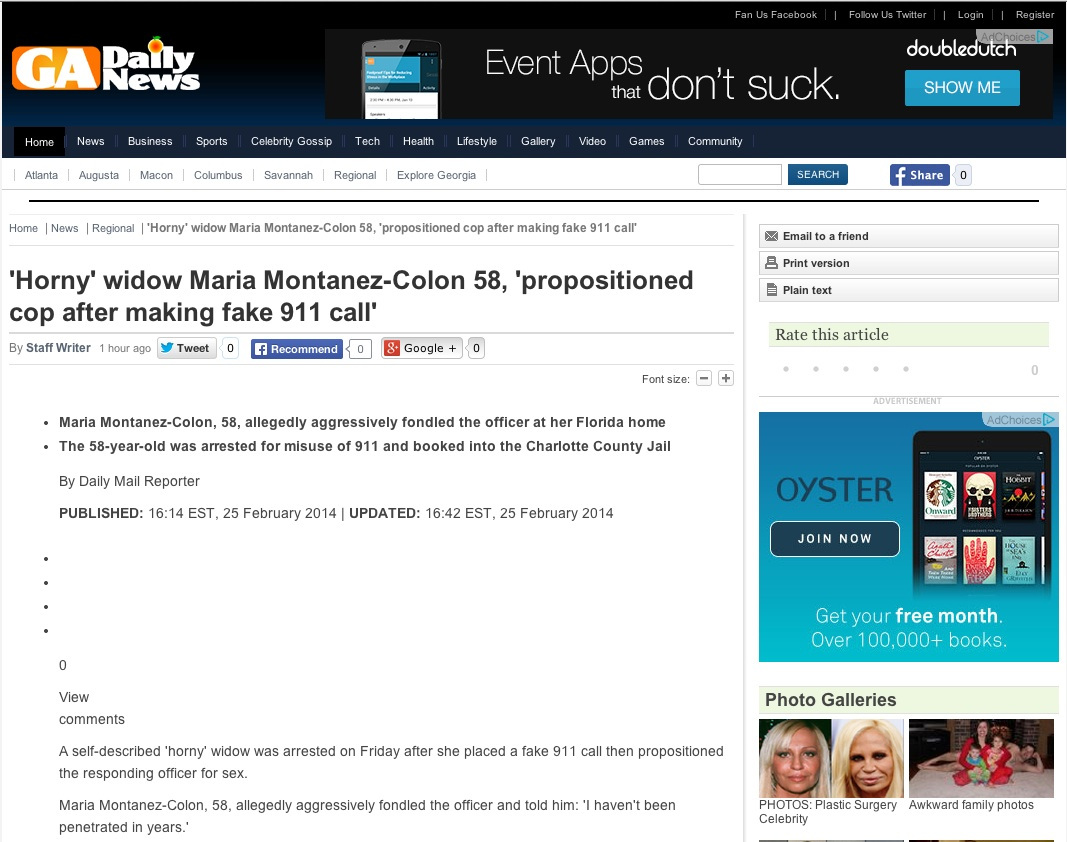
GADailyNews home pageConsidering the type of general news site it purports to be, GADailyNews.com doesn’t attract very much traffic at all.  And why would it? — since it contains precious little information of value or interest to anyone who is actually “seeking news about Atlanta.”

But it sure does generate a lot of ad impressions.  According to Marshall, each article page on the site features seven display ad units – all of which refresh every 20 seconds or so.

In the two-minute span of time it took him to read an article about Katy Perry and John Mayer (content copied from an Australian news site), Marshall was served more than 40 ad impressions.

Marshall continues:

“One page has served me nearly 500 ads in just 20 minutes – and I couldn’t stop refreshing them even if I wanted to.”

[And these ads aren’t for B-list advertisers, either.  They’re for brands like American Airlines, Hilton Hotels, Charles Schwaab and others.]

What’s happening here, of course, is that websites and ad tech middlemen have figured out that the algorithms of even the “quality” ad vendors like Google, AdRoll, and Bizo can be gamed pretty easily to serve ads on a low-quality site like Georgia Daily News, which is owned by a single-person entity called Integrated News Media Corporation.

It’s hardly the type of media vehicle that big-brand advertisers would normally wish to use for advertising.  But thanks to the vagaries and complexity of the ad exchange landscape, they are.

For every Georgia Daily News site, there are hundreds of others like it that cobble together seemingly valuable content with a passably convincing set of audience characteristics.

Put it together, and it adds up to problems on two levels.

First, advertisers are paying for impressions that are near-worthless.

Second, since there are finite ad dollars available, legitimate online publishers are losing out on those funds, which are far more important to their well-being than they are for sites that don’t engage in any true journalism at all.

As Jack Marshall concludes:

“Thanks to fraudulent traffic, dubious sites and middlemen with low quality standards, life is only getting harder for those publishers with expensive content teams to support.”

That “Nigerian Prince” e-mail scam? It’s as old as the hills.

scamsMost people I know have received at least one of them over the years:  a heartfelt plea to help some poor soul in a foreign land who is in need of assistance.

And if you help, you’ll be duly rewarded – with enough cash that you can quit your job and retire early.

… All this for simply delivering a few thousand dollars in funds up-front.

It’s amazing that people fall for these sorts of scams – but they do.  Some folks can’t see beyond their dreams of avarice, no matter how sketchy the premise.

And the fact that these schemes have been pumped into seemingly every e-mail inbox in existence over the past 15 years or so proves that they work on some level.

It turns out that this isn’t just some phenomenon of the e-mail era, where mass solicitations can be done for practically no out-of-pocket cost.  (Or even in the FAX era before that.)

In fact, this “advanced fee” swindle – and variants of it – dates back half a millennium.

… To the year 1588, to be precise.  That’s when the so-called “Spanish Prisoner” scheme appeared for the first time.  Here’s how it went:

A fraudster sends someone a letter purportedly on behalf of some wealthy aristocrat who is imprisoned under a false name in a Spanish jail cell.  The letter-writer claims that he can bribe the guards to allow the prisoner to escape – but needs money up-front to pay the bribe.  The letter recipient is asked to provide a specific amount of funds for the jailbreak – with the assurance that the freed nobleman will repay ten-fold the funds later.

scam letter
Appealing for advance fees: Same old scam, but in an earlier era …

Despite the 500-year span, this story doesn’t sound much different from the “Nigerian Prince”-type appeals most of us have received in recent years.

Proving how resilient the swindle is, in 1898 the New York Times reported on a particularly scurrilous scam that was circulating in the United States at the time.  The March 20, 1898 edition of the newspaper described the scheme as follows:

“A man in the country receives a letter from a foreign city … The letter is written on thin, cross-lined paper such as is used for foreign letters, and is written as fairly well-educated foreigners write English, with a word misspelled here and there, and an occasional foreign idiom.  The writer is always in jail because of some political offense.  He always has some large sum of money hid, and is invariably anxious that it should be recovered and used to take care of his young and helpless daughter by some honest man …”

There was even a short story written on this very topic by mystery author Arthur Train which appeared in Cosmopolitan Magazine in 1910.

How did the “Spanish Prisoner” story migrate to Nigeria by way of New York?

The answer has everything to do with the end of colonial rule in the former French and English colonies of West Africa.

Immediately following Nigeria’s independence in 1960, the highly corrupt successor regime plunged the country into political and economic chaos – there’s really no other way to describe it.

Even the discovery of offshore oil riches did little to alleviate the country’s ills (and in fact may have contributed even more to the sky-high levels of corruption and malfeasance).

Then, in the early 1980s the oil boom fizzled, leaving in its wake a shattered economy and a population in desperate need of money.  Soon, the “Spanish Prisoner” saga morphed into the “Nigerian Prince” story — and we were off to the races.

Other nations in the region weren’t immune to the same impulses:  Ivory Coast, Senegal, Gold Coast/Ghana, Upper Volta/Burkina Faso all experience similar growing pains as young countries, with the attendant social strife.

Sometimes the scam stories took on different permutations:  romance scams, lottery schemes, work-from-home swindles … and they were perpetrated in two languages (French and English), with FAX machines (and later e-mail inboxes) targeted in the United States, England, Canada, Australia, France and elsewhere that were inundated with appeals.

But Nigeria was – and continues to be – the modern-day epicenter of such frauds.

In fact, the very term the U.S. government uses to identify these advanced fee schemes is “Nigerian 419 scam,” which refers to Section 419 of the Nigerian criminal code.  It was added by the Nigerian judiciary to cover fraudulent activities of this type once they became so ubiquitous.

Human nature being what it is, advanced-fee scams like the “Spanish Prisoner” or “Nigerian Prince” will never die.  As long as there are people longing to “get rich quick” – on both sides of the bargain – we’ll see it continue to pop up.

It’s proof yet again that despite the technological leaps we’ve made in communications over the centuries – from couriers and pages to postal delivery, FAXes and e-mail – basic human impulses remain the same.  You can scam in any language … use any technology … and find a “useful fool” no matter where and when.

At Times Square, it’s “location-location-location” when it comes to advertising.

The building at 1 Times Square in New York City is nearly 100% vacant.

One Times Square Building (2010).

But if you’re the owner of the building, why should you even care?

That’s because the building takes in a reported near-$25 million per year in advertising revenues – thanks to the digital signage on the building being rented to top brands like Anheuser-Busch, Dunkin’ Donuts and Sony (among others).

Media, Sports & Entertainment Marketing Officer Blaise D’Sylva of Anheuser-Busch keeps it pithy:

“There’s a statement we make in being there – and we think the placement we’ve got is outstanding.”

Of course, there’s more to it than simply “making a statement.”  According to the Times Square Alliance, each year more than 100 million pedestrians pass through Times Square.

Moreover, foot traffic volume is running ~90% higher compared to 1996.

I’m quite sure these traffic volumes are central to any go/no-go advertising decisions being made by the big brands.

Where night is day:  Times Square advertising.
Where the night is as bright as day: Times Square advertising.

The Wall Street Journal reports that billboard signage in Times Square is actually the priciest outdoor advertising in the world.

Considering its location at the intersection of “high traffic” and “high trend,” marketers think it’s an investment worth making — and the rates they’re willing to pay proves the point.

e-Invoicing: Losing Luster … or Wave of the Future?

e-Invoice ServicesWhat’s happening with e-invoicing support services for small businesses these days?

Minneapolis, MN-based financial services industry market research firm Barlow Research Associates, Inc. reported in January 2014 that two of the three large banking institutions that had been offering e-invoicing services have now retired those programs.

Indeed, you won’t find mention of them anywhere on their small business online banking websites.

Donna Arce, Barlow Research Associates
Donna Arce

According to Donna Arce, a Barlow Research client executive, both Chase and Wells Fargo dropped e-invoicing in 2013, making Bank of America the only one of the nation’s 14 top banks still offering this service.  (Existing e-invoicing customers at Chase remain grandfathered in … for now.)

Reportedly, the reason behind the elimination of e-invoicing services was low usage.

But was this usage a function of low demand … or was it actually the result of limited market availability?

After all, Arce reports that overall invoice volumes are notable.  For the typical small business enterprise, approximately 75 paper invoices and 10 electronic invoices are generated in any given month.

In the middle market segment, the volume of invoices is quite a bit higher:  Those companies average just over 1,250 paper invoices and more than 250 electronic invoices in the average month.

For answers to the question about inherent e-invoicing demand, we can look to PayPal, one of several non-bank providers of e-invoicing services.

PayPalAccording to Chris Morse, a PayPal spokesperson, “millions of users” have accessed company’s online invoicing services – particularly since 2011 when the product was redesigned with more robust functionality and features.

For an analyst’s column she wrote on the topic, Barlow Research’s Donna Arce reported on remarks made by René Lacerte, founder and CEO of invoice management firm Bill.com, on the elements that are essential for making sure that e-invoicing is a viable solution for business owners.

Quoting Lacerte:

  • “Working in an entirely online environment is not realistic for many businesses, [which] need a receivables solution that will track and manage both paper-based and electronic invoices and payments in one system.
  • “Integration with accounting software is key to businesses adopting any financial management tool, including e-invoicing.  Without integration, businesses must re-key data from one system to another, which is both time-consuming and can be fraught with errors. 
  • “Issuing the invoicing and accepting payment are just part of the overall receivables process … The ability to collaborate with customers via a portal where invoices can be referenced, documents shared and notes exchanged, dramatically reduces the time businesses spend managing these inquiries.”

The PayPal approach is quite flexible in terms of the payment options for the recipient of the invoice.  Choices include its own PayPal bill payment option, along with credit and debit card payments as alternatives.

Contrast this with Bank of America, which requires the recipient to log on to a payment center, agree to terms, and then upload account information to make a payment – debit and credit cards not accepted.

Contrasting PayPal and the approach of the commercial banks, is it any wonder that the one is experiencing growth … while the others have seen low usage?

Of course, there’s also the issue of fees charged for e-invoicing services.  PayPal’s fee structure is different than how the commercial banks have charged for services, in that a portion of PayPal’s fee is based on a percentage of the transaction value (currently around 3%).  Depending on each company’s individual characteristics, that pricing model may or may not be the most lucrative for users.

Bottom-line, it’s clear that e-invoicing isn’t a dying service.  But how flexibly it’s presented – and the degree to which it can actually reduce inherently labor-intensive in-house administrative activities – spells the difference between its success or failure as a business service.

In other words … the difference between PayPal and the giant commercial banks.

Bitcoin currency: You’ve got a long way to go, baby.

bitcoin

Whether it’s defaulting to preparing the same half-dozen dinner recipes, always taking the same travel route, or preferring traditional hyms and liturgy at religious services, humans tend to be creatures of habit.

Of course, there will always be the minority who revel in being the first to try out novel communications technologies … adopt the newest fashions … or take advantage of the latest investment schemes.

But most people would prefer to hold back and let someone else take the plunge first.

That’s precisely where things stand at the moment with the Bitcoin alternative currency.  The “virtual currency” has been around long enough so that it’s now getting coverage in the “popular” press … and there are even a few folks who have begun using it as an alternative to established currencies.

Indeed, for the past year now, a few national retailers and chain foodservice establishments have been accepting payments in Bitcoin currency.

But a just-released survey that queried consumer attitudes about the new-fangled currency – referred to as a “crypto-currency” by some – underscores how steep a climb the Bitcoin has before it can ever be considered a viable alternative to the Dollar or other established currencies.

TheStreet, a digital financial media company, commissioned the survey which was conducted in January 2014 by GfK Custom Research North America’s OMNITEL unit  A total of 1,005 telephone surveys were conducted with Americans age 18 or older.

Let’s start out with the most basic finding from the survey:  Three out of four respondents aren’t even familiar with the Bitcoin term.

So right off the bat, that’s a major hurdle.  The Bitcoin may have been the subject of numerous press stories and broadcast reports, but the news hasn’t seeped into the larger market consciousness to any great extent.

NoNext … even after the concept of the Bitcoin was described to them, the survey respondents remained distinctly chilly to the idea:

  • Nearly 80% would “never consider” using an alternative form of currency like the Bitcoin.
  • ~80% would rather own gold than Bitcoin currency.

Did the survey uncover different attitudes based on the age of the respondents?  Yes – to a degree:

  • Just under one-third of young respondents (age 18 to 24) would consider using an alternative form of currency like the Bitcoin … versus only about one in ten seniors (over age 65).
  • ~15% of the young respondents would prefer to own Bitcoin over gold … versus only ~4% of seniors.
  • ~57% of young respondents feel that Bitcoin currency helps the global economy … while just ~14% of senior feel the same way.

The main takeaway from the GfK/OMNITEL research?  Bitcoin proponents are going to have to keep plugging away for a good long time before positive public perceptions of an alternative currency take hold — including needing to focus on the most basic educational elements.

Considering the level of financial literacy out there … good luck with that effort.

If any readers have ever used Bitcoin as a currency and would care to comment on their experience pro or con, please share your thoughts here.

It had to happen: Google Glass begets facial recognition apps.

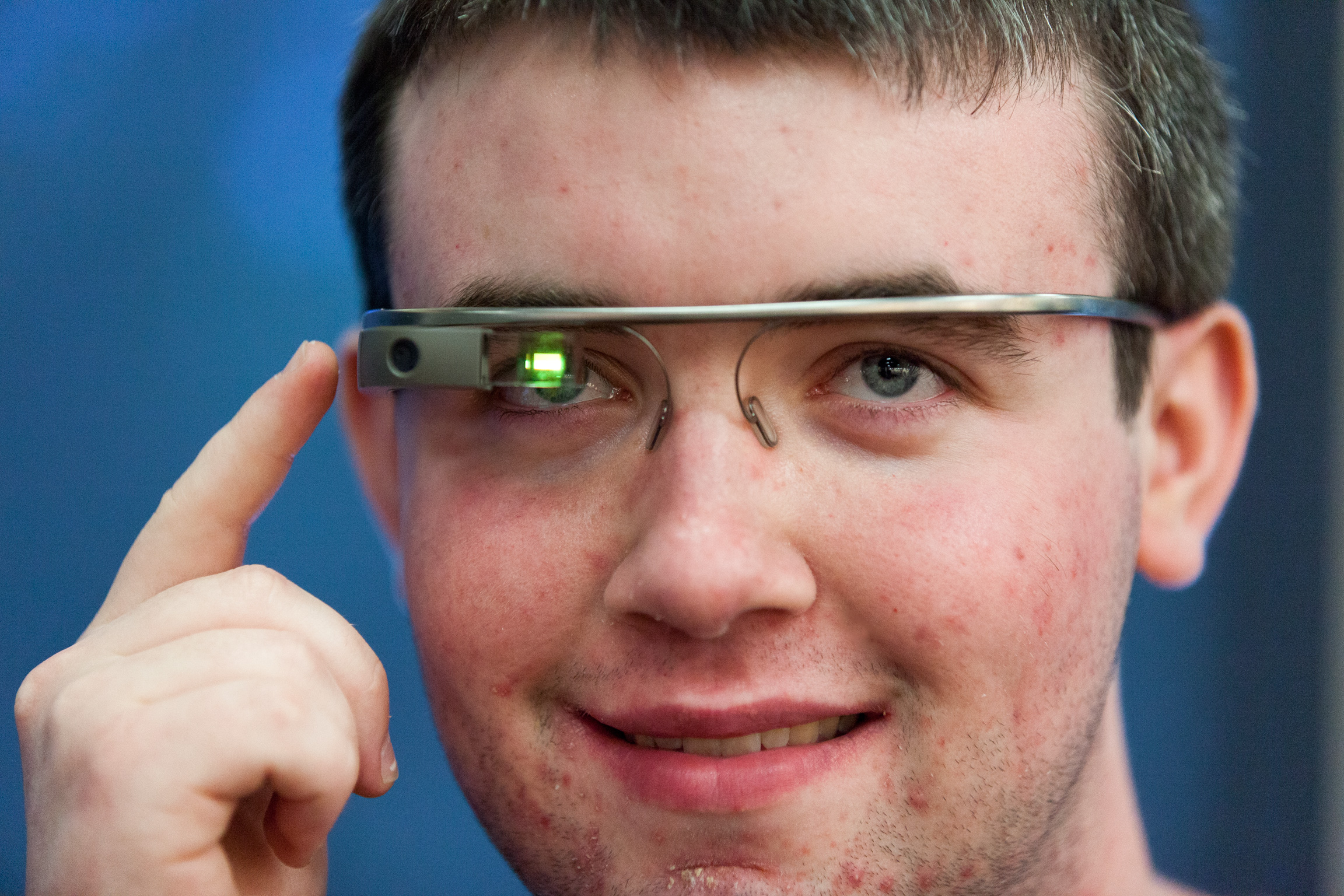
Google Glass wearerWell, that didn’t take long:  Now that Google Glass devices have started to be worn by more than just the first few early adopters, a new facial recognition app has promptly been developed.

It’s an app that enables users to snap a photo of someone, and then search the Internet for more information about the image – essentially, to identify the person by name.

Of course, Google has always maintained that such activities are an inappropriate use of Google Glass devices.  But that hasn’t stopped an outside app developer from doing just that.

The app is called NameTag, and it was introduced in late 2013 by a developer group known as FacialNetwork.  In December, the developer uploaded a video showing how NameTag works.  You can view it on YouTube here — and note that it’s quite controversial with more “dislikes” than “likes” from voters; how often does that happen?

Basically, the Google Glass wearer snaps a picture and the app runs the photo through a database containing ~2.5 million facial images.  If a match is found, it returns that finding along with the name and profile associated with the facial match (e.g., occupation, personal interests and relationship status).

According to the developers, NameTag can detect an image match even from behind obstructions like glasses and a hat.

What does FacialNetwork see as the benefit of its new NameTag app?  The developer touts the potential for dating and relationship-building.  On its website, the following scenario is presented:

“Jane has lots of different social media profiles and loves to meet new people.  By using NameTag, she can link all her social networks to her face and share her information, and meet new people in an instant.”

Personal privacy concernsRight. 

… And I’m sure “Jane” doesn’t worry one bit about the “creepiness” factor of someone learning her name and her personal information before she’s even aware of it …

As if pre-anticipating all of the hackles, NameTag quickly goes on to explain that people can choose whether to have their name and profile information displayed to others.

As entrepreneur and NameTag’s co-creator Kevin Tussy notes, “It’s not about invading anyone’s privacy; it’s about connecting people that [sic] want to be connected … We will even allow users to have one profile that is seen during business hours, and another that is only seen in social situations.”

If all of this sounds like it’ll be a tad more difficult to carry out in real life than it sounds like in theory – that you’re not fully comfortable “assuming” an app like this will actually offer the proper degree of safeguarding – I’m sure you’re not alone in your concerns.

In fact, some people aren’t waiting around to see what “might” happen, but are moving now to take preemptive action.  Certain congresspeople are in on the action.  And consumer advocacy group Public Citizen notes that Google Glass users in certain states could potentially face criminal prosecution in addition to civil penalties for recording people without their knowledge or consent.

Up to now, no one has faced such legal action – but that could be because the technology remains so new that few people are actually using Google Glass devices at this point.

The question is this:  Are people giving their “implicit consent” to be recorded just by talking with someone who’s wearing the device?  (The devices are fairly distinctive looking, after all.)

The answer may lie in whether the person even knows what Google Glass devices are.  One person speaking to another automatically means they know they’re being recorded seems to assume too much – at least at this relatively early stage in the product adoption cycle.

Things remain murky at this point because we’re still in an emerging phase in the application of the technology.  But one thing that seems clear is that we haven’t yet seen the beginning of what promises to be an airing of “dueling rights” in this area of the law.

For those who may already be using Google Glass (I’m not one, by the way), here’s your chance to share your perspectives with other readers here.

Football remains America’s #1 favorite sport – and it isn’t even close.

Favorite sportsThe Super Bowl XLVIII game between the Seattle Seahawks and Denver Broncos may have been a yawner … but that doesn’t mean pro football is in any danger of being knocked off its perch as America’s #1 favorite sport.

In fact, a December 2013 Harris Interactive Poll of ~2,300 American adults who follow at least one sport finds that the gap between pro football and any other favorite sport is a big as ever.

Today, ~35% of American adults say that professional football is their favorite sport, whereas only ~14% say that professional baseball, the next most popular sport, is their favorite.

That 21 percentage point gap is even larger than the previous year’s polling by Harris, which found ~34% naming pro football as their favorite sport, compared to ~16% for pro baseball – a difference of “only” 18 points.

Harris has been querying American adults on this topic annually for nearly 30 years.  In only one other instance before has the preference gap between football and baseball been as great as it is today.

In fact, since the question was first asked by Harris back in 1985, pro football’s popularity as a favorite sport has risen 11 percentage points … while pro baseball has dropped by 9 points.

That means that whereas the two sports were at near-parity barely a generation ago, the divergence in the two’s fortunes has been dramatic since then.

If you’re wondering what other sports are considered “favorites” by Americans, only one comes even close to professional football and baseball – college football.  Here are Harris’ popularity figures found in its most recent survey:

  • Pro football:  ~35% consider the sport to be their #1 favorite
  • Pro baseball:  ~14%
  • College football:  ~11%
  • Auto racing:  ~7%
  • Men’s pro basketball:  ~6%
  • Men’s hockey:  ~5%
  • Men’s college basketball:  ~3%
  • Men’s golf:  ~2%
  • Men’s soccer:  ~2%
  • Swimming:  ~2%
  • Men’s boxing:  ~2%
  • Men’s tennis:  ~2%

[Eight other sports were cited by 1% or fewer survey respondents each.]

Harris has also published cross-tabs which point to some interesting differences in sports preferences within certain sub-groups.  Some of those include:

  • Americans who live in rural areas are more likely to cite pro football as their favorite sport (~44%), as are ~39% of Easterners and ~42% of people with children under the age of 18.
  • At the other end of the football popularity scale, people with post-graduate degrees are less likely to prefer professional football (~24%).  Perhaps the game isn’t subtle enough for them!
  • As for professional baseball, Hispanic Americans are more likely to cite it as their top favorite sport (~19%), as well as similar popularity percentages of suburbanites and people living in households with incomes over $100,000.
  • Is it a surprise that Southerners are more likely to cite college football (~17%) than any demographic other sub-group as being their #1 favorite sport?  I think not.
  • And how about auto racing?  It’s the #1 favorite for Americans living in rural areas (~12%) … those with household incomes under $35,000 (~12%) … as well as people with high school or less education levels (~11%).

If you’re interested to see how Harris’ survey results reinforce certain demographic stereotypes – or not – you can view more details here.

HubSpot’s Marketing Predictions: Hits and Misses

soothsayingOne of the things I like about SaaS inbound marketing firm HubSpot is the steady stream articles and white papers the company publishes on varied facets of marketing and communications. 

They’re often quite meaty and beneficial as informational resources.

Moreover, HubSpot isn’t afraid to go out on a limb and render a pretty strong “point of view” about various factors and trends in the fast-evolving marketing world.

The risk is that some of those perspectives can end up being “off” – or looking even a bit silly – in retrospect. 

But more often than not, HubSpot’s trendspotting is on the money.

Marketing Prediction Hits & Misses (HubSpot)Here’s a case in point:  HubSpot’s team of analysts made a number of marketing predictions for the year 2013.  Recently, it revisited those predictions to judge whether they’d turned out to be on the mark or not.

These are HubSpot’s 2013 marketing predictions that it feels were on target: 

  • Content and social will matter even more for search engine optimization.
  • Stop-and-start campaigns will fade, and real-time will be ‘in.’
  • E-mail will live on.
  • Inbound marketing will spread enterprise-wide.

At the same time, four other marketing predictions for 2013 didn’t pan out so well, as underscored by HubSpot’s own cheeky editorial commentary about them:

  • Mobile or bust … “Not so hot.”
  • Marketing becomes accountable for revenue generation … “Meh.”
  • ‘Big data’ becomes real for businesses … “Nope.”
  • Print is dead … “Not even close.”

HubSpot’s post-mortem discussion points on these “misses” are interesting.  Quoting from its report:

  • Mobile or bust:  “Customers pay attention to multiple screens … and smart marketers capture attention by adding value wherever a consumer pays attention  … we need to be prepared, not by targeting just [mobile] but by embracing them all according to our specific customers and data.”
  • Marketing becomes accountable for revenue generation:  “The biggest challenge … has been proving ROI.       Even more frustrating … has been the lack of sales and marketing alignment in many companies.  Tracking can also get tricky, thanks to trying to reach fragmented digital audiences against so many channels … As much as lots of us really want this prediction to be a hit, it’s still largely aspirational.”
  • ‘Big data’ becomes real:  “Big data remains mainly a buzzword to many companies and markets — and continues to be more of a prediction than a reality …”
  • Print is dead:  “Saying ‘print is dead’ has lost pretty much all of its roots in reality … nor will it die in the next few years.”

Ever intrepid, HubSpot isn’t shying aware from new forecasts for 2014.  Looking forward, what do its analysts predict for this year?

  • Podcasting will continue to grow substantially.
  • Marketing departments will become more like engineering departments.
  • Social listening tools will gain context and get smarter.
  • The economy will become highly collaborative.
  • Marketers will become more holistic and less channel-focused.

And one more HubSpot prediction that’s a particular favorite of mine:

We’ll check back again a year from now to see how well HubSpot’s prognosticators fared this time around.

What types of word terms perform best in social media?

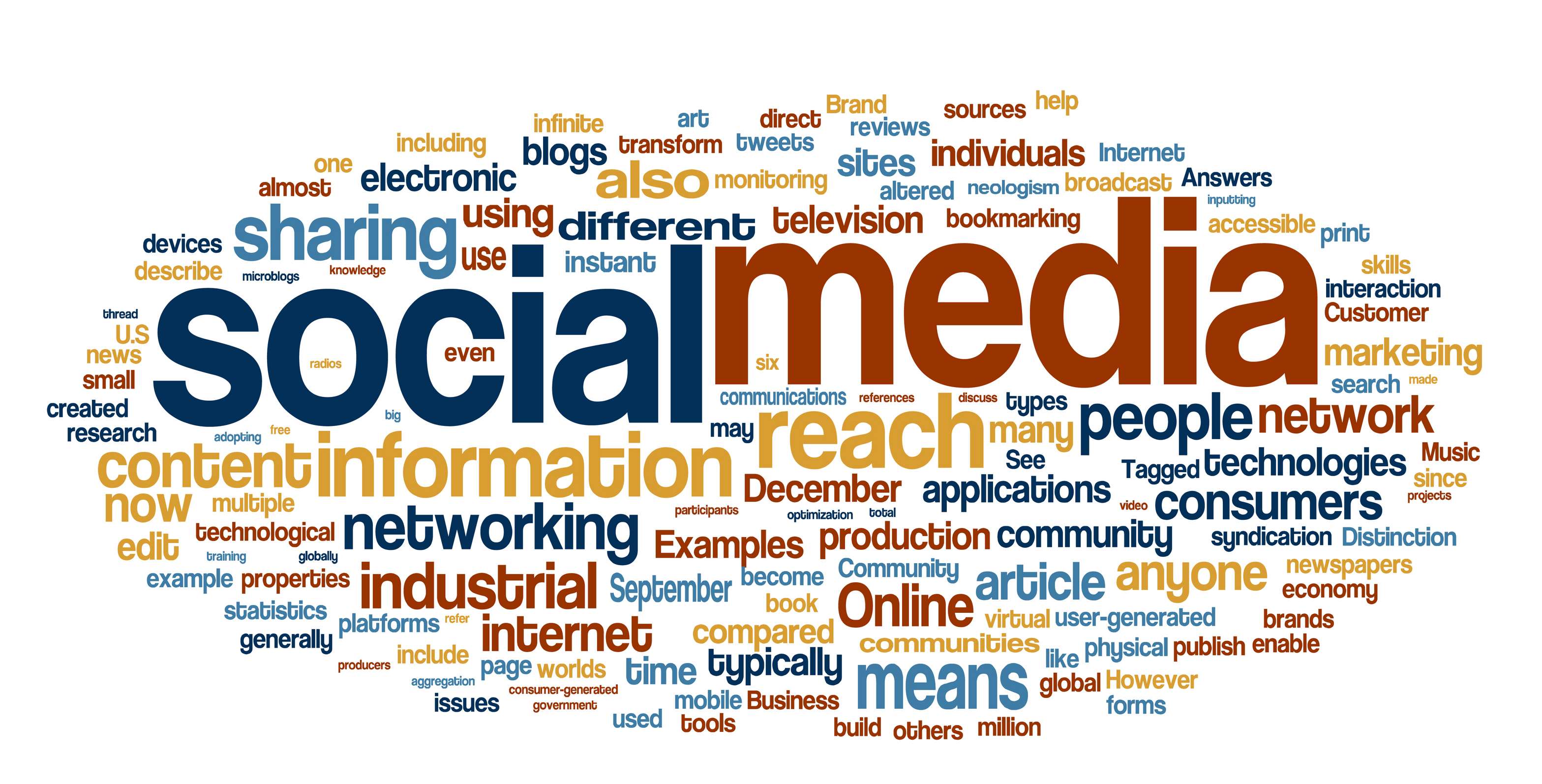
Words that sell in social mediaEver since the rise of social media platforms, marketers have wondered if the terms and phrases that generate the best response in direct marketing also perform as well in the social arena.

One reason why:  There have been plenty of experts emphasizing how consumers don’t wish to be “sold” in their social interactions, but instead prefer to develop a relationship of give-and-take with brands.

Dan Zarrella, Social Media Scientist at HubSpot

Now we have some empirical analysis to guide us, conducted by Dan Zarrella, a social media scientist at SaaS inbound marketing firm HubSpot based on reviewing ~200,000 links containing tweets.

Mr. Zarrella found that the tweets that contain more verbs and adverbs experience higher clickthrough rates than noun- and adjective-heavy tweets.

Zarrella’s research also found that when social media posts ask for an explicit action on the part of the recipient, that tends to increase clicks and engagement.

For instance, retweets are three times more likely to happen when people are specifically requested to do so.

Interestingly, the most “retweetable” words in the HubSpot analysis turn out to be the same terms that do well in e-mail marketing and other forms of direct marketing:

  • You
  • Please
  • Post
  • Blog / Blog Post
  • Free
  • Media
  • Help
  • Great
  • How To
  • Top
  • Check Out

In a parallel research endeavor, a recent evaluation of blog posts by writer and software analytics specialist Iris Shoor reveals how much a post’s title impacts on the volume of “opens.”

In her analysis, Ms. Shoor studied posts on 100 separate blogs, using an evaluation technique that rank-sorted blog posts from the most read to the least shared.

What were the words that resulted in the most opens?  Shoor calls them the “blood in the water” terms:

  • bleeds leadsKill
  • Fear
  • Dark
  • Bleeding
  • War
  • Dead
  • Fantasy

Translation?  Negative terms are more powerful for shares than more ordinary terms (e.g., positive ones).

It’s very much like the old adage in the newspaper world:  “If it bleeds, it leads.”

That’s another takeaway from the most recent research:  What’s worked in the offline world over the years appears to be working very much the same way in the online space today.

Plus ça change, plus c’est la même chose …

Marketers Give Themselves Only Middling Grades on Understanding ROI

Marketing frustrationIt turns out that even the practitioners in the marketing field don’t think they’re doing a very good job of understanding the return on investment on key marketing tactics.

That’s a major takeaway fnding from the most recent State of Search Marketing survey conducted by digital marketing information clearinghouse Econsultancy in conjunction with the Search Engine Marketing Professional Organization (SEMPO).

This survey of industry professionals is conducted annually.  The 2013 research cycle queried ~400 industry and marketing/communications agency professionals.

One would think that in an evolving field like digital marketing, the degree of collective skill in the discipline would be rising over time.  But the opposite appears to be the case – at least in terms of the professionals’ own self-assessment of their skills.

The SEMPO research report presents how marketers consider their level of understanding to be in terms of ROI factors.

What the research reveals is a pretty stark decline in self-assessment grades between the 2012 and 2013 surveys:

  • Understanding of paid search ROI:  ~47% consider their understanding to be “good” (down from ~79%)
  • Email communications ROI:  ~41% consider good (down from ~57%)
  • Digital display media ROI:  ~28% consider good (down from ~37%)
  • Social media ROI:  ~11% consider good (down from ~15%)

What’s the reason for the decline in these self-assessment ratings?

It could be ever-changing definitions of what each of these marketing tactics actually encompass.

… It may be that there is an actual decline in overall proficiency as more people are assigned these marketing tasks who have little or no relevant knowledge or prior training.

… Or if could be the rapid speed in which technology is evolving in the marketing sphere.  (Big data isn’t the half of it.)

Of the major marketing tactics addressed by the Econsultancy/SEMPO research, it’s clear that social media and mobile are the most mystifying to practitioners, judging from the percentage of survey respondents that profess to have a “poor” understanding of their ROI:

  • Social media ROI:  ~51% report having a “poor” understanding
  • Mobile marketing ROI:  ~35%
  • Search engine optimization ROI:  ~28%
  • Digital display advertising ROI:  ~26%
  • Paid search ROI:  ~19%
  • Email marketing ROI:  ~14%

Underscoring the admitted lack of understanding about ROI in social and mobile channels, the survey respondents reported that only ~11% of the digital marketing dollars in 2014 will be allocated to social media.

For mobile marketing, it’s even lower (~3% of the marketing budget).

This isn’t to imply that marketers don’t recognize the importance of these tactics.  For instance, more than eight of ten respondents consider mobile marketing to be a significant development in the field.

It’s just that many of them are having great difficulty going from Point A to Point B when it comes to quantifying the marketing payback.

[For access to the full report, which also provides interesting insights on the most popular marketing metrics, go to this page on the SEMPO website.]