Here’s an interesting statistic offered up by marketing consultant Rich Meyer: Three-fourths of mobile apps are deleted within three weeks of being downloaded by their users.
How can the attrition rate be so high?
According to Meyer, it’s because people decide they don’t really have a need for the apps … or they find them too difficult to use and master.
I suspect the percentage may also be so high because marketers fail to query their target audiences prior to developing apps to determine now much of a need it will be satisfying.
… Or to put it another way, to avoid falling into the trap of developing a cure for something that isn’t a disease.
Sources: MarketingProfs; Harris Interactive and EffectiveUI field survey, 2010.
Meyer believes part of the dynamic at work is a knee-jerk “bias for action” as the marketing playing field shifts endlessly.
“It’s called ‘do it’ because everyone else is doing it, and it results in not only bad marketing, but in turned off consumers and customers,” he maintains.
Questions as simple as “What would you like to see in a mobile app?” … or testing an app concept with a sample of potential users before spending the effort and energy to produce it would be good places to start.
Marketers can use the research findings to adjust the proposed design of an app — or to trash it altogether and come up with an alternative one that actually meets a need.
If more companies did this, perhaps the 75% deletion rate for mobile apps would cease to be so flat-out dismal.
To this end, I found a recent Wall Street Journal article penned by technology reporter Jeff Elder particularly interesting in that it pulls together various pieces of evidence that have been building … and which together showcase the extent of Twitter’s “Potemkin Village” problem. (Note the headlines from this article displayed above.)
Essentially, the problem is a plethora of “faux” Twitter accounts being created by an underground network of sellers – including 20 or so major operations scattered around the world – that then offer these accounts for sale to companies and brands wishing to “juice” their Twitter follower statistics to appear more consequential than they actually are.
Consider these points from Mr. Elder’s article:
Faux accounts abound on Twitter because users aren’t limited to having a single account – nor are they required to use their real names.
In securities filings, Twitter claims that “fake” accounts represent fewer than 5% of its active user accounts.
But this past summer, security researchers Andrea Stroppa and Carlo de Micheli reportedly uncovered more than 20 million fake accounts for sale on Twitter – which is closer to 10% of Twitter’s active account base. (Twitter had no comment on this report.)
Stroppa and de Micheli also unearthed the existence of software programs that allow spammers to create unlimited fake accounts on Twitter. (Twitter had no comment on this report.)
Evidently, Twitter has taken stabs at reducing fakery among its account base — however sporadically.
About a year ago, the company reportedly worked with a team of researchers from UC Berkeley and George Mason University to identify fake Twitter accounts and minimize “robot” activity. This was done by actually purchasing fake Twitter accounts on the black market and then identifying their common characteristics.
A filter subsequently developed was then able to block ~95% of such accounts – but it was only a matter of days before the underground market figured out ways to get around the new filters.
Within two short weeks, the filters were successfully blocking only about 50% of new fake Twitter accounts, and that percentage has continued to decline further since then.
And these faux accounts are available for a ridiculously small amount of money. For instance, this past November one marketer purchased 1,000 accounts from an online vendor located in Pakistan … for a whopping $58.
This marketer then programmed them to “follow” the Twitter account of a rap artist client who was interested in boosting his standing on the social network.
In addition, those same accounts have been used to retweet the rapper’s own tweets, thereby giving them greater exposure on Twitter.
And believe it or not, this sort of ruse often works, because prominence on Twitter can lead to legitimate attention by an unwitting press and other “influencers.”
But it’s all blue smoke and mirrors, of course.
The downside? As more of these stories get reported and shine a light on the seedy underside of the Twittersphere, it can’t help but have a negative impact on the social platform’s reputation.
There’s no question that most people value hearing the opinions of others when deciding whether to purchase a new product.
But in the fast-evolving world of social media where there’s been an exponential increase in testimonials, ratings and recommendations about various products and services, what types of recommendations resonate most?
We may have some answers to that question in results from a recent survey sponsored by marketing firm Social Media Link, which was issued in October to all members within the company’s Smiley360 community brand activation program.
Dubbed the “Social Recommendation Index,” the 20-question online survey was answered by more than 10,300 respondents.
The survey isn’t exactly a true cross-section of American consumers in that the vast majority of the respondents were women. Moreover, most respondents were between the ages of 25 and 45. Still, the results are certainly worth a look.
For starters, three-fourths of the respondents stated that fewer than 10 reviews are all that they need to make a purchase decision.
Moreover, the most valuable reviews tend to be the ones that include personal stories, rather than a laundry list of product benefits.
By contrast, “star” ratings are the least influential type of review by far: Only ~15% of respondents report that those ratings are the most important way to influencing their purchase decisions.
The degree of impact of a product review also depends on who’s doing the reviewing:
86% cite reviews by friends and family members as having the biggest impact
39% are influenced by blogger reviews
Only 11% report that celebrity reviews have the most impact
I’m not at all surprised about the paltry figure for celebrities. Celebrity endorsements in general are far less influential than many marketers would like to admit – a topic I’ve blogged about in the past.
“It’s OK. Your cousin Merlin also likes the product!”
Considering that “friends and family” are the most influential reviewers, it also comes as little surprise that survey respondents view Facebook as the most trusted of all the major social platforms:
Facebook: ~68% consider highly trustworthy
Pinterest: ~56%
YouTube: ~51%
Twitter: ~41%
Commenting on the research conclusions, Social Media Link’s CEO Susan Frech stated this: “The survey found that people don’t need hundreds of recommendations and reviews to entice purchase; it’s really about receiving a quality message from a trusted source.”
Click here to view an infographic summarizing the Social Recommendation Index key findings.
What about you? Is your view different from what’s been reported in this study? If so, please share your observations with other readers here.
Over the past several years, I’ve begun to hear increasing rumblings about how e-mail is a now-mature communications method that’ll eventually go the way of the FAX machine.
But I’m not at all sure I believe that. I think it’s more likely that e-mail’s future will look … a lot like it does today.
No doubt, texting and direct messaging have cut into some of the bread-and-butter aspects of e-mail communications. But what about e-mail marketing? Could we see a similar phenomenon happening?
Recently, I read the comments of e-communications specialist Loren McDonald on this very topic. McDonald, who is vice president of industry relations at digital marketing technology firm Silverpop, makes an important point concerning the “building blocks” that have to be in place before e-mail marketing will be seriously threatened by alternative MarComm means.
McDonald speaks about the challenge of an “addressable audience” when it comes to alternative channels: “Regardless of a competing channel’s popularity, marketers must be able to deliver a comparable or replacement message to an individual. This is where many channels fall short,” he contends.
Loren McDonald
McDonald notes that most marketers possess vastly more permission-based e-mail addresses than they do mobile phone numbers with permission to text. It’s the same story when comparing e-mail addresses to the percentage of their database that have liked their company’s Facebook page.
And there’s more: For mobile apps, what portion of the typical company’s database has downloaded it and authorized notifications? The inevitable response: How low can you go?
McDonald’s point is that for these alternative channels to gain true significance, they need to achieve a certain critical mass in terms of adoption rates – thereby allowing marketers to reach their customers and prospects in a comparable manner as they can via e-mail (as well as at a comparable cost).
Looking into his own crystal ball, McDonald feels fairly confident making three predictions concerning the future of e-mail marketing:
He predicts that content-focused newsletters will remain relevant and popular, particularly for B-to-B companies and publishers. That’s because marketers can push multiple newsletter articles within a single marketing touch, while publishers can attract ads and sponsorships for their e-newsletters (i.e. they’re moneymakers for them).
For broadcast/promotional messages, most consumers will continue to prefer e-mail delivery. “Will mobile app users [really] want their smartphones to ping them all day long whenever a message arrives — and then have to click attain to view it?”, he asks rhetorically.
Transactional and triggered messages will be e-mail’s primary challengers in McDonald’s view – especially for bulletin-type messages such as breaking news headlines, weather alerts, flight delay announcements, “flash” promotions and sales, and order confirmations linked to in-app landing pages.
And even on this third prediction, McDonald doesn’t see the transition happening all that quickly.
I find myself in general agreement with Loren McDonald’s prognostications. Do you have some differing views? If so, please share them with other readers here.
Marketing can be many things. But marketing without originality isn’t much of anything.
That’s why there’s a desire among marketers to avoid clichés and buzz terminology in sales and marketing content whenever possible.
Still, it’s easy to fall into the cliché trap – and it happens to the best of us.
This is particularly true when the “next new thing” in business comes along every few months and people grasp for shorthand ways to communicate those concepts.
[There: Perhaps “next new thing” qualifies as a marketing cliché itself!]
Brian Morrissey
Recently, communications specialist and editor-in-chief of vertical media company Digiday, Brian Morrissey, came up with a list of 25 marketing clichés which he feels should be avoided if at all possible.
I’ve gone through Morrissey’s list and have selected ten that I think are particularly baneful – especially in the world of B-to-B marketing. See if you agree:
Putting the customer at the center. Isn’t it obvious that companies and brands would be committed to this? And if not … where was the customer located before?
Having an “authentic” conversation with customers. Inauthenticity isn’t cool. Inauthenticity is also what we’ve been trying to avoid for years – or should have been. There’s really no news in this statement, is there?
We fail fast. Perhaps it comes from reading too many issues of Fast Company … but what companies do you know that want to slowly jettison a failed strategy?
Blue-sky thinking. The “sky’s the limit” when it comes to “out-of-the-box thinking.” Ugh.
Nab the low-hanging fruit. This cliché has been around so long, there can’t be any low-hanging fruit left!
Dipping our toe in the water. Trying to put a positive spin on a lack of depth or heft isn’t fooling anyone.
Open the kimono. Any buzz phrase that conjures mental imageries of a flasher can’t be what we want to communicate.
Curated experiences. A fancy way of admitting that content isn’t ours. Besides, the term “curator” hardly sounds contemporary. Instead, it connotes images of museums, galleries and other places that deal with the dusty past.
Surprising and delighting our customers. Morrissey contends that this whopper makes brands come off like clowns … and that clowns are silly, scary or creepy – take your pick.
Tentpole idea. Continuing with the clown analogy, no doubt … but whether it’s a circus or a tent revival, the mental imagery this elicits isn’t particularly apropos.
… And these are just ten terms on Morrissey’s list of 25 marketing clichés.
What about you? Do you have any buzz phrases that you find particularly annoying – perhaps “thought leadership” or maybe “exceeding our customers’ expectations”?
Please share your nominations with other readers here.
Are the days of the lowly printed sales circular numbered?
Judging from the flurry of newfangled activity by key retail marketers, it would seem so.
This past week, CVS Pharmacy announced a complete makeover of its weekly circular. The new digital version, dubbed myWeekly Ad, incorporates customized promotions focused on the products that are deemed of greatest interest to individual consumers.
The personalized sale items are determined from scanning the trove of customer buying behavior information housed in CVS’s ExtraCare Rewards database, which now numbers more than 70 million active users.
The myWeekly Ad circular determines which items to feature based on the products that each targeted consumer buys most frequently, along with showcasing deals on other products in related categories that may also be of interest based on the purchase history of each customer.
CVS’s digital circular provides other user-friendly options as well:
Consumers can scan the savings and rewards currently available to them, and print coupons or digitally send special offers to their card before visiting a CVS store.
Shopping lists can be created, shared and sent to mobile devices.
Shoppers can view their own purchase history showing all products bought at CVS previously going back 18 months.
And CVS is hardly alone in digitizing its MarComm materials. Thanks to the continuing evolution of rewards cards and the voluminous customer data they can collect, new personalized circular announcements are coming with regularity now.
Here are some of the latest new developments:
Shoplocal is a Gannett-owned print and digital circular publisher. It has gotten together with personalized video firm Eyeview to create a new digital ad promo piece known as V-circular. This vehicle allows retailers and major brands to target customers on a local level based on geographic, demographic and behavioral data – along with factoring in “real-time” conditions like the weather.
National coupon clearinghouse Valpak has introduced a novel “augmented reality” feature for its digital circulars. Simply pointing a smartphone toward the horizon will enable shoppers to see which nearby businesses are offering coupons.
Direct mail media and marketing services firm Valassis has unveiled Geo-Commerce Retail Zone, a new ad-targeting capability that applies transaction and behavior data from consumers to local store trading areas, enabling targeted advertising to be delivered cross-platform.
No one questions the fact that more and more information on individual consumers is being collected, archived and applied on an individualized basis. Anonymity is fast becoming a quaint notion of the past.
Of course, this couldn’t happen without the cooperation and willing engagement of consumers.
Considering the benefits – special discounts and even freebies on goods and services – is it any wonder that these programs have been able to grow in size and comprehensiveness over time?
What are your thoughts about the tradeoffs? Feel free to add your thoughts to the discussion.
“Big data” is definitely one of the more commonly heard business buzz terms these days.
But beyond the general impression that “big data” represents the ability to collect and analyze lots and lots of information in some efficient manner, most people have a difficult time explaining with any specificity what the term really means.
Moreover, for some people “big data” isn’t very far removed from “big brother” – and for that reason, there’s some real ambivalence about the concept. Consider these recent “man on the street” comments about big data found online:
“Big data: Now they can crawl all the way up your *ss.”
“The scary thing about big data is knowing [that] Big Brother can know every single thing you do – and realizing your life is too unimportant for Big Brother to even bother.”
“Big data is what you get after you take a big laxative.”
The book explores the potential for creating, mining and analyzing massive information sets while also pointing out the potential pitfalls and dangers, which the authors characterize as the “dark side of big data.”
The book also exposes the limitations of “sampling” as we’ve come understand it and work with it over the past decades.
Authors Viktor Mayer-Schonberger (l) and Kenneth Cukier (r).
Cukier and Mayer note that sampling works is fine for basic questions, but is far less reliable or useful for more “granular” evaluation of behavioral intent. That’s where “big data” comes into play big-time.
The authors are quick to note that advancements in data collection tend to come along, shake things up, and then quickly become routine.
Mayer calls this “datafication,” and describes how it works in practice:
“At first, we think it is impossible to render something in data form. Then somebody comes up with a nifty and cost-efficient idea to do so, and we are amazed by the applications that this will enable – and then we come to accept it as the ‘new normal.’ A few years ago, this happened with geo-location, and before it was with web browsing data gleaned through ‘cookies.’ It is a sign of the continuing progress of datafication.”
Causality is another aspect that may be changing how we go about treating the data we collect.
According to Cukier and Mayer, making the most of big data means “shedding some of the obsession for causality in exchange for simple correlations: not knowing why but only what.”
So then, we may have less instances when we come up with a hypothesis and then test it … but rather just use the data to determine what is important and act on whatever information is revealed in the process.
One example of this practice that’s cited in the book is how Wal-Mart determined that Kellogg’s® Pop-Tarts® should be positioned at the front of the store in selected regions of the country during hurricane season to stimulate product sales.
It wasn’t something anyone had thought about in advance and then decided to verify; it was something the retailer discovered by mining product purchase data and simply “connecting the dots.”
Author Mayer explains further:
“There is a value in having conveniently placed Pop-Tarts, and it isn’t just that Wal-Mart is making more money. It is also that shoppers find faster what they are likely looking for. Sometimes ‘big data’ gets badly mischaracterized as just a tool to create more targeted advertising … but UPS uses ‘big data’ to save millions of gallons of fuel – and thus improve both its bottom line and the environment.”
One area of concern covered by the authors is the potential for using “big data predictions” to single out people based on their propensity to commit certain behaviors, rather than after-the-fact. In other words, to treat all sorts of conditions or possibilities in the same manner we treat sex offender lists today.
Author Kenneth Cukier believes that the implications of a practice like this – focusing on the use of data as much as the collection of the data – is “sadly missing from the debate.”
This book fills a yawning gap in the business literature. And for that, we should give Dr. Mayer-Schönberger and Mr. Cukier fair dues. If any readers have become acquainted with the book and would care to weigh in with observations, please share your thoughts here.
Pay-per-gaze is an ad system that utilizes Google Glass for tracking the ads that consumers see online and elsewhere. The gaze-tracking capability comes from another Google innovation: a head-mounted tracking device that communicates with a server.
According to the patent documentation, the tracking devices includes eyeglasses with side-arms that engage the ears of the user … a nose bridge that engages the nose of the user … and lenses through which the user views the external scenes wherein the scene images are captured in real-time.
And it need not be limited to tracking online advertising, either; pay-per-gaze functionality could potentially extend to billboards, magazines, newspapers and other printed media, Google notes.
But the idea is even more revolutionary than that: Not only does it aim to measure how long an individual looks at an ad, but also how “emotionally invested” the consumer is by virtue of measuring pupil dilation.
So the tracking system not only will show how long someone looks at an ad, but also will measure the emotional response. The patent also covers a provision for “latent pre-searching” which would display search results over a user’s field of vision using Google Glass or another wearable computer.
If all of this seems like “Big Brotherism” at its worst … you may well be correct. But Google is doing its best to downplay such sinister connotations. It’s emphasizing that users can opt out of “pay-per-gaze” tracking, and that all data will be anonymized.
But let’s get this straight: The world’s biggest search engine was just granted a patent for the most “sticky” form of advertising possible – ads that literally flash in front of someone’s eyes.
And when we add in aspects like measuring pupil dilation, it won’t be long before Google will be able to determine how good eats, or good looks, are affecting our emotional response.
One wonders how much farther we can go with measuring advertising engagement and buying intent.
Then again, we already have an answer, of sorts. As early as 2000, experiments with electromagnetic brainwaves have shown that people can literally “think” instructions and thereby cause an action.
Imagine combining Google’s pay-per-gaze and pay-per-emotion with electromagnetic brainwave tracking. Add in a credit card number, and there’s no telling what could happen just with a fleeting thought or two!
If all of this sounds creepy and disturbing … get used to it. With the likes of Google and the NSA at the helm, “creepy and disturbing” may well become the “new normal” for society.
The most recently published Temkin Web Experience Ratings of more than 200 companies across 19 industries reveals continuing widespread disappointment with the quality of the “web experience.”
The Temkin Web Experience Ratings are compiled annually by Temkin Group, a Newton, MA-based customer experience research and consulting firm. The ratings are based on consumer feedback when asked to rate their satisfaction when interacting with each company’s website.
Temkin ratings are established for companies garnering responses from 100 or more of the ~10,000 randomly selected participants in an online survey conducted by the research firm in January 2013.
Rankings are calculated via a “net satisfaction” score based on a 7-point rating scale from “completely satisfied” to “completely dissatisfied” by taking the percentage of consumers selecting the two highest ratings and subtracting the percentage who selected the bottom three ratings.
Just 6% of the brands earned strong or very strong “net” trust ratings, while ten times as many (~63%) were given weak or very weak scores.
And there’s this, too: Not much improvement is happening. More than half of the ~150 companies that were included in both the 2012 and 2013 Temkin evaluations earned lower scores this year than last.
Managing partner Bruce Temkin summarized it succinctly: “The web is a key channel, but online experiences aren’t very good – and are heading in the wrong direction.”
The latest Temkin ratings give Amazon the top-rank position with a 77% overall rating score. Other companies ranked near the top include Advantage Rent A Car, U.S. Bank and QVC.
At the other end of the scale, MSN, EarthLink and Cablevision earned the lowest ratings – MSN worst of all.
Indeed, the following industries had composite company ratings that ended up in the “very weak” column:
Airlines
Health plans
Internet service providers
TV service providers
Wireless carriers
Do any of these industries seem like ones that shouldn’t be on this list?
I didn’t think so, either.
Which ones are the industries that score best in the Temkin analysis? By order of rank, they are as follows:
Banks
Investment firms
Retailers
Credit card issuers
Hotel chains
Come to think of it, I haven’t encountered problems online with companies or bands in any of these five industries.
It’s also interesting to consider which companies have improved the most over time. When comparing year-over-year results for the ~150 companies that were included in both the 2012 and 2013 studies, eight of them showed double-digit improvements in their scores:
Blue Shield of California
Citibank
Humana
Old Navy
Safeway
Toyota
TriCare
U.S. Bank
On the other hand, a much bigger contingent of 21 companies saw their ratings decline by at least 10 points; the six firms that dropped by 15 points of more were these:
If you notice any rankings that seem surprising – or that don’t comport with your own online experiences – please share your thoughts and perspectives below.
Ex-Cong. and New York City mayoral candidate Anthony Weiner hasn’t been the only one misbehaving on social media.
Chipotle Mexican Grill also gets a time-out to sit in the corner for its social media hi-jinks.
It turns out that a supposed hacking of Chipotle’s Twitter account in mid-July was nothing more than a ploy to grab attention and gain more Twitter followers.
For those who haven’t heard, Chipotle’s Twitter stream appeared to have been hacked as a series of bizarre and nonsensical tweets were posted over the span of several hours – until the company claimed to have solved the problem.
As it turned out … the whole thing was completely manufactured – all of those crazy tweets published by the company itself.
A few days later, a Chipotle spokesperson came clean, admitting that the whole episode was actually a carefully orchestrated effort to gain more Twitter followers, in concert with the company’s 20th anniversary.
Did it work? Evidently yes … because Chipotle had ~4,000 more Twitter followers at the end of the campaign than it did at the beginning.
But some marketing professionals were critical of the ploy. Here are a few representative comments:
“Chipotle is a brand about honesty and authenticity; faking a hack if off-brand.” (Rick Liebling, Y&R Creative Culturalist)
“Most of these stunts … strike me as being pretty lazy. It’s like making your CEO do a press conference drunk and then apologizing for it once he sobers up.” (Ian Schafer, Deep Focus CEO)
“Chipotle’s pico de gallo was more ‘weak sauce’ than ‘muy caliente.’”(Saya Weissman, Digiday Editor)
On second thought, perhaps it’s not such a good idea to “mess with the market” when upside is a few additional social media contacts (that probably won’t stick around), and the downside is brand irritation or even humiliation.
After all, Chipotle’s net gain in Twitter followers represented an uptick of just 1.7%.
That seems a bit paltry considering the potential blowback and reputation risk.

 Here’s an interesting statistic offered up by marketing consultant Rich Meyer: Three-fourths of mobile apps are deleted within three weeks of being downloaded by their users.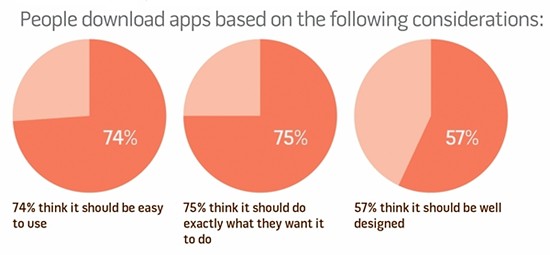












 Nones Notes