To this end, I found a recent Wall Street Journal article penned by technology reporter Jeff Elder particularly interesting in that it pulls together various pieces of evidence that have been building … and which together showcase the extent of Twitter’s “Potemkin Village” problem. (Note the headlines from this article displayed above.)
Essentially, the problem is a plethora of “faux” Twitter accounts being created by an underground network of sellers – including 20 or so major operations scattered around the world – that then offer these accounts for sale to companies and brands wishing to “juice” their Twitter follower statistics to appear more consequential than they actually are.
Consider these points from Mr. Elder’s article:
Faux accounts abound on Twitter because users aren’t limited to having a single account – nor are they required to use their real names.
In securities filings, Twitter claims that “fake” accounts represent fewer than 5% of its active user accounts.
But this past summer, security researchers Andrea Stroppa and Carlo de Micheli reportedly uncovered more than 20 million fake accounts for sale on Twitter – which is closer to 10% of Twitter’s active account base. (Twitter had no comment on this report.)
Stroppa and de Micheli also unearthed the existence of software programs that allow spammers to create unlimited fake accounts on Twitter. (Twitter had no comment on this report.)
Evidently, Twitter has taken stabs at reducing fakery among its account base — however sporadically.
About a year ago, the company reportedly worked with a team of researchers from UC Berkeley and George Mason University to identify fake Twitter accounts and minimize “robot” activity. This was done by actually purchasing fake Twitter accounts on the black market and then identifying their common characteristics.
A filter subsequently developed was then able to block ~95% of such accounts – but it was only a matter of days before the underground market figured out ways to get around the new filters.
Within two short weeks, the filters were successfully blocking only about 50% of new fake Twitter accounts, and that percentage has continued to decline further since then.
And these faux accounts are available for a ridiculously small amount of money. For instance, this past November one marketer purchased 1,000 accounts from an online vendor located in Pakistan … for a whopping $58.
This marketer then programmed them to “follow” the Twitter account of a rap artist client who was interested in boosting his standing on the social network.
In addition, those same accounts have been used to retweet the rapper’s own tweets, thereby giving them greater exposure on Twitter.
And believe it or not, this sort of ruse often works, because prominence on Twitter can lead to legitimate attention by an unwitting press and other “influencers.”
But it’s all blue smoke and mirrors, of course.
The downside? As more of these stories get reported and shine a light on the seedy underside of the Twittersphere, it can’t help but have a negative impact on the social platform’s reputation.
Like self-driving cars, Google Glass devices – those intriguing contraptions that allow users to be “online connected” at all times – appear to be one of those innovations that spark a thousand “what if?” scenarios.
And it’s not at all clear what all the implications of Google Glass may be. But we’re beginning to get some clues as to what’s in store for users.
For starters, Google Glass owners have been sternly warned against using them in locker rooms, movie theaters, casinos … and even restaurants.
And earlier this month, attorney Paul Alan Levy of Public Citizen, a consumer advocacy group, claimed that Google Glass wearers in some states could potentially face prosecution for recording people without their explicit consent.
“Many states require the consent of all parties in a conversation – at least, conversations not occurring in public situations – and provide both criminal penalties and a civil cause of action for participants.”
While such laws are on the books in just 12 states at the moment, collectively those jurisdictions represent more than a third of the American population (including the all-important states of California, Florida, Pennsylvania and Illinois).
So far, there doesn’t appear to be any record of prosecutions pertaining to using a Google Glass device to record someone without his or her consent. But since these devices are such a rarity yet, that seems hardly surprising.
Too, there’s the possibility that the courts will rule that people are giving the wearer of a Google Glass device implicit consent to record them. However, there’s something to the notion that many people would be basically clueless about whether they’re being recorded because of their unfamiliarity with the device and the technology.
And as if that angle isn’t enough, now there’s a company (FacialNetwork) that has developed a real-time facial recognition app for Google Glass. With this app, called NameTag, people can snap a photo and search for more information online about the image – all in one action.
With new technology like this, finding a mate (or just a good-time girl or guy) will never be the same again.
Nor will the inevitable charges of invasion of privacy or stalking that follow.
Of course, to hear how the folks at FacialNetwork characterize it, you’d never think there were any potential negative consequences. Instead, it’s all sweetness and light. As NameTag co-creator Kevin Tussy puts it:
“It’s not about invading anyone’s privacy; it’s about connecting people that want to be connected. We will even allow users to have one profile that is seen during business hours, and another that is only seen in social situations.”
For the past decade or so, marketing communications firm JWT Worldwide (for the tradition-minded, the alternate name for J. Walter Thompson) has issued an annual forecast of key trends for the upcoming year.
For 2014, JWT has identified certain key trends it believes will “shape our world” in the upcoming year and beyond. They’re pretty interesting – and it’s hard to argue with most of them.
Here are four trends that struck me as the most interesting and significant:
The Age of Impatience – With the mainstreaming of the on-demand economy and an “always-on” culture, consumers want what they want now – or yesterday preferably!
The End of Anonymity – The NSA surveillance revelations were the icing on the cake here: Unless you’re a monk on Mount Athos, it’s no longer possible to remain unobserved or untracked by corporations and governments – and you might not even be able to fly below radar on Mt. Athos.
Rage Against the Machine – In the inevitable backlash against the “end of anonymity,” many consumers resent or fear technology, even as they embrace it. But like that second dark chocolate truffle, it’s the classic conundrum of hating the very thing you can’t resist.
Remixing Tradition – Taking cherished traditions and recasting them in a new light – whatever “feels right” today. The burgeoning support for gay marriage is just one manifestation of this trend.
In order to develop its annual key trends forecast, JWT engages in a combination of qualitative and quantitative research and analysis. For this year’s report, that included an online survey of ~1,000 adults in the U.S. and U.K., along with input from ~70 JWT planners and researchers across numerous markets.
The JWT forecast includes a total of ten trends. The 2014 JWT report outlines all ten of them. Are there any you particular agree with — or disagree perhaps?
There’s no question that most people value hearing the opinions of others when deciding whether to purchase a new product.
But in the fast-evolving world of social media where there’s been an exponential increase in testimonials, ratings and recommendations about various products and services, what types of recommendations resonate most?
We may have some answers to that question in results from a recent survey sponsored by marketing firm Social Media Link, which was issued in October to all members within the company’s Smiley360 community brand activation program.
Dubbed the “Social Recommendation Index,” the 20-question online survey was answered by more than 10,300 respondents.
The survey isn’t exactly a true cross-section of American consumers in that the vast majority of the respondents were women. Moreover, most respondents were between the ages of 25 and 45. Still, the results are certainly worth a look.
For starters, three-fourths of the respondents stated that fewer than 10 reviews are all that they need to make a purchase decision.
Moreover, the most valuable reviews tend to be the ones that include personal stories, rather than a laundry list of product benefits.
By contrast, “star” ratings are the least influential type of review by far: Only ~15% of respondents report that those ratings are the most important way to influencing their purchase decisions.
The degree of impact of a product review also depends on who’s doing the reviewing:
86% cite reviews by friends and family members as having the biggest impact
39% are influenced by blogger reviews
Only 11% report that celebrity reviews have the most impact
I’m not at all surprised about the paltry figure for celebrities. Celebrity endorsements in general are far less influential than many marketers would like to admit – a topic I’ve blogged about in the past.
“It’s OK. Your cousin Merlin also likes the product!”
Considering that “friends and family” are the most influential reviewers, it also comes as little surprise that survey respondents view Facebook as the most trusted of all the major social platforms:
Facebook: ~68% consider highly trustworthy
Pinterest: ~56%
YouTube: ~51%
Twitter: ~41%
Commenting on the research conclusions, Social Media Link’s CEO Susan Frech stated this: “The survey found that people don’t need hundreds of recommendations and reviews to entice purchase; it’s really about receiving a quality message from a trusted source.”
Click here to view an infographic summarizing the Social Recommendation Index key findings.
What about you? Is your view different from what’s been reported in this study? If so, please share your observations with other readers here.
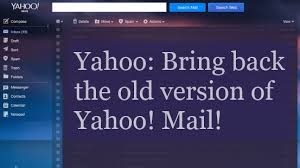
If you use Yahoo’s e-mail platform and can’t stand its new interface (actually there have been two of them within the past year, with the second one even more irritatingly clunky than the first), raise your hand.
As it turns out, even Yahoo’s own employees are in a negative frame of mind about using Yahoo’s e-mail (or its search tool).
That fact was inadvertently revealed to the world in November when an internal company memo was leaked. In the memo, Yahoo senior vice president of communications Jeff Bonforte and chief information officer Randy Roumillat wrote:
“Earlier this year we asked you to move to Yahoo Mail for your corporate email account. 25 percent of you made the switch (thank you). But even if we used the most generous of grading curves … we have clearly failed in our goal to move our co-workers to Yahoo Mail.
“It’s time for the remaining 75 percent to make the switch. Beyond the practical benefits of giving feedback to your colleagues on the Mail team, as a company it’s a matter of principle to use the products we make. (BTW, same for Search.)
Messrs. Bonforte and Roumillat seem to forget that this is America of the 21st Century — not the Soviet Union of the 1960s.
If three-fourths of a company’s employees won’t use its own products, those products can’t be very good. And the notion of coercion seems only destined to backfire – witness the leaking of the company memo.
That’s Raspberry #1.
It doesn’t help that the two principals chose as their e-mail subject line this little bon mot: “Windows 95 called and they want their mail app back.”
Implying that your recipients are mindless rubes isn’t a way to foster much in the way of cooperation and goodwill …
That’s Raspberry #2.
If Yahoo’s top brass were smart, they’d spend less time trying to pressure their employees – who must know a thing or two about the (de)merits of the interface.
Instead, they should listen to the millions of Yahoo e-mail account holders who are none-too-pleased with the company’s latest “innovations.”
That would be Raspberries #3 through #500,000 or so. And yes, I’m in that category.
Consider comments like these that have been appearing all over cyberspace:
“The new Yahoo Mail is awful. At least Yahoo Classic worked. I’ll be moving everything I can from Yahoo. Ugh.”
“Yahoo Mail seems as slow as treacle after the recent ‘forced march’ out of Yahoo Classic. If it doesn’t get better soon, they are not going to have any users left.”
“I get buttonholed almost everywhere I go by [Yahoo email] users – including prominent techies – who complain about the new version.”
“Yahoo email and search are horrible … Yahoo email needs to be thrown out and rebuilt from scratch. They need to also get someone who has a clue to create a spam filter. The ‘stickiness’ of Yahoo email, search and other products sucks, plain and simple.”
This last comment also refers to a related issue. As Wall Street Journal writer Kara Swisher noted in a story published in the industry website AllThingsD:
“A relentless and vocal group of Yahoo Mail users have been complaining vociferously after the Silicon Valley Internet giant drastically revamped its popular email service in October. The ire includes a lot of distress over the removal of its tabs function and the addition of a multi-tasking feature in its place.”
As for me, I’d been struggling with the latest e-mail interface for awhile, thinking I might eventually come to like it (or at least to tolerate it). After a few weeks, I came to the realization that this was never going to happen.
That’s when I decided to figure out if there was to get the old interface back.
The good news – at least for now – is this: You can restore Yahoo Classic email.
Yahoo doesn’t make it obvious, but by following the steps below, you can get yourself back out of e-mail purgatory:
After you open your Yahoo email, click on the small steamboat wheel located at the top right corner and select “Settings” from the dropdown menu.
Click on “Viewing Email” … then click on the box at the bottom labeled “Basic” and your screen will update to the classic version of Yahoo email.
Click on your browser’s “Back” button, and you will be returned to the original Mail Plus version of Yahoo (with the tabs).
These procedures should work with all of the major browsers (IE, Firefox and Safari). But you may need to repeat these steps whenever you refresh your browser, or close mail and reopen.
Even so, that’s way better than having to struggle with the new Yahoo interface.
What are your thoughts? Do you agree or disagree that the new Yahoo email interface is a “huge leap backwards” in terms of user-friendly functionality? Please share your comments pro or con with other readers here.
Over the past several years, I’ve begun to hear increasing rumblings about how e-mail is a now-mature communications method that’ll eventually go the way of the FAX machine.
But I’m not at all sure I believe that. I think it’s more likely that e-mail’s future will look … a lot like it does today.
No doubt, texting and direct messaging have cut into some of the bread-and-butter aspects of e-mail communications. But what about e-mail marketing? Could we see a similar phenomenon happening?
Recently, I read the comments of e-communications specialist Loren McDonald on this very topic. McDonald, who is vice president of industry relations at digital marketing technology firm Silverpop, makes an important point concerning the “building blocks” that have to be in place before e-mail marketing will be seriously threatened by alternative MarComm means.
McDonald speaks about the challenge of an “addressable audience” when it comes to alternative channels: “Regardless of a competing channel’s popularity, marketers must be able to deliver a comparable or replacement message to an individual. This is where many channels fall short,” he contends.
Loren McDonald
McDonald notes that most marketers possess vastly more permission-based e-mail addresses than they do mobile phone numbers with permission to text. It’s the same story when comparing e-mail addresses to the percentage of their database that have liked their company’s Facebook page.
And there’s more: For mobile apps, what portion of the typical company’s database has downloaded it and authorized notifications? The inevitable response: How low can you go?
McDonald’s point is that for these alternative channels to gain true significance, they need to achieve a certain critical mass in terms of adoption rates – thereby allowing marketers to reach their customers and prospects in a comparable manner as they can via e-mail (as well as at a comparable cost).
Looking into his own crystal ball, McDonald feels fairly confident making three predictions concerning the future of e-mail marketing:
He predicts that content-focused newsletters will remain relevant and popular, particularly for B-to-B companies and publishers. That’s because marketers can push multiple newsletter articles within a single marketing touch, while publishers can attract ads and sponsorships for their e-newsletters (i.e. they’re moneymakers for them).
For broadcast/promotional messages, most consumers will continue to prefer e-mail delivery. “Will mobile app users [really] want their smartphones to ping them all day long whenever a message arrives — and then have to click attain to view it?”, he asks rhetorically.
Transactional and triggered messages will be e-mail’s primary challengers in McDonald’s view – especially for bulletin-type messages such as breaking news headlines, weather alerts, flight delay announcements, “flash” promotions and sales, and order confirmations linked to in-app landing pages.
And even on this third prediction, McDonald doesn’t see the transition happening all that quickly.
I find myself in general agreement with Loren McDonald’s prognostications. Do you have some differing views? If so, please share them with other readers here.
It’s been more than 35 years since I began my post-collegiate working career in the commercial banking business. At that time, there were well more than 17,000 federally chartered banking institutions in the United States.
The reasons for the high tally were clear. Most states didn’t allow commercial branch banking across state lines. And quite a few others – mainly in the Midwest and Plains regions – put severe restrictions on state branch banking as well.
That’s why states like Illinois and several others could have as many as 1,500 or more independent banking institutions each.
Of course, this hardly meant that these banks were operating in a vacuum. Not only were there efficient automated clearing houses to process interbank transactions, there were also robust correspondent banking networks interlinking smaller and larger banks.
These networks enabled community banks to offer many of the same deposit, lending and cash management services provided by the larger institutions.
“Bigger is Better …”
Beginning in the late 1980s and early 1990s, many of the regulatory barriers began to fall. States relaxed prohibitions on branch banking, while branching across state lines became common. It wasn’t long before a string of acquisitions created large, consolidated banks. The banking system began to look a lot more like Europe and Canada and a lot less like … well, the United States.
But then a countervailing trend developed, and it wasn’t the proverbial “dead-cat bounce.” Consolidation caused voids in local banking coverage in many regions. As a result, some businesses and consumers sought a return to banking institutions where ownership and management were part of the community, and where decision-making was based on a more intimate knowledge of the local economy.
So the commercial banking industry actually witnessed an uptick in the number of institutions during the late 1990s and early 2000s.
… Until the Great Recession of 2008/09 hit.
Today, the number of federally chartered U.S. banking institutions now stands at its lowest level since the Great Depression.
The stark facts are these: A sluggish economy, low interest rates and ever-more complex regulations have diminished the number of federally chartered institutions to below 6,900. The tally, according to FDIC stats, had never fallen below 7,000 since the mid-1930s.
Almost entirely, the recent numerical decline has come among smaller institutions – those with fewer than $100 million in assets. And of the more than 10,000 banks that are now gone, it isn’t only because of mergers and consolidations. Nearly 20% of them simply collapsed.
We’re not simply dealing with a reduction in banking charters; the number of physical bank locations is also declining – by about 3% since late 2009, thanks in part to the rise of online banking in addition to institutional consolidation.
John Barlow
I asked banking industry specialist John Barlow for his thoughts on the latest bank figures. Not only is this expert head of Minneapolis-based Barlow Research, Inc., a nationally recognized financial services industry market research and consulting firm that counts the largest U.S. institutions among its client base, Barlow is also chairman of Iowa Falls State Bank, a family-owned institution that could be characterized as the quintessential “local bank.” (He’s also a former boss of mine back when I was working in the banking industry during the 1970s.)
Barlow noted an additional point about small banks: “By their very nature, community banks are typically closely held – often family-owned enterprises. A significant headwind for continued ownership is the transition of the business to a younger generation. The Baby Boomers had smaller households, and their children are more likely to move away from the business – mentally as well as geographically.”
… or Is it Not Better?
There may be something of a silver lining in the recent trends, however. Actual bank deposits have continued to grow, and consolidations have helped alleviate concerns that an abundance of separate banks leads to lower efficiencies in the financial system and more difficulties in conducting regulatory oversight.
… But only to a degree. “It remains to be seen where the economies of scale exist in banking. According to our studies at Barlow Research, larger banks do appear to be more efficient at generating income. But that’s because they’re more aggressive at charging fees, not because of lower costs,” Barlow reports.
David Kemper, CEO of Missouri-based Commerce Bancshares, may have a point when he notes, “There’s no reason why we need [so] many banks, especially if those smaller banks have a much lower return on capital. The small banks’ bread-and-butter is just not there anymore.”
[To that point, Barlow contends that one of the reasons smaller banks have a lower return on capital is that they have too much capital.]
There’s an important counter-argument to the “consolidation is better” view. It goes like this: Community banks remain critically important to the economy because they are the ones more likely to engage in small-business lending.
Barlow Research’s statistical studies show that the small businesses that deal with community banks are more likely to be able to secure a loan. And the average size of that loan will be larger than one obtained from a large institution.
The Most Startling Trend?
Another FDIC statistic might be the most startling trend of all. Over the decades, each year has witnessed new bank startups – ranging from at least a handful to the low hundreds in any given year. But that’s all changed since the Great Recession.
In fact, there has been just one new federally approved bank charter issued since 2010.
That institution, the Bank of Bird-in-Hand (located in Lancaster County, Pennsylvania), was able to raise approximately $17 million in investment capital. But it also had to expend nearly $1 million in consulting and legal fees to properly prepare its application for a new charter — including spelling out policies and procedures detailing its systems to guard against cyber-attacks and other security risks.
“Intense” doesn’t tell the half of it when describing the effort needed to obtain a new Federal bank charter.
Considering those hurdles, what made the Bird-in-Hand investors think they could run a profitable banking operation in today’s economic and business climate? It’s because they see an opportunity in serving a local community heavily populated by Amish and other rural/farming families. Banking-wise, it’s an underserved community.
There once was a local independent bank, of course … but that one was acquired by a larger entity in 2003. The new bank’s investors believe they can provide services that are better suited to the needs of the local community – which, in turn, will make their new bank successful.
John Barlow adds this observation about community banking: “A well-managed community bank is one of the best investments you can make, as long as you do not make bad loans. Do that, and it’s all over in a couple years.”
And about the degree of governmental regulation in the industry, he remarks: “I grew up in a banking family. My grandfather and father complained about regulators all the time. Banks are regulated businesses: What’s new about that?”
Barlow and the Bird-in-Hand bank investors may well be right about the prospects for smaller banks in America. Still … one wonders how many new banking institutions will be starting up in the current economic and regulatory environment.
… Or that the prospective investors will determine that it’s even worth the effort.
Here’s a statistic that surprises no one, probably: As of November 1st, more than one in five U.S. consumers had already begun their holiday season shopping.
Considering that many merchants begin pushing online and in-store holiday sales in October, it’s hardly any wonder.
In fact, marketing firm IgnitionOne is predicting that American consumers will spend 11% more during Thanksgiving weekend than they did last year.
Some of the increase is undoubtedly due to the calendar; Thanksgiving weekend is nearly a full week later than it was in 2012.
And other forecasting data don’t presage a big jump in holiday sales this year.
According to the National Retail Federation, sales are expected to be “not too hot … not too cold” – up a tad from 2012 but not at the growth level witnessed in 2010 and 2011:
2009: 0.5% sales increase over previous year
2010: 5.3% increase
2011: 5.1% increase
2012: 3.5% increase
2013 (forecast): 3.9% increase to $602 billion
Clues to the reasons behind the middling sales growth forecast can be found in Nielsen’s Holiday Spending Forecast report, in which American consumers describe their financial circumstances in these terms:
Two-thirds still feel like they’re in a recession.
Half are limited to spending funds on only the basics.
One in five has no spare cash at all.
How this translates to the amount of dollars consumers expect to spend on their holiday shopping breaks down as follows:
~44% will spend less than $250 this season
~30% will spend between $250 and $500
~20% will spend between $500 and $1,000
~6% will spend more than $1,000
As in years past, the most popular gift item promises to be … gift cards. Technology products, toys, food and apparel round out the “top five” holiday gifts. This is little changed from last year.
And here’s one other stat that retail establishments must be looking at: Mobile commerce sales grew by ~16% during the holiday season between 2011 and 2012, and ~18% of shoppers checked out deals on their mobile devices.
Those percentages are bound to increase this year.
Marketing can be many things. But marketing without originality isn’t much of anything.
That’s why there’s a desire among marketers to avoid clichés and buzz terminology in sales and marketing content whenever possible.
Still, it’s easy to fall into the cliché trap – and it happens to the best of us.
This is particularly true when the “next new thing” in business comes along every few months and people grasp for shorthand ways to communicate those concepts.
[There: Perhaps “next new thing” qualifies as a marketing cliché itself!]
Brian Morrissey
Recently, communications specialist and editor-in-chief of vertical media company Digiday, Brian Morrissey, came up with a list of 25 marketing clichés which he feels should be avoided if at all possible.
I’ve gone through Morrissey’s list and have selected ten that I think are particularly baneful – especially in the world of B-to-B marketing. See if you agree:
Putting the customer at the center. Isn’t it obvious that companies and brands would be committed to this? And if not … where was the customer located before?
Having an “authentic” conversation with customers. Inauthenticity isn’t cool. Inauthenticity is also what we’ve been trying to avoid for years – or should have been. There’s really no news in this statement, is there?
We fail fast. Perhaps it comes from reading too many issues of Fast Company … but what companies do you know that want to slowly jettison a failed strategy?
Blue-sky thinking. The “sky’s the limit” when it comes to “out-of-the-box thinking.” Ugh.
Nab the low-hanging fruit. This cliché has been around so long, there can’t be any low-hanging fruit left!
Dipping our toe in the water. Trying to put a positive spin on a lack of depth or heft isn’t fooling anyone.
Open the kimono. Any buzz phrase that conjures mental imageries of a flasher can’t be what we want to communicate.
Curated experiences. A fancy way of admitting that content isn’t ours. Besides, the term “curator” hardly sounds contemporary. Instead, it connotes images of museums, galleries and other places that deal with the dusty past.
Surprising and delighting our customers. Morrissey contends that this whopper makes brands come off like clowns … and that clowns are silly, scary or creepy – take your pick.
Tentpole idea. Continuing with the clown analogy, no doubt … but whether it’s a circus or a tent revival, the mental imagery this elicits isn’t particularly apropos.
… And these are just ten terms on Morrissey’s list of 25 marketing clichés.
What about you? Do you have any buzz phrases that you find particularly annoying – perhaps “thought leadership” or maybe “exceeding our customers’ expectations”?
Please share your nominations with other readers here.
It’s a question many people are asking: To what extent is the digital revolution fundamentally changing shopping habits?
A new report from Forrester Research titled “U.S. Cross-Channel Retail Forecast, 2012 to 2017” attempts to answer this question.
Its prediction: just over 10% of total U.S. retail sales will be online purchase in five years’ time.
By comparison, in 2012, e-commerce accounted for about 5% of total U.S. retail spending, so Forrester is projecting a doubling of e-commerce volume.
Forrester also projects that by 2017, ~60% of retail sales in the United States will involve the Internet – either as a direct commercial transaction or as part of buyers’ pre-purchase research on laptops, tablets or smartphones.
The sectors most likely to be influenced by online research are grocery, apparel, home improvement and consumer electronics – no doubt abetted by the ability to access customer reviews and comparison prices during shopping excursions, Forrester reports.
These findings and more are included in Forrester’s report which can be found here (it’s a for-purchase study).

 I’ve blogged before about the scads of Twitter accounts that are accounts in name only.













 Nones Notes