Mouse no more? Developers are forging ahead in hand-gesture technologies.

Hand-Gesture Technology for Laptops and DesktopsIt seems hard to believe, but the ubiquitous computer mouse has been with us for less than 30 years.  It’s difficult to recall how revolutionary a development mouse technology was compared to the restrictive keyboard-based functionality that was a carryover from the days of typewriters. 

Indeed, the mouse completely changed the way we interact with computers.

But the mouse’s days may now be numbered, as newer technologies are emerging that help people “do more with less” – such as drawing three-dimensional objects or even browsing images during medical procedures without actually touching anything.

The Wall Street Journal reports that several “boutique” developers are moving ahead quickly:

  • Leap Motion is introducing a ~$70 device that enables users to control a laptop or desktop computer by simply waving their fingers or hands in the air.  Reportedly, Leap’s technology is geared to particularly precise actions such as drawing a picture or writing words by virtue of the fact that it can track motions within a fraction of millimeters.
  • PrimeSense is developing motion-sensor technology that can be embedded into signs that change when different people stand in front of them.

And the big guys like Apple and Google are in on the action, too.  Microsoft is planning to release an upgraded version of its Kinect for Windows software, which has already been downloaded 350,000+ times since its introduction in early 2012.  Microsoft sees the enhanced software enabling the development of everything from advanced surgical procedures to inexpensive 3-D body scanners.

All of these developments are possible because of the growing success in harnessing the power of infrared light to create three-dimensional “zones” where minute movements can be detected.  It can be applied to nearly any software to which it is connected.

Based on how rapidly the technology is moving forward, it’s safe to say that inside of a decade, the computer mouse may be a nothing more than a quaint anachronism.

Facebook’s Interesting Week

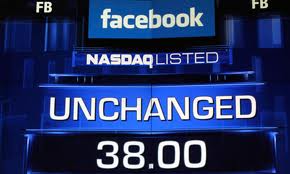
Facebook's_first_day_of_tradingBy now most people have heard all of the news reports about Facebook’s initial public offering, and how the world now has a new crop of instant millionaires and billionaires.

But the news last week wasn’t all roses for Facebook. For one thing, it became clear as Day 1 of trading ground on that Facebook shares weren’t going to increase in value. Indeed, it took the underwriters stepping in with institutional buying to keep the share price (barely) above the initial offering price of $38 per share.

And there was the news of GM dissing Facebook by announcing that it is dropping its paid advertising program with the social network … evidently due to Facebook’s failure to convince GM marketing execs of the effectiveness of its program.

But there was even more. Consider this news report: Facebook was hit with a $15 billion privacy lawsuit on the very first day of public trading. Filed on behalf of a number of Facebook’s users, the class action suit claims that Facebook invaded personal privacy by tracking users’ web usage.

The lawsuit cites a bevy of case law and regulations as part of the briefing documentation, including the Federal Wiretap Act, the Computer Fraud & Abuse Act, the Stored Communications Act, and various California statutes.

Consider the implications if this suit is at all successful:  Now that it is a public company, Facebook is under increased pressure to increase its advertising revenues rapidly – which means collecting yet more user data to help it target paid advertising effectively and thus command premium pricing.

But if the lawsuit is successful, it could prevent Facebook from collecting the very data it uses to serve up advertising based on relevant audience targets.

On the other hand, similar cases brought against Facebook in recent years have been thrown out of court because browser cookies haven’t been viewed as “wiretaps.” Moreover, plaintiffs have had difficulty in proving any “harm” as a result.

Of course, there was some additional very good news this past week for Facebook – at least for CEO Mark Zuckerberg: He got married.

… Which in the end may turn out to deliver far more happiness and fulfillment than all the money in the world ever could do.

Good marriages are like that … so let’s all hope for the very best for Mr. Zuckerberg.

More Interest in Pinterest …

While it pales in comparison to the $1 billion+ Facebook public offering today, social bulletin board Pinterest, the topic of a recent blog post of mine, has snagged its own financial windfall this week.  It comes in the form of a $100 million investment led by Rakuten, Inc., a Japanese conglomerate of Internet-oriented businesses.

With this filing, Pinterest is now valued at approximately $1.5 billion.

Why is Rakuten making the investment?  Very likely because one of the key components of the conglomerat is e-Commerce Marketplace, which is Japan’s leading electronic commerce player. 

Michael Jaconi, an executive officer at Rakuten, is quoted as saying that “Pinterest recognizes Rakuten as a global Internet player and they want to leverage some of the skill set in the growing business world.”

With 77 million members in Japan already, Rakuten has ambitious plans to become “the top global internet service company,” according to Mr. Jaconi.

But why choose Pinterest instead of Facebook or Twitter for such a major financial investment? 

The answer to that question isn’t necessarily “either/or,” actually.  “We want to continue investing in technology that is as innovative as Pinterest,” Jaconi notes.  “If we need to buy and invest to bring us closer to that source of innovation, we will.”

Stay tuned, obviously.

AAA Does the Math on the Cost of Automobile Ownership

Cost of Automobile OwnershipIt’s gotten a lot more costly to own and operate an automobile in recent years. That’s the clear conclusion one can draw from an evaluation done by the American Automobile Association.

The latest AAA analysis, based on a survey of driving costs it conducts annually, has determined that the “average car” (a midsize sedan) costs nearly $9,000 each year to keep fueled, licensed, insured and maintained.

That’s $750 per month – hardly chump change.

Not surprisingly, the cost of fuel is the biggest culprit in the upward trajectory of costs. Fuel prices have risen most dramatically in the past year.

But that’s not the only source of added expense; AAA found other items that have also contributed to higher costs, rising higer than the rate of inflation though not as sharply as gasoline:

  • Fuel cost: Up ~15% over the past year
  • Replacement tires: ~4% increase
  • Automotive insurance: ~4% increase

The typical American motorist is now spending ~$1,000 per year on automotive insurance, AAA finds.

But there are wide swings in the cost per motorist based on driving records, the type and age of the vehicle, the geographic location and so forth, so some lucky souls are paying only half the average.

Another finding: Today’s more sophisticated motor vehicles make them more complicated to service – thus increasing the time it takes to repair them. Time is money – and never more so as when a car is in the service bay!

The only category where cost reductions have been observed lately is in automobile depreciation, which is lower by about 5% compared to last year.

The reason? Reduced new car sales have resulted in a relative shortage of quality used cars available for sale, thereby driving up their value.

As an interesting aside, AAA has been conducting these surveys each year since 1950. Sixty years ago, motorists typically put ~10,000 miles on their cars, and fuel cost just 27 cents per gallon.

Today, the average motorist clocks ~15,000 miles on his or her vehicle in a year’s time. And, as we know all too well, fuel costs have been bounding around between $3.50 and $4.00 per gallon.

Oh, for the good ol’ days … even just five years ago!

What to Make of all the Interest in Pinterest …

I love PinterestUntil now, I’ve hesitated to blog about Pinterest, the digital bulletin board and newest “breakout network” in social media.  I wanted to see how it was evolving before jumping to conclusions about its importance and staying power.

Without a doubt, Pinterest is one of the biggest stories in the social sphere right now. It seems that something as simple as enabling users to post “boards” of their collections of photos has struck a nerve.

Pinterest is one of the most user-friendly social sites in cyberspace.  Pinterest participants use a “bookmarklet” button installed in their browser to affix photos or images to virtual bulletin boards set up on particular topics or themes such as interior decorating, food arts and fashion.  Each image has an accompanying clickthrough link to the web page where it was found.  Users can also “re-pin” images they find on other Pinterest boards.

Simple, easy … and popular.  In its most recent Digital Marketing Benchmark & Trend Report, Experian reports that Pinterest is now the third most popular U.S. social networking site. Only Facebook and Twitter rank higher.

Just how well is Pinterest doing? Consider that this invitation-only site has ~10 million users and receives nearly 25 million visits in a single week. That’s 30 times larger the volume of visits recorded on Pinterest just six months ago.

I’m still trying to determine how much staying power this latest social media phenom possesses. The rapid adoption rate tells us something right off the bat … and there are a few additional reasons why Pinterest may be here to stay in a big way:

  • Pinterest is a highly effective form of digital scrap-booking that seems to be extremely popular with its users.
  • Online audience measurement firm comScore reports that users spend an average of 1.5 hours per month on Pinterest, second only to Facebook.
  • Pinterest is easy and intuitive to use, making it popular with people who aren’t your typical “geeky” computer user. Pinterest users tend to skew older … more female (~80% actually) … and generally located more in “flyover country” than in coastal zones like New York and California.

Any time a social network can claim to have attracted the hearts and minds of the broader population, that’s noteworthy … and it leads me to believe that Pinterest isn’t merely a passing fad.

Indeed, we may have just scratched the surface of what Pinterest will be and what it will offer in the years ahead.

What are your thoughts about Pinterest?  Dynamic or dull?  Flash-in-the-pan or here to stay?  And how do you see it being used by marketers to promote their products and brands?

Klout and Klouchebag: Action and Reaction.

Klout scoreIt had to happen: The combination of social media measurement capabilities and ego gratification has brought forth attempts to “quantify” a person’s influence level in social media.

One of the better-known of these endeavors is run by Klout, a San Francisco-based entity launched in September 2009 that applies social media analytics to measure people’s influence across their social network.

Underscoring the company’s sense of self-importance is its proclaimed tagline/slogan:  “The Standard for Influence.”

Klout purportedly accomplishes this by analyzing data mined from Twitter, Facebook and other social sites – information such as the size of a person’s network, the content created, and how others interact with that content.

Klout profiles built from these bits of information include a “score” ranging from 1 to 100 – the higher a score representing a higher assessment of the breadth and depth of a person’s online influence.

Reportedly, more than 100 million of such profiles have been built by Klout over the past two years. And how is Klout building these scores? It’s using Twitter data points such as:

  • “Follower” and “following” volumes
  • The incidence of “spam” or “dead” following accounts
  • List memberships
  • Retweet activity
  • Unique mentions

Somehow, it doesn’t seem surprising at all that Klout’s rating and ranking activities have come under attack. And the criticism is not just coming from people who are questioning the methodology behind the analysis and rating. Some social critics contend that scoring devalues authentic online communication.

Movie critic, writer and novelist John Scalzi has written that Klout’s very premise is “socially evil” in that it exploits the “status anxiety” of social media participants. Charles Stross, a tech writer and sci-fi author, goes even further: He labels Klout “the Internet equivalent of herpes.”

But perhaps the most biting criticism comes in the form of satire, courtesy of Tom Scott, a freelamce web developer and humorist who has launched “Klouchebag.”

What’s Klouchebag? According to Scott, it measures “how much of an asshat you are on Twitter.”

In the same fashion as Klout, Klouchebag establishes a rating score. But this one is based on the ARSE rating system, an eyebrow-raising acronym that stands for:

  • Anger (“profanity and rage”)
  • Retweets
  • Social Apps (“every useless check-in on Foursquare or similar location-based social platform”)
  • English Usage (“exclamation marks!!! … ALL CAPS … or no capitalization at all … will definitely raise this score”)

For Tom Scott, Klouchebag satirizes what he considers to be a “pseudo-scientific” effort to create a social media hierarchy. He hopes its emergence will contribute to a backlash against Klout and other similar ventures.

When it comes to Klout, Scott is merciless: “I’d been annoyed with the idea of Klout for a while … [which] is one of the worst ideas ever put online. Klout annoys me for the same reason that search engine optimization annoys me: It’s an enormous amount of effort designed to game an arbitrary and often-changing system. Imagine if all that time went into actually making interesting things, or caring about the people around you.”

Maybe Tom Scott has forgotten a thing or two about human nature: People are often smitten by vanity and pride – and the desire for fame. It’s been that way ever since the dawn of time. Why should we expect anything different from people today?

[One can only imagine what Andy Warhol would have said about people and their “15 minutes of fame” had he lived in our era of social media!]

The “Digital Natives” are Restless …

Digital Natives, Digital Multi-taskingDigital natives” is a term used to describe consumers who have grown up with mobile technology as part of their daily lives – essentially people age 25 and younger.

And man, do these whippersnappers behave differently than the rest of us! “A Biometric Day in the Life,” a newly released research study from Time, Inc., reveals how the myriad digital devices and platforms are affecting the media consumption habits of the Digital Natives compared to the rest of the population.

The salient finding from the Time research: On average, Digital Natives switch their attention between various media platforms a whopping 27 times in a single hour. That’s nearly once every other minute.

[For purposes of the analysis, media platforms includes television, magazines, desktop computers, tablets, smartphones, as well as channels within platforms.]

What’s the impact of this “multi-tasking to the max” behavior? The Time study posits that Digital Natives’ emotional engagement with content is less involved and more constrained.

In fact, the study concludes that these people tend to use media to regulate their mood; if they grow tired or bored, they switch to something else.

The study’s comparison of Digital Natives’ interaction with their digital devices to the rest of the population is also instructive. Natives tend to divide their time equally between digital and non-digital media, whereas the rest of us spend about two-thirds of our time with non-digital media.

Moreover, Digital Natives are significantly more likely to take their devices from room to room with them when they are at home (~65% versus ~40% for the rest of the population). One natural result of this tendency is that it makes switching platforms even easier.

And what about texting? Nearly nine out of ten Digital Natives report that they send or receive text messages on a typical day (compared to half of the rest of the population).

In fact, more than half of Digital Natives state that they “prefer texting people rather than talking to them.” Fewer than 30% of the rest of us feel that way.

Social media behaviors are similar; ~80% of Digital Natives report that they access Facebook at least once per day – far greater than rest of the population accesses (~57%).

The Time survey’s findings suggest that the traditional way of delivering marketing messages with a clear “beginning, middle and end” may be morphing into something dramatically different from what we’ve known.

Dr. Carl Marci, CEO and chief scientist at Innerscope Research as well as a staff psychiatrist as Massachusetts General Hospital, has made several interesting observations about the Time study:

 Patterns of visual attention and emotional consequences may be changing as a result of modern media consumption.

 The brains of a new generation of Americans may be becoming “rewired.”

 Marketers are facing an increasingly complex media environment, making it harder to reach and engage their target audiences.

If Dr. Marci’s observations are accurate, things are going to get much less predictable – and a lot more challenging – for marketers.

When Friends become Foes: City of Portland vs. the Citizens

City of Portland propping up taxi industry at the expense of consumers.Pick up most any civics textbook, and it’ll contend that one of the purposes of government is to protect the common interests of the citizenry against the forces of corruption and special interests.

The idea is that government regulations can help curb the excesses of unfettered capitalism and help keep the playing field fair for everyone.

Unfortunately, we know from experience that things rarely turn out this way in practice. We have ample proof in the scads of lobbyists and special interest groups that swarm Washington, DC and the state capitals, holding sway over many politicians and the laws they enact.

Public opinion polls by Gallup and others show that the U.S. public sees the federal government as more culpable than state or local governments when it comes to special interests having undue influence over legislation.

But does the reality comport with the perception that “local” is less of a problem?

The latest example showing that this perception may be wrong comes from Portland, Oregon. The city council there has put in place regulations that require limousine and sedan services to charge a $50 minimum for transporting people to and from Portland International Airport … and to charge at least 35% more than taxis for trips to any other destination in the city.

In addition, sedan and limo services cannot pick up customers until at least one hour has elapsed after the customer has called for transportation.

Does anyone seriously believe that these regulations were put in place to benefit the citizenry of Portland … or to foster healthy competition for transportation services? If you believe so, you’re pretty naïve.

In actuality, the Portland city council is just doing the bidding of a small but politically powerful interest group in the city: the taxi industry. Frank Dufray, the administrator for Portland’s Private-for-Hire Transportation Program, says as much:

“The main thing is that you don’t want the Town Cars to take all of the best fares, which are to the airport, and not leave any for the taxi industry. That’s why there’s a minimum fare and a one-hour wait requirement.”

Basically, this is tantamount to stifling fair competition and protecting market share for the taxi industry by government fiat.

It gets worse: “Daily deal” companies like Group and LivingSocial have become a very popular way for local business to gain new customers by offering limited-time special offers that allow consumers to purchase goods and services at a discounted price. But when two Portland-area companies offered their chauffeur services at a discounted rate through Groupon last year, the city of Portland responded by assessing fines on every Groupon deal sold by these firms.

And these weren’t just “nuisance” fines. They totaled $259,500 for Fiesta Limousine and a whopping $635,500 for Towncar.com!

Rather than risk going bankrupt, these two companies did the only thing they could from a practical standpoint; they refunded all of the proceeds back to their would-be customers.

So, thanks to the city of Portland, we have customers who are unable to take advantage of special pricing for limousine services, plus we have two companies who lost both time and opportunity – not to mention the administrative hassle of refunding customers their money while also dealing with the potential legal fallout.

But there’s a winner, of course. It’s the local taxi industry, sitting pretty while being validated in the idea that political pressure placed on local politicians works.

But in an interesting twist, this may not be the end of the story. The Institute for Justice, a public interest law firm, has now filed suit in U.S. District Court against the city of Portland. Here’s how the group summarizes the legal question:

“Can the government bar entrepreneurs from offering competitive prices, online discounts and prompt service merely to protect politically powerful insiders from competition?”

The Institute for Justice’s complaint was filed on April 26, 2012, citing the U.S. Constitution’s 14th Amendment plus the Equal Protection and Due Process Clauses.

Expect this one to make its way all the way to the Supreme Court.

Data-Driven Pricing: Biting the Hand that Feeds

Data-driven-pricingWe hear the claim all the time: Online shopping gives you the best opportunity to find the best pricing on goods.

But here’s the rude reality: Developments in “data-driven pricing” is putting the lie to that assertion.

Although it’s a turn of phrase that hasn’t received very much play – at least until now – data-driven pricing is the latest method by which sellers are hankering to extract every last dollar they can from buyers.

Think of it as the digital version of global zone pricing in the petroleum industry, wherein gas companies charge filling stations in well-heeled areas more for the exact same gasoline product that they sell for less elsewhere.

But in the digital realm, online retailers like travel sites are keeping track of customer IP addresses and recording past shopping activities in order to serve up higher prices to the people who are interacting with their sites.

These retailers are taking customer loyalty … and standing it on its head.

Using browsing and shopping data collected about each customer – including every time a site is visited via Google search results – retailers can determine in real-time if they can get away with charging a higher price.

And that may well be why you paid $75 more for your air ticket than the person seated next to you on the plane who also purchased their ticket online on the exact same day.

Now, this scenario isn’t universally true. When there are many retailers to choose from on a particular item, along with ample supply of a good, the consumer can usually hold out for the lowest combination of price, shipping (hopefully little or none), and sales taxes (hopefully none).

But on items ranging from airline tickets to concert tickets, the online consumer is often up against a stacked deck.

Believing that online shopping is the slam-dunk way to extract the lowest price from the retail channel is a notion that’s out of date at best … and naïve at worst. Simply put, data-driven systems have gotten a whole lot “smarter.”

Some consumers might respond by hesitating before buying – no longer assuming that the price they’re being offered is the “lowest available” one.

So here’s a question: When consumers become more cautious about buying online, who’s hurt more?

The consumer? Or the suddenly smarter retailer?

U.S. Green Energy: Sizzle? … or Fizzle?

Impending doom for Green Energy?  The economic model isn't working.Tempting as it may be to dismiss Solyndra, Solar Power, Beacon Energy, SpectraWatt and other recent horror stories regarding “energy subsidies gone bad” as just examples of governmental ineptitude resulting from overly exuberant ideological thinking coupled with political favoritism … it turns out that these events are also emblematic of a much more fundamental challenge to green energy prospects.

A report released last week warning of problems on the horizon for green energy bears this out. The report, titled “Beyond Boom and Bust,” is a collaborative effort between the Brookings Institution, the Breakthrough Institute and the World Resources Institute (WRI), and was authored by six researchers associated with these organizations.

According to the report, the federal government’s involvement in the renewable energy marketplace has led to an unsustainable system. Among the study’s key conclusions are these eye-opening points:

 Nearly all “clean” tech segments in the U.S. remain reliant on production and deployment subsidies or other policies designed to facilitate gaining an expanding foothold in today’s energy market.

 Many of the nearly 100 individual policies and subsidies that undergird clean energy – grants, tax credits, loan guarantees and the like – are getting ready to expire, with the potential for dire consequences. To illustrate: Total federal spending on the clean tech sector was more than $44 billion in 2009, but would shrink to only ~$11 billion in 2014.

 In the absence of legislation to extend or replace current green energy subsidies, America’s clean tech policy system will be largely dismantled as of the beginning of 2015 because of the scheduled expiration of ~70% of the policy provisions.

In the current political and legislative climate, it’s doubtful that many of the current policies can be expanded or replaced. And even if this could happen, the report sheds doubt on whether such policies can be successful:

“The maintenance of perpetual subsidies is not a sustainable solution to the new challenges facing the U.S. clean tech industry. Clean tech markets in America have lurched from boom to bust for decades, and the root cause remains the same: the higher costs and risks of emerging U.S. clean tech products relative to either incumbent fossil energy technologies or lower-cost international competitors, which makes U.S. clean tech sectors dependent on subsidy and policy support.”

The report makes a number of recommendations for ushering in a “new era” of clean energy policy. Among these are:

 Foster establishment of a competitive market – development policies should create market opportunities for advanced clean energy technologies while fostering competition between technology firms.

 Create market incentives that demand and reward continuing improvement in technology performance and cost.

 Avoid technology lockout and promote a diverse energy portfolio.

Also, the authors emphasize the need for a “new national conversation” to determine the best route forward to accelerate technology improvements and cost reductions in clean tech sectors.

It would be nice if that conversation could start right now. But in an election year … don’t bank on it.