Craigslist riding high … but clouds on the horizon?

Craigslist logoNow here’s an interesting statistic about Craigslist, the online classified advertising phenomenon and bane of newspaper publishers across the country. Online publishing consulting firm AIM Group is forecasting that Craigslist will generate nearly $125 million in revenues this year.

But here’s the real kicker: Craigslist is on track to earn somewhere between $90 million and $100 million in profits on that revenue. That kind of profit margin is basically unheard of – in any industry. And the fact that it’s happening in the publishing industry is even more amazing.

What’s contributing to these stratospheric results? After all, Craigslist bills itself as a “free classified” site. That may be, but the publisher derives a huge portion of revenue – more than 50% – from paid recruitment advertising, much of it coming straight out of the pockets of the newspaper industry.

And the rest? Chalk up most of that to advertising let’s euphemistically label “adult services.” (AIM Group calls it something else: “Thinly disguised advertising for prostitutes.”)

Of course, these lucrative revenues and profits have come at a price. Craigslist has developed a reputation – not wholly undeserved – of being a virtual clearinghouse for anonymous hook-ups and other forms of vice. Complaints of Craigslist becoming a haven for scam artists, thieves – even the occasional murderer – have become more common as the site has expanded its reach into more cities and regions — now in excess of 500 communities.

And here’s another interesting finding from AIM Group. It reports that Craigslist’s traffic peaked in August of last year (~56 million unique visitors that month), but has fallen since then. In fact, monthly traffic has dropped and now plateaued at ~48 million since February.

Why? AIM speculates it’s the result of an “antiquated” user interface, along with a proliferation of “spam & scam” advertising. You start getting a lot of that … and you’re bound to start driving some people away.

Still, it’s pretty hard to argue with profit margins hovering around 75%.

“Mag Drag 2009”: Year-End Update

Earlier this year, I reported on the sorry state of print magazine publishing as illustrated by the spate of closures reported up to that time.

Now that we’re wrapping up 2009, we can see the full scope of the damage. MediaFinder has tallied up more than 370 magazine titles that have folded over the course of the year. And the number is closer to 450 if you also include magazines that ceased to publish in print form and went to an all-digital format.

Interestingly, magazine closure stats for 2009 were actually a bit lower than in 2008 and 2007. But this year saw the demise of some pretty important titles. Among the more noteworthy casualties were:

 Country Home
 Editor & Publisher
 Gourmet Magazine
 Hallmark Magazine
 Modern Bride
 Nickelodeon
 Portfolio
 Teen
 The Advocate
 Vibe

As we move into 2010, will these trends continue, or will magazine closures level off? It’s too soon to say, but some prognosticators are forecasting a slight uptick in print magazine advertising revenues, so perhaps the worst is behind us.

But coming off of a disastrous 18-month period when print advertising revenues have tanked 25%, 30% or more, it’s hard to see how some magazines can continue to survive at the new, depressed revenue levels which will likely be a fact of life going forward.

And what about newspapers? For them, 2009 was even more depressing, with a record number of bankruptcies filed including the companies that own the Chicago Tribune, Philadelphia Inquirer, Chicago Sun-Times, Minneapolis Star/Tribune and a number of other iconic newspaper brands. At the end of the year, though, some firms had managed to resolve their bankruptcy proceedings thanks to cash infusions, labor concessions, or selling out to new owners.

e-Books on the March

The Nook e-Reader, released by Barnes & Noble just in time for the holiday shopping season.
The e-book revolution continues apace. In the past week, Barnes & Noble announced the introduction of its own electronic book reader – the Nook – to compete against Amazon’s Kindle and Sony’s e-reader. Amazon promptly responded by lowering the price of the Kindle to match Barnes & Nobles’ Nook e-reader price. No doubt, both companies are looking to the holiday season, hoping their products will turn out to be among the few that are “stars” in what will otherwise be a season of tepid merchandise sales.

And now Google has gotten into the fray as well. It has announced new details on the pending launch of its e-bookstore, Google Editions. This is an online bookstore that will deliver digital books to any digital device such as e-readers, laptops and cellphones. Google plans to offer up to 600,000 book titles during the first half of 2010 alone, nearly matching the number of volumes that Barnes & Nobles will be offering with the Nook.

True to form, Google seems bent on taking an idea that is gained acceptance in the market – and then scrambling the deck to create a new set of game rules. In this case, it’s attempting an end-run around Amazon’s and Barnes & Nobles’ proprietary e-reader devices by offering the ability to download books to any digital device.

Google’s hope is that e-readers will eventually lose their luster once books are available for download to any device. But Forrester Research is estimating that ~3 million e-readers will be sold in 2009 — ~1 million higher than its earlier estimate. And some observers think that Google may be underestimating the importance and value of the proprietary e-readers; they note that Kindle users have been highly satisfied with the product and how it performs. (Besides, the audience for reading entire books on a cellphone device is probably pretty limited!)

In Google’s program, publishers will set the price of books, while Google will earn over half of the profits and share them with its retail partners. But there is an aspect of Google Editions that might turn out to be a significant “negative” for at least some users. Google is toying with the idea of including AdWords or AdSense advertising in its book offerings. Cramming a bunch of advertising surrounding the book contents could be a big turnoff. Even having blue-highlighted links in the text — while normal and expected when reading an online article such as this NonesNotes blog post – could be a major distraction when plowing through the contents of an entire book volume.

Regardless of how things play out, it’s clear that the ~$150 million e-book segment is going nowhere but up in the coming years, and it will be interesting to see how each of the key industry players ends up faring in the coming months. (And the story line gets even juicier with reports that Apple is also nosing around this market and may have something important to unveil before long.)

Condé-Nast Gets Real – and Reality Bites

Conde-Nast logoThis week, magazine publisher Condé-Nast announced the closure of four magazines, including two bridal publications plus the prestigious and well-known Gourmet Magazine title.

It’s an indignity for a publishing firm that has fallen pretty far pretty fast. For years, the company seemed by-and-large unaffected by the winds of change in the publishing industry. Even as other firms were belt-tightening and divesting themselves of low-performing magazine titles, the storied “in-your-face” Condé-Nast business style – replete with jet-setting executives and seemingly endless clothing and expense accounts – appeared to remain intact.

It didn’t hurt that parent company, Advance Publications, also owns cable TV properties that could help prop up the print publication segment of the business – at least for a time.

But with plunging ad page revenues from its luxury goods advertisers on the order of 30%+ throughout 2009, it was only a matter of time before the day of reckoning would arrive. And the sense of impending doom was only heightened when McKinsey & Co. consultants started roaming the halls, poking around the company’s headquarters like a nosy relative, asking all sorts of questions and taking notes.

And now, a few short months later, we have this announcement.

Accompanying the news of magazine closures and personnel layoffs, Condé-Nast reported that it is shifting its priorities to digital properties even while focusing on a fewer number of “core” magazine titles.

Will it be enough? One unnamed company executive was quoted in The Wall Street Journal as saying, “We’re going to make a go of everything else.” But I think that’s doubtful. McKinsey has recommended that nearly all of the remaining publications cut their budgets by upwards of 25%. Whether or not that happens – or whether it will be enough to save the remaining titles – is something we’ll be able to judge pretty quickly.

UPDATE (11/7/09)The New York Post is reporting that Condé-Nast has now hired Michael Sheehan, the famous crisis manager and media coach, to help the company with PR. Sheehan has coached presidential candidates from Clinton to Obama, as well as handling AIG Insurance’s PR during its financial meltdown in late 2008. Reportedly, Gina Sanders, publisher of Lucky magazine, prodded top brass to bring Sheehan in, citing deep morale problems at the company. Considering the dramatic events at the publishing house over the past year, this news is not at all surprising.

College Textbooks: It’s Time to Throw the Book at Them

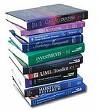
college textbooksConsidering that the digital revolution has dramatically improved access to information pretty much across the board, while also lowering the price of delivering the content to consumers, doesn’t it seem like college textbook publishing has been operating in something of a time warp?

Anyone with kids enrolled in college in recent years (present company included) has likely been confronted by obscenely high bills for textbooks. In fact, stats reported by the U.S. Public Interest Research Group reveal that college students spend an average of ~$900 per year on textbooks. When you consider that some courses don’t even have textbooks, the average cost for those classes that do is even higher than the overall figures would suggest.

What gives here? You can blame a number of factors. High among them are publishers that issue new editions of the same textbook every year or so; never mind the fact that 95%+ of the material is identical to prior editions. And so, perfectly good textbooks that could be used by different students over multiple years are instead relegated to the trash or a box in the basement. Or they languish, unwanted, at the book nook at the local thrift store.

And how about publishing books using expensive and high-margin hardcover binding when soft-cover would be more than adequate? That’s a common publisher ploy.

Finally, let’s not forget the “unholy alliance” between college bookstores and book publishers to try to corner as much of the college textbook business as possible. After all, those textbook sales represent a major contributor to college store profits.

Thankfully, recent developments suggest that real alternatives for students (and their beleaguered parents) have now emerged. Some of these resources are web sites like eBay’s Half.com where students can purchase books for substantially less than the published price. Or Chegg, where students can rent the books and return them following their use. Of course, this is assuming you know the correct ISBN number of the books in question and can be sure you’re ordering the correct edition. Often, that’s not an easy feat at all based on how hard some school stores try to hide the ISBN information from purchasers.

The ISBN information will also serve you in good stead when searching for used textbooks on sites like Amazon where the ISBN numbers are included in book listings.

But beyond simply finding sites to purchase books at a cheaper price, there are new digital alternatives that are also cropping up. CourseSmart provides digital versions of textbooks that are viewable online or can be downloaded. Not only is the cost much less, but students can choose to print out texts chapter by chapter or simply keep their textbooks on their computer, leaving more space in their backpacks for more important things like electronic gadgets, food and bottled water. For now, most of the CourseSmart choices are from major publishers like McGraw-Hill and Wiley, but these offerings are sure to expand in coming years.

Another interesting development is engaging the course instructors themselves in developing custom reading materials. That’s what Flat World Knowledge is doing: It’s an open-source textbook provider that offers online books through a web-based reader, free of charge. Professors can get in on the action by customizing what’s offered to their own specific course by rearranging book chapters and removing or adding text. Not only does it make their course syllabus more user-friendly for students, it’s a labor saver for the instructors as well.

How does Flat World make money doing this? Students can pay for “premium” upgrades such as PDF printing, audio files, and interactive quizzes that are offered along with the free basic text information.

As to which of these new services will turn out to be tomorrow’s standard way of acquiring course instruction materials … who knows? But one thing’s for certain: the cost of buying textbooks won’t be nearly the monetary challenge it’s been for students and parents up til now.