Is Charlie LeDuff’s Book the Final Word on Detroit and its Social Pathologies?

Abandoned Apartment Building in Detroit, MI
Abandoned apartment building in Detroit.

I’ve blogged before about the city of Detroit, surely our country’s “Exhibit A” when it comes to chronicling urban decline.

The saga of Detroit’s recent history is pretty widely known, thanks to a bevy of articles in news magazines, lurid photo essays by prominent “ruin porn” photographers like Camilo José Vergara, and books by author Ze’ev Chafets and others.

Detroit: An American Autopsy, a book by Charlie LeDuffBut the most recent volume, Detroit: An American Autopsy, authored by journalist and reporter Charlie LeDuff and released earlier this year, is perhaps the most impactful of these — which makes it required reading.

That’s because not only is this book the most contemporary one on the subject – with up-to-the-minute references to the city’s most recent governmental follies – but also because the author happens to be a Detroit native.

In my view, Charlie LeDuff is one of the most fascinating reporters in the news industry today, with a background that is hardly common for journalists.

Prior to joining the staff at the Detroit News in 2008, LeDuff’s reporting career included more than a decade at the New York Times, along with a stint as a writer for an Alaskan trade publication. His reporting has taken him all over the country and the world, including the war theater in Iraq.

So LeDuff approaches his topic with all the insights of a seasoned reporter – yet he is not the dispassionate observer. After all, Detroit is his hometown. And throughout the pages of the book, you can distinctly feel the anger, the despair, and the grief the author feels about his city.

Indeed, the saga of Detroit “hits home” in many personal ways for Charlie LeDuff. Consider these points:

  • Witnessing the 1967 race rioting mere blocks from their family home in West Detroit, LeDuff’s parents, like so many other middle-class residents, choose safety for their children, moving out of the city in a matter of days following.
  • LeDuff’s mother’s florist shop, located on Jefferson Boulevard on the east side of town, is broken into multiple times – with a final act of vandalism forcing her to move to a suburban location. (The site of her former shop is now a pile of rubble.)
  • Battling chemical dependency, LeDuff’s only sister is sucked into a life on the streets, becoming a prostitute and dying one evening while leaving a dive bar on the city’s far west side.
  • LeDuff’s three brothers become casualties of Michigan’s worsening business climate, bouncing from one dead-end job to the next – each one a step lower on the economic ladder as meaningful employment for high school-educated workers dries up.
  • LeDuff’s niece, barely 20 years old, dies from a heroin overdose.

The author may have been drawn back to Detroit because of the pull of family. But what he discovers is an urban environment that has a corrosive effect on all who come into contact with it. Although he moves his wife and young daughter to a suburban enclave just outside the city limits, LeDuff finds that no one is immune to its negative effects.

In the pages of his book, LeDuff reports on the unscrupulousness and/or incompetence of entire classes of Detroiters: politicians, government bureaucrats, street hustlers, business leaders (the car company executives come in for particular opprobrium) – and even the artist community.

But the author is also quick to point out that most Detroiters are simply attempting to survive in an urban environment that is so dysfunctional, so stress-inducing, that civil behavior is nearly impossible to practice.

During his time at the Detroit News, Charlie LeDuff would pen many columns exposing the squalor and corruption he witnessed in his city. For that, he received many an irate phone message or e-mail missive lobbed his way, criticizing him for failing to spotlight the “good” attributes of Detroit.

In his book LeDuff has this to say to those people:

“[They] complained that I was focusing on the negative in a city with so much good. What about all the galleries and museums and music …? What about the good things?

It was a fair point. There are plenty of good people in Detroit. Tens of thousands of them … There are lawyers and doctors and auto executives with nice homes and good jobs and community elders trying to make things better, teachers who spend their own money on the classroom, people who mow lawns out of respect for the dead neighbor, parents who raise their children, ministers who help with funeral expenses.

But these things are not supposed to be news. These things are supposed to be normal. And when normal things become the news, the abnormal becomes the norm. And when that happens, you might as well put a fork in it.”

Charlie LeDuff is now a reporter for WJBK, the Fox affiliate TV station in Detroit. He took over for Brad Edwards, another newsman whose hard-hitting-yet-poignant stories of a city on the edge of the abyss have moved many and made both reporters so respected – even loved — by the public.

It’s a journalist’s duty to report the news, of course. But sometimes he or she can attempt to do more. I have no doubt that Charlie LeDuff felt a certain sense of “mission” when he returned to his hometown.

But traces of any significant progress are hard to find, five years on. After a string of corrupt mayors, Detroit elected the affable but ultimately unsuccessful ex-NBA player and businessman Dave Bing to the office.

Today, not only have city operations been turned over to a state-appointed administrator, Mayor Bing announced this past week that he will not be running for reelection. And so it goes …

LeDuff evokes this sense of “no hope left, writ small” as he describes the family scene at the burial of his 20-year-old niece:

“[I] looked up at the old people around the grave and considered the great turmoil of human history that they represented. My mother, her ties to the Native people of the Great Lakes and the drifting whiskered French settlers. My stepfather, whose people emigrated from the port of Danzig, the long-disputed city claimed by both the Germans the Poles, which ignited World War II. My niece’s other grandparents, hill folk who hailed from Appalachia and traced their heritage back to the Lowlands of Scotland and the warrior William Wallace.

People from all corners of the earth who came to Detroit to work in its factories and make it one of the most significant cities of history.

I looked up over the grave and surveyed the heaving sobs of my nieces and the strained faces of my brothers. Jimmy looking for work. Frankie on the verge of losing his house. Billy in the screw factory. Somehow, the city of promise had become a scrap yard of dreams.”

Yet then … LeDuff adds this glimmer of light:

“But fighters do what they do best when they’ve been staggered. They get off their knees and they fight some more.”

The question is, how much longer can Detroit go on fighting?

What’s happening with marketing analytics right now?

MarketingSherpa logoWith so many promotional tactics available to marketers these days, figuring out how to measure the success of each may be just as challenging as choosing which ones to employ to begin with

That’s the reasoning behind the release of research firm MarketingSherpa’s first-ever marketing analytics research report

MarketingSherpa was seeking insights as to how marketers track metrics for a whole host of channels like PPC advertising, SEO initiatives, social media, display advertising, e-mail marketing and content marketing, among others.

2013 Marketing Analytics Benchmark Report from MarketingSherpaThe results compiled by MarketingSherpa are based on research and data collected during 2012 from more than 1,100 marketing professionals across a full range of industries worldwide. 

The research covers a wide variety of marketing analytics tools and practices, along with challenges and budget constraints faced by marketers in the course of carrying out their responsibilities.

The 2013 Marketing Analytics Benchmark Report is big – to the tune of ~325 presentation slides and 425+ data charts plus commentary – and rather costly as well. 

But it may be just the ticket for marketers who are looking for the latest insights on how to tackle measurement in today’s “smorgasbord” marketing landscape.

One set of data points that I find particularly interesting is in identifying the marketing metrics that companies routinely track.  The MarketingSherpa research has found that that e-mail open rates and clickthrough rates continue to be the most prevalent forms of measurement:

  • Open rate:  ~78% routinely track this metric
  • Clickthrough rate:  ~73%

Several other metrics are tracked by about half (or more) of the respondents:

  • Unsubscribe rate:  ~65% routinely track
  • Deliverability rate:  ~55%
  • Conversion rate:  ~54%
  • Clicks-per-link in e-mail:  ~49%
  • List size:  ~48%

On the other hand, several other metrics are being tracked by a distinct minority of companies:

  • ROI:  ~28% routinely track
  • Complaint rate:  ~25%
  • Social sharing rate:  ~21%

On one hand, seeing ROI tracking so far down the list is disappointing … until we remind ourselves that accurate ROI measurement is a function of having good data on 5 or 10 other factors.  If any one of them is off by a significant degree, it affects the veracity of the ROI conclusions.

Yet another example where “talk” is most definitely “cheap.”

But for more insights on measurement factors and other marketing topics, you can order and download the full report and see for yourself.

Experian Takes the Pulse of Hispanics in the United States

Hispanic Market Report from ExperianIt’s no secret that the share of the American population identifying itself as Hispanic or Latino is growing.

The latest evidence of this is a report just released by Experian Marketing Services. It shows that ~16% of Americans age 6 and older fall into this category.

That’s an increase of two percentage points in just six years.

But here’s an even more eyebrow-raising statistic: Among Americans aged 6 to 34, nearly one in four are Hispanic or Latino.

What this means is that the geographic zones of the country usually associated with Hispanic population – California and the Southwest, Central and South Florida, Chicagoland, and New York City/Northern New Jersey – will surely expand to encompass other geographic clusters as well.

Experian’s research also shows that Hispanic households account for approximately 10% of all discretionary spending in the U.S.

But in select metropolitan areas, the share of spending by Hispanic households is greater — sometimes substantially so:

  • San Antonio Metro Area: ~60% Hispanic share of all HH discretionary spending
  • Miami: ~37%
  • Los Angeles: ~33%
  • Houston: ~17%
  • San Francisco: ~14%
  • Chicago: ~12%
  • New York: ~12%
  • Dallas: ~11%

While the country now has many second- and third-generation Hispanic individuals and families, the Experian research finds that even with these consumers, emotional ties to the Spanish language carry over to companies that advertise their brands in Spanish.

Not surprisingly, more than half of Spanish-dominant Hispanics agreed that when they hear a company advertise in Spanish, “it makes me feel like they respect my heritage and want my business.”

But among English-dominant Hispanics, ~30% feel the same way as well. And similar percentages feel a much greater sense of loyalty to such companies.

There’s another interesting takeaway from the Experian research, too. Hispanic consumers tend to be more optimistic about their personal financial situation – and that of America as a whole – than their non-Hispanic counterparts.

This sense of greater optimism has been a common thread among all Experian surveys of this type, where the research has shown a persistent positive margin with Hispanics of about five index points over the rest of the survey sample.

That level of optimism is refreshing to see!

Optify Measures Social Media Activity in the B-to-B Market

Optify logoThis is my fourth and final post about the findings of Optify’s recently published business-to-business online marketing analysis.  The focus of this post is on what Optify found about social media usage.  (You can read my other posts on B-to-B web traffic and advertising here, here and here.)

Optify, which is a developer of digital marketing software for B-to-B marketing professionals, analyzes web behaviors and releases a report each year.  This annual “benchmark” report is particularly important in that the findings are reported from actual web activity, not from surveys.

The key takeaway findings on the social media front are these:

  • Despite all of the continuing hype, social media remains a very small fraction of traffic and leads to B-to-B websites.  In fact, social media has contributed to less than 5% of B-to-B web traffic and leads.
  • Facebook drives the more than half of the social media-generated web traffic to B-to-B websites, versus about one-third from Twitter and most of the remaining traffic from LinkedIn.
  • Visitors who arrive at B-to-B sites from LinkedIn are more likely to view more pages per visit (~2.5 page views on average) than visitors who come from Facebook (~1.9 page views) or Twitter (~1.5 page views).
  • Despite generating more traffic Facebook drives fewer actual B-to-B leads than either Twitter or LinkedIn.
  • At this time, Twitter appears to be the most lucrative social media source for leads, with a higher-than-average conversion rate of ~2.1% (defined as a visitor taking an action such as submitting a form).

Because of this last data point, Optify posits that companies should not shy away from considering social media‘s potential as a source for leads as opposed to being just an  awareness tool.

I’m sure Optify’s figures don’t lie.  But I for one remain unconvinced about social media’s lead generation potential in the B-to-B realm.

The Bad News Just Keeps Coming at JCPenney

JCP logo (JCPenney)
The name change from JCPenney to JCP was just one of many miscues made over the past 18 months during the tenure of CEO Ron Johnson — one of the most spectacular failures in recent retailing history.

The folks at JCPenney (JCP) just can’t seem to catch a break.

It turns out that the resignation of the company’s CEO in the wake of disastrous sales and profitability results caused by an ill-fated change in retail strategy was just the biggest clanger in a string of bad news.

Not only did the company’s sales plunge by $4.5 billion to around $13 billion, employment fell to only 116,000 workers — a huge drop from more than150,000 just a year earlier.

A centerpiece of the failed CEO’s retail strategy — opening boutique “stores within a store” — has been under constant fire, not least in the courts, where Macy’s has sued to prevent Martha Stewart-branded merchandise from being sold at JCPenney (citing a pre-existing exclusive sales agreement).

But there’s more.

We also have a report from STELLAService, an independent research company that gathers information on how well the nation’s Top 25 retailers are doing when it comes to delivering merchandise ordered online.

STELLAService has found that Staples, Zappos and Office Depot deliver merchandise the fastest.

And it’s fast all right:  these retailers achieve an average delivery time of one day.

On the other hand, who scored dead last? JCPenney. Its online division was the slowest of the 25 retailers, clocking in at an average delivery time of nine days.

That’s pretty miserable.

Is JCPenney filling the role that Montgomery Wards once played in U.S. retailing? Squeezed by big box discount stores on the one hand, and on the other by department store brands like Macys and Nordstroms the public considers far more exciting, JCPenney is trapped by its its own brand history.

No amount of “polishing the apple” in the mode of Apple’s fabulously successful retail branding can change the simple fact that the JCPenney brand name speaks to an older, middle-class demographic and psychographic audience.

Just-sacked CEO Ron Johnson has now experienced this brand reality first-hand.

One wonders how he could have missed it in the first place. Did his prior positions directing retail strategy at “go-go” brands Apple and Target blind him to the facts on the ground?

Can anyone who rubs elbows with real middle-class shoppers — even tangentially — seriously have thought that dropping store discount coupons would do anything other than turn off loyal customers?

There’s a reason coupon flyers continue to be so popular in the Sunday newspapers … and it has everything to do with millions upon millions of middle class and older consumers.

But unfortunately, JCPenney’s woes go much deeper than mere brand identity. Things appear to be seriously amiss on the operational side as well.

Any top retailer that can’t manage to deliver merchandise faster than an average of nine days deserves to have consumers snap their pocketbooks shut in response.

The next 18 months will tell us a good deal about where JCPenney is headed. Will the retailer end up regaining its brand strength … or will it die a slow death and ultimately be swept into the dustbin of retail history?

To me, the latter scenario seems more likely.  What makes it a particular shame is that the company has made so many unforced errors along the way.  Its own people, strategies and tactics have contributed as much as anything to its current plight.

HR managers’ views of new college grad hires: Curmudgeonly … or canaries in the coal mine?

Lack of professionalism among new hiresAs those of us in the world of business begin to add years (or decades) to our tenure, it becomes easier than ever to look at the younger crop of workers coming onstream and see traits that don’t align with our worldview about what is acceptable, “SFW” behavior.

Perhaps we’re too set in our ways. Maybe we’re not being flexible enough or making a sufficient effort to keep an open mind about proper office professionalism and etiquette.

But maybe we’re not offbase after all:  A new survey of HR professionals suggests that others have also noticed — and they’re not very forgiving, either.

In fact, this survey of ~400 human resources managers, which was conducted by the Center for Professional Excellence at York College, found that opinions of recent college graduates in the workforce have grown more negative over the past five years.  (The survey is conducted annually.)

When asked about their experiences in recruiting and hiring recent college graduates, these HR managers were pretty unsparing in their criticism. Here are some of the opinions the survey uncovered:

  • More than one-third of HR respondents felt that the level of professionalism among new college-educated employees has worsened over the past five years.
  • Nearly half believe that the work ethic of new employees is worse today than before.
  • More than half of the respondents feel that new workers come into the workforce with an unrealistic air of entitlement.

What are some of the specific areas where HR managers see new hires failing to measure up? These were the most prevalent mentions in the York survey:

  • Appropriate appearance and dress
  • Punctuality and workplace attendance
  • Attentiveness
  • Staying on-task through to completion of assignments
  • Honesty

And that’s not all.

The human resources professionals in this survey reported that younger employees “appear arrogant” during the hiring process and once they come on the job.

Moreover, these HR professionals contend that new employees aren’t taking proper cues from older, more established workers in the office, but instead from their peers and friends.

A manifestation of this is the predilection to text co-workers rather than to communicate via e-mail messages, or through personal conversations and interfaces.

The basic problem with the attitudes of new company hires was pointed out by Deborah Ricker, director of the Center for Professional Excellence: “Acceptable behavior among peers is not necessarily acceptable among coworkers and superiors.”

Amen to that.

[Click here if you’re interested in downloading a full summary of the 2013 Professionalism in the Workplace survey results.]

Most of us can probably think of one or two examples of employees who personify many of the issues brought up by the HR managers in the York survey.

One example that comes to my mind from our own office’s experience was a young worker who decided she needed to take short naps during her lunch periods.

Nothing really wrong with that, except … she did so by lying down on the floor next to her desk — which was directly behind another worker’s cubicle. Imagine trying to do your work while having someone snoozing (snoring) at your feet!

If you have similar anecdotes about some of the younger hires in your office, feel free to leave a comment. It’ll be good for a chuckle or two – even if there’s an underlying context that’s way sober.

Remembering Roy Brown, designer of the star-crossed Edsel, one of the biggest flops in automotive history.

Roy Brown, designer of the Ford Edsel
Roy Brown, Jr., designer of the Edsel.

I remember my father, who had a 45+ year career in industrial/commercial sales and marketing, having an interesting artifact hanging on the wall of his office: a hubcap from a 1958 Ford Edsel sedan.

It was an interesting prop because it represents one of the biggest marketing flops in American automotive history … and underscores what can happen when product development efforts ignore what market research is telling them.

Recently, Roy Brown, Jr., one of the key players in the Edsel fiasco, passed away at the age of 96. As the lead designer on the product, Mr. Brown bore the brunt of blame for the “glorious failure” that was the Edsel.

Of course, that rap isn’t entirely fair; introducing a new motor car is a team effort that involves a host of people. And in the case of the Edsel, the design of the vehicle was only one of several key failures.

Consider just how many ways the Edsel ran afoul of good product development practices:

  • The car was developed based on out-of-date consumer research. The late 1950s was the beginning of changing consumer tastes in car designs:  moving away from exuberant fins and outlandish colors and towards a more refined style. By the time the Edsel became available at dealerships, consumer tastes had shifted and the country was in a recession.
  • The design of the car was controversial. Its most memorable design feature was its “horse collar” grille, unfortunately referred to by some as a toilet seat. It was different from any other car on the market — but the notoriety wasn’t positive. Some wags joked that the car’s front resemble “an Oldsmobile sucking a lemon,” while others were even less charitable, noting that the grille design was suggestive of a giant vulva.
  • Despite undertaking a highly publicized naming effort for the vehicle that ultimately reached more than 6,000 possibilities being considered, Ford rejected all of these suggestions and chose to name the car after the lone son of company’s founder. The “Edsel” – a clunker of a car name if ever there was one – did nothing to endear the buying public to the brand, seeming more like corporate nepotism taken to the extreme.

Ford predicted great things for the Edsel. The company launched a glitzy ad campaign for the automobile in 1957, touting it as a revolutionary “car of the future” and projecting first-year unit sales of more than 200,000 vehicles.

Instead, when it debuted in Ford showrooms in 1958 carrying a list price between $2,300 and $3,800, consumers were distinctly underwhelmed.

But even with disastrous first-year sales, Ford limped along with the Edsel until finally killing the brand in 1960. In all, only ~100,000 Edsels had been sold over three model years.

The total cost of the Edsel boondoggle to Ford was ~$350 million, which translates into nearly $2.8 billion in today’s dollars.

Roy Brown was the man held most responsible for the failure of the Edsel. But ever the optimist, the designer didn’t let this become the end of his career. In fact, Brown bounced back to work on successful new introductions such as the Ford Falcon and Mercury Comet. These turned out to be everything the Edsel wasn’t.

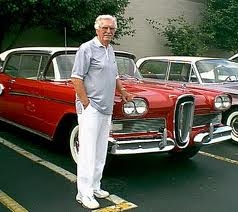
Mr. Brown didn’t disown his star-crossed child, either. In fact, he drove his own Edsel car (a stunning fire-engine red model) nearly to the end of his life — no doubt happy to know that in later years, mint-condition and restored Edsel cars were selling for upwards of $100,000 apiece. And there are highly active Edsel car clubs with members located throughout the United States and Canada.

So, maybe it’s not such a bad legacy in the end.

BlackBerry in 2013 … like Studebaker in 1965?

1965 Studebaker Commander station wagon
The end of the road: The 1965 Studebaker Commander station wagon.

BlackBerry has announced that it will finally introduce its new Z10 touchscreen smartphone model in the United States next week, in conjunction with its AT&T program.

That’s about a month after sales of the Z10 began in the United Kingdom, Canada and several other countries.

Does this signify a comeback of sorts for BlackBerry?

If it does, it will be a dramatic reversal of fortune, as the company has been on a steady downward trajectory ever since the release of the first Apple iPhone in 2007.

But speaking as the owner of a BlackBerry device, I have to admit that the company has seemed to be hopefully behind the curve for quite a few years now. And this latest, last-ditch effort is coming up against stiff competition, such as Samsung’s new Galaxy smartphone which is debuting at the very same time.

BlackBerry’s recently installed CEO, Thorsten Heins, has stated publicly that the company has to regain some of its market share in the U.S. in order to be successful.

But the news on this front doesn’t look promising at all, as corporate accounts — long the company’s bread-and-butter busines– appear to be falling away.

In February, The Home Depot reported that it was replacing all of its company-issued BlackBerry devices with iPhones.

And just last week, Yahoo announced that it will be phasing out its app for BlackBerry devices as of April 1st (yep, you got that right: April Fool’s Day).

Also, as of last September Yahoo no longer offers BlackBerry smartphone options to its own employees – just as with The Home Depot.

Rather than endorsements, these seem more like ringing indictments.

For those of us who love our BlackBerry keyboards, the company is promising that a keyboard version of the new smartphone (the Q10) will be available in the United States by this summer.

The question is, will it be too late by then?

We’ll know that answer soon.

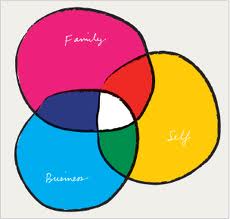
The (Mostly) Myth of the Multi-Generational Family Business

Multi-generational family businessesThe idea of the family enterprise is practically an article of faith when it comes to American business.

But how much of a reality is it? And do family businesses generally survive from one generation to the next?

To begin with, let’s make clear that there are many family-owned businesses in the United States.  In fact, consulting organization Family Enterprise USA estimates the figure at around 5.5 million entities.

But the average life span of a family business is fewer than 25 years, meaning that only a distinct minority of them remain in the family over time.

The stats are stark. Here’s how they break down by generations:

  • Business passed to the 2nd generation: ~40% of family owned entities
  • Business passed to the 3rd generation: ~13%
  • Business passed to the 4th generation: ~3%

When asked for their opinion, about half of the owners of family businesses stated that they would like to see the business stay in the family when the next generation comes along.

And for larger family businesses (those that employ 20 or more workers), nearly three-fourths would like this to happen.

But wishes and expectations aren’t the same … because only ~23% of these same respondents actually think that a transition to the next generation of family members is “likely” to happen.

At my company, we have some clients – perhaps 15% of our customer base — that are into their 2nd or 3rd generation as family-owned entities. But in my view, it’s highly doubtful that the next generation of family members will end up in charge at most of them.

Titanic deck chairs – USPS edition: The Postal Service is getting into the clothing business.

New USPS apparel line "Rain Heat & Snow"The U.S. Postal Service, hemorrhaging red ink all over the place, has finally decided to jettison Saturday mail delivery.

This decision was taken after years of (very public) hand-wringing and amidst dire predictions of public outrage if the trigger was actually pulled on eliminating Saturday delivery.

Yet, once the decision was finally announced, public response was … near silence. It was a total shrug.

[Politicians, take note: This may also turn out to be the public’s reaction to the sequester cuts kicking in — breathless predictions to the contrary aside.]

Of course, we all know the USPS hasn’t been able to catch a break in recent times. As mail volumes continue to slump, the postal service finds itself attempting to spread its fixed and operating costs over a steadily smaller share of mail volume.

According to the USPS’s own figures, there’s been a ~33% decline in catalogs mailed in just the past four years.  First class mailed hasn’t fared much better, decreasing by one-fourth over the past decade.

At worst, the situation is a recipe for complete failure … at best, the USPS will just continue to lurch from one mini-crisis to another. 

So what to do with such dire prospects staring you in the face?

Why not start a clothing line!

That is correct: The USPS has announced plans to launch a new line of apparel and accessory items. It is partnering with Cleveland-based apparel company Wahconah Group to launch the product line, which will be sold under the brand moniker Rain Heat & Snow.

Forget trying to figure out mail delivery practices that will work in the 21st Century. According to the USPS’s corporate licensing manager, Steven Mills, “This agreement will put the Postal Service on the cutting edge of functional fashion!”

By “cutting edge,” Mills is apparently referring to the fact that the new clothing line will incorporate wearable electronics technology to make the items “smart.”

Isaac Crawford, CEO of Wahconah, reports that “the products will build on the rich American history of this iconic brand, creating specialized apparel for consumers, at affordable prices, delivering something new and exciting that retailers can offer their customers.”

Is anyone jumping up and down with excitement yet?

Tellingly, none of the Rain Heat & Snow apparel will be available at post office locations — only at department stores and apparel shops.

I guess it would be rather strange to encounter mannequins and display racks amongst the shipping containers, change-of-address forms and passport applications at your local post office branch.

As much as many people would like this new venture to be a success, I can’t visualize this endeavor causing anything more than a minor blip on an otherwise steady downward trajectory for the postal service.

So, is it back to the drawing board?