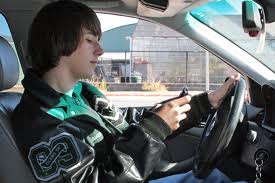
Air, Water, Food … Internet

Fundamental importance of the InternetIs the Internet today as important to people as the very air they breathe? That’s what the results of a survey of ~2,800 college students and young professionals seem to be telling us.

Market research firm InsightExpress fielded the survey for Cisco Systems, a consumer electronics, networking, voice and communications technology/services company.

The research effort collected responses from the USA and 13 other countries in the developed world plus emerging powerhouse economies (Australia, Canada, the U.K., France, Germany, Italy, Spain, Russia, India, China, Japan, Brazil and Mexico).

What did the survey discover? More than half of the respondents said they couldn’t live without the Internet – it’s that vital to their lives.

In fact, for many the Internet is more important than dating, partying, and wheels.

Intriguing findings from the survey include:

 ~55% of college students and ~62% of young professionals believe that the Internet is such an integral part of their lives, they could not live without it.

 If forced to make a choice between access to the Internet and access to a car, ~64% of the respondents would choose having the Internet connection.

 “Virtual” relationships are gaining on face-to-face interaction. More than one quarter of the college respondents reported that staying updated on Facebook is more important to them than partying, dating, listening to music, or visiting with friends.

 Smartphones are on the cusp of eclipsing desktop computers as the most prevalent means of connecting with this segment of society … which then makes it not much of a stretch to learn that ~60% of these same young professionals feel that “having an office” is unnecessary for being competitive.

And here’s another thing: These respondents are used to constant interruptions. ~80% report being interrupted by instant messaging and social media updates at least once per hour … and over 30% reported having five or more such interruptions hourly.

To me, this sounds more like disruption than interruption.

Marie Hattar, Cisco Systems’ marketing vice president, concludes that the survey findings “should make businesses re-examine how they need to evolve in order to attract talent and shape their business models.”

She also noted that “CIOs need to plan and scale their networks now to address the security and mobility demands that the next generation workforce will put on their infrastructure … in conjunction with a proper assessment of corporate policies.”

As the survey makes clear, at the rate things are evolving, the office environment will look and feel nothing like it did just a few short years ago. And it may be the biggest single transformation in the business world we’ve yet seen.

Social Couponing and “Daily Deal” Sites: Storm Clouds on a Blue Horizon?

Daily deals and other online couponsI’ve blogged in the past about the risks and rewards of social couponing. Recently, we’ve been getting some conflicting reports about the online couponing phenomenon.

On the positive side, according to a new market forecast by local media expert and advertising firm BIA/Kelsey, American consumer spending on coupon “deals” – including daily deals, instant deals and flash sales – is expected to grow at a healthy compound annual growth rate of ~37% between 2010 to 2015.

That would mean that Americans will be spending ~$4.2 billion in this segment by 2015. And that’s an increase of ~$300 million over BIA/Kelsey’s earlier 2015 forecast, released by them just this past March.

The BIA report also makes the following observations and prognostications about the segment:

Groupon and LivingSocial – the leading players in this market – have expanded rapidly. With low barriers to entry, more participants have entered as well, including vertical sites and local media companies.

 There’s been substantial growth in the number of registered users who are active in buying coupons.

 More specialization in deal sites – by market segment and by geography – is leading to more activity by registered users.

 An increase in both the number of transactions and the average price per transaction will occur.

Counterbalancing this rosy report is the experience of market leader Groupon in its attempts to take itself public. That endeavor has been accompanied by the release of financial figures that show company performance well below expectations.

And the challenges go well beyond Groupon: The Wall Street Journal’s Shayndi Raice is reporting that a shakeout has already begun among the ~530 daily deal sites that have been formed in recent times. So far in 2011, nearly one-third have shut down or been sold (~170 of them), according to daily deal site aggregator Yipit. Even sites like Yelp and Facebook have pulled back from their daily deal coupon activities.

According to reporter Raice, at the root of the challenge is the cost of acquiring registered users for the couponing services. At the outset, the novelty of the segment and the resulting PR buzz made it relatively easy to attract “early adopter” consumers and participating merchants, so only a relatively modest sales promotion budget was needed.

But, Raice notes, “It now takes more spending to get to remaining consumers and to cut through the noise created by so many competitors.”

Groupon’s own statistics from regulatory filings in connection with its bid to go public illustrate this dramatically. Here’s how the average cost to acquire a new custom jumped over the span of just one year:

 March 2010: $7.99 average acquisition cost-per-customer
 June 2010: $20.93
 March 2011: $30.74

Groupon was forced to spend nearly $380 million in marketing initiatives during the first half of 2011, compared to only around $35 million a year earlier. In the heightened competitive environment, not only must companies vie for new consumers, they need to sell new merchants on the program as well.

Those marketing and selling requirements translate into nearly 1,000 Groupon sales employees in North America alone, while second-ranked LivingSocial has ~700 … each of whom earns an average $100,000 in salary plus commission.

Considering these daunting dollar figures, it’s hardly a surprise that there’s a shakeout happening, with the less-heeled participants having to exit the market or sell themselves off.

In hindsight, it appears that many entrepreneurs and investors may have been tempted by the deceptively low barriers to entry into the “online deals” coupon game – basically a website … a few merchants offering coupon discounts … and some e-mail offers to consumers. But the real costs come with trying to scale operations so that the individual coupon offers result in sufficient income and fees that will offset the relatively labor-intensive operating model.

Obviously, many have yet to find the sweet spot in this business.

Playing “Gotcha Games” is Getting More PR Firms (and their Clients) in Trouble

Bad PR, stupid PRIt seems that the rise of social media, wherein anyone can have their say on just about any issue, has caused some PR companies to miscalculate in the publicity campaigns they’ve come up with for clients.

It’s always been a challenge to conjure up fresh ways to gain audience attention. And today, with so many consumers interacting with brands – and with each other – in the online realm, it’s become tougher than ever to dream up a PR ploy that cuts through the clutter to capture the interest and engagement of target audiences.

The best of these new PR efforts – Virgin Mobile’s “Sparah” campaign, for example – play off of the new communications techniques of the day, exploiting them for their own ends.

But for every one of those, there are more PR initiatives that get it wrong, such as the recent Con Agra (and Ketchum) flameout with bloggers that I wrote about recently.

Hosting a dinner featuring Marie Callender’s frozen dinner fare at a faux New York City restaurant may have seemed like an idea that was fresh, hip and irreverent – and very much in the realm of publicity that could go viral. But duping and dissing bloggers was hardly the recipe for getting positive results.

And now we have another PR snafu that’s making news. A woman who was targeted by Toyota in a stalker-themed publicity stunt is now suing the company for mental distress.

In a campaign that seemed to Toyota (and its communications agency Saatchi & Saatchi) so “spot on” in the brave new world of interactivity, a woman named Amber Duick began receiving highly personal e-mails from a total stranger. “Sebastian Bowler” appeared to be a 25-year semi-alcoholic soccer fanatic from England – at least it seemed so based on a bogus MySpace page forwarded along to Duick.

“Sebastian” also e-mailed Duick messages that he was on a cross-country tour of America and would be arriving in her community in a few days. Next, he wrote that he ran into trouble while staying at a hotel in Duick’s town, which was followed up by yet another e-mail – this time from the “manager’ of the hotel — with an “invoice” attached for replacing a hotel TV that “Sebastian” was said to have “destroyed.”

Needless to say, Ms. Duick was highly distraught over the disturbing e-mails … before she received a message directing her to a video that revealed that she had been “punked.” The whole episode was “nothing more” than a prank – part of a Toyota Matrix car advertising campaign that was aimed at young male consumers.

Understandably, Duick thought her treatment was far more than just a “harmless prank.”

And how had Duick been targeted in the first place? It turns out someone had signed her up for the campaign at YourOtherYou.com, a website set up for the prank because, according to Saatchi and Saatchi, the target younger male demographic “loves to punk their friends.” (The website has long since been taken offline, for reasons that will become obvious as you read this blog post further.)

The campaign itself was elaborate, including advertising in print, online and on billboards to drive people to the website where people could enter the name and details of someone they wished to “punk.” Once targeted, that person would be besieged with text messages, phone calls, e-mails and videos over the span of a week.

The aim was to spook friends by making them think a stranger possessed personal information about them (such as their home address and phone number) … and that the stranger was on the way to visit.

Lending credibility to the elaborate hoax was establishing a fake online presence for the stranger – everything from listings appearing on search engine results pages to lifelike but bogus MySpace and Facebook pages.

“Even when you get several stages in, it’s still looking pretty real,” Saatchi & Saatchi’s creative director Alex Flint stated before his campaign took a turn for the worse. “I think even the most cynical, anti-advertising guy will appreciate the depth and length to which we’ve gone.”

The judge in the pretrial proceedings evidently thought so as well – so much so, he’s allowing the case to go forward.

And Ms. Duick isn’t going after chicken feed, either; she’s suing Toyota, Saatchi & Saatchi and ~50 people associated with the campaign for a total of $10 million, alleging infliction of emotional distress, unfair and deceptive trade practices, along with negligent misrepresentation.

When reading the judge’s reasoning for allowing the lawsuit to move forward, one is struck by the fact that, despite the elaborate efforts at realism and to cover all the bases in the campaign, the publicity folks got a few things horribly wrong.

In fact, the court, citing “fraud in the inception,” noted that Toyota had enticed Duick to click on an arbitration agreement under false pretenses. According to the lawsuit, after a friend of Duick’s signed her up to participate in the campaign without her knowledge, Duick received an e-mail with a link to a website where she was invited to participate in a personality evaluation.

Instead, that document turned out to be a release form and arbitration agreement. Duick clicked on the agreement, which made only vague references to things like “interactive experience” and “digital experience.” As a result, instead of signing up for a personality test, she proceeded to receive the strange e-mails from “Sebastian Bowler,” leading the court to state that Toyota, Saatchi & Saatchi and the individual defendants “misrepresented and concealed … the true nature of the conduct to which Duick was to be subjected.”

In hindsight, it’s obvious that the negative press surrounding this ill-fated endeavor was the last thing Toyota needs. Instead of an “oh-so clever” publicity campaign for its Matrix car, the company is left looking more than just a little foolish.

What’s the bottom line on this sorry tale? How about this: PR firms and their clients need to approach publicity campaigns in today’s interactive age with great care … and to err on the side of prudence.

True, much of what’s happening with interactivity and engagement is exciting, fresh and bold. But when major brands start playing the same kind of interactive games (in a big way) that Joe and Jane Consumer might be doing in their own little social worlds, trouble can’t be far behind.

Saatchi & Saatchi and Ketchum aren’t hayseed PR outfits. The fact that both of them come out looking pretty naïve (stupid?) as a result of the programs they devised, says legions about the risks of playing “gotcha” games in today’s interactive climate, no matter how interesting and entertaining they might seem.

Gallup Sees Deterioration in Americans’ Perceptions of Major Industry Sectors

Decline in perceptions of U.S. industriesThe past decade hasn’t been kind to the image of most industries in the United States. And given the economic and sociopolitical upheavals experienced by nearly every strata of society, it’s not hard to understand why.

This isn’t just conjecture, either. For years, the Gallup polling organization has surveyed Americans’ opinions of 25 major industry sectors every August to determine if their overall opinion of each of them is positive, neutral or negative.

The results of the 2011 survey of 1,008 respondents (age 18 and over) have now been released, and they show that a majority of Americans view just five of the 25 industries in a positive light:

 Computer industry: ~72% rate positive
 Restaurant industry: ~61%
 Farming and agriculture: ~57%
 The Internet: ~56%
 Grocery industry: ~52%

Interestingly, when comparing these results to ten years ago (August 2001), just two of these five sectors have improved their positive ratings: the Internet and the computer industry.

At the other end of the scale, seven of the 25 industry sectors scored 30% or lower in positive ratings:

 Banking industry: ~30% rate positive
 Airline industry: ~29%
 Legal field: ~29%
 Healthcare industry: ~27%
 Real estate industry: ~23%
 Oil and gas industry: ~20%
 Federal government: ~17%

The remaining 13 industries in Gallup’s survey came in between 30% and 50% on the scale – hardly stellar ratings, but not in the basement like the hapless sectors listed above.

Over the past decade, Gallup has observed that a clear majority of the industries – 19 of the 25 – have seen declines in their positive scores.

The most precipitous ones include the usual suspects, led by – you guessed it – the federal government:

 Federal government: Down 24 percentage points since 2001
 Real estate industry: Down 23 points
 Banking: Down 17 points
 Educational field: Down 15 points
 Accounting industry: Down 11 points
 Healthcare industry: Down 10 points

It’s little wonder why we’re seeing these six industries striking out so badly with the American public; they’re precisely the ones associated most with various political or economic problems.

By contrast, the positive views about the computer industry and the Internet reflect the continuing innovation and financial success of many businesses in this sector.

This can’t be lost on consumers – many of whom have directly benefited through the steady stream of new products and services introduced by companies in these sectors over the past decade.

And as for agriculture, groceries and restaurants … well, we all have to eat, no matter what the economic situation! Besides, there’s been little controversy seen in these categories, and they’re mature sectors have been smooth-running in this country for years.

One hopes the next decade will witness a reversal in the downward trajectory of the public’s perceptions of American industries. In at least a few of the cases, it’s hard to imagine how they could sink any lower!

Personalized e-mail campaigns? Nothing personal … but it’s not that important.

e-mail personalizationIt’s been a nagging question about direct marketing for years now: To what degree does personalizing a mass marketing program improve audience engagement and action?

Back in the old days, personalization was difficult to pull off, because the limitations of printing meant that the way people’s names were inserted into letters looked awkward and even jarring – different typeface, different ink concentration, etc.

Instead of creating a positive impact that suggested a personal relationship with the recipient, the effect was often just the opposite: the ill-fitting interpolations screaming “mass mailer.”

Today, with so many marketers targeting consumers electronically versus via postal mail, personalization has become a common technique used for the same purpose: to draw the reader’s attention by making the e-communiqué “unique” to him or her. Plus, it’s much easier to accomplish.

But how is this working out in the digital age? The latest e-mail marketing metrics report from email marketing and newsletter services provider MailerMailer, LLC, issued in July 2011, uses data compiled from more than 977 million opt-in e-mail newsletters in a sampling of over 1,600 customers. It found that adding the recipient’s first or last name to the subject line of an e-mail often generates negative, not positive results.

On the other hand, personalization within the message portion of the e-mail makes it a tad more likely to lead the recipient to interact with the message.

Here are the open rates MailerMailer found based on the degree of personalization:

 Subject line personalized: 4.1% open rate
 Both subject line and message personalized: 4.6% open rate
 Message personalized: 12.6% open rate
 No personalization at all: 11.4% open rate

[MailerMailer claims that personalized subject lines perform less favorably because this has been such a common tactic used by spammers in recent years. I claims the method has been so overused, recipients now associate all such e-mails as spam.]

And what about clickthrough rates — the more important metric? MailerMailer’s findings track neatly with the open rate trends, as follows:

 Subject line personalized: 0.8% clickthrough rate
 Both subject line and message personalized: 1.1% clickthrough rate
 Message personalized: 3.0% clickthrough rate
 No personalization at all: 3.0% clickthrough rate

So another thing the MailerMailer report is telling us is that the effort to personalize e-mails may not be worth it in the end. It’s true that a slightly higher open rate may occur with personalized message content … but the clickthrough rate, which is the more important metric, doesn’t budge at all with personalization versus without it.

So it would seem that personalizing e-mails isn’t something that’s going to “make or break” your direct marketing campaign’s success rate. Better to focus on the other classic success factors: the message, the offer, and the target recipients list. You know … just like always.

Fraud and Abuse in Government Programs: It’s Really Not About Politics

Medicare and Medicaid Fraud and Abuse ... It's PervasiveMalcolm Sparrow, esteemed author and professor at Harvard University’s Kennedy School of Government, has been alerting us recently about the problems with various government programs like Medicare and Medicaid.

He’s painting a pretty bleak picture, actually. And the issues have little or nothing to do with ideology, but of competence.

Dr. Sparrow’s main argument is that the seemingly endless stream of horror stories about Medicare and Medicaid scams proves that many people are using these programs as “personal tills.” The number of cases that have come to light in recent years runs into the hundreds and involve millions of dollars – and there are likely many more incidences that have not ever been uncovered.

Seeking to find common threads between the many cases of fraud and abuse, Dr. Sparrow has concluded that the system’s vulnerability comes not from how it is designed, but because of the payment mechanisms the federal government has chosen to utilize.

It turns out that most Medicare and Medicaid funds are paid out automatically in response to electronic claims received from a slew of healthcare providers. Most of these claims are processed using rules-based systems – with no human interaction at all.

What this means is that fraudsters need only learn the rules, and then proceed to submit hundreds or thousands of bogus claims electronically – with little risk of detection.

And here’s a real kicker: If someone makes a mistake in their submission, the government returns a computer-generated message explaining the error(s) – thereby enabling the fraudulent activity to continue!

In short, those who are gaming the system find it nearly effortless to receive payments for fabricated claims … all because the systems check for billing “correctness” but not for “truthfulness.”

Dr. Sparrow’s conclusion: “The simple rule for getting rich quick through health care fraud is [to] bill your lies correctly.”

The thing that makes this state of affairs doubly distressing is that the government has been aware of the propensity for abuse for years now.

Dr. Sparrow quotes one Medicaid fraud investigator back in 1995 warning about the fraud risk of electronic claims processing: “Thieves get to steal megabucks at the speed of light, and we get to chase after them in a horse and buggy. No rational businessman would ever invent a system like this.”

But did this realization make a difference in “business as usual”? Nope.

Why? Dr. Sparrow believes it’s because the processing efficiencies of such payment systems are so obvious and tangible. But the problem with such an approach is that it becomes a sitting duck for fraud. Dr. Sparrow sets up the scenario like this:

“The recipe for disaster is now clear. Whatever the nature of the payments … pay them electronically. Set up the system with honest claimants in mind. Allow claims to be submitted electronically. Set the administrative budget low enough that the bulk of the claims have to be paid without verification.”

He then proceeds to conjecture how these programs make it so far down the road with so little in the way of critical evaluation:

“To make things really dangerous, add a degree of urgency to the public purpose … Urgency tends to trump caution and raises policymakers’ perception of the ‘business-acceptable risk.’ And if it’s a really ‘valuable’ program, supporters and officials will be loath to hear any criticism of it, and to discount reports of fraud.”

After painting such a bleak picture, Dr. Sparrow does not leave us without a path forward to a possible solution. He notes that fixing vulnerabilities in Medicare, Medicaid and other federal programs would offer good promise for long-term deficit reduction – an action that both political parties could support. But there needs to be the political will to make major structural and procedural reforms to the programs in order to meet the objective.

Call me a curmudgeon, but I’m a bit less optimistic than Dr. Sparrow; much as I’d love to believe that these changes could happen with everyone on board with the program, I’m not holding my breath waiting for them to happen anytime soon.

Where in the World do Americans Wish to Vacation?

World of travel: Americans see Italy as their #1 overseas vacation destination.Have you ever wondered where Americans would wish to vacation overseas if they had the opportunity and the financial wherewithal? It’s a topic that that Harris Interactive surveys every year.

The results are now in for the 2011 survey, which queried nearly 2,200 adults online in July … and for a second year in a row, Italy comes in first place in popularity.

Countries in Europe and Oceania remain the most popular vacation countries for Americans, a finding Harris has observed in annual surveys ever since 2008. This year, the Top 10 countries chosen by respondents for vacation destination are as follows:

#1: Italy
#2: Great Britain
#3: Australia
#4: Ireland
#5: France
#6: Greece
#7: Spain
#8: Germany
#9: Japan
#10: Canada

Since 2008, the biggest shift in popularity has been in Spain (up three notches) and in Japan (down two spots). What’s causing this? One too many natural disasters in Japan? … The increased popularity of the Costa del Sol?

While Italy is the top pick in 2011 for both men and women, there are some differences when looking at the next-ranked countries:

 For men, the #2 choice is Australia, followed by Great Britain.

 For women, the #2 choice is Great Britain, and Ireland is #3.

 Baby boomers as well as respondents over the age of 65 choose Great Britain over Italy as the top vacation destination.

In viewing the 2011 results, I was somewhat surprised by the lack of any Caribbean countries on the list.

If Harris continues to conduct this survey annually, it will be interesting to see how the results change over time. I’d predict that Brazil and Argentina may start making the Top Ten list before too long. (Speaking for myself, those two would be my picks a lot sooner than some of the other countries listed above.)

More survey stats and a history of results can be found here.

What’s the Very Latest with Consumers and How They’re Using QR Codes?

Scanning a QR code with a smartphoneI’ve written before about QR (quick response) codes and how they’re viewed as a marketer’s dream.

What can be better than the ability for consumers to point-and-click their smartphones for instant access to product details, a coupon or other information … without them having to type in a web address?

But it’s been observed that U.S. consumers are a bit more reticent to use them compared to their Japanese counterparts (where QR codes got their start).

And a July 2011 survey of ~500 adult social media users conducted by research firm Lab42 (Chicago, IL) found that nearly 60% of the respondents were not familiar with QR codes. Furthermore, only ~13% of the respondents were able to use a QR code when prompted to do so in the research, suggesting that many of those saying they were familiar with QR codes may never have actually used them — or maybe only experimented with them once or twice.

But now that some time has elapsed since QR codes have made their debut in America, we have access to field research to help us understand how U.S. consumers are actually interacting with them.

The data comes in the form of a new MobiLens study by comScore, which has found that ~14 million mobile users in the U.S. scanned a QR code on their “smart” mobile device at least once during June 2011.

That figure represents ~6% of the total mobile audience over the age of 13. Not a big percentage, but considering that smartphones still represent only a minority of all mobile phones in circulation (just shy of 40%), it shows that use of QR codes is happening to some degree.

And what are the demographic characteristics of QR code users? According to comScore, they’re more likely to be male (~61% of the code scanning audience) … they definitely skew younger (~53% are between the ages of 18 and 34) … and they’re more likely to be upper-income folks (~36% have household incomes of $100,000+).

What are the most popular sources of scanned QR codes? The study shows that this skews more toward “traditional” media: magazines and newspapers:

 Printed magazines or newspapers: ~49% of the QR code audience
 Product packaging: ~35%
 Websites on a PC: ~27%
 Posters, flyers or kiosks: ~24%
 Business cards or sales brochures: ~13%
 Storefronts: ~13%
 Television: ~12%

I got a chuckle out of the fact that QR codes published on websites receive so many scans … it would seem to me that if someone is already sitting at a desktop or laptop computer, what’s the point of scanning a QR code into a smartphone? But I’m sure people have their reasons.

And where are people situated when they’re scanning a QR code? To hear many marketers tell it, they’re most excited about placing QR codes on billboards or in other public paces. But comScore has found out that most people are scanning QR codes not while “out and about” … but when sitting at home:

 Scanning QR codes at home: ~58% of the QR code audience
 … At a retail store: ~39%
 … At the grocery store: ~25%
 … At work: ~20%
 … Outside, or when using public transit: ~13%
 … In a restaurant: ~8%

If you’re interested in reviewing additional findings from the comScore MobiLens study, you can find them here. Because of the “newness and novelty” of QR codes in the American market, not doubt comScore will be returning to this research topic regularly to chart how consumer behaviors continue to evolve over time.

Mobile Phone Users: Driven to Distraction?

Texting while driving ... and other unsafe habits of cellphone usersIt’s pretty well determined by now that the plethora of new communications conveniences that have come on the scene in recent years have done just as much to complicate our lives as to simplify them.

Certainly, they have introduced new types of dangers. Take mobile phones and driving. For those who have heard the sickening cellphone recording of the young driver who has a fatal car accident while discussing wedding plans with her family over the phone … it’s a chilling example of the worst kind of thing that can happen.

But despite the fact that people claim to understand the risks of driving while using a mobile phone, most Americans continue just such behavior, believing themselves to be better than average drivers.

At least, that’s the finding of research firm Harris Interactive, which surveyed nearly 2,200 American adult cellphone users in June 2011.

About two-thirds of those queried in the Harris online survey admitted to using their cellphones while driving. In addition, nearly one in four send or read text messages while they’re behind the wheel.

As stark as those figure are, they are actually down somewhat from an earlier Harris survey conducted in 2009. In that study, ~72% of drivers with cellphones reported that they used them while driving, and nearly 30% texted while driving.

The newer figures remain disconcerting, though, because cellphone distraction is reported to cause more than 300,000 injuries in the United States each year – and several thousand fatalities as well.

A study published by Human Factors Quarterly has concluded that motorists who are engaged in cellphone conversations while driving are actually less capable of handling the wheel than intoxicated drivers with a blood alcohol level exceeding .08.

But back to the Harris survey. It found that ~57% of the respondents consider themselves to be “better than average” drivers (only 1% consider themselves worse than average). And for men, that figure is even higher at 66%. Since it’s basically impossible for two thirds of the male drivers to be above average, clearly the perception is not matched by the reality.

Not surprisingly, some of the more alarming findings from Harris are coming from the younger set. Texting while driving is much more common in this cohort; nearly half of the drivers under the age of 35 reported that they send or read text message while driving.

Oh, and by the way … ~60% of drivers continue to use handheld phones while driving, rather than the hands-free models. (Not that the hands-models have been shown to be that much safer … although that’s what most respondents in the Harris survey believe.)

More of the sobering findings from the Harris research survey can be found here.

Remembering Nancy Wake (1912-2011): Secret Agent Extraordinaire

Nancy Wake in later lifeNancy Wake, master spy, during World War IIThe world of wartime espionage lost one of its most colorful characters early this month when Nancy Wake, just a few days shy of her 99th birthday, passed away in London.

In fact, when it comes to messing with the Germans during World War II, Nancy Grace Augusta Wake Fiocca Forward may be the ultimate pièce de resistance.

Like so many of the women who were to join the resistance movement on the European Continent, Ms. Wake fell into the role quite by accident after finding herself behind enemy lines. But the big difference with Nancy Wake wasn’t only that she survived – because a goodly number of them didn’t – but also her deadly effectiveness in the role of spy.

Nancy Wake’s early life could never have foretold living the adrenaline-rush life of a secret agent. She was a New Zealander, born in 1912 in Wellington. A few years later, her family moved to Sydney, Australia. But her journalist father soon abandoned the family, so Nancy’s early life was one of some privation in a family of six children headed by a single mother.

At the age of 16, Nancy decided to leave home, using a small inheritance from an aunt to sail for England in 1928.

Here’s where Nancy’s life begins to take on the contours of a spy thriller. First, the plucky young woman bluffs her way into a job in journalism with the Hearst newspaper chain by claiming she is fluent in “Egyptian” – never mind that no such language exists. Once ensconced into a crack news reporter position, she is sent to Paris as a correspondent.

There, Nancy becomes increasingly alarmed by the Nazi saber-rattling occurring on the other side of the Rhine River … but at the same time she meets and marries Henri Fiocca, who happens to be the wealthy heir to a shipping company based in Marseilles.

As she would later say about Mr. Fiocca in an interview with the London Daily Telegraph: “He was tall. He could dance the tango. And if you dance the tango with a nice, tall man, you know what will eventually happen …”

Just one year into the marriage, however, the German tanks rolled into France. At first, Nancy became an ambulance driver, and from there became involved in manning escape lines from her home in Marseilles as people of all stripes desperately sought safe passage to neutral Spain. Among her early exploits were hiding people on the run, giving lavish cash payoffs to guards to free prisoners, and becoming a communications courier for the French resistance.

Not surprisingly, these doings made her known to the Germans as a key figure in the resistance movement – one who needed to be neutralized at all cost. In fact, at one point she was tops on the Gestapo’s “most wanted” list. Heeding advice from her husband and friends to leave the country while she still had the opportunity, Nancy made her way back to England by way of Gibraltar.

Her husband had made plans to join her after settling his business affairs in Marseilles, but the Germans made short work of that by torturing and then killing him – presumably because he refused to divulge information about his wife’s whereabouts.

Nancy was not to learn of her husband’s fate until the end of the war. Meanwhile, her trip to England via Spain and Gibraltar was a harrowing one involving switching from coal trucks to trains and ships … evading German soldiers and bullets along the way.

But was that the end of her spying career? Hardly. Nancy spent eight months of training in the British special operations forces, then parachuted back into central France in 1944 to work as a communications liaison between London and the local Maquis resistance.

Amusingly, she would later recount how her descent into the French countryside was not particularly elegant; the local Maquis leader, Capt. Henri Tardivat, found her tangled in a tree.

The good captain greeted her by remarking, “I hope that all the trees in France bear such beautiful fruit this year.” Her tart response: “Don’t give me that French sh*t.”

It would be hard to overstate the contribution Nancy Wake made to the resistance movement in France. Not only did she take care of finances, she allocated the arms and equipment that were being parachuted and smuggled into the country. She was also responsible for recruiting many new members to the movement – so that the resistance force eventually numbered ~7,500 people.

And boy, did they ever wreak havoc on the German occupiers! It’s estimated that from April 1944 until the liberation of France, the Maquis fought ~22,000 German SS soldiers and caused ~1,400 casualties while taking fewer than 100 themselves. Nancy did her part; she was a good marksman, and even killed an SS guard with her bare hands on one of the Maquis’ many raids in order to prevent him from sounding the alarm to his fellow soldiers.

At the end of the war, Nancy Wake was all of 33 years old, yet had already lived a veritable lifetime of excitement and action. In the postwar period, she divided her time between Australia and England, becoming involved in leftish politics and also working as an intelligence officer … eventually remarrying and settling in England for good.

Her popular 1985 memoir, The White Mouse, was so titled because it had been the name the Gestapo bestowed on her for her deft ability to avoid the traps that had been set for her.

In later years, Nancy Wake became a resident of the fashionable Stafford Hotel in London’s St. James Place (Picadilly), which had served as a British and American services club during the war. In fact, its bar had been the place where Nancy had been introduced to alcohol many years before.

Evidently quite the character well into her 90s, she could be found at the hotel bar every morning, enjoying the bar’s first gin and tonic of the day. Now that’s what I call style!