Clueless at the Capitol

Lawmakers’ cringeworthy questioning of Facebook’s Mark Zuckerberg calls into question the government’s ability to regulate social media.
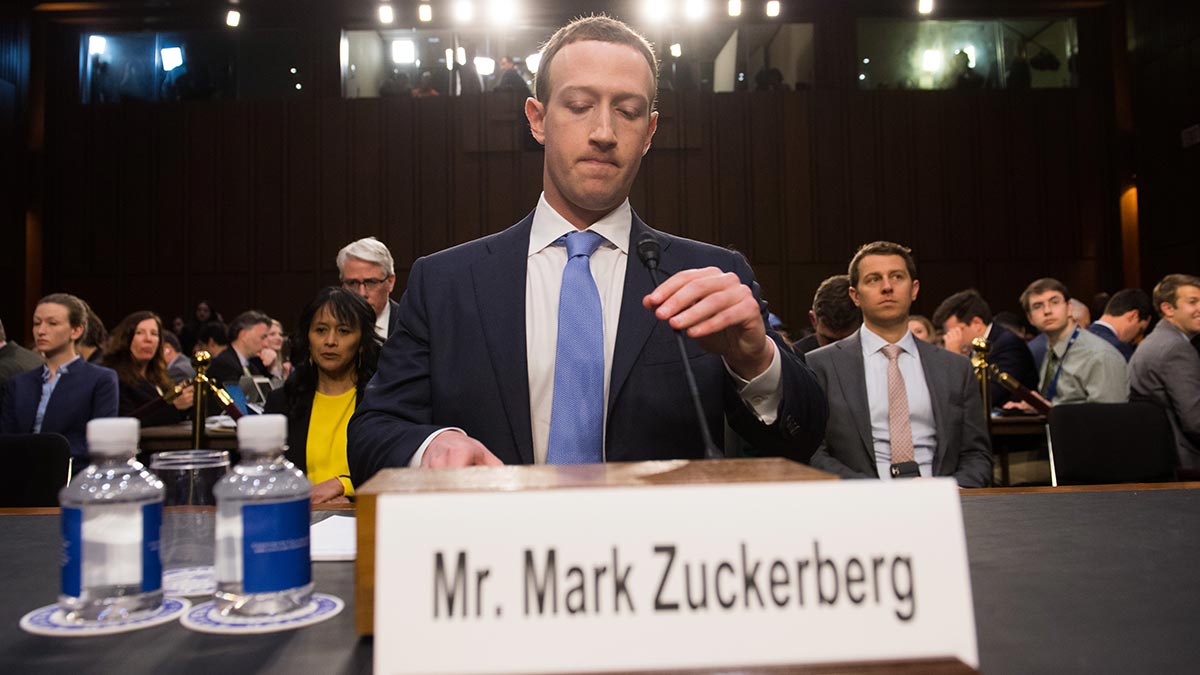
Saul Loeb/AFP/Getty Images
Facebook CEO Mark Zuckerberg on Capitol Hill, April 2018. (Saul Loeb/AFP/Getty Images)

With the testimony on Capitol Hill last week by Facebook CEO Mark Zuckerberg, there’s heightened concern about the negative side effects of social media platforms. But in listening to lawmakers questioning Zuckerberg, it became painfully obvious that our Federal legislators have next to no understanding of the role of advertising in social media – or even how social media works in its most basic form.

Younger staff members may have written the questions for their legislative bosses, but it was clear that the lawmakers were ill-equipped to handle Zuckerberg’s alternatively pat, platitudinous and evasive responses and to come back with meaningful follow-up questions.

Even the younger senators and congresspeople didn’t acquit themselves well.

It made me think of something else, too. The questioners – and nearly everyone else, it seems – are missing this fundamental point about social media:  Facebook and other social media platforms aren’t much different from old-fashioned print media, commercial radio and TV/cable in that that they all generate the vast bulk of their earnings from advertising.

It’s true that in addition to advertising revenues, print publications usually charge subscribers for paper copies of their publications. In the past, this was because 1) they could … but 2) also to help defray the cost of paper, ink, printing and physical distribution of their product to news outlets or directly to homes.

Commercial radio and TV haven’t had those costs, but neither did they have a practical way of charging their audiences for broadcasts – at least not until cable and satellite came along – and so they made their product available to their audiences at no charge.

The big difference between social media platforms and traditional media is that social platforms can do something that the marketers of old could only dream about: target their advertising based on personally identifiable demographics.

Think about it:  Not so many years ago, the only demographics available to marketers came from census publications, which by law cannot reveal any personally identifiable information.  Moreover, the U.S. census is taken only every ten years, so the data ages pretty quickly.

Beyond census information, advertisers using print media could rely on audit reports from ABC and BPA.  If it was a business-to-business publication, some demographic data was available based on subscriber-provided information (freely provided in exchange for receiving those magazines free of charge).  But in the case of consumer publications, the audit information wouldn’t give an advertiser anything beyond the number of copies printed and sold, and (sometimes) a geographic breakdown of where mail subscribers lived.

Advertisers using radio or TV media had to rely on researchers like Nielsen — but that research surveyed only a small sample of the audience.

What this meant was that the only way advertisers could “move the needle” in a market was to spend scads of cash on broadcasting their messages to the largest possible audience. As a connecting mechanism, this is hugely inefficient.

The value proposition that Zuckerberg’s Facebook and other social media platforms provide is the ability to connect advertisers with more people for less spend, due to these platforms’ abilities to use personally identifiable demographics for targeting the advertisements.

Want to find people who enjoy doing DIY projects but who live just in areas where your company has local distribution of your products? Through Facebook, you can narrow-cast your reach by targeting consumers involved with particular activities and interests in addition to geography, age, gender, or whatever other characteristics you might wish to use as filters.

That’s massively more efficient and effective than relying on something like median household income within a zip code or census tract. It also means that your message will be more targeted — and hence more relevant — to the people who see it.

All of this is immensely more efficient for advertisers, which is why social media advertising (in addition to search advertising on Google) has taken off while other forms of advertising have plateaued or declined.

But there’s a downside: Social media is being manipulated (“abused” might be the better term) by “black hats” – people who couldn’t do such things in the past using census information or Nielsen ratings or magazine audit statements.

Here’s another reality: Facebook and other social media platforms have been so fixated on their value proposition that they failed to conceive of — or plan for — the behavior inspired by the evil side of humanity or those who feel no guilt about taking advantage of security vulnerabilities for financial or political gain.

Facebook COO Sheryl Sandberg interviewed on the Today Show, April 2018.

Now that that reality has begun to sink in, it’ll be interesting to see how Mark Zuckerberg and Sheryl Sandberg of Facebook — not to mention other social media business leaders — respond to the threat.

They’ll need to do something — and it’ll have to be something more compelling than CEO Zuckerberg’s constant refrain at the Capitol Hill hearings (“I’ll have my team look into that.”) or COO Sandberg’s litany (“I’m glad you asked that question, because it’s an important one.”) on her parade of TV/cable interviews.  The share price of these companies’ stock will continue to pummeled until investors understand what changes are going to be made that will actually achieve concrete results.

Amazon’s Spark that Fizzled …

Amazon Spark: Less like a sizzle … more like a fizzle.

It’s now been more than nine months since Amazon launched its social media platform Spark … and so far, it’s hardly sizzled.

In fact, it’s made barely a ripple in the market.

There are plenty of people who contend that the last thing the world needs is yet another social network. But others would like to see new alternatives to the recently beleaguered Facebook platform.

As for its trajectory, it looks as if Spark is following the former rather than the latter path. The question is, “Why?”

Very likely, the answer lies in Spark’s questionable underlying raison d’etre.  Essentially, Spark is a social feed of photos and other images. That makes it similar to Instagram … sort of.

One difference between the two platforms is that Spark is open to exclusively to Amazon Prime members.  That limits the potential number of Spark users pretty severely, right from the get-go.  [It’s true that non-members can view Spark feeds — but they can’t post their own content. And what’s a social platform if you cannot interact with it?  It isn’t one.]

Another difference with Instagram may be even more of a fundamental problem. The rationale for Spark is to focus on products that Amazon sells.  Spark is directly “shoppable,” which differentiates it from Instagram and other social networks.  It also makes it less like a true social network and more like a garden-variety e-commerce site.

In other words, rather than being an interesting and engaging social platform, Spark is boring. Informative – but boring.

It isn’t that Amazon/Spark allows brands themselves to post content there; posting privileges are granted only to people it dubs “enthusiasts” or “onsite associates.” Brands must seek out “regular people” [sic] who are members of Amazon Prime to post content on their behalf about their products.

And I’m sure that’s happening – along with varying levels and forms of compensation flowing to these supposed “enthusiasts” in return for the product plugs. But can anyone imagine less compelling content than what results from this kind of commercialized “AstroTurfing”?  No wonder people are ignoring this social media platform.

Andrew Sandoval, a group director for media planning agency The Media Kitchen, summarizes Spark’s predicament by noting that lifestyle-focused people tend congregate on Instagram — a place that shows people living their lives through products. By contrast, “Amazon Spark is mostly just talking about your products, which is the hard-sell.  Ultimately, the e-commerce social experience is a little too far from the social experience,” Sandoval opines.

Have you interfaced with Spark since its July 2017 launch? If so, do you see redeeming qualities about the platform that the rest of us might be missing?  Please share your comments with other readers.

Gord Hotchkiss and the Phenomenon of “WTF Tech”

Gord Hotchkiss

Occasionally I run across an opinion piece that’s absolutely letter-perfect in terms of what it’s communicating.

This time it’s a column by marketing über-specialist Gord Hotchkiss that appeared this week in MediaPost … and he hits all the right notes in a piece he’s headlined simply: WTF Tech.

Here is Hotchkiss’ piece in full:

WTF Tech

By Gord Hotchkiss , Featured Contributor, MediaPost

Do you need a Kuvée?

Wait. Don’t answer yet. Let me first tell you what a Kuvée is: It’s a $178 wine bottle that connects to WiFi.

Ok, let’s try again. Do you need a Kuvée?

Don’t bother answering. You don’t need a Kuvée.

No one needs a Kuvée. The earth has 7.2 billion people on it. Not one of them needs a Kuvée. That’s probably why the company is packing up its high-tech bottles and calling it a day.

A Kuvée is an example of WTF Tech. Hold that thought, because we’ll get back to that in a minute.

So, we’ve established that you don’t need a Kuvée. “But that’s not the point,” you might say. “It’s not whether I need a Kuvée. It’s whether I want a Kuvée.” Fair point. In our world of ostentatious consumerism, it’s not really about need — it’s about desire. And lord knows many of the most pretentious and entitled a**holes in the world are wine snobs.

But I have to believe that, buried deep in our lizard brain, there is still a tenuous link between wanting something and needing something. Drench it as we might in the best wine technology can serve, there still might be spark of practicality glowing in the gathering dark of our souls. But like I said, I know some real dickhead wine drinkers. So, who knows? Maybe Kuvée was just ahead of the curve.

And that brings us back to WTF tech. This defines the application of tech to a problem that doesn’t exist — simply because it’s tech. There is no practical reason why this tech ever needs to exist.

Besides the Kuvée, here are some other examples of WTF tech:

The Kérastase Hair Coach

This is a hairbrush with an Internet connection. Seriously. It has a microphone that “listens” while you brush your “hear,” as well as an accelerometer, gyroscope and other sensors. It’s supposed to save you from bruising your hair while you’re brushing it. It retails for “under $200.”

The Hushme Mask

This tech actually does solve a problem, but in a really stupid way. The problem is obnoxious jerks that insist on carrying on their phone conversation at the top of their lungs while sitting next to you. That’s a real problem, right? But here’s the stupid part. In order for this thing to work, you have to convince the guilty party to wear this Hannibal Lecter-like mask while they’re on the phone. Go ahead, buy one for $189 and give it a shot next time you run into a really loud tele-jerk. Let me know how it works out for you.

Denso Vacuum Shoes

“These boots are made for sucking, and that’s just what they’ll do.”

Finally, an invention that lets you shoe-ver your carpet. That’s right, the Japanese company Denso is working on a prototype of a shoe that vacuums as you walk, storing the dirt in a tiny box in the shoe’s sole. As a special bonus, they look just like a pair of circa 1975 Elton John Pinball Wizard boots.

When You’re a Hammer

We live in a “tech for tech’s sake” time. When all the world is a high-tech hammer, everything begins to look like a low-tech nail. Each of these questionable gadgets had investors who believed in them. Both the Kuvée and the Hushme had successful crowd-funding campaigns. The Hair Coach and the Vacuum Shoes have corporate backing.

The dot-com bubble of 2000-2002 has just morphed into a bunch of broader-based — but no less ephemeral — bubbles.

Let me wrap up with a story. Some years ago, I was speaking at a conference and my panel was the last one of the day. After it wrapped, the moderator, a few of the other panelists and I decided to go out for dinner. One of my co-panelists suggested a restaurant he had done some programming work for.

When we got there, he showed us his brainchild. With much pomp and ceremony, our waiter delivered an iPad to the table. Our co-panelist took it and showed us how his company had set up the wine list as an app. Theoretically, you could scroll through descriptions and see what the suggested pairings were. I say theoretically, because none of that happened on this particular night.

Our moderator watched silently as the demonstration struggled through a series of glitches. Finally, he could stay silent no longer. “You know what else works, Dave? A sommelier,” he said. “When I’m paying this much for a dinner, I want to talk to a f*$@ng human.”

Sometimes, there’s just not an app for that.

_______________________

Does Gord Hotchkiss’ column resonate with you as it did me? Feel free to leave a comment for the benefit of other readers if you wish.

The escalating “arms race” in the adblocking arena.

Have you noticed how, despite installing adblocking software on your computer or mobile device, a lot of online advertising is still making it through to you?

That isn’t just your imagination. It’s happening – and it’s getting worse.

According to a recent report based on findings prepared by researchers at the University of Iowa, Syracuse University and the University of California – Riverside, the extent of “end runs” being successfully made around adblockers is quite high – and it’s growing.

According to the research, more than 30% of the Top 10,000 Alexa-ranked websites are thwarting adblockers in order that millions of visitors will continue to see online advertisements despite running adblocking software.

As the universities’ report states:

“Online publishers consider adblockers a major threat to the ad-powered ‘free’ web. They have started to retaliate against adblockers by employing anti-adblockers, which can detect and stop adblock users.   

To counter this retaliation, adblockers in turn try to detect and filter anti-adblocking scripts.”

Some of the more “forthright” publishers are being at least a little transparent about the process – first asking visitors to stop blocking ads. If those appeals go unheeded, the next step is to notify visitors that if they fail to whitelist the site, they will no longer be able to access any of its content.

The problem with this scenario is that many visitors simply go elsewhere for content when faced with such a choice. Still, it’s nice that some online publishers are giving people the choice to opt in … in an environment where the publisher’s content can be monetized to some degree.

Other sites aren’t so courteous; instead, they’re overriding the adblock software and serving up the advertising anyway. That certainly isn’t the way to “make friends and influence people.”

But “violating consumer intent” is kind of where we are in this arena at the moment, unfortunately.

Changing Cross-Currents in E-Mail Marketing

Many marketers find it one of the easiest marketing tactics to execute … but also one of the least effective in terms of results.

In the realm of digital marketing, e-mail marketing has to be one of the most mature choices of tactics these days. It’s been around for a long time, and its relatively small hard-dollar costs make it one a natural “go-to” marketing tactic for many companies.

But today, a declining percentage of marketers see e-mail as one of their most effective tactics in the digital marketing arsenal.

So, what’s the problem?  Many companies have the technology and skills in place to perform e-mail programs using in-house resources. That’s the good news.

The not-so-good news is that more companies are seeing their e-mail programs becoming less effective — for a variety of reasons. Among them are these:

  • E-mail filtering technology is making it more difficult to land e-mails into inboxes.
  • Privacy regulations are becoming more stringent.
  • Overuse of this marketing tactic means more e-mail messages than ever from more companies are being deployed – and with that, more of them are being ignored by recipients.
  • While e-mail used to be the only digital direct marketing game in town, today there are a bigger variety of ways to engage with customers and prospects.
  • Building a high-performing e-mail list that also conforms to regulatory stipulations is more challenging than ever.

This last point is particularly nettlesome for marketers: Data quality and data management are considered among the most difficult challenges for marketers – and also among the least effective in terms of their success.

So, in some ways the factors affecting the use of e-mail marketing are working at cross-purposes. E-mail marketing is easier to execute than other digital marketing endeavors … but as for its effectiveness, many marketers rate other tactics higher, including content marketing and search engine optimization.

In the coming years, it will be interesting to see how attitudes and behaviors regarding e-mail continue to evolve. Will this time-honored tactic decline in importance, or find new life?  Stay tuned …

Changing Buying Behaviors: Clues from Thanksgiving Weekend 2017

If there was any doubt that we’re in the midst of fundamental changes in consumer buying behaviors, the results from the opening days of the 2017 holiday season have put such questions to rest.

Movable Ink, a firm that enables content personalization within e-mails, has just published some insightful statistics it compiled from Thanksgiving weekend last month.  Movable Ink logged nearly 438 million e-mail opens between the Wednesday before Thanksgiving and the following Cyber Monday. What did it find?

To start with, it found that recipients engaged with them.

Of the e-mails sent on Black Friday, nearly 50% achieved read lengths of at least 15 seconds. On Cyber Monday, the results were nearly the same (~46%).

Fifteen seconds may not seem like a long time to engage with an e-mail, but it’s light years compared to what is often experienced in consumer e-retail.

Movable Ink also found that the majority of the e-mails were opened on smartphones — far outstripping desktops and tablets:

  • Smartphones: ~53% of e-mail opens
  • Desktop computers: ~25%
  • Tablet opens: ~16%

An equal 53% of conversion actions happened on smartphones … but desktop conversions proved to be higher than their open stats, and e-mails opened on tablets were much less likely to experience conversions:

  • Smartphone: ~53% of e-mail conversions
  • Desktop computers: ~38%
  • Tablets: ~8%

Consumers were certainly in a buying mood over the holiday weekend, with purchases averaging between $120 and $140 on each of the four days of the long weekend:

  • Black Friday: An average of $124 spent
  • Saturday: $120
  • Sunday: $119
  • Cyber Monday: $141

However, while smartphones led in terms of e-mail engagement, when it comes to actual dollar sales smartphones come in last – by a country mile:

  • Desktop computers: ~$162 average holiday weekend total spend
  • Tablets: ~$107
  • Smartphones: ~$85

We can acknowledge that smartphones have become the most important method for reaching consumers with product content, coupons and special offers.  And yet, significantly more purchasing continues to happen on desktops.

One takeaway is that for all of the convenience smartphones purport to provide, the purchasing experience on mobile devices doesn’t yet match the experience on desktop computers.

It would also help if there was more similarity between the purchasing process sellers are delivering across all platforms. That continues to be a missing ingredient with some sellers, and it’s likely explaining at least some of the dampening effect on mobile sales revenues.

Welcome to the Ad Duopoly: Google and Facebook

Unless you’ve been living under a rock, it’s pretty obvious that the advertising marketplace in America has changed radically in the past few years.

In short order, we’ve seen the largest concentration of digital advertising converge on just two players:  Google and Facebook.  In fact, according to digital advertising research firm eMarketer, those two firms alone are attracting two-thirds of all digital ad dollars in the United States.

But this development isn’t all that surprising.  The vast bulk of Google’s ad market share results from its search engine marketing platform (paid search). As for Facebook, it dominates digital display advertising not just in America, but in many other countries all over the world as well.

And both companies are the “big kahuna” players in the mobile advertising sector, too.

What’s interesting is that, despite the shortcomings that many people recognize in both types of digital advertising – banner blindness and often ill-targeted paid search results — healthy growth in both forms of advertising continues apace.

Google’s ad revenue growth has average around 20% for more than 30 straight quarters. Its growth in the third quarter of 2017 is right on pace at 22%.

For Facebook, the growth dynamics are particularly lucrative; its year-over-year ad revenue growth is pushing 50%.

Mobile ad revenues are growing even faster; they accounted for “only” $9 billion in revenues for Facebook in just the third quarter.  And just as paid search advertising revenues represent more than 90% of Google’s total company revenues, mobile advertising accounts for nearly 90% of Facebook’s overall revenues.

With so much advertising activity, one might wonder from where it’s emanating.

One answer to that question is that the “universe” of advertisers is exponentially higher than we’ve ever encountered before. With low barriers to entry and “anyone can do it” ad development tools, “Jane and John Doe” are far more likely to be advertisers in today’s world of digital marketing than was ever contemplated just a few decades ago.

To wit: Facebook estimates that its social platform has more than 6 million active advertisers participating on it at any given moment in time.  That’s the equivalent of 2% of the entire population of America.

It’s kinda true:  “We’re all advertisers now.”

Does “generational marketing” really matter in the B-to-B world?

For marketers working in certain industries, an interesting question is to what degree generational “dynamics” enter into the B-to-B buying decision-making process.

Traditionally, B-to-B market segmentation has been done along the lines of the size of the target company, its industry, where the company’s headquarters and offices are located, plus the job function or title of the most important audience targets within these other selection criteria.

By contrast, something like generational segmenting was deemed a far less significant factor in the B-to-B world.

But according to marketing and copywriting guru Bob Bly, things have changed with the growing importance of the millennial generation in B-to-B companies.

These are the people working in industrial/commercial enterprises who were born between 1980 and 2000, which places them roughly between the ages of 20 and 40 right now.

There are a lot of them. In fact, Google reports that there are more millennial-generation B-to-B buyers than any other single age group; they make up more than 45% of the overall employee base at these companies.

Even more significantly, one third of millennials working inside B-to-B firms represent the sole decision-makers for their company’s B-to-B purchases, while nearly three-fourths are involved in purchase decision-making or influencing to some degree.

But even with these shifts in employee makeup, is it really true that millennials in the B-to-B world go about evaluating and purchasing goods and services all that differently from their older counterparts?

Well, consider these common characteristics of millennials which set them apart:

  • Millennials consider relationships to be more important than the organization itself.
  • Millennials want to have a say in how work gets done.
  • Millennials value open, authentic and real-time information.

This last point in particular goes a long way towards explaining the rise in content marketing and why those types of promotional initiatives are often more effective than traditional advertising.

On the other hand … don’t let millennials’ stated preferences for text messaging over e-mail communications lead you down the wrong path. E-mail marketing continues to deliver one of the highest ROIs of any MarComm tactic – and it’s often the highest by a long stretch.

Underscoring this point, last year the Data & Marketing Association [aka Direct Marketing Association] published the results of a comparative analysis showing that e-mail marketing ROI outstripped social media and search engine marketing (SEM) ROI by a factor of 4-to-1.

So … it’s smart to be continually cognizant of changing trends and preferences. But never forget the famous French saying: Plus ça change, plus c’est la même chose

Fewer brands are engaging in programmatic online advertising in 2017.

How come we are not surprised?

The persistent “drip-drip-drip” of brand safety concerns with programmatic advertising – and the heightened perception that online advertising has been showing up in the most unseemly of places — has finally caught up with the once-steady growth of economically priced programmatic advertising versus higher-priced digital formats such as native advertising and video advertising.

In fact, ad tracking firm MediaRadar is now reporting that the number of major brands running programmatic ads through the first nine months of 2017 has actually dropped compared to the same period a year ago.

The decline isn’t huge – 2% to be precise. But growing reports that leading brands’ ads have been mistakenly appearing next to ISIS or neo-Nazi content on YouTube and in other places on the web has shaken advertisers’ faith in programmatic platforms to be able to prevent such embarrassing actions from occurring.

For Procter & Gamble, for instance, it has meant that the number of product brands the company has shifted away from programmatic advertising and over to higher-priced formats jumped from 49 to 62 brands over the course of 2017.

For Unilever, the shift has been even greater – going from 25 product brands at the beginning of the year to 53 by the end of July.

The “flight to safety” by these and other brand leaders is easy to understand. Because they can be controlled, direct ad sales are viewed as far more brand-safe compared programmatic and other automated ad buy programs.

In the past, the substantial price differential between the two options was enough to convince many brands that the rewards of “going programmatic” outweighed the inherent risks.  No longer.

What this also means is that advertisers are looking at even more diverse media formats in an effort to find alternatives to programmatic advertising that can accomplish their marketing objectives without the attendant risks (and headaches).

We’ll see how that goes.

Advertisers “kinda-sorta” go along with FTC guidelines for labeling of native advertising placements.

In an effort to ensure that readers understand when published news stories represent “earned” rather than “unearned” media, in late 2015 the Federal Trade Commission established some pretty clear guidelines for news stories that are published for pay.

The rationale behind the guidelines is that the FTC wants advertisers to be prevented from presenting paid content in ways that mask the fact that it’s a form of advertising.  Essentially, it wants to avoid leaving the erroneous impression that the advertiser did not create — or influence the creation — of the content, or that it paid a fee in order for the news to be published.

But what native advertising content developer Polar has found is that the explicit disclosures the FTC wishes advertisers to include as part of their stories tend to have a negative impact on readership.

… Which is precisely what native advertising is trying to avoid, of course.

After all, the whole point of these articles is to appear that they’re published due to their inherent newsworthiness, rather than because advertisers wish to push a sales message disguised as “narrative” so strongly, they’re willing to fork over big bucks for the privilege.

In its evaluation, Polar analyzed ~140 native placements across 65 publishers, and found that only ~55% of them used the term “sponsored” as a way to label the content.

As for the term “advertisement” or “advertorial,” the incidence of usage was far lower; less than 5% of the native placements identified their content as such.

Correlated to these findings was that more euphemistic terms like “partner content” tend to perform better in terms of reader engagement than do more explicit disclosures of an advertiser relationship.

“Promoted” was found to be the best performing term, garnering a 0.19% clickthrough rate as compared to “sponsored,” with just a 0.16% clickthrough rate.

[Interestingly, on desktop devices “sponsored” marginal outperformed “promoted,” whereas on mobile devices it was just the opposite.]

More broadly, the Polar investigation also found that nearly one-third of the pay-to-play native advertising placements it evaluated failed to comply at all with the FTC guidelines (as in zip/zero/nada) – which brings up a whole other set of issues at a time of heightened awareness of the “fake news” phenomenon online.