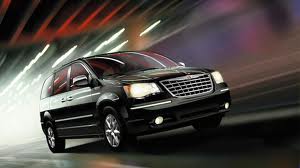
The Automotive Comeback Story of the Year?

2010 Chrysler Town & Country Minivan
Chrysler's Town & Country minivan: On top of the charts again.
Not surprisingly, the ongoing saga of the GM bailout and subsequent re-listing of General Motors on the New York Stock Exchange was the biggest automotive news story of 2010.

But in what may be the more surprising comeback story, the Chrysler Town & County minivan is poised to regain the top spot in a segment that Chrysler once dominated, going all the way back to when the first minivan rolled off the assembly line in the early 1980s.

But in recent years, beset by organization troubles along with spirited competition from other domestic and imported automakers, Chrysler had lost its first-rank position to the Honda Odyssey while its overall share of the minivan market declined.

For December, the Town & Country’s unit sales were over 102,000, compared to the Odyssey’s ~98,000. Chrysler’s sister brand, Dodge, racked up minivan unit sales of ~89,000, the same as the Toyota Sienna. That puts Chrysler on pace to lead the minivan pack for all of 2010 and reclaim the sales crown.

It’s no secret that Chrysler considers the minivan to be one of the keys to its brand identity – and a key component of its comeback strategy. “Our goal is regaining leadership. We consider we own it and we need to regain what once belonged to us,” the Detroit News quotes Olivier Francois, head of the Chrysler brand, as saying.

[Another reason Chrysler might have lost its edge over the years in the “minivan derby” was a perception of quality issues and the way its vehicles handled. But speaking as someone whose family has driven Chrysler minivans since 1990 – and currently owns four Dodge Caravans spanning ten years’ worth of model years – we’ve never encountered any major quality issues beyond the expected maintenance requirements for vehicles we routinely run for close to 200,000 miles each.]

If a car maker is making a major push for product sales, it makes sense to place more inventory in the showrooms for consumers to buy. Significant “upgrades” to Dodge and Chrysler minivans are being introduced for 2011, and greater numbers of vehicles will be delivered to dealerships, it’s being reported.

Of course, no one believes that Chrysler’s goal to maintain the sales crown for minivans will be slam-dunk easy. Japanese automakers are introducing their own all-new minivan models in 2011.

And why not? They’re seeing an increase in consumer interest in the minivan segment just like everyone else. While no one expects sales of minivans to return to the stratospheric levels of the late 1990s, stories about the “death” of the minivan that were being published in more recent years have now completely disappeared from the newswires.

One of the interesting questions Chrysler will be facing in the coming years is whether to continue to cultivate two separate minivan nameplates or to consolidate them into one. Chrysler has tended to lavish more “design” attention on the Town & Country and more “performance” focus on the Dodge Caravan. As a result, the Town & Country is now more popular with female consumers and the Caravan more popular with men.

This “gender-focused” targeting finds its penultimate manifestation this year with the introduction of Dodge Caravan’s so-called “man-van” – a high-performance version of the Grand Caravan featuring a “macho” all-black interior with red stitching. Can’t wait for one of these show up in the auto showroom!

The Limits of Delivering “Cheaper Value”

Nano vehicle

Tata Nano car on fire
Tata Nano ... Tata "No-No"?
About a year ago, the international press was abuzz about the latest new “value” entry in the automobile business. Amid great fanfare, Tata Motors, part of India’s largest corporate conglomerate, was introducing the “Nano,” a car designed to appeal to India’s mass market.

The Nano, which can seat five people and has a surprisingly roomy interior for its size, carries a base price of only ~$2,200 — lower than any other car in the world — which proved irresistible to families of modest means whose finances had required that they make do with motorcycles or scooters before.

Some 9,000 Nano vehicles were delivered in July, but since then, sales have slowed dramatically – to just around 500 shipments to dealers in November.

How did Nano’s star fall so far, so fast – especially for a vehicle which Tata Motors thought was impressive enough that it planned to introduce it in other developing markets … then Europe … and finally to the United States?

Production delays have something to do with it. But the real problem is the performance of the car. Most alarming are reports that the vehicle can catch on fire, with one widely broadcast incident where a Nano caught on fire and was engulfed by flames on the way home from the auto showroom!

In response, Tata, while denying anything is wrong with the design of the Nano and studiously avoiding any language of “recall,” is offering to retrofit the automobile with extra safety features. It’s also extending the warranty on the car from 18 months to a solid four years.

Will these moves change the impression that the car is more of a “No-No” rather than a “Nano” and move its sales trajectory back into positive territory? Perhaps. But it’s interesting to note that sales of a rival “value” car made by Suzuki – the “Alto” – have now overtaken those of the Nano. The Alto carries a higher base price of $6,200, and yet it posted unit sales of ~30,000 in November, making it India’s best-selling car that month.

[The success of the Suzuki Alto in India is nice news for a company whose cars in the U.S. have been on a downward plunge all this year – with sales off ~42% in 2010 compared to 2009.]

The experience of the Nano and the Alto in India brings up an interesting question: Is it possible to make small, cheap version of products that are significant purchase items and win the confidence of a broad customer base?

To a degree, yes. But there are limits to “how low you can go” in value-engineering a product for performance and safety, below which customers just turn and walk away. (Or, in this case, drive away.)

Moreover, just like the experience of the Yugo or the Trabant, there’s a risk of forming a poor market image that’s impossible to shake off.

And in this particular case, the brand names don’t help at all. It’s just too easy for disgusted consumers to say “Ta-Ta” to Tata Motors and “No-No” to the Nano.

Multimedia Centers: Migrating From the Family Room to the Garage

Automobile multimedia centersConverseon’s Craig Daitch, writing in Advertising Age magazine, is claiming that Ford Motor could be the next media company.

What does that mean?

It means this: Today, the most well-equipped media centers may well be the ones found in your car. What’s being featured in car showrooms are vehicles that contain everything from portals for laptops to smartphone-enabled screens … satellite-enabled geo-positioning systems … high-definition and/or satellite radio … even televisions.

The reality is, the home is no longer the exclusive domain of all of these collective media. The automobile is a multimedia hub as well, which means that any medium that was once reserved for in-home consumption can now be experienced in cars – on the go.

What are the implications for marketers? For one thing, merchants are now closer than ever to closing the gap between in-store and out-of-store marketing. Now, marketing messages can travel along with the target audience … right into the store parking lot. Messages reach their targets that much more effectively when cars are taking them directly to the point of purchase.

Sure, outdoor billboards and broadcast radio have played a role similar to this in the past, but never to the same degree as delivering an electronic coupon or alerting the consumer based on locational tracking.

Up to now, mobile media were limited to devices such as cellphones that could be unplugged and personally ported by users to different locations. Going forward, it’s the plugs that are mobile … and essentially any medium is now a mobile medium when it resides in a car.

It’s an intriguing twist that has vast implications on tactical marketing as we look to the future.

Let’s Revisit the Yugo!

Yugo advertisementThose of us “of a certain age” remember well when the Yugo car was introduced to America with great fanfare. In 1985, the prospect of purchasing a small vehicle with an even smaller price tag (~$3,990) was irresistible to many – even with the high gasoline prices and gas lines of the 1970s looking more distant in the rearview mirror. For those on a budget, who could resist the allure of buying a new car for $99 down and a $99 monthly payment?

Here’s a startling statistic that bears this out: When the Yugo was introduced in the summer of 1985, more than 1,000 of them were sold in one day. In fact, the Yugo was to be the fastest-selling first-year European import ever sold into the U.S. – a record that stands yet today.

But in just a few short years, the Yugo would go from being a star to being a dud … from being the “it” car to being the butt of jokes.

How could this happen? The answers are found in a just-released book “The Yugo: The Rise and Fall of the Worst Car in History,” written by Jason Vuic (ISBN-13: 978-0809098910). This pithy, irreverent volume takes readers on a merry romp through its 250+ pages … and things never have time to become dull.

One of the earliest signs that the Yugo might not be all it was cracked up to be came when its American investors decided to drive a Yugo car across the country. What better way to test the product? In retrospect, they should have heeded the clear warning signs: the new car broke down not once … not twice … but three times during its ~3,000 mile journey.

Undeterred, they plowed ahead, forming a national dealer network and trumpeting the Yugo as a fresh, affordable European car that came with a small price tag and a big attitude.

But the reviews were scathing from the get-go. The car broke down during a road test by Motor Trend, leading the magazine to conclude that the vehicle was “hard to recommend at any price.” Some customers reported that their new Yugos came off the dealer lot with rust spots already showing in the trunk. That plus noisy brakes … rough-riding clutch … and a few other deficiencies not normally experienced until any other car is years old.

Predictably, it didn’t take long for the magic to wear off. By the time of Saturday Night Live’s famous parody of the Yugo – its fake TV ad for the Adobe clay car (at $179 apiece) – Yugo dealers across America were already closing their doors.

Actually, what’s most surprising to read is that the Yugo actually continued to be manufactured in Europe as late as 2008.

In retrospect, I suppose the Yugo wasn’t a complete waste of time. It helped us realize – once again – that despite the enduring appeal of a low-cost alternative, there’s no substitute for producing a quality product.

It’s also given us 25 years of great jokes.