Asian-Americans Set the Pace

Asian Americans setting the pace in education, income and career success, according to the Pew Research CenterAs an American with Asian relatives in my family, I’ve witnessed first-hand how having a strong work ethic and a dedication to industriousness leads to success here on our shores.

And now a new Pew Research Center study demonstrates that the anecdotal evidence of our family reflects a larger reality.

Bottom-line, Asian Americans are not only the fastest-growing racial group in the USA today, they’re also the best-educated, highest-income segment.

According to the Pew research, Asian-Americans are also more satisfied with their lives compared to the general public … as well as more satisfied with their own personal finances and the overall direction of the country.

Other questions on the Pew survey reveal that Asian-Americans place more value than other Americans in time-tested values like parenting, marriage, hard work and career success.

But they’re also distinctly “21st century” … in that they’re the most likely of any major group in America to live in mixed neighborhoods and to marry across racial or ethnic lines.

The findings of the Pew survey are even more interesting when we realize that the U.S. Asian population remains majority-immigrant – nearly 75%, in fact. Asian-Americans now represent almost 6% of the U.S. population, some ~18 million people. That’s up from less than 1% of the population in 1965.

The Pew study contains interesting income and education demographics that place Asian-Americans above all other groups. But the research also addressed attitudinal measures and found that most Asian-Americans believe the United Sates is better than their country of origin in a variety of quality-of-life factors, including:

  • The opportunity to “get ahead” (~73% in USA versus ~5% in country of origin)
  • The freedom to express political views (~69% vs. ~3%)
  • Treatment of the poor (~64% vs. ~9%)
  • Conditions for raising children (~62% vs. ~13%)
  • The freedom to practice religion (~52% vs. ~7%)

Opinion is mixed in one attribute: “the moral values of society.” In this case, ~34% of Asian-American respondents believe that the United States does better, compared to ~28% who give the edge to their country of origin.

And in one big measure – “the strength of family ties” – the U.S. falls way behind: Only ~14% perceive the U.S. does better in this attribute, while a whopping ~56% give the nod to their country of origin.

The Pew report provides a fascinating snapshot of the current situation characterizing the Asian-American experience.  More details from the Pew Research report can be found here.

Oh, S#\@*!! Facebook’s Not for Prudes

Profanity on Facebook:  More than you might imagine.In the “anything goes” world of social media, it stands to reason that the language we find there isn’t exactly reserved for polite company.

And now we have some quantifiable data that confirms those suspicions. Reppler, a Palo Alto, CA-based social media monitoring service, recently scanned some 30,000 Facebook members’ walls … and what they found wassn’t exactly the language of choirboys.

Here are two interesting stats from what Reppler discovered:

 Nearly half of the Facebook walls contain some form of profanity.

 Four out of five users with profanity on their Facebook wall have at least one comment or post from a friend that contains profanity.

What’s the most common profane terms used? Not surprisingly, the “f-word” comes out on top. That’s followed by various derivations of the word the French know as merde. Runner-up among the top three is the “b-word.”

It’s important to note that people don’t have complete control over the language their Facebook friends use. But the prevalence of profanity on Facebook walls comes at a time when many employers are increasingly looking at the online presence of their prospective hires and noting the degree of professionalism – or lack thereof – that they see.

And there’s a related issue that’s becoming increasingly significant as well. With more companies and brands creating Facebook pages and other social networking sites, monitoring the discussion that takes place on them takes on even more importance.

It’s critical for brands not to offend even a small percentage of their customers. But with the general “race to the bottom” in what’s deemed acceptable language, there are real differences in what some people think is legitimate expression … and what others would consider to be gross indecency.

These differences are a factor of not only of age, but of acculturation.

Third-party tools from Reppler and others that automatically flag certain language or phrases can alleviate some of the problem, but there’s really no substitute for good, old-fashioned site monitoring. Which is why so many companies are finding the whole social media thing to be pretty labor-intensive, when done properly.

The “ol’ college try” … Not good enough anymore?

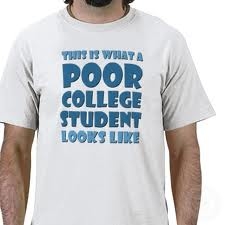
The questionable college degree ... along with crushing student debt.I’ve blogged before about the increasing concerns many people have regarding the quality of college education in America. Now, several new data points should make every parent of college-age kids – or children who will be ready for college soon – take additional notice.

The first interesting news tidbit is that total student debt, which surpassed the country’s credit card debt for the first time in August 2010, now tops $1 trillion. Compare that to student debt being only around $200 billion as late as 2000.

So we’re talking an increase of ~400% in a little over a decade, which is miles more than the inflation rate over this period. Average debt now stands at almost $23,000 per student, which is a spike of ~8% over the past year alone.

And just what are students getting for all the money they’re spending (or borrowing) for their higher education? If you want to know the ugly truth, check out the recently published book Academically Adrift by sociologists Josipa Roksa and Richard Arum [ISBN-13: 978-0226028569 … also available in a Kindle edition].

Based on the information presented in this book, some grads might wish to haul their colleges up on charges of educational malpractice. Full-time instructional faculty has declined from 78% of college teachers in 1970 to only around 50% today.

Roksa and Arum also report that college faculty members spend, on average, just 11 hours per week on instructional preparation and delivery … the rest of their time is spent on research and a slew of administrative activities.

And how about the “quality” of the education that’s being delivered? If we wish to view that in terms of the amount of time students are spending on their studies, the stats aren’t trending in the right direction. The book claims that whereas the typical college student in the early 1960s devoted an average of 40 hours each week to academic work, today’s students now spend only about 27 hours per week on studies. So in what way is the substantial extra money being extracted from students being used to delier a better quality product?

Here’s the next shocker: ~85% of college graduates are moving back home following graduation. This information comes from a 2011 field survey conducted by Philadelphia-based market research firm Twentysomething, Inc. Compared to the firm’s prior surveys, that represents a spike of nearly 20 percentage points in only five years.

Of course, we all know the economy has been a major problem over the past few years, with jobs hard to come by even for seasoned workers. But to learn that fewer than one in six college students are moving out on their own following college graduation means that precious few grads are coming out of school with the ability to land jobs that can sustain an independent lifestyle — however modest.

With stats as dismal as these, is it any wonder why some people are seeking an alternative paradigm for higher education other than the “four years away from home” model? Enrollment figures at America’s community colleges have been skyrocketing. Online education is also booming, despite lingering concerns about learning standards and accreditation.

Some economists such as Richard Vedder are suggesting making radical reforms in the way that financial aid is provided – and to whom – while other observers are pushing for more recognition of learning credentials that take us beyond a BS or BA degree.

Many of these ideas strike at the very heart of what we’ve always been conditioned to believe about a four-year college education as the gateway to a better life. But with today’s reality being so far removed from the theory (fantasy?) … some out-of-the-box ideas and approaches are exactly what are needed now.

Marshall McLuhan: The Great Prognosticator

Marshall McLuhan, scholar, writer and social theorist
Marshall McLuhan: The Great Prognosticator
I’ve been reading a new biography on Marshall McLuhan, the Canadian educator, scholar and social theorist who is notable for having predicted the rise of the Internet years before Al Gore or anyone else took credit for inventing it.

The succinct biography, Marshall McLuhan: You Know Nothing of My Work! by Douglas Coupland [ISBN-10: 1935633163 … also available in a Kindle edition], is quite interesting and I definitely recommend it for anyone interested in mass communications and popular culture.

Reading this biography, one gets the impression that McLuhan was a man who correctly predicted a good deal of the world of communications in which we live today. Not only did he forecast the rise of the web 30 years before it came about, he was the one who coined the expression “the medium is the message” … and who spoke about the “global village” long before Hilary Clinton came on the scene.

It turns out that this extraordinary thinker led a pretty conventional life, actually. Born in Edmonton, AB, he spent the better part of his career in Canada, although it was as a visiting professor at St. Louis University where he met his future wife, with whom he would have six children. (Born an Anglican, McLuhan was influenced by the writings of G. K. Chesterton and had converted to Roman Catholicism by his late 20s.)

Although trained as an academician in Canada and at Cambridge – and being on the faculty at prestigious educational institutions like the University of Toronto where he eventually had his own research center – the demands of raising a large family drove McLuhan to more financially lucrative work in the advertising field as well. He also had consulting stints at large corporations like AT&T and IBM.

Although passionate about and partial to his teaching and academic work, it was as an ad industry personality that McLuhan probably made his biggest mark.

As early as 1951, McLuhan published a book of essays called The Mechanical Bride, which analyzed various examples of “persuasion” in contemporary popular culture.

In his 1964 book Understanding Media: The Extensions of Man, McLuhan coined the phrase “the medium is the message” as he wrote of the influence of communications media independent of their content. He contended that media affect society in which they play a role not by the content they deliver, but by the characteristics of the media themselves. True enough.

And how did McLuhan come to predict the rise of the Internet? It was right there in his 1962 book The Gutenberg Galaxy, which attempted to reveal how communications technology – alphabetic writing, printing presses, electronic media — affects cognitive organization and, in turn, social organization. Here’s what he had to say:

“The next medium, whatever it is – it may be the extension of consciousness – will include television as its environment, and it will transform television into an art form. A computer as a research and communication instrument could enhance retrieval, obsolesce mass library organization, retrieve the individual’s encyclopedic function and flip into a private line to speedily tailored data of a saleable kind.”

Remember, this was written in 1962!

McLuhan also used the term “surfing” in a way that seems uncannily similar to its meaning today – in his case, using the word “surfing” to refer to rapid, irregular and multidimensional movement through a body of knowledge.

More books would come from McLuhan’s pen in subsequent years, including:

 The Medium is the Massage: An Inventory of Effects (McLuhan’s best seller)
War and Peace in the Global Village
From Cliché to Archetype

All of these volumes sound pretty fascinating – definitely ones to explore in the future, although the biography provides good synopses of their contents.

It is difficult to think of someone that has had more influence over the world of media and advertising than Marshall McLuhan. Sure, there are people like David Ogilvy, but his influence has been confined almost exclusively to the advertising industry alone.

By contrast, the McLuhan’s biographer contends that McLuhan influenced scads of writers and critical thinkers – I was pleased to see Camille Paglia among them – along with politicians like Pierre Elliott Trudeau and Jerry Brown. McLuhan was even named a “patron saint” of Wired Magazine, and a quote of his appeared on the publication’s masthead during the first decade of its publication.

And finally, it’s nice to discover that McLuhan’s years in academia have been given their due as well: The University of Toronto has continued his work by running a center at the school named, appropriately, the McLuhan Program in Culture and Technology.