
Amidst the Depression … An Inspiring Tale

Samuel J. Stone, aka "B, Virdot"
Samuel J. Stone, the real identity of "B. Virdot," whose act of kindness benefited the citizens of Canton, Ohio in the Winter of 1933.
One topic that’s been “done to death” in the world of books is that of the Great Depression. It seems very little new could possibly be written about it. But I’ve come across a very interesting book just published that sheds new light on this chapter of American history – and does so with a personal poignancy that strikes right to the heart.

The book is A Secret Gift: How One Man’s Kindness – and a Trove of Letters – Revealed the Hidden History of the Great Depression, written by Ted Gup, a former investigative reporter with the Washington Post (ISBN-10: 1594202702 … also available in a Kindle edition). It’s about an act of kindness done by the owner of a chain of clothing stores, who posted a pseudonymous announcement in December 1933 in his hometown (Canton, Ohio) newspaper offering to send holiday cheer to those in need.

The holiday cheer was in the form of $5 checks (worth about $100 in today’s money) which were sent to ~150 families in response to letters received that described family hardships of that year – one of the worst of the entire Great Depression. The announcement stated that the identities of the letter-writers would be kept secret “until the very end.”

This act of kindness would remain hidden for decades until Ted Gup’s mother (the daughter of the benefactor) gave the author a suitcase filled with memorabilia from her father, Samuel J. Stone. Among the artifacts was a bundle of letters written to a person named “B. Virdot.”

At first seemingly unrelated to the author’s grandfather, the giveaway clue was an old clipping of the “B. Virdot” newspaper announcement, revealing that “B. Virdot” was, in actuality, Samuel Stone.

The letters sent by families laid low by the economic events of the day revealed that the Great Depression did not discriminate by social class or status. Some of the checks Mr. Stone sent were to former business owners who had lost their companies, savings, insurance policies and homes.

Many other checks were sent to families of more modest means; one was sent to a recently widowed mother of two children who had no savings and a house mortgage. “It looks pretty dark sometimes but we still hold on to that ray of hope – that this terrible depression will soon be over,” she wrote. She went on to state, “I have never received charity of any kind.”

That’s one of the themes that runs through the letters: These were people with dignity, who were not inclined to ask for charity nor even to discuss their plight with others. They had played by the rules in their lives – taking responsible jobs, buying homes, building their savings, raising their families – until the collapse of the economy and closure of the banks robbed them of nearly everything.

Drawing on his investigative reporting background, Ted Gup proceeded to research as many of the families as he could find, to learn more about them and to interview their descendants (he would eventually interview nearly 500 descendants).

One of the interesting aspects of this endeavor was how few of the people he interviewed really understood (or even knew) the hardships that their families had suffered in that time. Yet tell-tale signs were there when descendants were told of the events those many years ago. One son spoke of his mother: “There was a loss of confidence. For her, the good times were wonderful, then all hell broke out. Friends of hers said she had been full of pep and vigor. I didn’t know her that way at all, so I think it probably did a job on her.”

Dignity was important to these people of the 1930s, when folks felt uncomfortable talking about hardships with their relatives or with their children. Yet they opened up to a total stranger in their letters – maybe the only time they ever did so. One man asked “B. Virdot” to reveal his real name to him so that one day he might repay the gift with interest.

But Samuel Stone never did so. Instead, he took his secret to the grave. And his grandson discovered that this wasn’t the only secret his grandfather had kept. Instead of being “Samuel J. Stone, born in Pittsburgh” as he’d always claimed, Ted Gup found out that his grandfather’s real name was Sam Finkelstein … and instead of being from Pennsylvania, he had been born in Dorohoi, Rumania.

Not only that, it turns out that Sam Finkelstein entered the United States illegally and never normalized his immigration status – even after becoming a prosperous businessman in America. Even much later, during World War II when the U.S. government required foreign-born residents to register or risk deportation, Samuel Stone was still afraid to take any chances and did not step forward.

So what in the end was the basis for Samuel Stone’s gesture to his fellow Canton residents? Was it an act of kindness delivered anonymously so that the families in question could maintain their dignity and not have to face the person who knew their innermost hardships and fears? Or was it Stone’s own fear of being discovered as an illegal alien that kept his gifts anonymous?

That part of the story will never be explained. But thanks to Ted Gup, the grandson, we have a surprising new story to add to the chronicles of the Great Depression.

And this one is more inspiring, heartwarming – and intensely personal – than any other I’ve read. As the author himself states, “For one moment, in one forgotten town, one man managed to shrink the vastness of the Depression to a human scale.”

As a side note, Samuel Stone would keep his promise “until the very end,” but 400 of the descendants of those who wrote the letters held a gathering in Canton just last week in a reunion that was never meant to happen — but did, thanks to this book. (And one of those who wrote a letter to “B. Virdot,” now a a 90-year-old woman, was actually on hand for the occasion.)

This book is definitely at the top of my list for holiday gift-giving this season. I heartily recommend it – it’s that good.

Search Goes Global

SEO in Different LanguagesMost companies hitched their wagon to search engine optimization long ago. That’s not surprising, because high search rankings are one of the most effective ways to get in front of customers and prospects when they’re in the mood to research and buy.

But up until recently, SEO has generally existed in the world of English. By contrast, SEO campaigns in Spanish and other languages haven’t worked so well. Despite the fact that Spanish is among the most widely spoken of languages, many Spanish-language countries have been behind the curve in Internet connectivity. And you could say the same of other languages.

But that’s not the case today. As more people overseas have become connected, the amount of content in Spanish and other foreign languages has risen dramatically.

Looking back at a bit of history, in the early-1990s essentially all of the search engines were in English only; if you wanted to conduct a web search, you had no other choice. That started to change by the mid-1990s when ~75% of all Internet searches were being conducted in English.

Fast-forward to today. According to Internet World Stats, an information resource that chronicles web usage in more than 230 countries and world regions, searches in English now account for only ~25% of all searches conducted.

Time was … search spoke English only. But the dramatic growth of Hispanic and other non-English digital markets means that companies that take the time to invest in foreign-language content and SEO initiatives will find themselves in the strongest position going forward.

It’s yet another item for the marketing department’s to-do list. Fortunately, help is available … with companies like MSEO.com and SEO Matador providing turnkey programs for implementing SEO campaigns in multiple different languages.

Projectile Pumpkins: More Popular than Ever

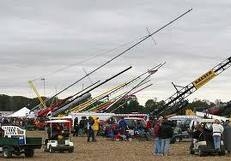
Punkin' Chunkin' "Big Guns"This past weekend, “Mrs. Nones Notes” and I hauled ourselves over to Southern Delaware and paid a visit to the national championship Punkin’ Chunkin’ competition.

For those who are unfamiliar with this pastime, you might think that people who get their jollies firing pumpkins hundreds or thousands of feet into the air using devices like catapults and pneumatic air cannons might be out of their gourds. But the annual Punkin’ Chunkin’ competition has become something of a national craze – especially after the Discovery Science Channel decided to air a special about the event in 2008. TV ratings were strong and media coverage has expanded each year since.

In fact, this year’s event was the 25th anniversary of a competition that began in its first competition with just four contestants. This year, nearly 100 contestants participated in numerous classes – air, centrifugal, catapult, trebuchet, torsion … and yes, human-powered as well.

When we arrived at the competition venue on Saturday morning – basically a large field in rural Sussex County – it became evident quite quickly that the torrential rains from Thursday had turned the viewing area into a sea of mud. As we were slogging our way up to the viewing area and very nearly coming out of our shoes as they sank into the mire, I couldn’t help but think of a work colleague’s story of surviving his own personal Woodstock Festival “soggy adventure” in 1969.

Let’s just say that the mud, coupled with the brisk winds and cold temperatures, made for a “challenging” outdoor environment.

But all that was soon forgotten when the “big guns” began their loudly impressive battery of air-powered pumpkin chunking. All thoughts of Woodstock disappeared and I was instead reminded of my grand-uncle’s tales of World War I warfare in the muddy trenches of Northern France.

I’d love to report that we were able to see the pumpkins as they were launched into the air to land 3,500 or more feet in the distance … but the truth of the matter is that the projectile pumpkins flew so fast, it was well-nigh impossible to see them. The only pumpkin we saw “airborne” was an unfortunate misfire by one of the catapults, which flung the pumpkin only a few dozen feet above ground level and then landed with a sickening thud.

One thing was abundantly clear: all the contestants take their pumpkin chunking very seriously! In all, it was an exciting time, and it made me realize why the activity has become progressively more popular over time. One of my business clients – Kaeser Compressors – sensed the competition’s potential early on and became a supplier of compressed air for several of the contestants’ air cannon machines as far back 1999. Smart move.

And how popular is pumpkin chunking now? Popular enough that today, you can find any number of produce/harvest farms where you or your kids can step behind an air-powered cannon and shoot off your very own pumpkins.

Take a weekend outing. Pick up your pumpkins, Indian corn and mums, purchase some natural apple cider … and smash a few pumpkins for good measure. Some families are making it an annual tradition.

Perhaps the greatest proof of all that this pastime has really made it onto the big boards: Believe it or not, a European pumpkin chunking championship is now being held every year in Belgium.

First Euro Disney … now Punkin’ Chunkin’. For sure, the American cultural takeover of Europe is now complete!

Bing, Blekko, and more new developments in search.

Facebook + BingWhen it comes to the evolution of online search, as one wag put it, “If you drop your pencil, you miss a week.”

It does seem that significant new developments in search crop up almost monthly – each one having the potential to up-end the tactics and techniques that harried companies attempt to put in place to keep up with the latest methods to target and influence customers. It’s simply not possible to bury your head in the sand, even if you wanted to.

Two of the newest developments in search include the introduction of a beta version of the new Blekko search engine with its built-in focus on SEO analytics — I’ll save that topic for a future blog post — along with a joint press conference held last week by Facebook and Microsoft where they announced new functionalities to the Bing search engine. More specifically, Bing will now be displaying search results based on the experiences and preferences of people’s Facebook friends.

What makes the Bing/Facebook development particularly intriguing is that it adds a dimension to search that is genuinely new and different. Up until now, every consumer had his or her “search engine of choice” based on any number of reasons or preferences. But generally speaking, that preference wouldn’t be based on the content of the search results. That’s because the ability for search engines to deliver truly unique search results has been very difficult because they’ve all been based on essentially the same search algorithms.

[To prove the point, run the same search term on Yahoo and Google, and you’ll likely see natural search results are pretty similar one to another. There might be a different mix of image and video results, but generally speaking, the results are based on the same “crawling” capabilities of search bots.]

The Bing/Facebook deal changes the paradigm in that new information heretofore residing behind Facebook’s wall will now be visible to selected searchers.

The implications of this are pretty interesting to contemplate. It’s one thing for people to read reviews or ratings written by total strangers about a restaurant or store on a site like Yelp. But now, if someone sees “likes,” ratings or comments from their Facebook friends, those will presumably carry more weight. With this new font of information, as time goes on the number of products, brands and services that people will be rating will surely rise.

The implications are potentially enormous. Brands like Zappos have grown in popularity, and in consumer loyalty, because of their “authenticity.” The new Bing/Facebook module will provide ways for smaller brands to engender similar fierce loyalty on a smaller scale … without having to make the same huge brand-building commitment.

Of course, there’s a flip side to this. A company’s product had better be good … or else all of those hoped-for positive ratings and reviews could turn out to be the exact opposite!

Social couponing: Big idea … but big profits?

Groupon logoThe rise of the Internet has changed the way the couponing business operates. Not only are people logging online to find coupons rather than searching for them in the local paper, so-called “social couponing” has also entered the scene. This is where online coupon offers become active only after a minimum number of registered users sign on to them.

Groupon is probably the best-known of these couponing platforms, although there are others active in the field including MyCityDeal, Half Off Depot, BuyWithMe and LivingSocial. [Interestingly the idea of social couponing originated in the People’s Republic of China.]

The concept, as Groupon does it, is pretty simple. It offers one “Groupon” per day in distinct market segments. If a predetermined specified number of people sign up for the coupon offer, the deal then becomes available to all; otherwise, the offer doesn’t take effect.

Groupon makes its money by getting a percentage of the deal from the participating retailers.

In theory, social couponing reduces the risk for retailers, who can treat the coupons as brand promotion tools in addition to offering discounts or freebies. But research carried out recently by the Jones Graduate School of Business at Rice University throws a bit of cold water on this hot idea.

The Rice research, which included ~150 businesses, found that the Groupon campaigns were unprofitable ventures for one-third of them. Furthermore, ~40% of the companies studied stated that, based on their experience, they don’t plan to run another social coupon promotion.

The Rice study measured program success based on two criteria: what portion of customers spent more than the coupon amount … and to what degree did customers subsequently make follow-up purchases without the coupon offer. Those companies that reported their campaigns had not been profitable also reported that only ~25% of the coupon redeemers spent more than the face value of the coupon.

Beyond that, fewer than 15% made a subsequent purchase at full price.

In contrast, firms that reported having profitable promotions stated that about half of the coupon redeemers spent more than value of the coupon, and ~30% of them made follow-up purchases at regular prices.

But even some of these firms were wary about conducting another campaign, believing that the Groupon offer did not attract the “right” kind of customers.

What types of offers did well? The Rice study found that foodservice offers performed best in terms of the quantity of offers redeemed. Other categories that scored relatively well were tourism offers, educational services, salons and spas – but each of these drew less than half the response level that restaurants achieved.

Utpal Dholakia, an associate professor of marketing at Rice and leader of the research study, concluded, “There is disillusionment with the extreme price-sensitive nature and transactional orientation of these consumers.” Dr. Dholakia went on to point out that “they are not the relational customers that they had hoped for, or the ones … necessary for their businesses’ long-term success.”

What’s the caveat for businesses thinking about jumping into social couponing? Such a program may well contribute to a surge in business. But many of these new customers will be price-conscious in the extreme, holding a bargain-hunting agenda above everything else.

Hmmm. Just like the real world.

Google: The Company Everyone Loves to Hate?

Google, the company people love to hate?What is it about Google that gets people so riled up? After all, it’s a company that has revolutionized the ease in which we find and process information, not to mention the way we consume video content.

If that seems like an overstatement, just think back 15 years or so to how you once researched questions or searched for information … like trudging to the public library or placing “wish-and-wait-for” phone calls to other offices or government agencies.

Maybe we get frustrated with Google because even though the company’s informal slogan is “Don’t be Evil” … every time we turn around, it seems the company is saying or doing something to (deliberately?) engender consumer dissatisfaction.

Consider the comments of Eric Schmidt, Google’s CEO, who speaks often about the role of Google and how it relates to the personal privacy of consumers. There he goes, wandering from media outlet to media outlet, dropping bon mots — others might call them “verbal bombshells” — like these:

 “[Google is] building an augmented version of humanity, building computers to help human do the things they don’t do well, better.”

 “We know where you are. We know where you’ve been. We can, more or less, know what you’re thinking about.”

 “If you have something that you don’t want anyone to know, maybe you shouldn’t be doing it in the first place.”

What’s more, Mr. Schmidt seems to be digging in his heels on Google Maps. I’ve blogged before about this controversial initiative, as it began to become evident that Google was collecting more than just photos of people’s homes.

Just this past week, Google finally admitted that its Street View vehicles had been scooping up a lot more than just “meaningless fragments” of information from unsecured WiFi networks as it sweeps through neighborhoods. The digital harvest has included full e-mail addresses and passwords.

Alan Eustace, Google’s senior vice president of engineering and research, seemed apologetic. “We are mortified by what happened,” he said.

But Eric Schmidt may have revealed the true feelings of the company when he suggested on CNN’s Parker-Spitzer program that the people who don’t like Google’s Street View vehicles taking pictures of their homes “can just move.”

Of course, complaining about Google is a great armchair activity that may be little more than petting grousing. I know of few (if any) people who would be willing to forego the benefits that Google’s vaunted information and content engine delivers.

Going forward, it does appear that Google may be a bit more receptive to the concerns people have expressed. This past Friday, the company announced that it has appointed a new “director of privacy” across its engineering and product management. Reportedly, Alma Whitten, the person appointed to this position, will be focusing on building privacy controls into products and internal practices.

We’ll see how that goes.

“Made in USA”: Still Magic Words?

Made in USA iconHistorically, the words “Made in USA” have helped convey not only a sense of national pride, but also the idea of a quality product. It’s considered important enough that there are several online databases that provide consumers with information on which products are American-made (www.madeinusa.org is one such example).

But with so many great products now being manufactured overseas — and with high-profile cases of product quality flaws publicized for both American and foreign companies — how powerful a message is the “USA-made” claim today?

Findings from a July 2010 online survey of over 2,000 U.S. consumers conducted by Harris Interactive reveal that the those words do still have power. Overall, ~61% of respondents stated that they’re “much more likely” or “somewhat more likely” to buy a product when the advertising or the packaging states that it is made in America.

Are there regional deviations to this view? Harris doesn’t see too much. Consumers in the Midwest seem to be most swayed by the “American made” message (~67%), while consumers in the West are least influenced (~57%).

But here’s where things get more interesting: The younger you are, the less likely you are to be swayed by this “feel-good” marketing message. The Harris Poll stats show this pretty convincingly in their age cross-tabs:

 Age 55+: ~75% say they’re “more likely” to buy a product that’s made in USA
 Age 45-54: ~66% are more likely to buy American
 Age 35-44: ~61% are more likely to buy American
 Age 18-34: ~44% are more likely to buy American

But what’s even more startling is how steep the drop-off is when you get below age 35. Indeed, it seems as if there’s a major demarcation line between consumers on either side of age 35.

… Which means that the claim to national pride could become less and less potent as a selling point for marketers in the years ahead.

What’s changing – and what’s not – in consumer banking habits.

Consumer Banking BehaviorsThose of us who live our daily lives online from sun-up to sun-down may need to be gently reminded that many people are only being brought to the online world kicking and screaming.

The results of a new survey on consumer banking habits underscores this fact. Market research firm Empathica Consumer Insights surveyed more than 15,000 Americans and Canadians on their preferences for how they do their banking. The results show that while Internet banking has certainly made its mark, many people still have a preference for traditional methods when it comes to transacting routine banking business:

 Prefer Internet banking: ~41%
 Prefer branch banking: ~33%
 Prefer an ATM machine: 23%
 Prefer a mobile (M-banking) channel: 2%
 Prefer telephone banking: 1%

Moreover, it’s when dealing with an account issue or problem that consumer preferences for “tried and true” banking interfaces really come to the fore:

 Prefer to visit the bank/branch office to deal with an account issue: ~60%
 Prefer the telephone to deal with an account issue: ~34%
 Prefer online contact to deal with an account issue: ~6%

What’s more, consumers’ brand loyalty to a banking organization is mostly dependent on their perceptions of how well the bank deals with account issues or problems — not everyday banking transactions.

The quicker and easier a bank addresses an account issue, people are more apt to be brand loyal – even when compared to consumers who have never faced a banking issue or concern with their bank.

In other words, the notion of “making lemonade out of lemons” is at work here.

What about other major transactions like applying for a loan or opening a new account? The survey showed that there’s the same preference for dealing with the bank in traditional ways – face-to-face.

One of the more surprising findings of the Empathica study was how few people are using the mobile channel for their routine banking transactions. At the moment, it’s barely a blip on the scale. One factor that may be at play is that more than half of the respondents say they don’t trust the security of mobile banking (whereas only a quarter don’t trust the security of banking by computer).

But here’s a nugget that may be a harbinger of future behavior … those consumers who do use the mobile channel for everyday banking transactions say they’re highly satisfied with this aspect of their banking, and they express a high degree of affinity with their banking institution.

Like we’re seeing with so many other market segments, the mobile channel appears to be lurking just around the corner …

The Big Dig: Scraping and Scooping the Web

Data ScrapersI’ve blogged before about how the Internet is making people’s lives pretty much an open book.

Most people who are online are pretty aware of how their reputation can be affected by their Facebook or MySpace pages and other public or quasi-public online information. But The Wall Street Journal has been publishing a series of stories on how much more pervasive than that digital snooping has become.

The series is titled “What They Know” … and it’s well-worth checking out. The most recent article appeared on the front page of the October 12, 2010 edition of the WSJ, and focuses on the phenomenon of “data scraping.”

For those who aren’t familiar with the term, “scraping” is a method by which sophisticated software is used to access and scoop up information that has been posted anonymously on sites that are supposed to be closed to prying eyes. One example cited in the WSJ article of a site that has been scraped is PatientsLikeMe, which has message boards and forums dealing with mental disorders, depression and other issues that most people would prefer to keep private.

People who post on discussion forums like these do so using pseudonyms, and the identity of the posters is carefully guarded by the host sites.

But it turns out that these sites are little match for the sophisticated IT capabilities of companies like Nielsen and PeekYou, who are in the business of matching psychographics as well as demographics to individual people for purposes of serving up relevant advertising — and goodness knows what else.

Think of it as the “lifestyle” direct mail lists of yesteryear – but now on steroids.

PeekYou has applied for a patent on a system whereby it matches real people to the pseudonyms used on forums, blogs, Twitter and other social media outlets. Taking a “peek” at the company’s patent application reveals the great lengths their systems go to ferret out and cross-analyze small, innocuous bits of information that, taken together, find the “needle in a haystack” match to the actual individual:

 Birthday match
 Age match
 First name match
 Nickname match
 Middle name match
 Middle initial match
 Gender match
 e-Mail address match
 Phone number match
 Physical address match
 Username match

When you consider that the same type of powerful computers that are used to analyze and process search engine queries are the ones processing millions or billions of information bits and instantaneously testing and slotting them based on relational patterns … it’s not hard to understand how, over time, eerily accurate portraits of individuals can be drawn that not only correctly reflect the “demographics” of the person, but also a host of psychographic and behavioral aspects such as:

 Shopping habits
 Recreational pursuits
 Personal finance profile
 Health information
 Political leanings
 Hobbies and interests
 Spirituality/religiosity
 Sexual preference or sexual proclivities

The WSJ articles detail how web sites are attempting to stay one step ahead of the “scrapers” by employing software that alerts them to suspicious “bot” activity on forums and other password-protected areas. It’s often a losing battle … and is that particularly surprising?

These days, not even the Orthodox monks at Mount Athos are protected, probably!

What’s Happening with Web Search Behaviors?

Search EnginesMore than 460 million searches are performed every day on the Internet by U.S. consumers. A new report titled 2010 SERP Insights Study from Performics, an arm of Publicis Groupe, gives us interesting clues as to what’s happening in the world of web search these days.

The survey, fielded by Lancaster, PA-based ROI Research, queried 500 U.S. consumers who use a search engine at least once per week, found that people who search the Internet regularly are a persistent lot.

Nine out of ten respondents reported that they will modify their search and try again if they aren’t successful in their quest. Nearly as many will try an alternate search engine if they don’t succeed.

As for search engine preference, despite earnest efforts recently to knock Google down a notch or two, it remains fully ensconced on the top perch; three-fourths of the respondents in this survey identify Google as their primary search engine. Moreover, Google users are less likely to stray from their primary search engine and try elsewhere.

But interestingly, Google is the “search engine of choice” for seasoned searchers more than it is for newbies. The Performics study found that Google is the leading search engine for only ~57% of novice users, whereas Yahoo does much better among novices than regular users (~36% versus ~18% overall).

What about Bing? It’s continuing to look pretty weak across the board, with only ~7% preferring Bing.

The Performics 2010 study gives us a clear indication as to what searchers are typically seeking when they use search engines:

 Find a specific manufacturer or product web site: ~83%
 Gather information before making a purchase online: ~80%
 Find the best price for a product or service: ~78%
 Learn more about a product or service after seeing an ad elsewhere: ~78%
 Gather information before purchasing in-store or via a catalog: ~76%
 Find a location for purchasing a produce offline: ~74%
 Find coupons, specials, or sales: ~63%

As for what types of listings are more likely to attract clickthroughs, brand visibility on the search engine results page turns out to be more important than you might think. Here’s how respondents rated the likelihood to click on a search result:

 … If it includes the exact words searched for: ~88%
 … If it includes an image: ~53%
 … If the brand appears multiple times on the SERP: ~48%
 … If it includes a video: ~26%

The takeaway message here: Spend more energy on achieving multiple high SERP rankings than in creating catchy video content!

And what about paid or sponsored links – the program that’s contributing so much to Google’s sky-high stock price? As more searchers come to understand the difference between paid and “natural” search rankings … fewer are drawn to them. While over 90% of the respondents in this research study reported that they have ever clicked on paid sponsored listings, only about one in five of them do so on a frequent basis.