Skip to content

Nones Notes

Thoughts and perspectives on the ever-changing business and cultural landscape.

  • Home
HomePosts tagged 'Identity Theft'

Identity Theft

Phishing Expeditions: How Effective Are They?

September 2, 2015 Phillip Nones Banking, Business, Direct Marketing, Education, Government, Security, Social Commentary, Social Media Account Security, Computer Hacking, Google, Hacking, hijacking, Identity Theft, Manual Hijacking, Phishing, phishing attacks, Security

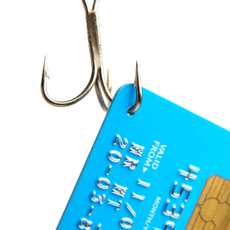
phishing expeditionAccording to poll of consumers conducted for Google, more people are concerned about their identity being stolen or their accounts being hacked than someone breaking into their home.

Clearly, people are highly sensitized to the issue of identity theft and various forms of online mischief. The question is, how good are we in protecting ourselves against these threats?

Further Google analysis has determined that the biggest threats come from so-called “manual hijacking,” in which nefarious attackers spend significant time exploiting a single victim, with the near-inevitable result of financial losses.

The incidence of manual hijacking is rare — about nine incidences per million users per day.  But the damage can be severe.

The most common way attackers gain illicit access to online accounts is through phishing — sending deceptive e-messages designed to trick recipients into divulging their user names, passwords, and related personal information.

Unfortunately, phishing attacks are working more effectively than people would care to admit.

The most effective attacks — the ones that “look and feel” legitimate — are successful in getting people to act about 45% of the time — typically going to a fake but all-too-genuine-looking web page impersonating a “real” vendor, where the unsuspecting “phishee” is asked to provide personal information.

Incredibly, Google finds that nearly 15% of the people who go to those sites actually end up divulging their personal information.

Then it’s off to the races for the bad guys. Google’s findings show that approximately 20% of the compromised accounts are accessed within 30 minutes of the login information being nabbed.

And the breach isn’t for a just a few seconds, as some people erroneously believe.  In actuality, the average amount of time spent trolling around inside an unsuspecting owner’s account is more than 20 minutes. You can bet that those 20 minutes aren’t being spent wandering around “just looking”!

The kinds of things happening inside of those 20 minutes include changing passwords to lock true owners out of the site, searching for pertinent information such as credit card data, SSNs, bank relationships data including account numbers and balances — and even social media account data.

Not only is this information used to fleece the target individual in question, but also to launch new attacks against other people who are discovered within the compromised individual’s own sphere of contacts.

These subsequent phishing attacks are often successful because they appear to be completely legitimate — communications coming from friends or relatives.

Not just successful, but really successful:  Google estimates that people targeted from the contact lists of hijacked accounts are more than three times more likely to be successfully hacked themselves.

Keeping a healthy vigilance is what’s required to stymie these “manual hijacking” efforts. My own approach is to delete anything that comes from a purported “known” source if I’m not expecting the e-mail beforehand, without opening it. I figure if it’s important enough, the sender will get in touch with me a second time or in some other fashion.

If I’m particularly suspicious, I might also visit the sender’s website directly (through the web address I already have on file) to see if there’s any corroborating evidence that there is a legitimate attempt to get in touch with me.

The way I figure it, the minor inconvenience and/or delay in conducting business in this fashion is far less problematic than the potentially disastrous consequences associated with identity theft or account hijacking.

Unfortunately, there’s no indication at all that these kinds of “manual hijacking” activities will start declining anytime soon. It’s a very lucrative business for the perpetrators, because even a very small percentage of accounts compromised in this manner represents significant dollars when you consider how many millions of phishing messages are being sent out by these hijackers on the front end.

What are your strategies for counteracting phishing attempts? Please share your thoughts with other readers.

Share this:

  • Click to share on Reddit (Opens in new window) Reddit
  • Click to share on Facebook (Opens in new window) Facebook
  • Click to share on X (Opens in new window) X
  • Click to share on LinkedIn (Opens in new window) LinkedIn
  • Click to share on Pinterest (Opens in new window) Pinterest
  • Click to share on Tumblr (Opens in new window) Tumblr
  • Click to email a link to a friend (Opens in new window) Email
  • Click to print (Opens in new window) Print
Like Loading...
1 Comment

Recent Posts

  • How to be behind the eight-ball in Davos. April 11, 2022
  • The 2020-21 COVID-19 and 1918-19 Spanish Flu epidemics: How do they compare? November 15, 2021
  • Predicting company misconduct before it even happens … really? October 12, 2021
  • When will U.S. employment dynamics change? October 5, 2021
  • Online search:  So fast … so convenient … so imperfect. September 21, 2021
  • Another COVID consequence: Consumer preferences for text communications just got a lot more pervasive. September 13, 2021
  • Arguing, finger-pointing, and other nasties. September 1, 2021
  • Another summer of natural disasters — and still too few people heed the warnings. August 24, 2021
  • The COVID-related product shortages that just won’t go away. August 16, 2021
  • In a twist, “working from home” benefits big tech in big ways. August 8, 2021
  • Not so neat: The rise of the NEET generation. July 5, 2021
  • In-flight magazines disappear into thin air. June 22, 2021
  • Is FedEx losing its luster in the package delivery field? June 8, 2021
  • A second look at the prospects for persistent price inflation in our future. May 30, 2021
  • That 70s Show: Inflation is back. May 24, 2021
  • The debate over social media’s effectiveness continues. May 18, 2021
  • The predictable — and unexpected — economic consequences of COVID. May 4, 2021
  • COVID Casualty: Homogenous Corporate Swag April 26, 2021
  • COVID Casualty: Office Gossip April 19, 2021
  • Robots become humans – at least in the eyes of the law. April 12, 2021
  • The consequences of COVID on office space leasing. April 5, 2021
  • Advertising’s COVID Consolidation March 28, 2021
  • Have we finally reached “peak oil”? March 21, 2021
  • America turns the corner on air travel. March 15, 2021
  • Changing the “work-live location paradigm” in the wake of the coronavirus pandemic. March 9, 2021
  • Tissue issue: Explaining the curious connection between the coronavirus pandemic and toilet paper shortages. February 22, 2021
  • “You are what you wear.” February 15, 2021
  • The ripple effects — good and bad — of the COVID-19 pandemic on our health and wellness. February 9, 2021
  • Education alert: The unintended consequences of schools’ response to the COVID-19 pandemic. January 30, 2021
  • In the wake of the coronavirus pandemic, where are trade shows headed? January 26, 2021

Top Posts & Pages

  • How to be behind the eight-ball in Davos.
    How to be behind the eight-ball in Davos.
  • The disappearing attention spans of consumers.
    The disappearing attention spans of consumers.
  • Notre-Dame Cathedral, an iconic structure built for the ages, survives.
    Notre-Dame Cathedral, an iconic structure built for the ages, survives.
  • Amidst the Depression … An Inspiring Tale
    Amidst the Depression … An Inspiring Tale
  • Have we finally reached “peak oil”?
    Have we finally reached “peak oil”?
  • In-flight magazines disappear into thin air.
    In-flight magazines disappear into thin air.
  • Saints and Sinners:  The Ten Most Sinful Cities in the United States … and the most Saintly
    Saints and Sinners: The Ten Most Sinful Cities in the United States … and the most Saintly
Blog at WordPress.com.
  • Subscribe Subscribed
    • Nones Notes
    • Join 492 other subscribers
    • Already have a WordPress.com account? Log in now.
    • Nones Notes
    • Subscribe Subscribed
    • Sign up
    • Log in
    • Report this content
    • View site in Reader
    • Manage subscriptions
    • Collapse this bar
 

Loading Comments...
 

    %d