Joel Kotkin: America’s Best Years Are Still Ahead

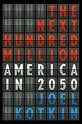
The Next Hundred Million: America in 2050 by Joel KotkinIn the study of demographics – a field that has had its share of doomsayers over the years – the irrepressible Joel Kotkin has been a continuing voice of optimism. The Distinguished Presidential Fellow in Urban Futures at Chapman University and an authority on economic, political and social trends as well as demographics, Kotkin has also been one to defend suburbia as one of the key ingredients of successful urban development.

It’s been interesting to watch how these views have played out in relation to the predilection of many in the American elite to denigrate anything pertaining to the suburban lifestyle. In their characterization, “suburbia” is synonymous with faceless neighborhoods punctuated by numbingly similar commercial strip developments featuring cookie-cutter national chain stores and restaurants. The only difference between suburban Los Angeles and suburban Chicago is the palm trees.

The suburban mindset has also been maligned by many as being obsessed with material pursuits and economic upward mobility … and possessing little if any thinking that’s “progressive.”

As an example of this side of the debate, the publication of Richard Florida’s book The Rise of the Creative Class – with its claims that metropolitan areas with high concentrations of high-tech employees, artists, musicians and gay people correlate to a higher level of economic development – articulates a theory that has been far better received by the news media and other members of the American intelligentsia.

Now, along comes Kotkin’s newest book … and with it his latest intriguing predictions. In The Next Hundred Million: America in 2050, Kotkin argues that the coming 40 years will witness a resurgent America, even as the population swells by another 100 million souls. Comparing the birth rates of America to all other developed nations, along with the continued in-migration of people from other countries – particular Asian and Latin American – Kotkin contends that no other country anywhere will enjoy such ethnic diversity. And to Kotkin, youth and diversity equate with strength.

By contrast, Kotkin maintains that “most of the developed countries in both Europe and Asia will become veritable old-age homes.” Many of these nations, with their generous social safety nets, will face huge pension obligations without having younger workers to help shoulder the costs.

Kotkin’s bottom-line prediction is that Europe and Asia will decline even as America thrives. And not just economically but also culturally: “The most affluent, culturally rich and successful nation in human history.”

Kotkin also believes that the large new numbers of Americans will flock to – where else – the suburbs, which he characterizes as “the best, most practical choice for raising their families and enjoying the benefits of community.”

No doubt, there will be those who question Mr. Kotkin’s conclusions and predictions. What about the rise of China? How will illegal versus legal immigration affect social and economic trends? How about the widening gulf between the earning power of “technocrats” and the rest of the population? Not to mention the collapse of the family unit which has rendered so much of the fabric of “inner-urban” America dysfunctional at best … hopeless at worst?

Either way, this book is very interesting and helps us reappraise some of the “big trends” in social demography. The theories of Richard Florida’s “creative class” ring decidedly less compelling today, barely six or seven years on. It’s time now to consider Joel Kotkin’s interesting theories — with the same critical eye, of course.


e-Books on the March

The Nook e-Reader, released by Barnes & Noble just in time for the holiday shopping season.
The e-book revolution continues apace. In the past week, Barnes & Noble announced the introduction of its own electronic book reader – the Nook – to compete against Amazon’s Kindle and Sony’s e-reader. Amazon promptly responded by lowering the price of the Kindle to match Barnes & Nobles’ Nook e-reader price. No doubt, both companies are looking to the holiday season, hoping their products will turn out to be among the few that are “stars” in what will otherwise be a season of tepid merchandise sales.

And now Google has gotten into the fray as well. It has announced new details on the pending launch of its e-bookstore, Google Editions. This is an online bookstore that will deliver digital books to any digital device such as e-readers, laptops and cellphones. Google plans to offer up to 600,000 book titles during the first half of 2010 alone, nearly matching the number of volumes that Barnes & Nobles will be offering with the Nook.

True to form, Google seems bent on taking an idea that is gained acceptance in the market – and then scrambling the deck to create a new set of game rules. In this case, it’s attempting an end-run around Amazon’s and Barnes & Nobles’ proprietary e-reader devices by offering the ability to download books to any digital device.

Google’s hope is that e-readers will eventually lose their luster once books are available for download to any device. But Forrester Research is estimating that ~3 million e-readers will be sold in 2009 — ~1 million higher than its earlier estimate. And some observers think that Google may be underestimating the importance and value of the proprietary e-readers; they note that Kindle users have been highly satisfied with the product and how it performs. (Besides, the audience for reading entire books on a cellphone device is probably pretty limited!)

In Google’s program, publishers will set the price of books, while Google will earn over half of the profits and share them with its retail partners. But there is an aspect of Google Editions that might turn out to be a significant “negative” for at least some users. Google is toying with the idea of including AdWords or AdSense advertising in its book offerings. Cramming a bunch of advertising surrounding the book contents could be a big turnoff. Even having blue-highlighted links in the text — while normal and expected when reading an online article such as this NonesNotes blog post – could be a major distraction when plowing through the contents of an entire book volume.

Regardless of how things play out, it’s clear that the ~$150 million e-book segment is going nowhere but up in the coming years, and it will be interesting to see how each of the key industry players ends up faring in the coming months. (And the story line gets even juicier with reports that Apple is also nosing around this market and may have something important to unveil before long.)

Sandford Dody: The most famous biographer you’ve never heard of.

Sandford Dody, ghostwriter to the stars.
Sandford Dody: Ghostwriter to the stars.
The American author Sandford Dody died a month ago. You’re forgiven if you don’t know who he is – and not just because, at age 90, he was a throwback to another era.

Mr. Dody was, in fact, the author of numerous autobiographies of American stars of the stage and screen. But the public never really knew that, because his name didn’t appear on his books.

Dody was a ghostwriter. Acclaimed “autobiographies” that in actuality he authored of celebrities like Bette Davis (The Lonely Life) and Helen Hayes (On Reflection) became best-sellers, with readers delighted to find out how “good” Miss Davis and Miss Hayes were as authors – almost as great as their acting abilities!

Most would never learn the truth – that Sandford Dody, as confidante and gentle interrogator, was the person who coaxed and teased these great stories out of his subjects.

How did Dody end up becoming “Ghostwriter to the Stars”? Like so many people who made their careers in the field of entertainment and arts journalism “back in the day,” the native New Yorker started out wanting to be in show business, perhaps as an actor or a writer. And like many others with stars in their eyes, he made the trek to California to try his luck in the film industry.

Back in the 1940s, it wasn’t so hard to meet the famous as well as not-so-famous who inhabited the then-relatively small world of the Hollywood film industry. Even as he dreamed of becoming a playwright, Dody took bit parts in a few films.

But as it became clear he would never ascend the heights either in front of the footlights or on the marquee boards, and in need of money, Dody turned to ghostwriting beginning in the 1950s. His first project was authoring the autobiography of a now-obscure silent film star, Dagmar Godowsky. (One could assume Miss Godowsky was obscure even then, some 30 years after her film career had ended!)

The assignments with Bette Davis, Helen Hayes, the Metropolitan Opera star Robert Merrill, and members of the Barrymore family came along later, in the 1960s. (The Davis autobiography was particularly successful, and is credited with leading to a late-career renaissance for the aging movie star.) And while these projects would prove to be financially lucrative for Dody, it is clear from his own writings that the author was somewhat ambivalent about the whole business of ghostwriting.

In fact, he stopped doing it after his book on Miss Hayes was released. Why? In his own autobiography, published in 1980, Dody gives us a clue. “The most suitable way to view stars is from a long way off,” he declared.

For Dody, it seems that spending so many hours with his subjects as he prepared to write his manuscripts, experiencing their egotism and petty vanity “up close and personal” inevitably came as a letdown. “Let the next star write her own damned autobiography,” is how he would sum it up after he retired.

In later years, Sandford Dody returned to New York City, where he resided quietly in Lower Manhattan, living off his royalties and indulging in his passion for the musical and visual arts. For those of us who know New York as a “walker’s city,” it will come as no surprise that Dody kept up a nearly-every-day regimen of walking an eight-mile loop from his Greenwich Village apartment to the Metropolitan Museum of Art, Lincoln Center and back. It’s an important clue as to how he was able to reach his tenth decade despite having battled asthma from the earliest years of childhood.

Ironically, it is a poignant passage from his own autobiography, Giving Up the Ghost, that illustrates the uncommon talent Dody possessed as a writer – and hints at what he might have produced had he taken a different literary path:

“When a ghost’s job is done, he wanders, unheeded, unseen in a half-world and in circles now too grand for him. Unseen by everyone – except on rare occasion by the subject who pretends blindness but winks conspiratorially when the unfamiliars are looking the other way – I have been able to slip through closed doors and between locked mortals as they engage in their earthly affairs. Impossible to be heard, I for one have cried out in protest, in joy, in vain. Isn’t that what death is all about, finally?”

College Textbooks: It’s Time to Throw the Book at Them

college textbooksConsidering that the digital revolution has dramatically improved access to information pretty much across the board, while also lowering the price of delivering the content to consumers, doesn’t it seem like college textbook publishing has been operating in something of a time warp?

Anyone with kids enrolled in college in recent years (present company included) has likely been confronted by obscenely high bills for textbooks. In fact, stats reported by the U.S. Public Interest Research Group reveal that college students spend an average of ~$900 per year on textbooks. When you consider that some courses don’t even have textbooks, the average cost for those classes that do is even higher than the overall figures would suggest.

What gives here? You can blame a number of factors. High among them are publishers that issue new editions of the same textbook every year or so; never mind the fact that 95%+ of the material is identical to prior editions. And so, perfectly good textbooks that could be used by different students over multiple years are instead relegated to the trash or a box in the basement. Or they languish, unwanted, at the book nook at the local thrift store.

And how about publishing books using expensive and high-margin hardcover binding when soft-cover would be more than adequate? That’s a common publisher ploy.

Finally, let’s not forget the “unholy alliance” between college bookstores and book publishers to try to corner as much of the college textbook business as possible. After all, those textbook sales represent a major contributor to college store profits.

Thankfully, recent developments suggest that real alternatives for students (and their beleaguered parents) have now emerged. Some of these resources are web sites like eBay’s Half.com where students can purchase books for substantially less than the published price. Or Chegg, where students can rent the books and return them following their use. Of course, this is assuming you know the correct ISBN number of the books in question and can be sure you’re ordering the correct edition. Often, that’s not an easy feat at all based on how hard some school stores try to hide the ISBN information from purchasers.

The ISBN information will also serve you in good stead when searching for used textbooks on sites like Amazon where the ISBN numbers are included in book listings.

But beyond simply finding sites to purchase books at a cheaper price, there are new digital alternatives that are also cropping up. CourseSmart provides digital versions of textbooks that are viewable online or can be downloaded. Not only is the cost much less, but students can choose to print out texts chapter by chapter or simply keep their textbooks on their computer, leaving more space in their backpacks for more important things like electronic gadgets, food and bottled water. For now, most of the CourseSmart choices are from major publishers like McGraw-Hill and Wiley, but these offerings are sure to expand in coming years.

Another interesting development is engaging the course instructors themselves in developing custom reading materials. That’s what Flat World Knowledge is doing: It’s an open-source textbook provider that offers online books through a web-based reader, free of charge. Professors can get in on the action by customizing what’s offered to their own specific course by rearranging book chapters and removing or adding text. Not only does it make their course syllabus more user-friendly for students, it’s a labor saver for the instructors as well.

How does Flat World make money doing this? Students can pay for “premium” upgrades such as PDF printing, audio files, and interactive quizzes that are offered along with the free basic text information.

As to which of these new services will turn out to be tomorrow’s standard way of acquiring course instruction materials … who knows? But one thing’s for certain: the cost of buying textbooks won’t be nearly the monetary challenge it’s been for students and parents up til now.

Welcome to the Customer Service Department … Dante Alighieri will be your tour guide.

Who hasn’t faced the frustrations of dealing with what passes for customer service today? I recall an ordeal several months ago when I spent the better part of three hours on the phone with Hewlett-Packard’s customer service department – if you could call it customer service – trying to get an issue resolved with reloading a printer driver for an HP model that is no longer classified as “current” – which in my case was a printer I purchased five or six years ago.

Because my model was older, I was transferred to a different help desk that turned out to be an outsourced/offshore area of HP’s customer service. (Presumably, the good folks at HP seem to think that outsourcing technical questions about older equipment will actually give their customers access to better knowledge than their own in-house personnel can provide …?)

The first 90 minutes of my ordeal were spent trying to talk to someone who could actually solve my problem, but about 90% of those 90 minutes were basically spent on hold. The next nearly 90 minutes was taken up with attempting to get my $59.99 service charge reversed, since I had been unable to speak with anyone who could actually assist me with my problem.

That’s an evening of my life I’ll never get back.

… Which made a new book just published on the woeful state of customer service capture my attention all the more. In Emily Yellin’s book “Your Call Is (not that) Important to Us,” (Free Press, ISBN-13: 978-1416546894 … also available in a Kindle edition), the author gives us plenty of statistical information, polling results and excerpts from studies to help chronicle the sorry state of today’s customer service affairs.

But it is Yellin’s “customer service hell” anecdotes – far more horrific than my own experience with Hewlett-Packard – that stick most in the memory. Those stories certainly provide fodder for a sort of morbid fascination; reading them is not unlike seeing an auto accident unfold in slow motion before your very eyes: You know what the final result is going to be but you can’t resist seeing it through all the way to the end.

Fortunately, not all is bad news. The author also cites some examples of where companies are trying – pretty diligently – to deliver a customer service experience that is at least “serviceable.” The book is a worthwhile read.

But back to my own experience. How did things turn out? Well, after nearly three hours on the phone, I was finally able to get my charge for service reversed. Then, rather than spend any more time trying to work with my HP printer, I simply purchased a new one. It was a Canon.